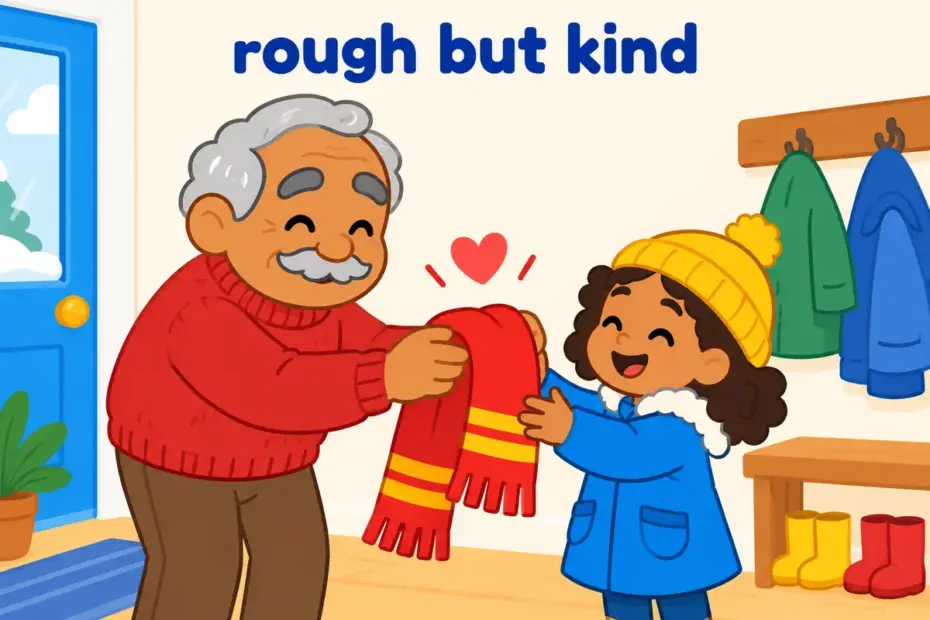
Gruff describes a voice or manner that is low, rough and unfriendly in sound, yet not always unkind at heart. To use gruff in a sentence, match it to a person or a voice: “The coach gave a gruff answer.” It usually describes speech or manner, not written text.
Gruff at a glance
- Gruff is an adjective with the comparative gruffer, the superlative gruffest, the adverb gruffly and the noun gruffness.
- The dominant pattern is be gruff or gruff + noun, as in a gruff voice.
- It describes sound and manner, so its usual partners are voice, tone and reply.
- The word belongs to neutral storytelling rather than technical writing.
- The commonest error is using the adverb gruffly after a linking verb such as was.
What does gruff mean?
Gruff is an adjective meaning rough and low in sound, or abrupt in manner, often with warmth underneath. The Cambridge entry for gruff shows the two threads of sound and temper, and they often meet: a gruff voice can signal a kind person too shy to soften it. Where the roughness is only about a strained throat, hoarse is the physical word, because gruff also says something about manner.
| Sense | Plain meaning | Example sentence |
|---|---|---|
| Rough voice | Low and gravelly in sound | His gruff voice filled the small room. |
| Abrupt manner | Short and unfriendly on the surface | She gave a gruff reply and turned away. |
| Kind underneath | Rough outside, warm within | The gruff caretaker quietly fixed her bike. |
| Animal sound | A low, rough noise | A gruff bark came from the kennel. |
One limitation is worth stating plainly. Gruff is not a synonym for cruel, and it rarely describes deliberate rudeness. A gruff person may be perfectly kind; a cruel one is not. When the only point is that words were blunt, blunt is more accurate than gruff.
How do you use gruff in a sentence?
Gruff works in two positions: after a linking verb, as in his answer was gruff, or directly before a noun, as in a gruff voice. The adverb gruffly modifies a verb of speaking, and the noun gruffness names the quality. Choose the form by asking what the word is describing: a thing, a manner of speaking, or the quality itself.
| Pattern | Example | What it signals |
|---|---|---|
| be + gruff | His reply was gruff. | Describes manner after a linking verb. |
| gruff + noun | She had a gruff voice. | Attributive; usually voice, tone or manner. |
| gruffly + verb | He answered gruffly. | Adverb for how something was said. |
| sound + gruff | The teacher sounded gruff at first. | Linking sense; a perceived tone. |
| gruff + with + person | He was gruff with reporters. | Names the target of the manner. |
A practitioner rule keeps the forms apart: use gruff after a linking verb, gruffly with an action verb, and gruffness when you need a noun. A sergeant who barks orders does so gruffly, not gruff.
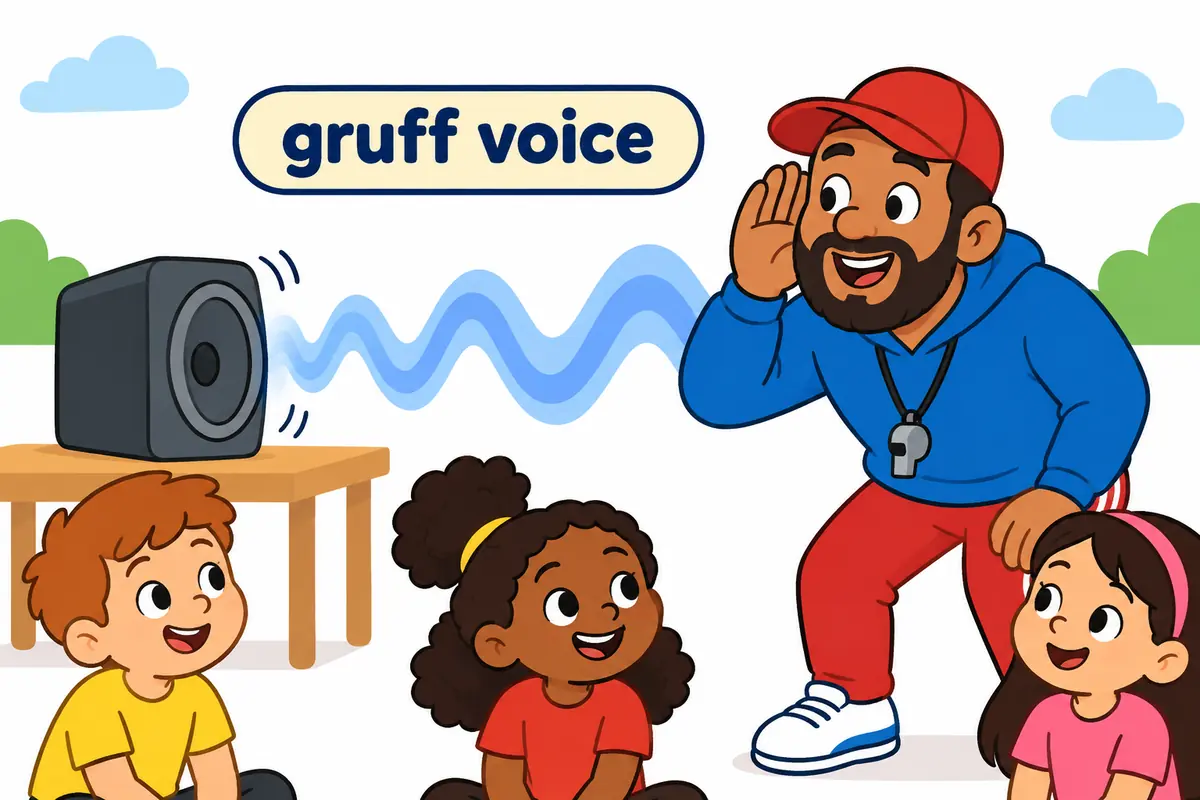
Gruff in a sentence: examples across contexts
Gruff changes little in meaning but moves between a voice, a manner and a mood. These nine sentences keep the adjective and show how each setting tunes it.
| Context | Example sentence | Why this works |
|---|---|---|
| Classroom | The new teacher seemed gruff until she handed out the sweets. | A small kind act reveals the warmth beneath. |
| Workplace email | His email was gruff, but the offer was generous. | Contrasts tone with substance. |
| News profile | The retired captain is famous for his gruff charm. | The pairing of opposites is the point. |
| Fiction | A gruff voice called from the corridor. | Sound alone introduces a character. |
| Conversation | Do not worry; she is just gruff with strangers. | Explains the manner without condemning it. |
| Sports writing | The manager’s gruff praise meant more than a speech. | Understatement carries the meaning. |
| Theatre review | The actor’s gruff delivery anchored the final act. | Names the vocal quality on stage. |
| Customer service | The clerk was gruff but solved the problem in minutes. | Separates manner from competence. |
| Memoir | My grandfather was gruff, and I miss him daily. | A warm backward glance suits the word. |
Notice that gruff almost always arrives with a counterweight, a kind act or a generous offer. That contrast is what keeps the word from sounding simply harsh, which is why abrupt alone would lose the tenderness.
Gruff vs brusque, blunt and surly
Gruff sits in a cluster of words for rough manner and shares its edge with several neighbours. A brusque reply is short to the point of rudeness, a blunt remark is honest and plain, and a surly mood is openly bad-tempered. Only gruff leaves room for warmth, which is why it suits an awkward, kind character better than the others.
| Attribute | gruff | brusque | blunt | surly |
|---|---|---|---|---|
| Core quality | Rough-sounding, often kind underneath | Abrupt and short | Direct and plain | Bad-tempered and unfriendly |
| What it describes | A voice or manner | Speech or manner | A remark | A person or a mood |
| Warmth intended | Often yes, hidden | No | Honest, not rough | No, openly hostile |
| Typical partner | voice, reply | tone, answer | opinion, truth | look, silence |
| Register | Neutral | Formal | Neutral | Neutral |
Verdict: choose brusque for cold efficiency, blunt for plain honesty, surly for open bad temper, and gruff when the roughness hides a softer heart, as a crusty neighbour does when he finally lends a hand.
Word forms and grammar of gruff
Gruff inflects like a short adjective, taking the comparative and superlative without more and most. The adverb and the noun are the forms learners confuse most, so the table shows each in a sentence.
| Form | Part of speech | Example |
|---|---|---|
| gruff | adjective | She waved us in with a gruff nod. |
| gruffer | adjective, comparative | He grew gruffer as the meeting ran on. |
| gruffest | adjective, superlative | That was the gruffest welcome I have had. |
| gruffly | adverb | He gruffly told us to sit down. |
| gruffness | noun | Her gruffness hid a deep shyness. |
Common mistakes with gruff
- Incorrect:
His voice was gruffly.Correct: His voice was gruff. Rule: Use the adjective after a linking verb; keep the adverb for an action verb. - Incorrect:
She spoke gruff.Correct: She spoke gruffly. Rule: Adverbs modify verbs, so speaking takes gruffly. - Incorrect:
He was gruff on his friends.Correct: He was gruff with his friends. Rule: Use with, not on, before the person who receives the manner. - Incorrect:
Her gruffness voice filled the room.Correct: Her gruff voice filled the room. Rule: Gruff is the adjective; the noun gruffness cannot modify another noun.
Practice using gruff
Work through the six items, then check the reasoning rather than only the key.
- Fill the gap: The goalkeeper answered the reporters ______, then smiled.
- Choose the better word: The weathered sailor had a warm heart under a (gruff / surly) manner.
- Correct the error: She was gruffly until the children made her laugh.
- Build a sentence: use gruff + noun about a teacher’s greeting.
- Spot the register: which fits a novel — a gruff voice called from the corridor, or the voice was gruffish?
- Rewrite with the noun: The coach was gruff. Use gruffness.
Answers
- gruffly — the adverb modifies the verb answered.
- gruff — the sentence praises hidden warmth, and surly would mean open bad temper.
- She was gruff — a linking verb takes the adjective, not the adverb.
- Model answer: A gruff welcome did not fool the new pupil for long.
- A gruff voice called from the corridor — a novel uses the standard adjective, not gruffish.
- The coach’s gruffness melted once the match began — the noun names the quality itself.
The bottom line
Use gruff in a sentence when a voice or manner is rough on the surface but leaves room for kindness underneath. Two details decide most sentences: gruff follows a linking verb while gruffly goes with an action verb, and gruff suggests hidden warmth where brusque and surly suggest none.
Frequently asked questions about gruff
Is gruff a positive or negative word?
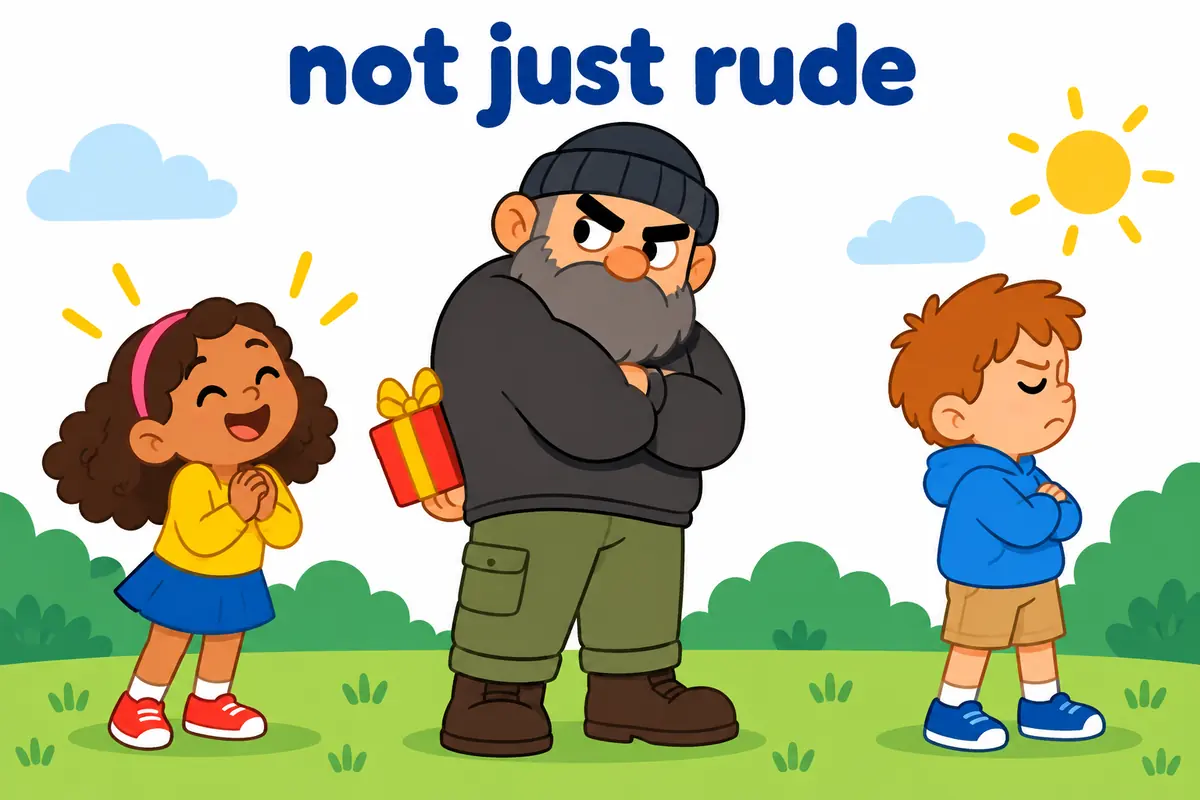
Gruff is usually mildly negative about the surface and positive about the heart. It describes a rough voice or abrupt manner that often hides kindness, so writers use it fondly for awkward, generous characters rather than as an insult. That balance is what separates it from words of pure criticism.
What is the adverb of gruff?
The adverb is gruffly: he answered gruffly. It modifies verbs of speaking or acting, never a linking verb. After is, was or seemed you need the adjective, as in his answer was gruff, not his answer was gruffly. Match the form to the verb underneath your sentence.
Can gruff describe something other than a voice?
Yes. Gruff can describe a manner, a reply, a mood or even an animal sound such as a gruff bark. What stays constant is the mixed signal: a rough, low quality that may still carry warmth or restraint. A rough manner with a soft heart is the usual pattern.
What is the difference between gruff and grumpy?
Gruff is about how something sounds or how someone behaves, and it often hides kindness. Grumpy is about a passing bad mood, and it carries no warmth. A gruff grandfather is rough but loving; a grumpy one is simply irritable today.
Have you ever encountered a person whose voice sounded harsh and rough, conveying a sense of sternness or irritability? That’s the essence of “gruff.”
“Gruff” describes a tone or manner of speaking that is abrupt, curt, or harsh. It often implies a lack of friendliness or warmth in someone’s speech or behavior.
7 Examples Of Gruff Used In a Sentence For Kids
- The gruff pirate captain shouted orders to his crew.
- The old man had a gruff voice, but he was kind to everyone.
- The dog’s bark was loud and gruff.
- The gruff security guard checked everyone’s bags before they entered the building.
- The bear made a gruff sound as it walked through the forest.
- The gruff teacher was actually very nice once you got to know him.
- The lion’s roar was deep and gruff.
14 Sentences with Gruff Examples
- Gruff professors often intimidate students during lectures.
- Some students find it difficult to approach their gruff seniors for advice.
- The gruff security guard at the college gate always checks student IDs carefully.
- The librarian’s gruff reminder to keep quiet in the library startled the students.
- The gruff tone of the canteen staff sometimes puts off students.
- Students often avoid the gruff cafeteria supervisor during lunch hours.
- The gruff bus driver shouted at students for not maintaining discipline while boarding the bus.
- Despite his gruff exterior, the college dean is known to be supportive of student initiatives.
- The gruff response from the administrative staff left students feeling dismissed.
- The gruff notice board announcement about exam dates created panic among students.
- Students hesitated to ask questions during the gruff professor’s office hours.
- The gruff response from the college administration regarding fee payment deadlines frustrated students.
- A gruff reminder from the college management about maintaining cleanliness on campus irked students.
- The gruff feedback from the project supervisor motivated students to work harder on their assignments.
How To Use Gruff in Sentences?
Gruff is used to describe someone who is stern or harsh in manner or appearance. When using Gruff in a sentence, it is important to consider the context in which it is being used. For example, you might say “The gruff teacher scolded the students for talking during class.”
To use Gruff effectively, make sure to place it before the noun it describes. For instance, you could say “The gruff police officer questioned the suspect aggressively.” In this sentence, “gruff” is used to indicate the demeanor of the police officer.
When using Gruff in writing, be mindful of the tone you want to convey. It is commonly used to describe someone who is tough or no-nonsense, so make sure the context aligns with this meaning. Avoid using Gruff in a positive context, as it typically carries a negative connotation.
In conversation, you can use Gruff to describe a person’s voice or behavior. For example, you might say “His gruff voice intimidated the audience.” By using Gruff in this way, you can help paint a vivid picture for your listeners.
Overall, Gruff is a versatile word that can add depth and nuance to your descriptions. Practice using it in different contexts to become more comfortable incorporating it into your vocabulary.
Conclusion
In conclusion, the use of gruff sentences can convey a tone of roughness, brusqueness, or sternness. Such sentences often lack warmth or friendliness in their delivery, and may come across as curt or impatient. While gruff sentences can be effective in certain contexts, such as setting boundaries or conveying authority, they may also create tension or distance in communication.
It’s important to be mindful of the impact gruff sentences can have on the recipient, as they can be perceived as harsh or unfriendly. Balancing directness with empathy and consideration for others’ feelings is key to effective communication. Striking a balance between being assertive and being respectful can help foster more positive and constructive interactions in both personal and professional relationships.


