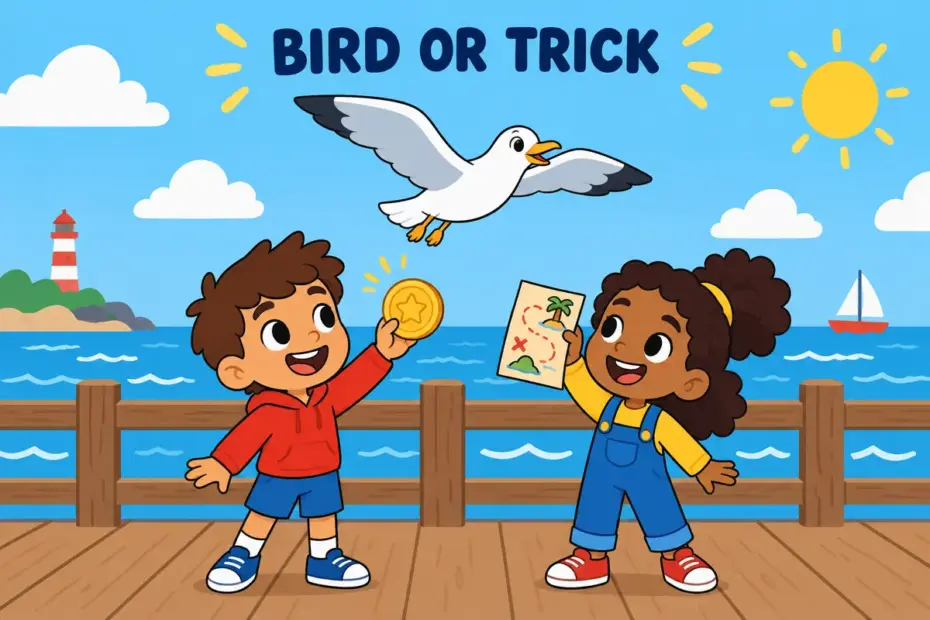
Gull is a noun for a seabird and a verb meaning to deceive or trick someone. To use gull in a sentence as a verb, name the person fooled and the false belief: “They gulled investors with a fake report.” As a noun it names the coastal bird that gathers on piers and beaches.
Gull at a glance
- Gull is both a noun, the seabird, and a verb, to deceive; the plural birds are gulls.
- As a verb the forms are gulls, gulled and gulling, and it always takes a person as object.
- The verb pattern is gull someone into doing something, or gull someone out of money.
- The verb belongs to formal or literary writing; in speech people say trick or fool.
- The commonest error is using gull for a harmless prank, which sounds far too strong.
What does gull mean?
Gull has two distinct meanings: a seabird with long wings, and a verb meaning to deceive someone. The Cambridge entry for gull records both, and the verb is the rarer of the two. When a person is misled in an ordinary way, deceive is the plainer verb.
| Sense | Plain meaning | Example sentence |
|---|---|---|
| Seabird (noun) | A coastal bird with long wings and grey and white feathers | A gull swooped low over the harbour wall. |
| Deceive (verb) | Trick someone into believing something false | The advert gulled buyers into a bad deal. |
| Make a dupe (verb) | Turn someone into a fool or a victim | They gulled the village out of its savings. |
One limitation matters. The verb gull is not a gentle word for a joke; it implies a real deception with a victim, so it suits fraud, hoaxes and swindles rather than a playful trick between friends.
How do you use gull in a sentence?
The noun and the verb follow separate patterns. The bird takes articles and plurals like any noun, while the verb needs a person as its object and usually a phrase explaining the deception.
| Pattern | Example | What it signals |
|---|---|---|
| gull + person (verb) | The conman gulled the tourists. | the object is always a person |
| gull + person + into + gerund | They gulled him into signing. | states the false step |
| gull + person + out of + noun | She gulled them out of a deposit. | names what was taken |
| a / the + gull (noun) | A gull landed on the post. | the seabird sense |
| flock of gulls (noun) | A flock of gulls wheeled overhead. | the plural bird sense |
A useful clue separates the senses: if the sentence has a human object, gull is the verb of deception; if the subject is a bird on a pier or a beach, gull is the noun. The two senses never blend in one clause.
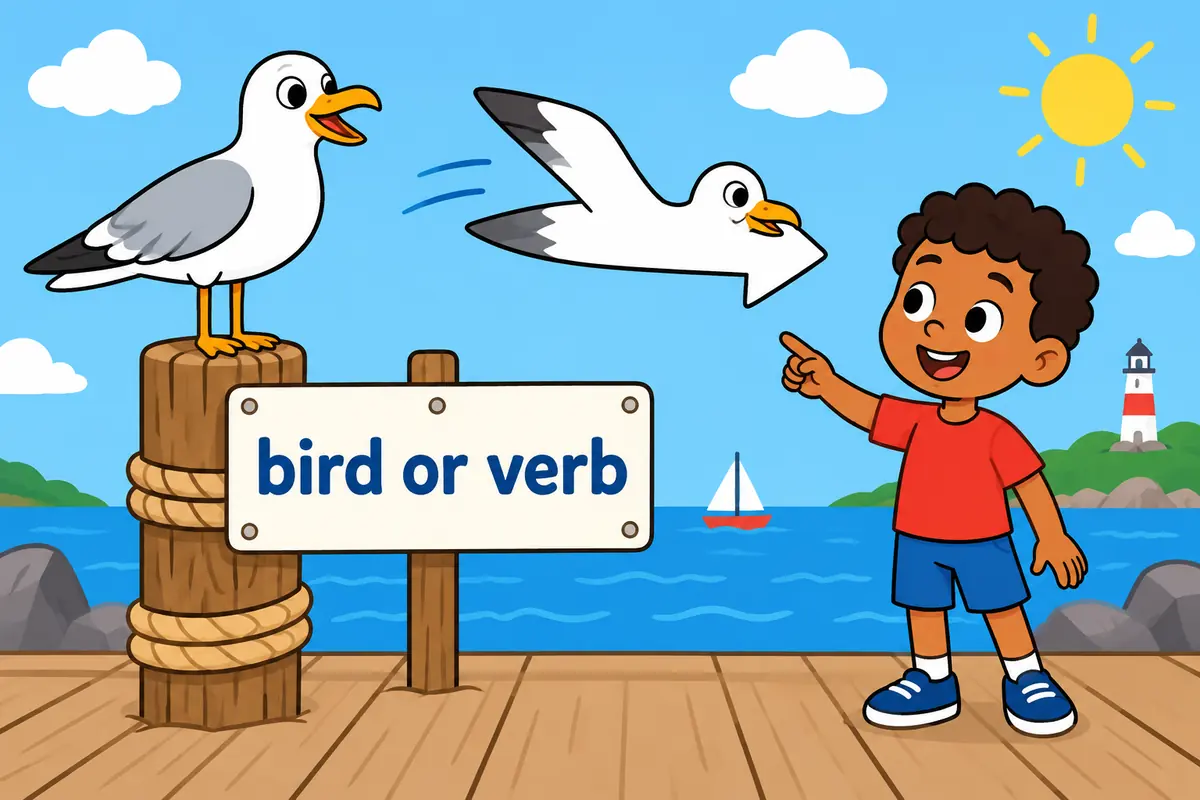
Gull in a sentence: examples across contexts
The nine sentences below keep the word gull while moving from a nature report to a court story, and each one makes the sense obvious.
| Context | Example sentence | Why this works |
|---|---|---|
| Nature writing | A lone gull circled the cliffs on the rising wind. | The bird sense in descriptive prose. |
| News report | Fraudsters gulled pensioners into parting with their savings. | The deception sense in reporting style. |
| Legal writing | The court found that the seller had gulled the buyer. | The deception sense with a human object. |
| History essay | The scheme gulled investors across three counties. | Formal, large-scale deception. |
| Conversation | Do not let the advert gull you into buying the bigger model. | Spoken register with into plus gerund. |
| Fiction | A cunning rogue gulled the weary travellers out of their coins. | Literary swindle with out of. |
| Workplace | The report gulled the board into approving the merger. | Corporate deception with into. |
| Science writing | The gull population has grown along the warm coastline. | The bird sense in a factual frame. |
| Travel writing | Gulls cried above the fishing boats at dawn. | Atmospheric bird sense, plural noun. |
Gull vs deceive
| Attribute | Gull | Deceive |
|---|---|---|
| Core idea | Trick someone into a false belief | Cause someone to believe something untrue |
| Tone | literary and strong | neutral and general |
| Usual frame | gull someone into or out of | deceive someone about something |
| Register | formal, rather old-fashioned | everyday and flexible |
| What it implies | a definite victim and a real loss | any degree of misleading |
Choose gull when a person is tricked and loses something, and deceive for the plain, general act of misleading. A trick can be harmless, while gull rarely is. To fool someone is lighter, to mislead them sends them the wrong way without a swindle, and to hoodwink is a close formal cousin.
Word forms and grammar of gull
| Form | Part of speech | Example |
|---|---|---|
| gull | noun (bird) | a gull on the pier |
| gull | verb (base) | to gull a customer |
| gulled | verb (past) | They gulled the buyer with false papers. |
| gulling | verb (participle) | He was gulling the whole town. |
| gullible | adjective | A gullible reader believed it at once. |
The adjective gullible, meaning easily tricked, is far more common than the verb and often prompts learners to look up the verb, as the entry on bamboozle shows for another formal deceiving verb.
Common mistakes with gull
- Incorrect:
He gulled.Correct: He gulled the buyer. Rule: the verb needs a person as its object. - Incorrect:
The gull gulled over the sea.Correct: A gull glided over the sea. Rule: the bird sense is a noun, not a verb. - Incorrect:
They gulled a joke on their friend.Correct: They played a joke on their friend. Rule: gull implies real deception, not a prank. - Incorrect:
She was gulled at the party.Correct: She was tricked at the party. Rule: gull is formal and needs a clear object and deception. - Incorrect:
a groups of gullsCorrect: a group of gulls Rule: use the plural noun gulls after group, not the base form.
Practice using gull
- Fill in the blank: A ________ perched on the harbour post all morning.
- Choose the better word: The salesman (gulled / tricked) the family into a costly contract.
- Correct the error: The gull gulled low over the waves.
- Build a sentence: use gull as a verb with out of about a lost deposit.
- Spot the register: which sentence suits a court report, and which suits a nature diary?
- Fill in the blank: Swindlers ________ the visitors out of their holiday money.
Answers
- gull — the subject is a coastal bird, so the noun sense is required.
- gulled — the family lost money to a real deception, so the stronger verb fits.
- A gull glided low over the waves. — the bird sense is a noun and needs a separate verb.
- The agent gulled them out of their deposit. — the pattern gull someone out of something names the loss.
- The court report uses gulled; the nature diary uses gulls. — the verb is formal and the plural noun is descriptive.
- gulled — the visitors were tricked and lost money, which is the deception sense.
The bottom line
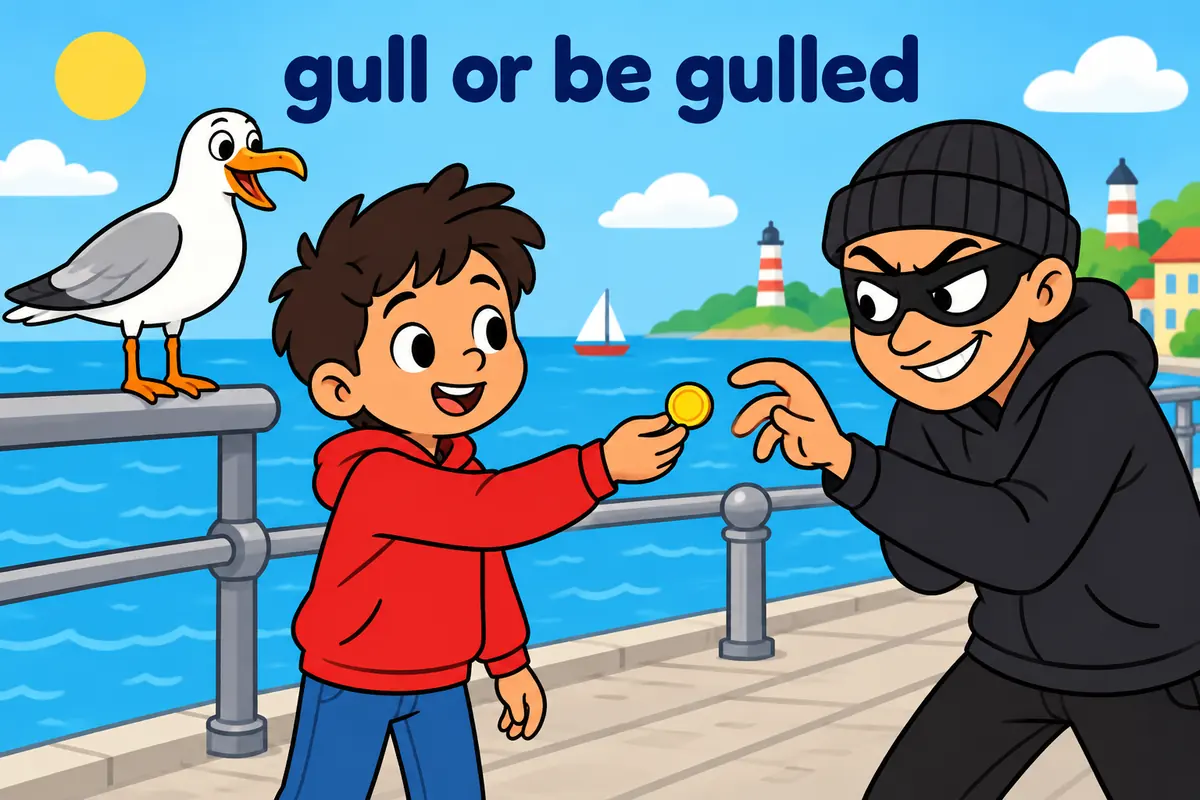
Gull names a coastal seabird as a noun and a real deception as a verb, and the human object separates the two senses instantly. Use the verb with into for a false step and out of for a loss, and keep it for genuine swindles rather than pranks. Its adjective gullible is far commoner than the verb. Gull works best when a victim is clearly involved.
Frequently asked questions about gull
Is gull a bird or a trick?
It is both, and the sentence tells you which. As a noun, gull is a coastal seabird with long wings and grey and white feathers, as in a gull on the pier. As a verb, gull means to deceive or swindle someone, as in they gulled the buyer. The presence of a human object signals the verb.
How do you use gull as a verb?
Give it a person as the object and usually a phrase explaining the deception. The two standard frames are gull someone into doing something and gull someone out of something, as in they gulled him into signing and they gulled her out of a deposit. The verb is formal and rarely appears in speech.
What is the difference between gull and deceive?
Deceive is the plain, general verb for making someone believe something untrue, and it works in any register. Gull is stronger and more literary, and it usually implies a definite victim who loses something valuable, such as money. A mild misunderstanding could deceive someone, but only a real swindle gulls them.
Is gullible related to gull?
Yes. Gullible, meaning easily tricked or too ready to believe things, comes from the same root as the verb gull. The adjective is far commoner today than the verb, so a learner may meet gullible first and only later discover that gull itself means to deceive someone.
Ever wondered how to use the word “gull” in a sentence? Let’s delve into its meaning and explore how this versatile term can be incorporated effortlessly in your everyday language.
A “gull” refers to a type of seabird often found near coastlines, known for their loud calls and scavenging behavior. However, beyond its ornithological significance, “gull” also serves as a verb, meaning to deceive or trick someone. Explore the various ways to incorporate this unique word in your communication to enhance your vocabulary and express yourself more vividly.
7 Examples Of Gull Used In a Sentence For Kids
- The gull flew high in the sky.
- The gull has white feathers.
- I saw a gull by the beach.
- The gull made a funny noise.
- Gull eggs are speckled brown.
- The gull likes to swim in the water.
- The gull can catch fish with its beak.
14 Sentences with Gull Examples
- Gull was spotted near the canteen, looking for food scraps.
- I watched a gull swoop down and snatch a student’s sandwich.
- The campus lake is a popular spot for gulls to hang out.
- Students were feeding the gulls by the sports field.
- A group of gulls were circling above the lecture hall.
- The noisy gulls on campus woke me up early in the morning.
- Students were studying outside when a gull tried to steal their snacks.
- A bold gull stood on the railing, unfazed by the students walking by.
- The cafeteria had signs warning about feeding the gulls.
- During monsoon season, gulls often take shelter on the rooftops of campus buildings.
- The campus janitor shooed away the gulls that were pecking at trash bins.
- A mischievous gull left a trail of footprints on a student’s parked car.
- The biology students were observing the behavior of gulls near the water.
- Amidst the chaos of students rushing to class, a lone gull stood watching from a distance.
How To Use Gull in Sentences?
To use the word “Gull” in a sentence, start by understanding its meaning. Gull is a noun that refers to a seabird with mainly white plumage, often found near coastal areas.
When incorporating Gull into a sentence, consider the context. For example, you could say, “I spotted a majestic gull soaring above the ocean.” In this sentence, gull is used to describe the bird that was seen flying by the speaker.
Another way to use Gull in a sentence is by providing more information about the bird. For instance, “The noisy gulls gathered on the sandy shore, searching for scraps of food.” Here, gulls is used to indicate a group of the seabirds in a specific location and activity.
Remember to use Gull correctly by ensuring it fits naturally within the sentence. Avoid overusing the word and make sure it provides clarity to your message. Practice incorporating Gull into different sentences to become more comfortable with using it.
In summary, using Gull in a sentence involves understanding its meaning as a seabird and incorporating it appropriately to describe or refer to these birds in a given context. With practice, you can effectively integrate Gull into your writing to enhance your communication.
Conclusion
In conclusion, the sentences with the keyword “gull” showcase how this term can be used in various contexts. From describing the behavior of seabirds to illustrating acts of deception or cheating, “gull” can be a versatile word in expressing different meanings. Whether referring to a clever trick or a noisy bird, the word “gull” adds depth and imagery to the sentences in which it is used.
Overall, sentences incorporating “gull” highlight the significance of concise and precise language in conveying ideas effectively. By carefully selecting and employing words like “gull” with intention, writers can enhance the clarity and impact of their statements, ultimately enriching the communication process with vivid descriptions and nuanced meanings.


