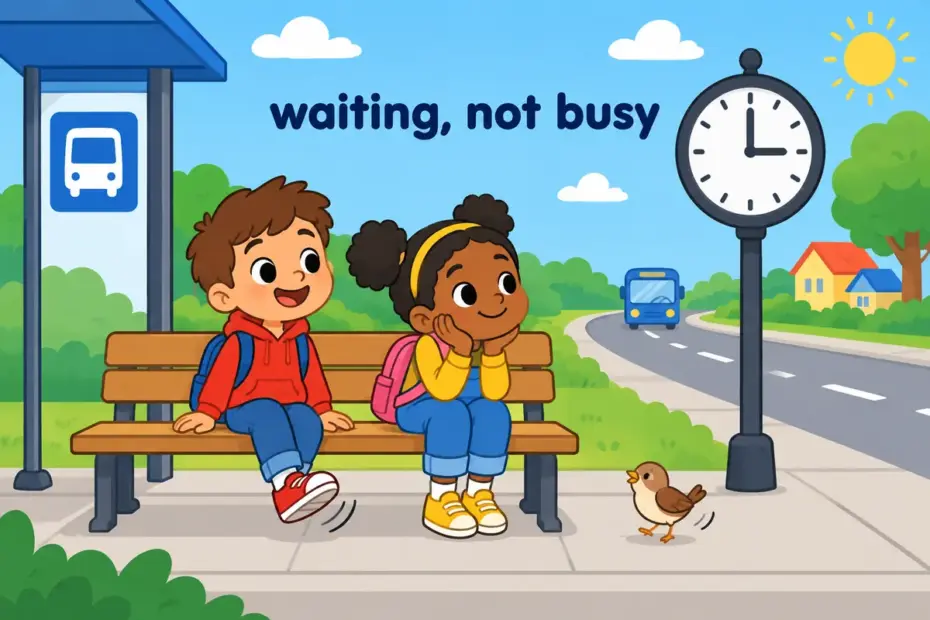
Hang around is a phrasal verb meaning to spend time in a place with little purpose, usually while waiting or socialising. To use hang around in a sentence, give it a place or a companion: “We hung around the arcade until the rain stopped.” The verb is intransitive, so no object ever separates the two words.
Hang around at a glance
- Hang around is an inseparable, intransitive phrasal verb: hung around, never hang the place around.
- It takes a place phrase or the preposition with: hang around the park, hang around with friends.
- The dominant sense is idle waiting; a second sense is lingering or remaining over time.
- It belongs to informal speech and light writing, and it sounds relaxed rather than rude.
- The commonest error is separating the particle or dropping with before a person.
What does hang around mean?
Hang around is a phrasal verb meaning to stay in a place without a clear purpose, often while waiting for something else to happen. The Cambridge entry for hang around records both the waiting sense and the social sense of spending time with people. A third, quieter sense is to linger, as when a smell or an illness refuses to leave.
| Sense | Plain meaning | Example sentence |
|---|---|---|
| Wait idly | Spend time somewhere with nothing to do | We hung around the station for an hour. |
| Socialise | Spend time with people in a casual way | He hangs around with the older players. |
| Linger | Refuse to leave or fade | The smoke hung around long after the bonfire. |
| Stay near someone | Remain close, often unwelcomely | Stop hanging around me while I work. |
One limitation is worth stating plainly. Hang around suggests a lack of purpose, so it is the wrong verb when the time is purposeful. A student revising in the library is not hanging around, and a colleague waiting for a scheduled meeting is simply waiting. Choose the plainer verb when the idleness is not the point.
How do you use hang around in a sentence?
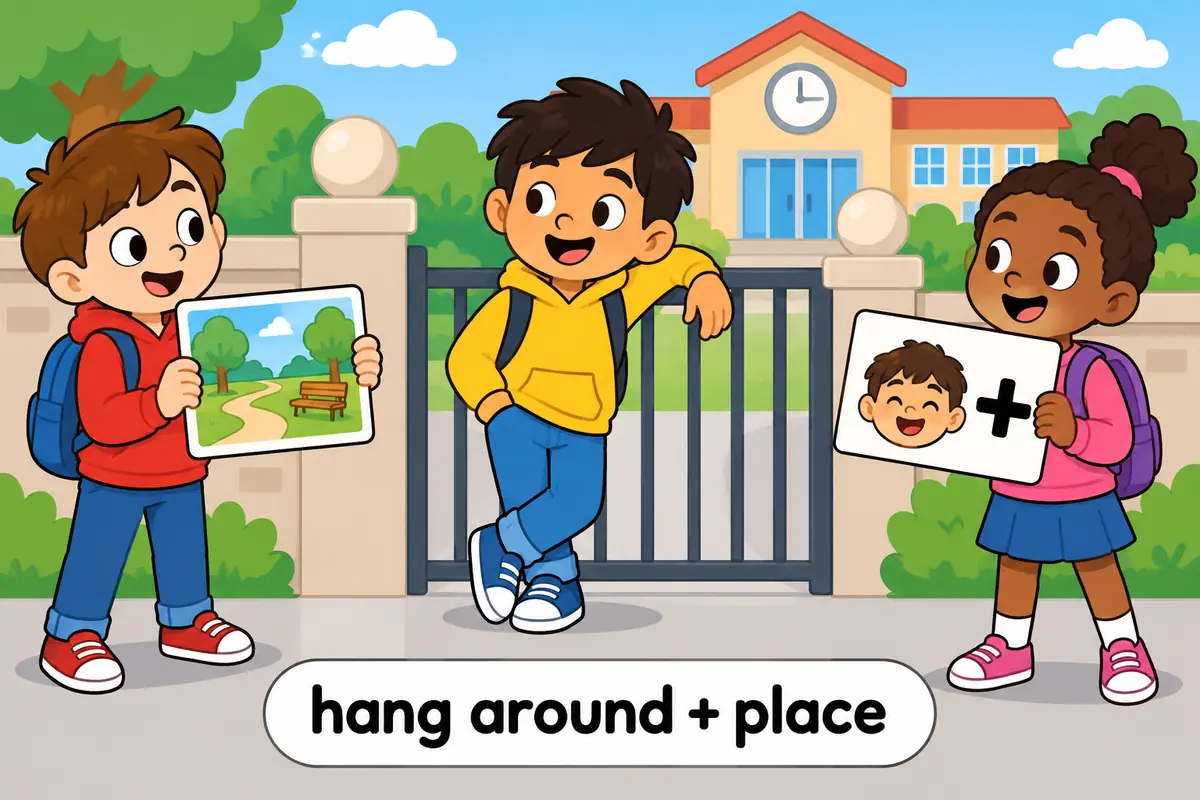
Hang around is intransitive, so it never takes a direct object and the particle around cannot be moved. A place phrase or the word with follows the verb, which keeps the two words together: you hang around the park, never hang the park around. Four frames cover almost every real sentence.
| Pattern | Example | What it signals |
|---|---|---|
| hang around + place | The boys hung around the corner shop. | Idle time in a named location. |
| hang around + with + person | She hangs around with the drama crowd. | Casual company; with is required before a person. |
| hang around + doing nothing | We hung around doing nothing all morning. | Makes the lack of purpose explicit. |
| hang around (of a thing) | The smell hung around for days. | Lingering, with an inanimate subject. |
Hang around in a sentence: examples across contexts
Hang around keeps its informal tone wherever it appears, so writers use it deliberately to sound relaxed. The eight sentences below move from the playground to a weather report, and each one shows what the idling or lingering adds.
| Context | Example sentence | Why this works |
|---|---|---|
| Playground | The new boy hung around the gate, milling about until someone spoke to him. | Shows shy waiting, which is the sense children recognise. |
| Workplace chat | A few of us hang around after the shift to finish the crossword. | Keeps the verb casual among colleagues, where it fits. |
| News colour piece | Crowds hung around the square long after the ceremony ended. | Reports lingering without claiming any purpose. |
| Conversation | Don’t hang around waiting for me; I might be late. | A direct instruction, natural in speech. |
| Parent to child | Stop hanging around with kids who skip class. | Uses with before a person, the required pattern. |
| Weather report | Damp air hung around the coast for a week. | Applies the lingering sense to an inanimate subject. |
| Sports report | The substitute hung around the touchline, hoping for a call. | Pairs waiting with a plausible hope. |
| Travel writing | We hung around the harbour because the ferry was late. | Gives a clear reason for the idle time. |
Hang around vs hang out
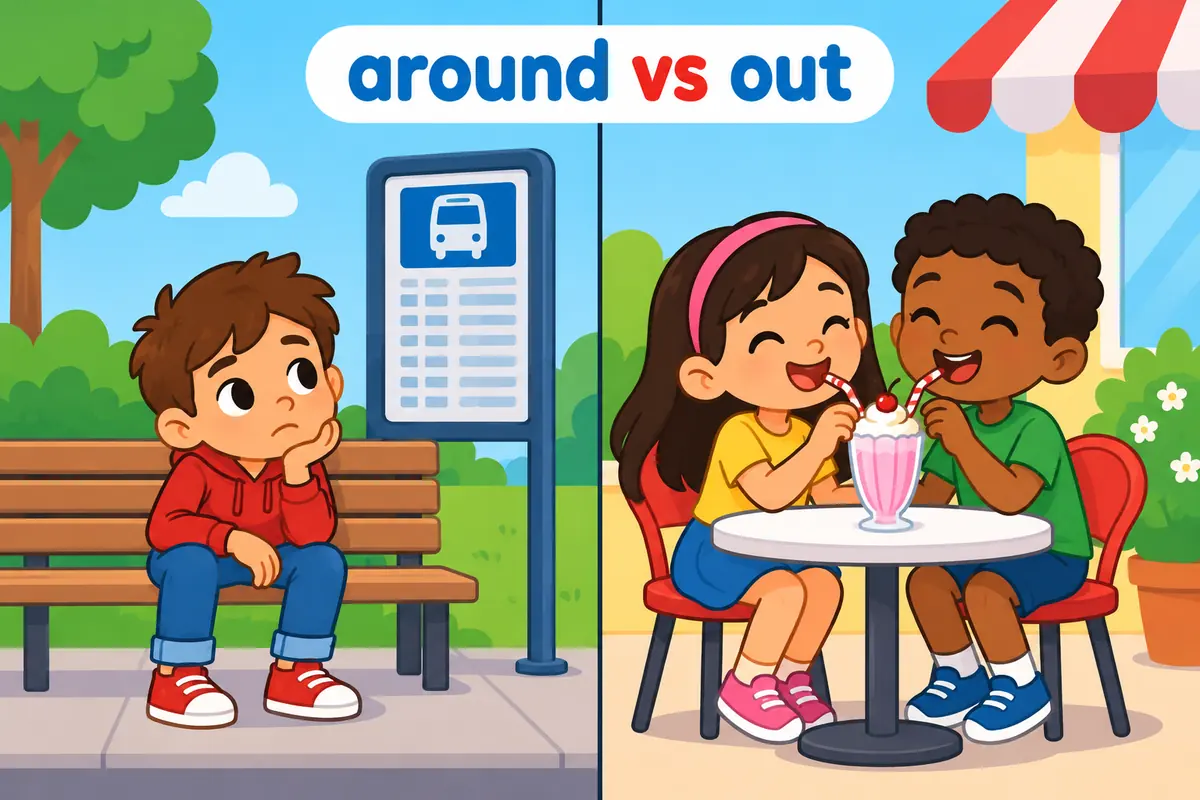
Hang around and hang out are close, but hang out is the warmer, more social phrase, while hang around often implies waiting. British speakers also say hang about with much the same idle sense as hang around.
| Attribute | hang around | hang out |
|---|---|---|
| Core meaning | Wait or linger with little to do | Spend relaxed social time |
| Purpose | Often none, or waiting for something | Enjoying company on purpose |
| With people | Needs with: hang around with friends | Can take with or stand alone |
| Tone | Neutral to mildly negative | Warm and positive |
| Typical subject | A person, or a smell that lingers | People only |
| Best in | Waiting, loitering, lingering | Making friendly plans |
Verdict: choose hang around for time that idles away, and hang out when the company is the point. If the sentence contains an invitation or a plan, hang out almost always reads better.
Word forms and grammar of hang around
Hang around is regular except for the verb itself: hang has the past tense hung. Keep it apart from other hang phrasal verbs, because the particle changes the meaning completely.
| Form | Part of speech | Example |
|---|---|---|
| hang around | phrasal verb, base | They hang around the courts after school. |
| hangs around | third person singular | She hangs around the art room at lunch. |
| hung around | past and past participle | We hung around until the coach arrived. |
| hanging around | present participle | He is hanging around the lobby again. |
| hang up | different phrasal verb | hang up the phone means end the call. |
| hanged | non-standard here | Hanged belongs to execution, not to hanging around. |
Common mistakes with hang around
Incorrect: We hung the mall around all afternoon. Correct: We hung around the mall all afternoon. Rule: The particle stays after the verb, because hang around cannot be split by an object.
Incorrect: I will hang around you at the party. Correct: I will hang around with you at the party. Rule: A person is introduced by with; only a place follows around directly.
Incorrect: They were hanging around to finish their project. Correct: They were hanging around instead of finishing their project. Rule: The verb implies idleness, so a purposeful to-infinitive contradicts it.
Incorrect: Yesterday I hang around the library. Correct: Yesterday I hung around the library. Rule: The past tense of hang is hung, not hang.
Incorrect: He was hanged around the corner by the cafe. Correct: He hung around the corner by the cafe. Rule: Hanged means executed by the neck, so it never describes waiting.
Practice using hang around
Work through the six items, then read the reasons rather than only the answers.
- Fill the gap: After the match, the players ______ the tunnel hoping for autographs.
- Choose the better phrase: On Friday we are going to (hang out / hang around) at the pool, just for fun.
- Correct the error: She hangs around the older students at break. Make it social, not merely idle.
- Build a sentence: use hang around with about a shy child finding a friend.
- Spot the register: which belongs in a chat message — Want to hang around later, or Kindly await my arrival?
- Rewrite with the past tense: They hang around the shop every evening. Change the time to yesterday.
Answers
- hung around — the past tense is hung, and the place phrase follows the particle.
- hang out — a planned, friendly outing is the job of hang out, not hang around.
- She hangs around with the older students at break — with is required before a person.
- Model answer: The shy child began to hang around with a classmate who liked the same games.
- Want to hang around later? — a chat message stays informal and short.
- They hung around the shop yesterday evening — the past tense replaces hang.
The bottom line
Use hang around in a sentence for time spent in a place with little purpose, and keep the two words together because the verb is intransitive and inseparable. The two nuances that decide most sentences are these: a person needs with after the verb, so you hang around with friends rather than hang around friends, and hang around suggests waiting while hang out suggests enjoyment. Where the company is the point, hang out is the warmer choice.
Frequently asked questions about hang around
Is hang around too casual for work emails?
Hang around is informal, so it sits oddly in a formal report or a client email. In a message to close colleagues it sounds natural, as in we hung around after the meeting to finish up. For a manager or a customer, choose wait, stay or remain, which carry the same meaning without the relaxed tone.
What does hang around mean when it describes a smell?
With an inanimate subject, hang around means to linger and refuse to fade, as in the smell of paint hung around for days. The verb keeps its sense of staying past the expected time but drops the human idea of waiting. This lingering sense also fits doubt, cold weather and an illness.
Can hang around take an object?
No. Hang around is intransitive, so it never takes a direct object and the particle cannot be separated from the verb. A place phrase may follow, as in hang around the park, but that phrase is a locative, not an object. A person always needs the preposition with before them.
Is hung or hanged correct with hang around?
Hung is the correct past form of hang around, so a sentence reads we hung around all day. Hanged belongs only to the separate legal sense of execution by the neck. The two forms come from different uses of hang, and mixing them is one of the clearest signs of a learner.
Have you ever found yourself lingering in a place without any specific purpose? This aimless loitering is what we commonly refer to as “hanging around.” When someone is hanging around, they are simply passing time without a clear objective or task at hand.
Whether it’s waiting for a friend to arrive or simply enjoying the ambiance of a café, hanging around is a casual and relaxed way to spend time. It often involves leisurely activities or idle conversations, making it a laid-back way to unwind and pass the time.
7 Examples Of Hang Around Used In a Sentence For Kids
- Hang around under the shade of the tree.
- Let’s hang around the playground after class.
- We can hang around the garden and play.
- Hang around with your friends and have fun.
- Don’t forget to hang around near the swings.
- It’s fun to hang around the park with friends.
- Hang around quietly during storytime.
14 Sentences with Hang Around Examples
- Hang around the campus canteen after classes for some quality time with friends.
- Planning to hang around the library to study for upcoming exams.
- Let’s hang around the sports complex and maybe play some basketball.
- I usually hang around the college garden during breaks to relax and unwind.
- Hang around the college auditorium and attend some interesting seminars or workshops.
- Looking for a quiet spot to hang around and catch up on some reading.
- Feeling hungry? Let’s hang around the food trucks outside the college gates.
- It’s a beautiful evening, perfect to hang around the college grounds and watch the sunset.
- Want to hang around the college computer lab to finish that pending assignment?
- Let’s hang around the college notice board to check for any important announcements.
- The college festival is coming up, so expect a lot of people to hang around the campus.
- Need a break from studying? Let’s hang around the college’s recreational area and play some games.
- Hang around the college bookstore and browse through some new arrivals.
- Feeling restless? Let’s hang around the college music room and jam out for a while.
How To Use Hang Around in Sentences?
Hang Around means to spend time in a place without doing much or waiting for something.
Here is a simple guide on how to use it in a sentence:
-
Subject: Begin your sentence with the person or thing that will be hanging around. For example, “John decided to hang around the park.”
-
Action: Use the phrase “hang around” to indicate the act of spending time without any specific purpose. For example, “She likes to hang around the coffee shop on weekends.”
-
Location: Provide the place where the hanging around is taking place. For example, “Kids often hang around the playground after school.”
-
Additional Information: You can add more details to your sentence to make it more interesting. For example, “We should hang around a bit longer to see if anyone else shows up.”
Remember, “hang around” is a casual term that is usually used to describe a relaxed or idle situation. It can be used in various contexts, including social gatherings, public places, or even at home. Feel free to experiment with different sentences to get a better grasp of how to use this expression effectively.
Conclusion
In conclusion, spending time with others, engaging in activities, or simply being present in a particular place can all be described as “hanging around.” From leisurely lingering with friends to loitering in a specific area, the phrase captures the essence of casual, relaxed interactions. Whether waiting for something to happen, enjoying each other’s company, or passing time without a specific purpose, hanging around embodies the idea of being present in the moment.
Overall, the concept of hanging around encompasses a range of situations where individuals casually stay in a particular place or engage in informal activities. It reflects a sense of ease, leisure, and togetherness, making it a versatile phrase that can convey different scenarios of spending time or loitering in a relaxed manner.


