What Does Hindrance Mean?
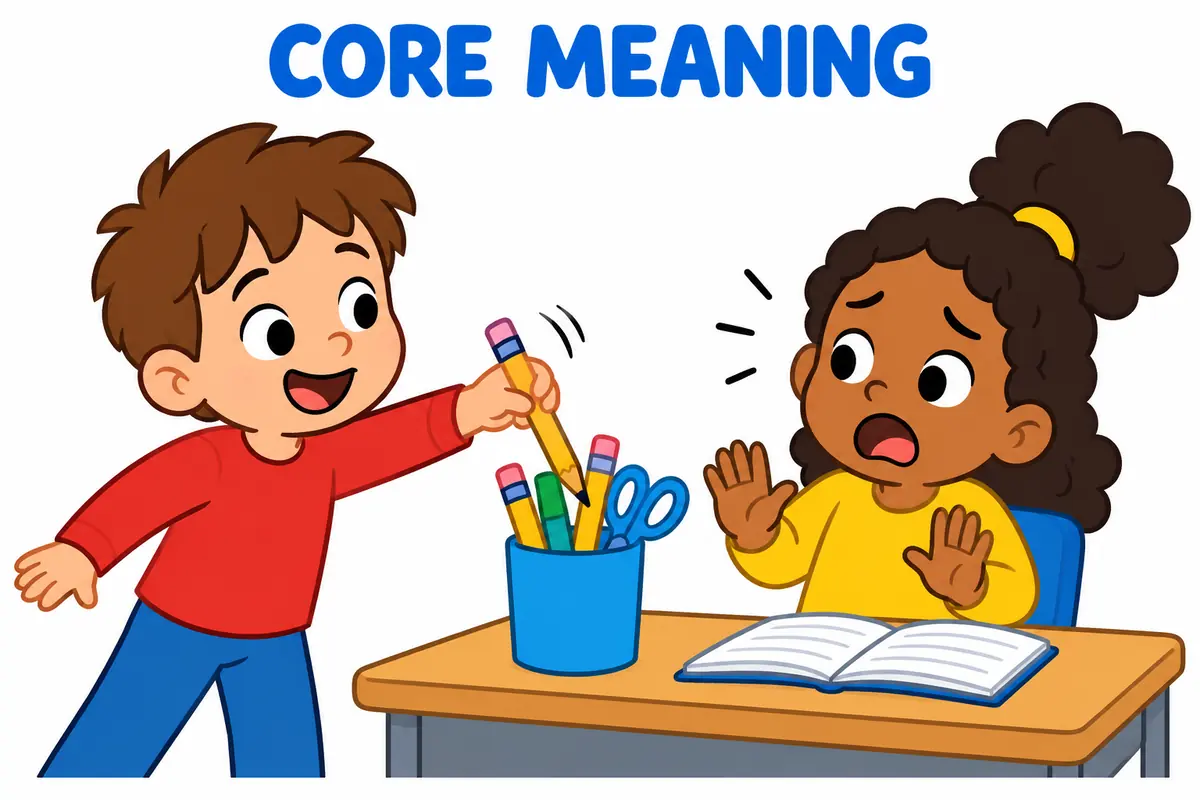
A hindrance is something that makes an action, plan, or development harder or slower. It can be a practical obstacle, a condition, or an arrangement that gets in the way. The word names the problem; it does not necessarily mean that the goal is impossible. A delayed bus may be a hindrance to arriving on time, for example, while a different route may still get you there.
Cambridge Dictionary labels hindrance a noun that is usually singular but can also be uncountable, and defines it as something that makes doing or developing something more difficult. It gives patterns such as a hindrance and without hindrance. Read the dictionary entry. The related verb hinder means to limit someone’s ability or limit the development of something. Cambridge’s entry for hinder shows how the verb works in a sentence.

How to Use Hindrance in a Sentence
Hindrance is a noun. In everyday sentences, it often appears after a, the, or a describing word such as major, serious, or temporary. It can be followed by to when you name what is affected: The extra approval step became a hindrance to progress. It can also be used with in to describe a task or activity: Heavy rain was a hindrance in finishing the repairs.
- A hindrance to + noun: “The missing map was a hindrance to the search.”
- A hindrance in + activity: “The delay was a hindrance in preparing the presentation.”
- Without hindrance: “The crew moved the equipment without hindrance.” This formal phrase means that nothing prevented or obstructed the action.
- Hindrances (plural): “Several small hindrances slowed the renovation.” Use the plural when you mean separate obstacles.
Cambridge marks the noun as “usually singular,” which is a helpful guide: in many sentences, hindrance refers to an obstacle in general or one main obstacle. The plural is still useful when individual barriers can be counted. For general noun-countability guidance, see Cambridge Grammar’s countable and uncountable noun guide.
Sentence Examples by Situation
These additional examples show how the noun can describe different kinds of delay or difficulty. In each sentence, the hindrance affects progress but does not automatically make success impossible.
- Work: “A late shipment was a temporary hindrance to the launch, so the team adjusted its schedule.”
- Travel: “Construction on the bridge became a hindrance to the morning commute.”
- Learning: “Unclear directions can be a hindrance when students are learning a new procedure.”
- Communication: “The weak phone signal was a hindrance to the interview, so they moved closer to the window.”
- Research: “The small sample size was a hindrance to drawing a firm conclusion.”
- Home: “A crowded hallway became a hindrance to carrying the bookcase upstairs.”
- Outdoor plans: “Strong winds were a hindrance to the sailing lesson, and the instructor rescheduled it.”
- Public services: “A closed entrance can be a hindrance to visitors, so clear directions to an accessible route matter.”
- Creative work: “The short deadline was a hindrance to revising every section, so the editor prioritized the most important changes.”
- Teamwork: “Conflicting calendars were a hindrance to finding a meeting time that suited everyone.”

Choosing the Right Word
Hindrance is close in meaning to obstacle, barrier, and impediment, but each word creates a slightly different emphasis.
- Hindrance is a broad choice for something that delays or complicates progress: “The paperwork was a hindrance to approval.”
- Obstacle often suggests a challenge that must be dealt with or overcome: “The steep hill was an obstacle on the route.”
- Barrier can suggest something that separates, blocks entry, or limits access: “A locked gate was a barrier to the trail.”
- Impediment is a more formal word for something that interferes with progress or action: “A shortage of trained staff was an impediment to expansion.”
- Delay names the extra time itself, rather than the thing causing it: “The storm caused a delay.”
Choose hindrance when you want to focus on an unfavorable effect on progress. If you mean the obstacle is physically blocking a route, barrier may be more exact. If you only mean that something took longer, delay may be simpler.
Common Sentence Patterns and Mistakes
A precise sentence usually makes the relationship between the hindrance and the goal easy to see. These patterns help:
- “X was a hindrance to Y.” “Missing data was a hindrance to the analysis.”
- “X proved to be a hindrance.” “The outdated software proved to be a hindrance.”
- “X created/posed a hindrance.” “Limited opening hours posed a hindrance for evening visitors.”
- “X was no hindrance to Y.” “The light rain was no hindrance to the outdoor concert.”
Avoid using hindrance when you simply mean a person is inconvenient or different. Name the specific condition or practical barrier instead, and avoid treating a person’s identity or disability as the obstacle. For instance, describe an inaccessible entrance as the hindrance, rather than describing a visitor as one. This keeps the sentence accurate about what is actually making access difficult.
Also avoid stacking vague modifiers. “A major hindrance to the project” is understandable, but explaining the cause is more informative: “The missing safety inspection was a hindrance to the project because work could not resume until it was complete.” The added detail tells the reader what was delayed and why.
How a Hindrance Affects a Goal
The noun becomes clearer when a sentence connects three details: the obstacle, the activity it affects, and the result. Compare “The old printer was a hindrance” with “The old printer was a hindrance to distributing the workshop handouts because it jammed after every few pages.” The second sentence identifies both the goal and the effect. In shorter writing, the context may already supply those details, so the shorter version can be enough.
A hindrance can be temporary or ongoing, minor or serious, avoidable or outside someone’s control. The word itself does not tell the reader how severe the problem is. Add an accurate modifier or an explanation instead of assuming hindrance means a complete stop:
- “A minor hindrance delayed the delivery by ten minutes.”
- “The steep access road was a continuing hindrance during the repairs.”
- “A brief power cut caused a hindrance, but the backup lights came on.”
- “The missing signature was the final hindrance to approving the application.”
Notice the useful difference between cause and result: the missing signature is the hindrance; the approval is delayed as a result. Naming both makes the example concrete. You can also use a clause after that to describe the obstacle: “A schedule that changes every day became a hindrance to planning childcare.”
Using the Word Respectfully and Precisely
Because hindrance can sound critical, it is best to apply it to a condition or obstacle when that is what you mean. “The lack of a ramp was a hindrance to entering the building” identifies the design problem. Saying that a visitor is a hindrance would assign blame to the person instead of identifying the barrier. This distinction improves both accuracy and tone in workplace, school, and public-service writing.
Similarly, avoid calling every inconvenience a major hindrance. A small interruption may be a minor hindrance, while a missing permit that stops all work may be a serious hindrance. Matching the description to the actual effect helps readers understand the scale of the problem.
Quick Practice
Try completing each sentence with a concrete cause. Then check that the cause truly makes progress harder or slower.
- “The ______ was a hindrance to finishing the report on time.”
- “A lack of ______ proved to be a hindrance in preparing for the trip.”
- “Although ______ created a hindrance, the group continued by ______.”
Possible answers include missing information, transportation, and the road closure / taking a different route. These are open-ended prompts: many answers work if the obstacle and its effect make sense together.
Sources and Usage Note
The definition, part of speech, usual singular use, and the phrase without hindrance were checked against Cambridge Dictionary. The distinction between hindrance and the related verb hinder was checked against the Cambridge entry for hinder. The sentence examples in this guide are original and illustrate common grammatical patterns rather than quotations from the dictionary.

Have you ever encountered a hindrance while trying to achieve a goal or complete a task? A hindrance refers to something that obstructs or delays progress, causing difficulties or setbacks along the way.
It can come in various forms, such as a lack of resources, external factors, or personal challenges. Learning how to overcome hindrances is essential for personal growth and success in both professional and personal endeavors.
7 Examples Of Hindrance Used In a Sentence For Kids
- **A big stone can be a hindrance while walking.
- **Rain can be a hindrance for playing outside.
- **Tying shoelaces can be a hindrance for kids sometimes.
- **Having too many toys can be a hindrance for cleaning up.
- **Loud noise can be a hindrance during naptime.
- **Being late can be a hindrance for joining games.
- **Not sharing can be a hindrance in making friends.
14 Sentences with Hindrance Examples
- The lack of access to high-speed internet proved to be a hindrance in completing our group project online.
- The limited study resources in the college library posed a significant hindrance to my research.
- The noisy roommates in the hostel were a constant hindrance to my concentration while studying.
- Cutting-edge technology can sometimes be a hindrance rather than a help for some students who are not tech-savvy.
- The language barrier proved to be a hindrance for international students trying to communicate with their peers.
- Poor time management skills can be a major hindrance to excelling in academics.
- Limited parking space on campus is a common hindrance for students who commute by car.
- The lack of financial aid options can be a significant hindrance for students from low-income backgrounds.
- The broken elevator in the building was a major hindrance for students trying to reach their classes on higher floors.
- The professor’s confusing instructions acted as a hindrance for students trying to complete the assignment.
- Health issues can often be a hindrance to students attending classes regularly and performing well.
- Procrastination is a common hindrance that many college students face when trying to meet deadlines.
- The rigid class schedule can sometimes be a hindrance for students who have part-time jobs to manage.
- Limited access to research databases was a significant hindrance in conducting thorough research for the thesis project.
How To Use Hindrance in Sentences?
Hindrance means something that causes delay or difficulty in the progress of something.
To use Hindrance in a sentence, you can first identify a situation where something is impeding progress, causing delay, or creating an obstacle. For example, “The heavy traffic was a major hindrance to me getting to work on time.”
When incorporating Hindrance into a sentence, you can place it in the context of a problem or setback that is inhibiting a desired outcome. For instance, “The lack of funding proved to be a significant hindrance to the completion of the project.”
It is essential to ensure that the word Hindrance is used appropriately in the sentence and that it effectively conveys the concept of an obstacle or difficulty hindering progress. Here is an example: “Her fear of public speaking was a significant hindrance to her career advancement.”
By practicing incorporating Hindrance into sentences in various contexts, you can become more comfortable using it effectively in your writing and communication. Remember to consider the meaning and context of Hindrance when constructing your sentences to ensure clarity and accuracy.
Conclusion
In conclusion, hindrance, as seen in various examples of sentences, refers to something that delays or obstructs progress. Whether it is a physical barrier, a personal limitation, or an external obstacle, hindrances can hinder growth, success, or development. It is essential to identify and address these hindrances promptly in order to overcome challenges and achieve desired goals.
By recognizing and removing hindrances, individuals and organizations can improve effectiveness, productivity, and overall well-being. Taking proactive steps to minimize or eliminate obstacles can lead to smoother processes, enhanced performance, and a clearer path toward success. Embracing a problem-solving mindset and seeking solutions to overcome hindrances can ultimately pave the way for growth and advancement in various aspects of life.