
Implausible means not believable or not likely to be true, and it describes claims, excuses and stories rather than people. To use implausible in a sentence, attach it to the thing being doubted: “The referee called the excuse implausible and reached for a card.” The adjective usually follows a linking verb such as seem, sound or be.
Implausible at a glance
- Implausible is an adjective; its related forms are implausibly and implausibility.
- It means not seeming reasonable or probable.
- The usual pattern is something + seems, sounds or is + implausible.
- Implausible belongs to neutral and formal writing and judges an idea rather than a person.
- The commonest error is using implausible when impossible is the precise word.
What does implausible mean?
Implausible is an adjective meaning not seeming reasonable or probable. The Cambridge entry for implausible gives this sense, and the word almost always judges a claim rather than a speaker. An an improbable outcome is unlikely; an implausible one is also unconvincing, which is why the two words are close but not interchangeable.
| Sense | Plain meaning | Example sentence |
|---|---|---|
| Hard to believe | Not convincing as a story or excuse | His account of the delay sounded implausible. |
| Unlikely to happen | Very improbable as an outcome | A comeback from three goals down was implausible. |
| Weak as reasoning | Not standing up to scrutiny | The plan rests on an implausible assumption. |
One limitation is worth stating plainly. Implausible is not the same as impossible. An implausible story could still be true, so the word leaves room for credible evidence to change the verdict. When something simply cannot happen, impossible is the precise word. Implausible also judges the idea rather than the person, which makes it gentler than an unbelievable claim or a direct accusation.
How do you use implausible in a sentence?
Five patterns cover almost every real sentence. The linking-verb patterns are the most common, because they mark a first impression rather than a settled fact.
| Pattern | Example | What it signals |
|---|---|---|
| subject + be + implausible | The explanation is implausible. | States a judgement directly. |
| seem / sound / look + implausible | The offer sounded implausible. | Marks a first impression rather than proof. |
| find + it + implausible | The judge found the claim implausible. | Reports an assessment by an authority. |
| implausible + noun | An implausible excuse delayed the vote. | Uses the adjective before the thing doubted. |
| it is implausible that + clause | It is implausible that nobody noticed. | Introduces a whole idea with that. |
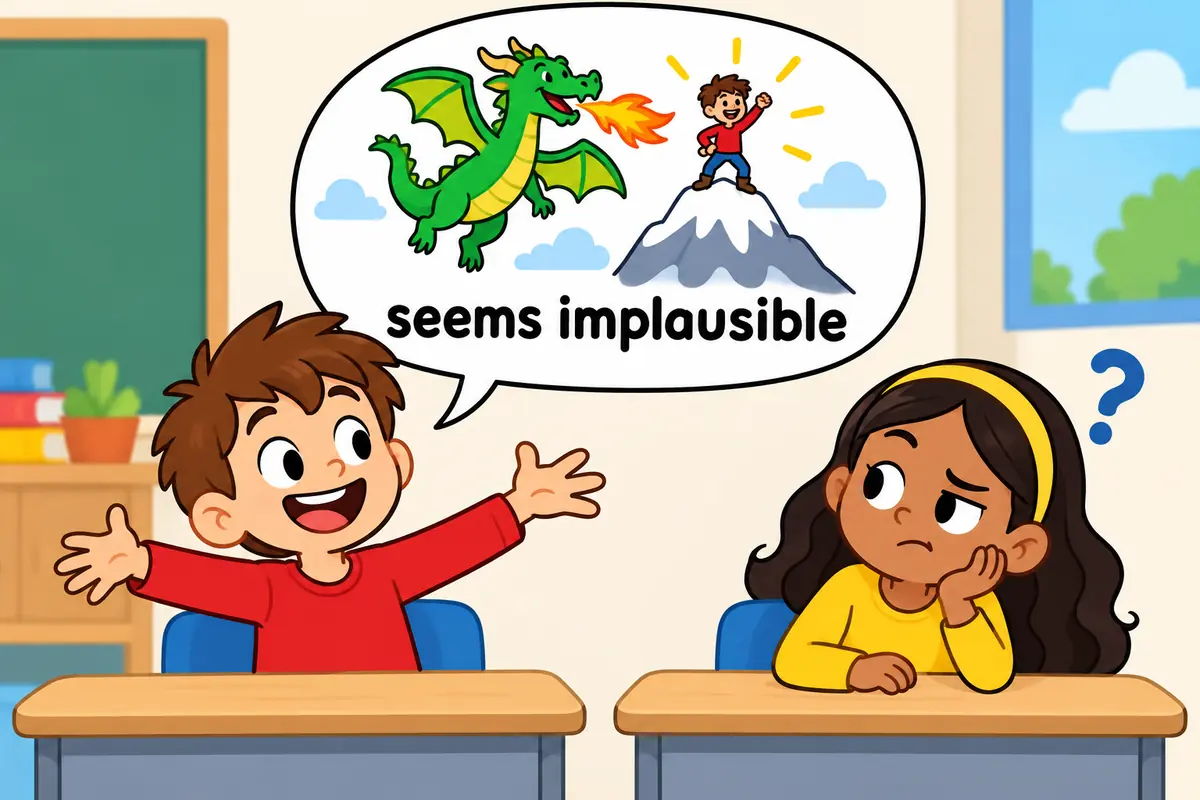
Implausible in a sentence: examples across contexts
The adjective keeps its meaning but shifts its company. A news report attributes the judgement to investigators, a review separates belief from enjoyment, and a conversation adds a hedge. The nine sentences below show those shifts.
| Context | Example sentence | Why this works |
|---|---|---|
| News report | Investigators called the timeline implausible. | Attributes the judgement to people who examined the evidence. |
| Classroom discussion | The story sounded implausible, so we checked the dates. | Shows doubt leading to verification rather than dismissal. |
| Workplace email | A two-day turnaround seems implausible for this report. | Softens a refusal with a reason rather than a flat no. |
| Science writing | The result was implausible until two labs repeated it. | Keeps the door open for evidence to change the verdict. |
| Legal writing | The court found the alibi implausible. | Uses the formal find it implausible pattern. |
| Film review | The plot is implausible but the performances carry it. | Separates belief from enjoyment, which criticism needs. |
| Conversation | That excuse sounds pretty implausible to me. | Uses the everyday seem pattern with a hedge. |
| Academic prose | The model relies on an implausible assumption about behaviour. | Points at the reasoning rather than the writer. |
| Sports commentary | A recovery in the last minute looked implausible. | Describes a moment of doubt before the outcome. |
Notice that no example calls a person implausible. Every one keeps the judgement on the claim, which is what makes the word precise rather than rude.
Implausible vs plausible
Implausible and plausible are opposites that share almost everything except the prefix. The table sets out how they divide the work.
| Attribute | implausible | plausible |
|---|---|---|
| Meaning | Not seeming reasonable or probable | Seeming reasonable or probable |
| Force | Expresses doubt about a claim | Expresses cautious belief |
| Register | Neutral to formal | Neutral to formal |
| Typical subject | A story, excuse, plan or result | A story, excuse, plan or result |
| What it implies | The idea needs more support | The idea is worth considering |
| Opposite form | Formed with the prefix im- | The base adjective |
A a doubtful excuse leans on the listener’s suspicion, and once an account is rejected, investigators look for a likely cause instead.
Verdict: use implausible when a claim fails to convince but could still be true, and save plausible for the cautious belief that an idea is worth considering.
Word forms and grammar of implausible
Implausible builds its family with a regular adverb and noun. The table lists the forms and marks the one that learners sometimes invent but English does not use.
| Form | Part of speech | Example |
|---|---|---|
| implausible | adjective | The claim was implausible from the start. |
| implausibly | adverb | The character behaves implausibly in the final act. |
| implausibility | noun | The implausibility of the story became clear. |
| plausible | adjective, opposite meaning | A plausible explanation satisfied the editor. |
| unplausible | non-standard | Avoid this form; English uses implausible. |
The adjective is not gradable with very much; writers use highly or utterly instead. That small point of collocation is what separates a natural sentence from a translated one.
Common mistakes with implausible
- Incorrect:
The plan was implausible to fail.Correct: The plan was bound to fail. Rule: Implausible describes how likely something seems, so it cannot be followed by an infinitive of result. - Incorrect:
He is an implausible person.Correct: His story is implausible. Rule: The adjective judges a claim or idea, not a person’s character. - Incorrect:
It was implausible for the door to open.Correct: It was impossible for the door to open. Rule: A physical impossibility takes impossible; implausible only means hard to believe. - Incorrect:
The excuse sounded very much implausible.Correct: The excuse sounded highly implausible. Rule: Gradable adjectives of judgement take highly or utterly, not very much. - Incorrect:
She implausible the report.Correct: She found the report implausible. Rule: Implausible is an adjective; the verb frame needs find or consider.
Practice using implausible
Work through the six items, then check the reasoning rather than only the answer.
- Fill the gap: The referee found the player’s account of the incident ______.
- Choose the better word: Because the bridge was closed, crossing the river was (implausible / impossible).
- Correct the error: The witness gave an implausible person to the police.
- Build a sentence: use seem implausible about a rumour at school.
- Spot the register: which belongs in a news report — investigators called the timeline implausible, or the timeline was, like, so implausible?
- Rewrite with the noun: The story was implausible. Use implausibility instead.
Answers
- implausible — the referee doubted the account rather than ruling it out.
- impossible — the closed bridge makes crossing physically impossible, not merely hard to believe.
- The witness gave an implausible account to the police — the adjective modifies a claim, not a person.
- Model answer: The rumour that the school day was cancelled seemed implausible to the class.
- Investigators called the timeline implausible — a news report avoids filler and keeps the formal judgement.
- The implausibility of the story was obvious — the noun needs an article and takes of.
The bottom line
Use implausible in a sentence when a claim or outcome fails to convince, and attach it to the thing being doubted rather than to a person. The two nuances that decide most sentences are these: implausible is weaker than impossible, because the story might still be true, and it judges reasoning, which makes it more precise and less personal than calling someone a liar.
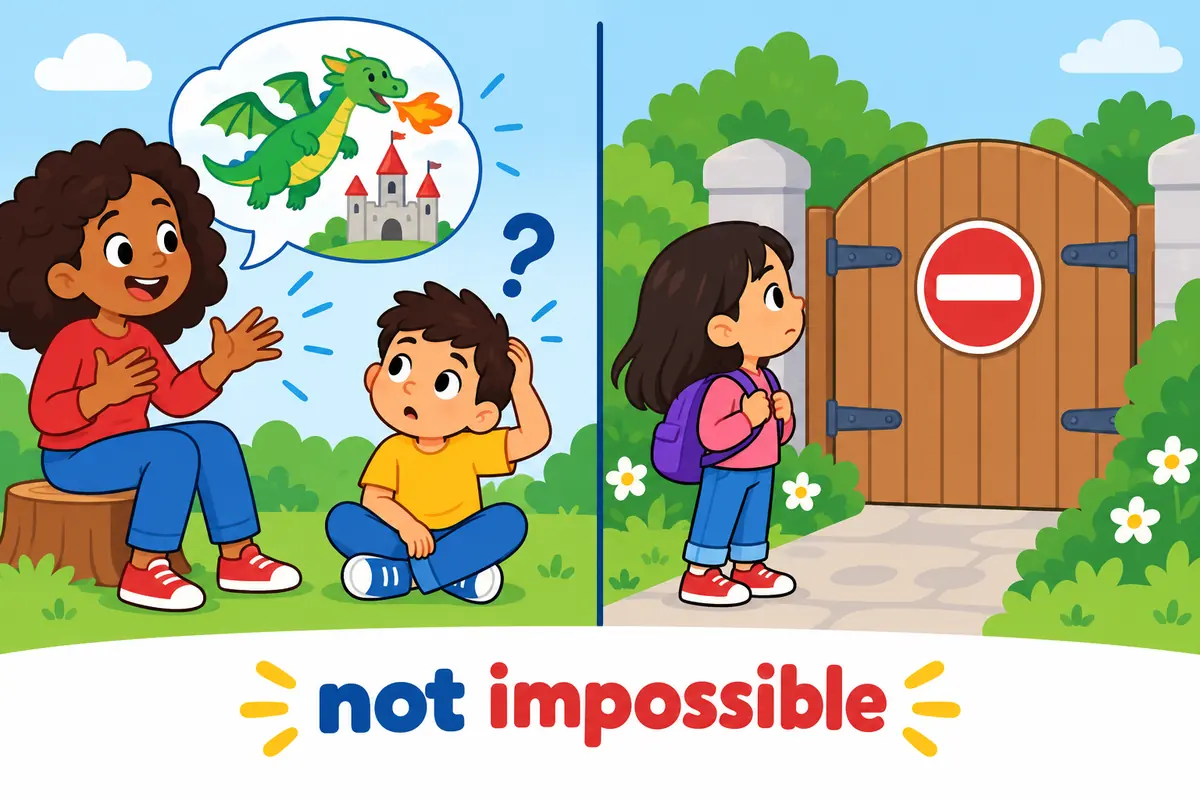
Frequently asked questions about implausible
What is the difference between implausible and impossible?
Implausible means hard to believe, while impossible means unable to happen at all. An implausible story could turn out to be true, so the word leaves room for evidence. Impossible rules the event out entirely, and using implausible for a physical impossibility weakens the sentence.
Can implausible describe a person?
Implausible normally describes a claim, excuse, plan or result, not a person’s character. Saying a person is implausible suggests they themselves are hard to believe, which is unusual and vague. Writers usually say the person gave an implausible account, keeping the judgement on the story rather than the speaker.
What is the noun form of implausible?
The noun is implausibility, meaning the quality of being hard to believe. It usually appears with an article and of, as in the implausibility of the excuse. The adverb implausibly modifies a verb, as in the character behaves implausibly. Both forms keep the same core meaning as the adjective.
Is implausible formal or informal?
Implausible sits in the neutral to formal range, common in news, academic and legal writing. It sounds more measured than unbelievable, which carries a stronger note of surprise. In casual speech people often say that does not sound right, but implausible is understood everywhere and never sounds out of place in writing.
Have you ever encountered a story or situation that seemed completely unbelievable or unlikely? This type of scenario falls under the category of “implausible,” meaning something that is difficult to believe or far-fetched.
An implausible event or statement can stretch the boundaries of credibility, often challenging the reader or listener to suspend their disbelief. It is a term used to describe situations that are so unlikely, they may seem almost impossible.
7 Examples Of Implausible Used In a Sentence For Kids
- The monkey flying in the sky is implausible.
- A talking tree is implausible.
- An elephant riding a bicycle is implausible.
- A fish flying in the air is implausible.
- A cat dancing on its tail is implausible.
- A house made of chocolate is implausible.
- A lion wearing glasses is implausible.
14 Sentences with Implausible Examples
- Getting a perfect score on every test without studying is implausible.
- Expecting to finish an assignment the night before it’s due without any prior research is implausible.
- Asking for a deadline extension on the day of submission because of a sudden illness seems implausible.
- Believing that all professors will overlook late submissions is implausible.
- Planning to pass an exam without attending any lectures or tutorials is implausible.
- Assuming that all group project members will do their fair share of work without any reminders is implausible.
- Thinking that all notes and study materials can be absorbed by just glancing at them once is implausible.
- Expecting to receive good grades without putting in effort is implausible.
- Relying solely on last-minute cramming to ace an exam is implausible.
- Believing that all professors will accept excuses for missing classes frequently is implausible.
- Hoping to successfully write a research paper without citing any sources is implausible.
- Thinking that one can excel in academics without actively participating in class discussions is implausible.
- Planning a flawless college life without facing any challenges or setbacks is implausible.
- Assuming that all classmates will share accurate study materials without any discrepancies is implausible.
How To Use Implausible in Sentences?
To use the word Implausible in a sentence, follow these simple steps:
-
Understand the meaning of Implausible – This word refers to something that is unlikely or not believable. For example, if a story is Implausible, it means it is far-fetched or doesn’t seem realistic.
-
Identify a context – Think of a situation where you want to describe something as not believable or unrealistic. This could be a plot in a movie, an excuse given by someone, or a statement that seems too improbable.
-
Construct your sentence – Once you have your context, frame your sentence using Implausible appropriately. For example, “The detective found the suspect’s alibi to be Implausible due to conflicting details.”
-
Check for accuracy – Make sure that the usage of Implausible fits the context of your sentence and accurately conveys the meaning of something that is not credible or believable.
-
Practice – Try using Implausible in different sentences to become more familiar with its usage. The more you practice, the more comfortable you will be incorporating it into your vocabulary.
By following these steps, you can effectively incorporate the word Implausible into your writing and conversations, adding depth and nuance to your communication.
Conclusion
In conclusion, sentences with implausible scenarios are often characterized by their lack of believability or coherence within a story. These sentences stretch the bounds of reality to a point where readers find them difficult to accept or envision as possible occurrences. The implausibility of such sentences can detract from the overall credibility and enjoyability of a narrative, leading to confusion or disconnection for the audience.
To enhance the quality of writing and maintain reader engagement, it is crucial to ensure that sentences with implausible content are avoided or revised to align more closely with the plausible elements of the story. By crafting sentences grounded in realism and logic, authors can create a more immersive and satisfying reading experience for their audience.


