
How do you use leave in a sentence?
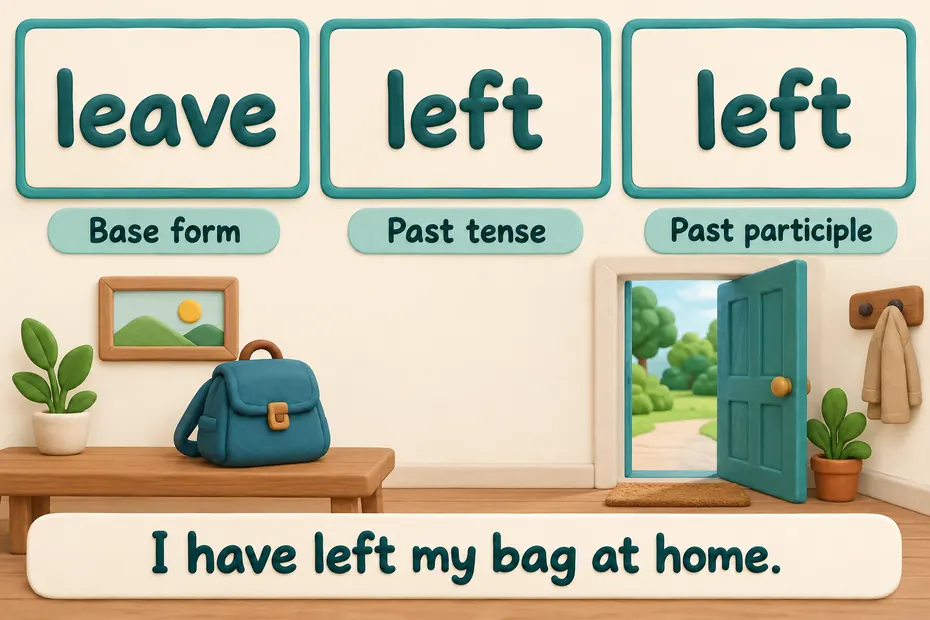
Use leave in a sentence to describe departing, letting something remain, or putting someone in a particular state: “We leave at noon,” “Leave the keys here,” and “The news left us surprised.” Leave also works as a noun for authorized absence or permission. Its past tense and past participle are both left.
- Leave is usually a verb, but can also be a noun.
- The main verb forms are leave, left, and left.
- He, she, and it take leaves in the simple present.
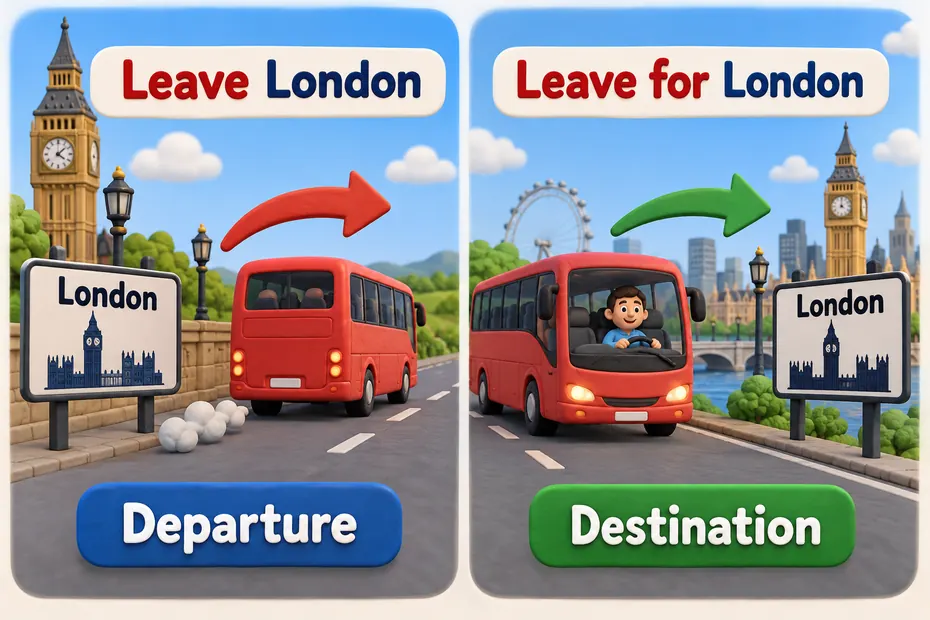
- Leave for introduces a destination; leave from introduces a starting point.
- Leave something somewhere means allow it to remain there.
What meanings does leave have?
Leave can describe movement away from a place: “The students leave the classroom quietly.” It can also describe something remaining: “Leave the window open.” The object and the words following it show the intended meaning, so leave does not always imply that a person travels anywhere.
Cambridge’s entry for leave distinguishes departure, making something available, assigning responsibility, and other uses. In “Leave some cake for your brother,” the instruction concerns a remaining portion. In “Leave the booking to me,” it assigns a task. Neither sentence asks someone to depart.
The noun is useful in phrases such as annual leave, maternity leave, and leave of absence. “She is on leave this week” reports an authorized absence. “She will leave this week” describes departure. This small difference between is on leave and will leave changes the grammatical role and meaning.
Leave in a sentence: tense and agreement
| Pattern | Example | Explanation |
|---|---|---|
| I leave | I leave home at eight. | A routine |
| She leaves | She leaves home at eight. | Third-person singular present |
| We left | We left early yesterday. | A finished past action |
| Have left | They have left already. | A completed departure relevant now |
| Are leaving | We are leaving soon. | An arranged or imminent departure |
| Will leave | The bus will leave at noon. | A future departure |
Use the base form after did, didn’t, and modal verbs: “Did he leave?” “He didn’t leave,” and “He might leave.” Avoid “Did he left?” or “He will leaves.” The past form already appears in did, while a modal is followed by the base verb.
Leave becomes leaving by dropping its final e before adding -ing. Left serves both past-tense and participle roles: “I left” and “I have left.” The standard past form for departure is not leaved. A phrase such as “a three-leaved plant” belongs to different vocabulary and does not change this verb pattern.
Leave a place or leave for a place?
Leave a place means depart from it; leave for a place introduces the destination. “We left London” identifies the place we departed. “We left for London” identifies where we were going. This distinction is particularly important in travel messages.
- “The train leaves Manchester at nine” names its departure point.
- “We leave for Manchester at nine” names the destination.
- “The tour leaves from the main entrance” identifies the starting location.
- “She left the office for the station” includes both departure and destination.
Use at for a clock time and on for a day: “We leave at six on Monday.” “We leave in ten minutes” gives the interval before departure. In a timetable, the simple present can describe a scheduled future event: “The ferry leaves tomorrow morning.”
How does leave work with an object?
Leave can take an object followed by a location or description. “Leave your shoes by the door” locates the shoes. “Leave the kitchen clean” describes the required condition. These sentences instruct the listener to let something remain, rather than necessarily abandon it.
“I left my bag on the train” may imply an accident, while “I left my bag at home” may be intentional or accidental. The verb alone does not settle intention. Add a phrase if it matters: “I deliberately left my bag at home” or “I accidentally left my bag on the train.”
Leave someone alone can mean stop bothering them, or allow them to remain unaccompanied. “Leave the seedlings alone” asks someone not to interfere. “We left the seedlings outside overnight” states their location and duration. Specific objects and complements keep examples understandable.

Common expressions and mistakes
Leave out means omit: “Do not leave out the final paragraph.” Leave behind can mean fail to take something, or move beyond it: “She left her umbrella behind.” Leave over commonly appears as left over, identifying a remainder: “There was soup left over after dinner.”
Do not treat leave and let as interchangeable in every pattern. “Let me explain” gives permission to explain; “Leave me to explain” asks someone to allow you to handle the explanation. For a straightforward permission request, let me is the natural choice.
The older examples below include “Don’t leave your assignments to the last minute.” That idiom means do not postpone them. It does not instruct students to place assignments somewhere. When revising an example, preserve its intended sense before changing its preposition or object.
Frequently asked questions
What is the difference between leave and live?
Leave means depart or let something remain; live commonly means reside or be alive. Their vowel sounds differ in standard English: leave has the vowel in see, while live as a verb has the vowel in sit. “I live nearby, but I leave early” provides a useful contrast.
Can leave be used without an object?
Yes. “We should leave” is complete when the context supplies the place of departure. Adding information can help readers: “We should leave the office before the storm.” Both are grammatical. A standalone example often benefits from a time or location, while conversation can leave those details implicit.
Is leaves always the plural of leaf?
No. Leaves can be the plural noun in “The leaves turned yellow,” or the third-person singular verb in “She leaves at five.” The surrounding words determine the role. A person or singular subject before leaves often signals the verb, while a determiner and descriptive verb may identify the noun.
Does leave mean abandon?
Sometimes, but not automatically. Leaving a building describes departure without implying abandonment. Leaving someone unsupported may carry a stronger sense, depending on context. When choosing leave in a sentence, add enough detail to show whether you mean ordinary departure, temporary absence, something remaining, or a failure to provide support.

Have you ever wondered how to properly use the word “leave” in a sentence? In English language, the word “leave” can have several meanings depending on the context in which it is used.
Typically, “leave” is a verb that indicates departing from a place or someone’s presence. It can also refer to permission granted to someone to be absent or to depart. Let’s explore the different ways “leave” can be incorporated into a sentence, from farewells to vacation requests.
7 Examples Of Leave Used In a Sentence For Kids
- Please leave your shoes by the door.
- Don’t leave your toys on the floor.
- After lunch, remember to leave your plates in the sink.
- Make sure to leave your bag in the classroom.
- When the bell rings, it’s time to leave for home.
- Always remember to leave the classroom neat and tidy.
- Before you go home, don’t leave any litter behind.

14 Sentences with Leave Examples
- Leave the lecture hall quietly if you need to step out for a moment.
- Remember to leave your textbooks in your room before heading to the library.
- Don’t leave your assignments to the last minute.
- It’s important to leave a good impression on your professors.
- Make sure you leave enough time for studying before exams.
- Don’t forget to leave a note if you’re not going to be attending a group study session.
- If you’re feeling unwell, it’s better to leave class and rest.
- Make sure to leave your phone on silent during lectures.
- Don’t leave your study material lying around – keep it organized.
- It’s important to leave time for self-care during the busy college schedule.
- Always leave extra time for traffic when heading to campus.
- Don’t leave your assignments until the last minute.
- Remember to leave space in your bag for your laptop and notebooks.
- Don’t leave your group project work until the eleventh hour.

How To Use Leave in Sentences?
Leave is a versatile word with multiple meanings. Here is a simple guide on how to correctly use it in a sentence:
- Leave as a verb: When used as a verb, leave typically means to go away from a place. For example, “I will leave the office at 5:00 pm today.” In this sentence, leave shows the action of departing or moving away from a specific location.
- Leave as a noun: As a noun, leave can refer to permission to do something or time off from work or duty. For instance, “She asked for a leave of absence from work.” Here, leave represents the approved time away from work.
- Leave as a command: When using leave as a command, it can indicate telling someone to depart. For example, “Please leave the room immediately.” This usage directly instructs someone to go away.
- Leave in a phrase: Leave can also be part of a phrase or expression, such as “take leave” which means to say goodbye or depart. For instance, “He took his leave of the guests and left the party.”
By understanding these different ways to incorporate leave into sentences, you can effectively communicate various actions, permissions, or commands in English.

Conclusion
In conclusion, sentences with “leave” can convey various meanings depending on the context in which they are used. The word “leave” is often used to describe someone’s departure or to give permission to go, such as “I will leave the party early” or “You can leave your car here.” Additionally, “leave” can suggest abandoning something or neglecting a responsibility, like “Please don’t leave your trash behind” or “She always leaves her chores for later.”
“Leave” can also be used to indicate a state of being or to impart a feeling, as seen in sentences like “The sadness left her feeling empty” or “His absence left a void in their lives.” Understanding the nuances of sentences with “leave” is important for clear communication and effective interpretation of the intended message in both written and spoken language.


