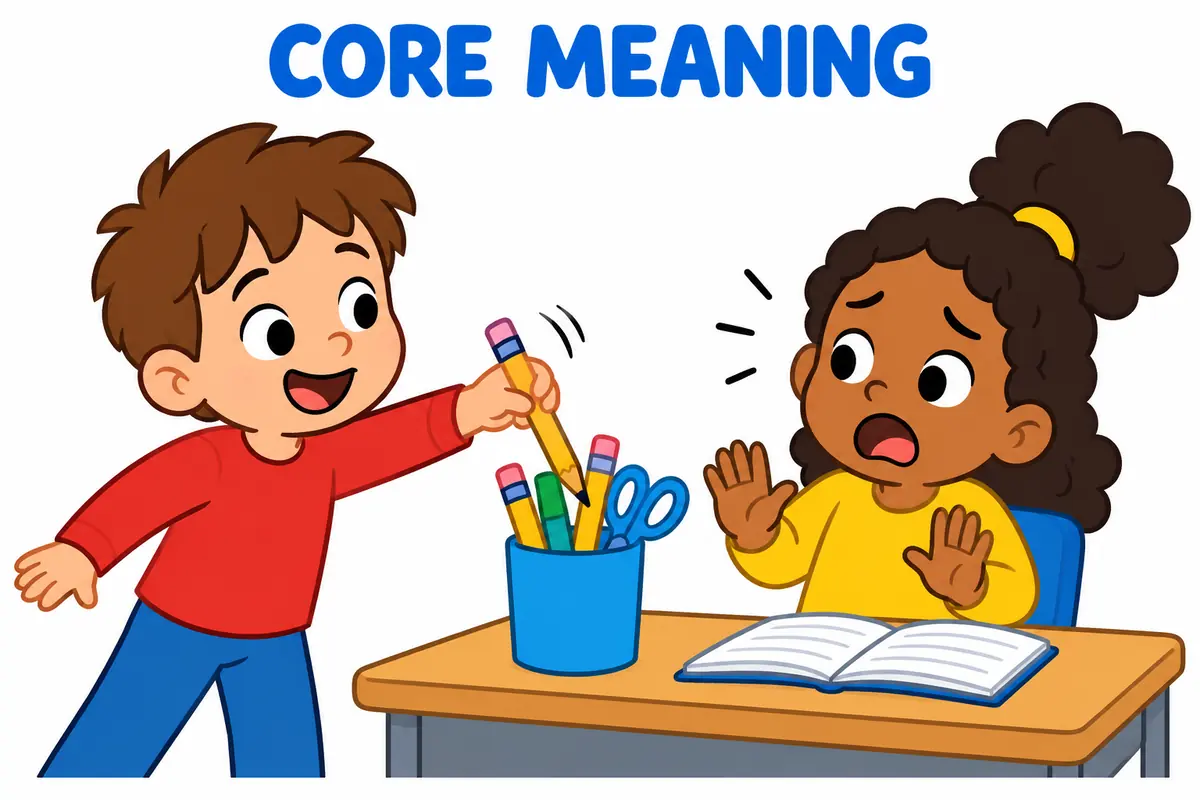
Lenient means less strict or severe when applying rules, judging behavior, or deciding a punishment. Use lenient in a sentence as an adjective: “The teacher was lenient with students who submitted their work late.” The word describes a relaxed response to an expectation, rather than kindness in every situation.
- Lenient is an adjective; leniently is the related adverb.
- Leniency is a noun naming the quality or practice.
- “Lenient with someone” identifies the person receiving flexibility.
- “Lenient about something” identifies the rule or issue.
- “Too lenient” expresses criticism; “appropriately lenient” expresses approval.

How do you use lenient in a sentence?
Place lenient before a noun or after a linking verb such as be, seem, or become. “A lenient supervisor approved the extension” uses the adjective before supervisor. “The supervisor was lenient” places it after was. Both constructions describe how a person handles rules or mistakes.
For a complete example, name the rule and the response: “The supervisor was lenient about the missed deadline and accepted the report the next morning.” This gives readers evidence for the description. Without that detail, “The supervisor was lenient” leaves them to guess whether the issue was lateness, attendance, clothing, or performance.
| Pattern | Original example | Focus |
|---|---|---|
| Lenient with a person | The coach was lenient with a new player. | Who receives flexibility |
| Lenient about an issue | Her parents were lenient about bedtime on Saturday. | Which expectation is relaxed |
| A lenient noun | The office introduced a lenient attendance policy. | A rule or approach |
| More lenient than | The new teacher is more lenient than the previous one. | A comparison |
| Too lenient | The committee considered the warning too lenient. | The speaker’s negative assessment |

Does lenient mean kind, fair, or generous?
Lenient does not automatically mean kind, fair, or generous. A kind teacher can enforce a deadline strictly; a lenient teacher can waive a penalty without showing personal warmth. Choose lenient when the key detail is reduced severity or relaxed enforcement, and choose kind when the key detail is considerate treatment.
The earlier sentence about a friend sharing toys illustrates generosity more clearly than leniency. A stronger lenient example is “My friend was lenient about my arriving ten minutes late.” Similarly, affordable gym fees are low or reasonable, rather than lenient. Leniency would apply if the gym accepted a late payment without its usual charge.
The earlier counselor example also needs a clearer connection with rules. “The counselor gave helpful advice about course selection” fits ordinary advising. “The program coordinator was lenient about the missed registration deadline” identifies an exception to an expectation. These distinctions prevent the adjective from becoming a vague replacement for positive words.

Which word form should you choose?
Use lenient to describe a person, policy, judgment, or punishment. Use leniently to describe how an action is performed: “The committee treated the mistake leniently.” Use leniency when you need a noun: “The committee showed leniency.” Changing the form lets the same idea fit different sentence structures.
For comparison, write more lenient or less lenient. “The revised policy is more lenient about occasional lateness” is a natural form. Add the comparison standard when readers need it: more lenient than last year’s policy, or less lenient than the neighboring school. “Very lenient” describes degree without comparing two cases.
How can you write a precise example?
- Name the person or policy responsible for the decision.
- Identify the expectation, such as arriving by nine or returning a book on time.
- Explain the relaxed response, such as a warning instead of a penalty.
- Choose whether your wording approves, criticizes, or neutrally describes that response.
For example, “The librarian was lenient about the overdue book and waived the usual fine” is more informative than “The library was lenient.” It supplies a subject, issue, and consequence. It does not claim that every overdue borrower would receive the same treatment, which would require evidence about the library’s policy.
Frequently asked questions
Can lenient describe a punishment?
Yes. A lenient punishment is relatively mild compared with what might normally be expected. “The students received a lenient punishment: a warning rather than detention” makes the comparison concrete. In a legal context, sentence can mean a punishment imposed by a court, rather than a grammatical unit.
Is lenient a negative word?
Lenient can be positive, negative, or neutral depending on the speaker’s judgment. A parent may welcome a lenient response to an honest mistake. Another observer may call the same response too lenient. The adjective describes reduced strictness; words such as too or appropriately reveal the evaluation more directly.
Should I write lenient with or lenient about?
Use with when you name the person receiving the treatment, and about when you name the issue. “The teacher was lenient with Eva about her first late assignment” combines both naturally. Other constructions occur, but these two patterns are useful starting points for learners writing everyday examples.
What is a simple example for children?
“The teacher was lenient and let us finish our homework tomorrow” is a clear example for children. Explain that the teacher allowed extra time instead of insisting on the original deadline. Connect the word with that specific decision, rather than telling children that lenient simply means nice.
When using lenient in a sentence, make the relaxed rule or reduced punishment visible. The Cambridge definition emphasizes reduced severity in judgment or punishment; Merriam-Webster also records a less common soothing sense, which is not the usual meaning in these classroom and workplace examples.

Have you ever encountered a situation where you wished the rules were more flexible? When guidelines are relaxed and punishments are less severe, we often refer to this leniency as being “lenient.” Legal systems, school policies, and even parents can choose to be lenient in their enforcement of rules.
In a lenient scenario, individuals may receive second chances, face milder consequences, or benefit from a more forgiving approach. The concept of leniency allows for understanding, empathy, and the opportunity for personal growth.
7 Examples Of Lenient Used In a Sentence For Kids
- Lenient teachers allow extra time for finishing homework.
- It is nice when parents are lenient about bedtime.
- Some schools have lenient rules about wearing uniforms.
- A lenient friend always shares toys during playtime.
- Teachers are lenient when students make mistakes.
- The principal is very lenient about small misbehaviors.
- It is important to be lenient and forgiving towards others.
14 Sentences with Lenient Examples
- The professor was lenient in extending the deadline for the research paper.
- The college hostel has a lenient policy regarding late-night curfew on weekends.
- The exam invigilator was lenient and allowed students extra time to complete the test.
- The college administration has a lenient approach towards attendance for extracurricular activities.
- The grading system for this course is quite lenient compared to other subjects.
- The college canteen is lenient in allowing students to pay their bills at the end of the week.
- The library has a lenient policy on returning books, with no strict fines for late returns.
- The college administration can be lenient in granting leave for students attending competitions or events.
- The college faculty are known for being lenient in terms of giving extensions for projects.
- The college gym is lenient in its membership fees, making it affordable for all students.
- The sports department has a lenient approach towards students who want to join a new team mid-semester.
- The college counselor is lenient in giving advice on course selection and career options.
- The college committee is lenient with its rules on organizing events, making it easier for students to host cultural festivals.
- The college administration is lenient about dress codes on campus, allowing students to wear comfortable clothing.
How To Use Lenient in Sentences?
Lenient means to be permissive, tolerant, or indulgent. When using lenient in a sentence, it is important to consider the context in which the word is being used.
Here are a few examples of how to use lenient in a sentence:
- The teacher was lenient with the students’ deadline, allowing them extra time to complete the assignment.
- The judge was lenient in sentencing the first-time offender to community service rather than jail time.
- My parents were lenient when I accidentally broke the vase, understanding that it was just an accident.
- The company’s policy was lenient when it came to taking time off, allowing employees to schedule vacations without much restriction.
- The coach was lenient with the team after their loss, focusing on encouragement rather than criticism.
Remember, when using the word lenient, always make sure your sentence clearly communicates that someone is allowing more freedom or flexibility than strict rules or norms typically permit. By practicing using this word in different sentences, you will become more comfortable with incorporating it into your everyday vocabulary.
Conclusion
In conclusion, lenient sentences are those that are relatively mild or forgiving in nature. These lenient sentences can range from reduced prison time to community service or probation. When offenders receive lenient sentences, it may be due to factors such as their cooperation with authorities, lack of prior criminal record, or mitigating circumstances surrounding the offense. While lenient sentences aim to promote rehabilitation and second chances for offenders, critics argue they may fail to deter future criminal behavior or provide justice for victims.
Overall, lenient sentences play a role in the criminal justice system by balancing punishment with rehabilitation. They can be a tool for promoting fairness and understanding individual circumstances, but must also consider the need for accountability and deterrence. It is essential for the judicial system to carefully evaluate when and how lenient sentences are appropriate, taking into account the impact on public safety and the administration of justice.