
Adjectives for business are words that describe a company, its products, its service, or the way it works. Choose a descriptor that fits the specific subject and audience: “reliable delivery” is clearer when supported by on-time records, while “innovative software” should point to a concrete feature customers can use.
Business adjectives at a glance
- Use adjectives to clarify a specific quality, not to replace evidence.
- Describe the company, product, service, team, or person precisely; these are different subjects.
- Pair evaluative words such as “trusted,” “best,” and “proven” with verifiable support.
- Match tone to the context: a proposal, résumé, product page, and internal review need different levels of formality.
- One precise adjective usually communicates more than a string of broad praise words.
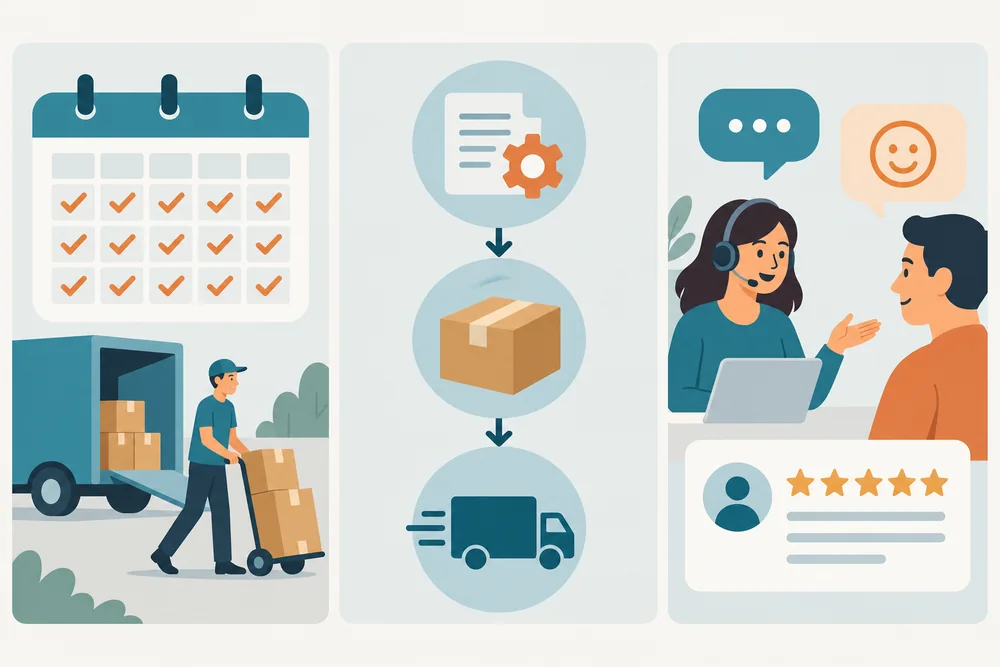
As a business owner, you want customers to have the best possible experience with your product or service. Adjectives for Business can be a powerful tool in achieving this goal. By using positive adjectives to describe your business, you can create an inviting and positive image that will attract customers.
For example, if you own a restaurant, you might want to use adjectives like “tasty,” “fresh,” and “inviting” to describe your food. If you own a retail store, you might use adjectives like “stylish,” ” trendy,” and “affordable” to describe your merchandise. Using the right adjectives can help you create the perfect image for your business and attract more customers.
In business, promotion is vital to success. The right adjectives can make all the difference in whether or not customers are interested in what you’re selling. Here are some tips on using adjectives to promote your business:
- Use positive adjectives to describe your products or services. Customers are more likely to be interested in something that is described as “amazing,” “incredible,” or “unbelievable” than something that is simply “good.”
- Be specific. rather than simply saying that your product is “good,” try to describe exactly what makes it good. For example, if you’re selling a new type of toothpaste, you might say that it’s “the best toothpaste for preventing cavities.”
- Use active language. Adjectives like “powerful,” “effective,” and “proven” will make your products or services sound more appealing than passive adjectives like “nice” or “OK.”
- Be careful not to overuse adjectives. Too many adjectives can make your writing sound insincere or even desperate. Use them sparingly, and only when they genuinely add to the description of your product or service.
Adjectives To Describe A Business
In the business world, first impressions are everything. The way you dress, the way you speak, and the way you carry yourself can all make a big difference in the way you are perceived by potential clients and colleagues.
Adjectives are also important in the business world. By using certain words to describe your products or services, you can help to create a favorable impression in the minds of your customers.

For example, if you are selling a new type of computer software, using words like “innovative,” ” cutting-edge,” or “revolutionary” can help to convey the message that your product is truly groundbreaking. Similarly, if you are hoping to win over a new client, using words like “professional,” “reliable,” or “trustworthy” can help to show that you are a business that can be trusted.
In today’s competitive marketplace, it is important to use every tool at your disposal to give yourself an edge. Using carefully chosen adjectives is one way to help ensure that your business makes a positive impression.
A
| able | advanced | appreciative |
| accomplished | affordable | approachable |
| accurate | aggressive | articulate |
| active | alternative | astute |
| adaptable | ambitious | attentive |
| adept | analytical | attuned |
There are many adjectives that can be used to describe businesses, but those that start with the letter A are some of the most important. After all, businesses need to be able to adapt to change, be agile in their thinking, and have a positive attitude.
They also need to be aware of their surroundings and be able to take advantage of opportunities as they arise. In short, businesses need to be able to think and act like entrepreneurs in order to succeed. The following are some of the most important adjectives that begin with the letter A: adaptive, agile, innovative, resourceful, and forward-thinking. If your business can embody these qualities, then you’ll be well on your way to success.

Adjectives are an important part of writing for businesses, as they help to describe the products and services being offered. Here are some adjectives that start with the letter A that can be used in business writing:
Affordable: offering products and services at a price that is reasonable or below the average cost.
Example: We offer affordable rates on all of our services.
Available: able to be purchased or used.
Example: Our new product is available for purchase now.
Authoritative: having the power or authority to make decisions.
Example: Our company is the authoritative source for information on this topic.
Accurate: free from error or mistakes; precise.
Example: We pride ourselves on providing accurate information to our clients.
B | C
| best | candid | committed |
| better | capable | competent |
| better-than-the-rest | career-advancing | competitive |
| bold | careful | comprehensive |
| busy | choice | confident |
| Blue-chip |
There are a number of adjectives that can be used to describe businesses, many of which begin with the letter B. Businesses can be big or small, blue-chip or start-ups, dynamic or stagnant. They can be cutting-edge or behind the times, customer-centric or profits-driven.
No matter what kind of business you’re running, it’s important to choose the right adjective to describe it. The right word can help you capture the essence of your company and attract the right kind of attention. So if you’re looking for a business adjective that starts with B, here are some of the most popular options:
C
| committed | consistent | creative |
| competent | corporate | credible |
| competitive | creative | curious |
| comprehensive | credible | customer-oriented |
| confident | consistent | cutting-edge |
| conscientious | corporate |
D | E
| daring | diligent | easy-to-get-along-with |
| decisive | diplomatic | easygoing |
| dedicated | discreet | economical |
| dependable | diversified | effective |
| detailed | driven | efficient |
| determined | dynamic | eloquent |
E | F | G
| energetic | exemplary | game-changing |
| enterprising | experienced | hands-on |
| enthusiastic | extraordinary | happy |
| ethical | fair | hard-working |
| excellent | familiar | helpful |
| executive | friendly | high-earning |
I | K | L | M
| imaginative | influential | knowledgeable |
| important | innovative | leading |
| impressive | insightful | logical |
| independent | instrumental | loyal |
| indispensable | intellectual | masterful |
| industrious | intelligent | mature |
M | O | P
| methodical | open-minded | patient |
| meticulous | optimized | perceptive |
| moral | organized | persistent |
| motivated | outgoing | persuasive |
| on-target | outstanding | pleasant |
| open | passionate | positive |
Professional, punctual, and productive are adjective for business that starts with p. Many businesses today lack professionalism. This adjective is defined by the attitude, skills, position or appearance of an individual in the workplace. For example, if you show up to a meeting unprepared, this lack of professionalism reflects poorly on you and your company
P | Q
| practiced | problem-solving | prolific |
| precise | productive | promotional |
| preferred | professional | proven |
| premier | proficient | prudent |
| prepared | profitable | punctual |
| proactive | progressive | qualified |
Q | R | S
| quality-conscious | resourceful | shrewd |
| rational | responsible | skilled |
| ready | revolutionary | smarter |
| recommended | safe | social |
| reliable | savvy | specialized |
| resilient | serious | stable |

S | T | U
| strategic | tactical | tolerant |
| streamlined | talented | trained |
| stress-free | targeted | trustworthy |
| strong | tenacious | unique |
| successful | thorough | upgraded |
| tactful | time-saving | useful |
V | W | Z
| value-priced | well-rounded | working |
| versatile | white/blue collar | zealous |
| visionary | willing | |
| well-oiled | work-saving |
Final words
It is evident that the use of adjectives can be very beneficial for businesses when used correctly. Adjectives can help to promote a positive image, create a more favorable impression, and increase customer interest. However, it is important to use adjectives judiciously and not overuse them, as this can have the opposite effect. When used sparingly and with precision, however, adjectives can be a powerful tool for businesses looking to improve their promotion and marketing efforts.
In conclusion, using adjectives in business promotion can be highly effective in boosting sales and attracting new customers. By carefully selecting the right words, businesses can create an emotional connection with their audience and communicate the unique value of their products or services. When used skillfully, adjectives can be a powerful tool for any business looking to get ahead.
How do you choose the right adjective for a business?
Start with the noun being described, then name the quality that matters to the reader and check whether you can support it. “Efficient checkout” describes a process; “knowledgeable team” describes people; “durable case” describes a product. The word becomes useful when the sentence makes its subject and evidence clear.
- Name the subject. Decide whether you mean the whole company, a service, a product feature, a workplace, or an individual.
- Choose the relevant quality. A buyer comparing delivery options may value “dependable,” while a customer choosing an app may care more about “intuitive.”
- Replace vague praise with a testable detail. Explain what makes a process efficient or a service responsive.
- Check the strength of the claim. “Leading” and “best” imply comparisons; “guaranteed” makes a promise. Confirm the evidence and any conditions.
- Read the phrase aloud. Remove repeated or inflated modifiers that add attitude but no information.
This sequence works for a product page, company profile, sales email, or performance review. It also prevents a common mismatch: using a personality word such as “friendly” to describe a measurable operational result, or an operational word such as “efficient” when the real point is the customer’s experience.

Business adjectives by purpose
The most useful business adjectives fall into practical groups. Select a group based on the decision the reader is making, then use a phrase or example to explain the quality.
| Purpose | Useful adjectives | What to make clear | Example phrase |
|---|---|---|---|
| Trust and consistency | reliable, dependable, consistent, secure | What happens repeatedly or what protection applies | “Dependable weekly delivery, tracked from dispatch to arrival” |
| Speed and process | efficient, streamlined, responsive, prompt | The process, response time, or step being improved | “A streamlined booking process with three steps” |
| Quality and craft | durable, precise, well-made, thorough | Materials, tolerances, checks, or service scope | “A durable cover made for daily handling” |
| Price and access | affordable, flexible, accessible, value-priced | Price, eligibility, fees, and limits | “Flexible monthly plans with no annual commitment” |
| Ideas and change | creative, adaptable, innovative, forward-thinking | The actual new method, feature, or response to change | “An adaptable schedule that can be changed online” |
| People and service | attentive, knowledgeable, collaborative, professional | Observable behaviors and relevant experience | “A knowledgeable support team that explains setup options” |
| Impact and results | effective, profitable, productive, successful | The goal, period, comparison, and measurement | “An effective reminder sequence that increased completed bookings in the pilot” |
What is the difference between common business adjectives?
Similar business adjectives often describe different criteria. Cambridge Dictionary distinguishes efficient, which emphasizes working in an organized way without wasting time or resources, from effective, which emphasizes producing the intended result. A process can be efficient yet ineffective if it quickly completes the wrong task.
| Word pair | Difference | Use it when | Example |
|---|---|---|---|
| Efficient / effective | Resource use / goal achievement | You can distinguish cost or time from outcome | “The form is efficient to complete; the screening is effective at finding missing details.” |
| Affordable / cheap | Reasonable relative to value or budget / low in price, sometimes with a negative implication | Price matters but quality and trade-offs also matter | “An affordable starter plan” is warmer; “cheap materials” may imply poor quality. |
| Innovative / new | Introduces a useful idea or method / recently created or introduced | You can identify what is novel and useful | A new dashboard is not necessarily innovative; explain the capability it adds. |
| Reliable / dependable | Consistently performs as expected / can be relied on for a need or responsibility | You are describing predictable service or follow-through | “Reliable records” versus “a dependable project partner.” |
| Professional / formal | Competent and appropriate to work / following a formal style or procedure | You mean skill and conduct rather than dress or tone alone | A clear, warm email can be professional without sounding formal. |
| Competitive / best | Compares favorably on defined criteria / claims the top position | You can name the market, comparison, date, and criteria | “Competitive shipping rates” needs a meaningful comparison; “best” needs even stronger substantiation. |
These distinctions matter because a familiar word can quietly overstate or change a claim. Cambridge Dictionary’s entries for efficient and effective offer a concise contrast; consult a current dictionary for the sense that fits the sentence, since meanings can vary by context.
How can you use business adjectives in different writing?
Keep the fact steady and adjust which verified quality you foreground. A company description, résumé, proposal, and advertisement have different readers, but changing the audience does not make an unsupported adjective accurate.
- Company profile: “A family-owned repair shop specializing in same-day bicycle service.” The concrete details can carry more weight than “amazing local business.”
- Product copy: “A lightweight travel mug with a leak-resistant lid.” Use a performance descriptor only if testing or product specifications support it.
- Résumé: Replace “highly successful manager” with the role and result: “Managed a six-person support team and reduced the open-ticket backlog over two quarters.” Include numbers only when they are true and attributable.
- Proposal: “A flexible onboarding plan with weekly check-ins” says what the client receives; “world-class service” does not define delivery.
- Internal feedback: “The analyst was thorough: she checked each invoice against the purchase order and flagged three mismatches” turns praise into useful evidence.
The Purdue OWL business-writing guidance emphasizes concise, reader-focused writing. In practice, a useful edit is to delete the adjective and see whether the sentence loses a decision-relevant fact. If it does not, the modifier may be decoration.
Which adjectives need extra care?
Words that imply ranking, proof, safety, or a measurable outcome deserve a closer check because readers may understand them as factual claims. Words such as “best,” “leading,” “certified,” “guaranteed,” “risk-free,” and “proven” can require context or substantiation; they are not automatically harmless just because they are common in marketing.
For US advertising, the Federal Trade Commission says claims must be truthful and not misleading, and that advertisers should have a reasonable basis for objective claims. Its Advertising FAQs for Small Business explain that evidence expectations depend on the claim. Rules vary by jurisdiction and product category, so this vocabulary guide is not legal advice; businesses should check the rules that apply to their offer.
A quick evidence check asks: What exactly is being claimed? Which records, tests, customer feedback, or comparison support it? Does a qualification materially change the impression? A “secure” service, for example, is clearer when the business names the specific safeguards and limitations rather than presenting the adjective as a blanket guarantee.
Common mistakes when describing a business
- Stacking praise words: “Innovative, exceptional, best-in-class service” gives no concrete reason to believe the description. Keep the strongest relevant descriptor and show the feature or behavior behind it.
- Using a subjective superlative as a fact: “The best café in town” needs a stated basis if presented as an objective comparison. A clearly framed personal opinion is different from a measurable superiority claim.
- Confusing efficiency with effectiveness: A fast process is not effective if it fails to solve the customer’s problem. Name both the process and the result when both matter.
- Calling a price “affordable” without naming the audience: Affordability depends on a customer’s budget, alternatives, and total cost. State the price, fees, or plan limits where relevant.
- Describing people with labels alone: “Diligent” is more useful when attached to a behavior, such as checking the figures before sending the report. For feedback, describe the action and its effect.
- Overusing jargon or trendy language: “Disruptive,” “synergistic,” or “world-class” may blur rather than clarify. Use a plain description unless the term has a specific meaning for the audience.
Adjectives are not always the strongest part of a sentence. A concrete noun and active verb can communicate more: “The team answered customer questions within one business day” gives a reader something to evaluate, while “responsive team” summarizes that evidence.
Frequently asked questions about business adjectives
What are positive adjectives to describe a business?
Useful positive adjectives include reliable, ethical, attentive, efficient, innovative, knowledgeable, and customer-focused, but the right choice depends on what the business actually does well. Pair the adjective with evidence: describe a service response, product feature, documented practice, or result so readers understand the quality rather than receiving a string of praise.
How do I describe a business in one sentence?
Name the business, its audience or offer, and one specific quality supported by a detail. For example: “A neighborhood bakery making small-batch sourdough and taking online orders for next-day pickup.” This identifies the business and a useful service feature without relying on broad claims such as “amazing” or “the best.”
Can I call my business the best or the leading provider?
Use “best” or “leading” only when the meaning and support are clear. A reader may interpret these as objective comparisons, so identify the relevant market, criteria, timeframe, and evidence; follow advertising rules that apply to the claim. A specific description of what customers receive is often clearer and easier to substantiate.
What is the difference between efficient and effective in business?
Efficient describes doing something with little wasted time, effort, or resources; effective describes achieving the intended result. A checkout may be efficient because it takes few steps, while its payment checks are effective if they correctly catch invalid details. A business process can be one, both, or neither.
How many adjectives should I use in business writing?
There is no fixed number, but use only the modifiers that help the reader understand a meaningful quality. One accurate adjective with a concrete example is usually stronger than several overlapping superlatives. Purdue OWL’s business-writing guidance favors concision, so remove a modifier when the sentence stays just as informative without it.
Conclusion: choose business adjectives with evidence
Adjectives for business can make a description specific when they connect a company, product, service, or team to a meaningful quality. Choose words such as reliable, efficient, affordable, or innovative according to the reader’s question, then support strong claims with a detail. Precise wording earns more trust than inflated praise.


