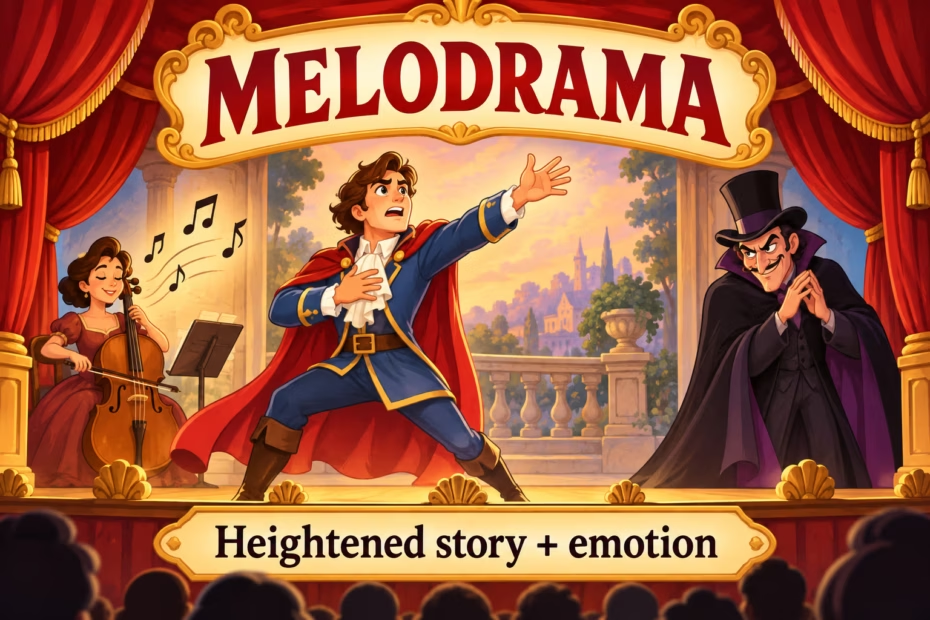
Melodrama is a noun for a heightened story or, informally, an exaggerated emotional reaction; melodramatic is the adjective. For example, “The play is a melodrama” names a genre, while “He gave a melodramatic sigh” describes an over-the-top response.
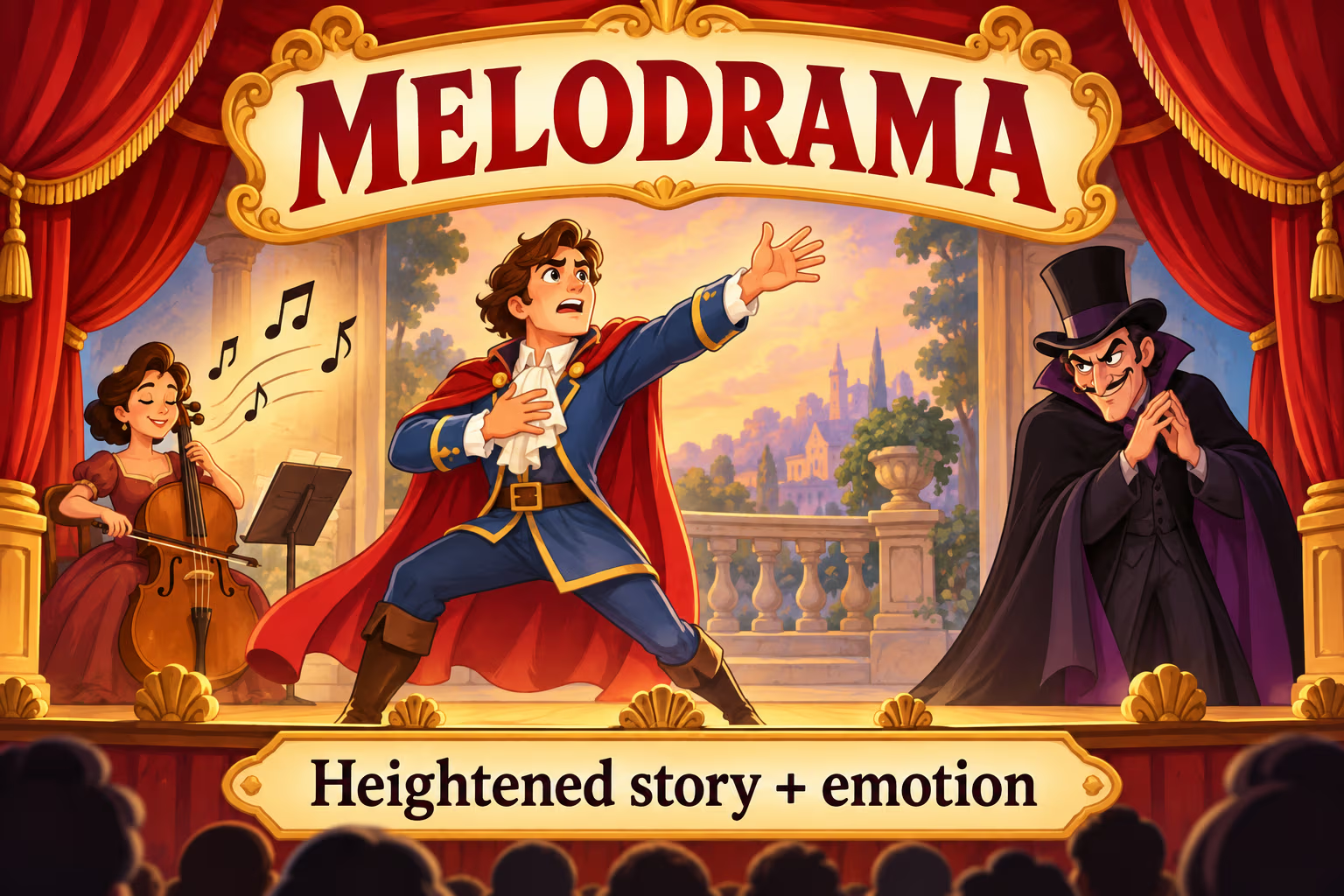

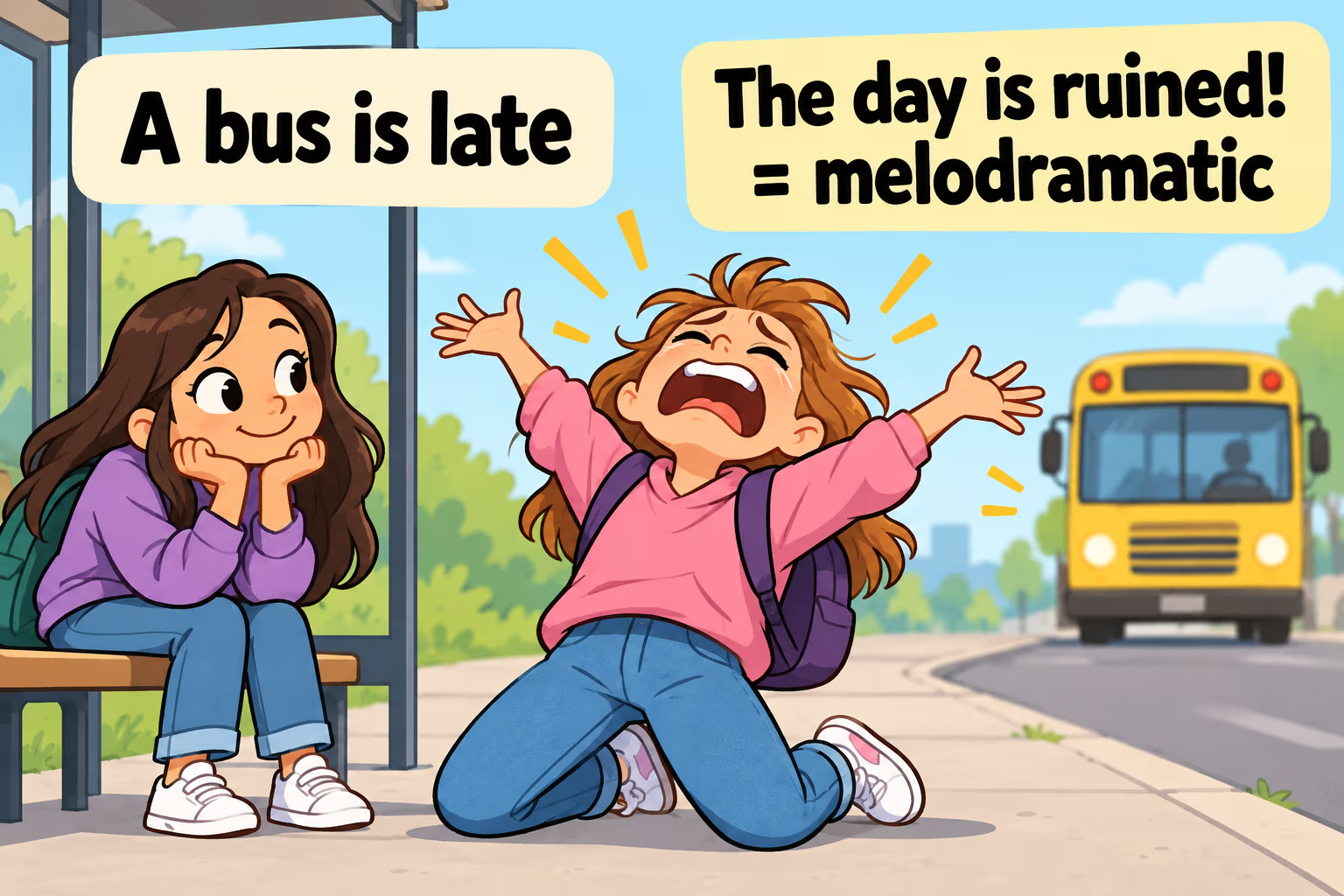
Are you familiar with the term “melodrama”? Melodrama is a style of storytelling or performance characterized by exaggerated emotions, sensational plots, and simplistic moral dichotomies. It often focuses on heightened conflicts between good and evil, and is known for its overtly emotional and theatrical nature.
In literature, theater, and film, melodrama can be found in various genres, from classic tragedies to soap operas. The exaggerated emotions and dramatic twists in melodramas are intended to evoke strong reactions from the audience.
7 Examples Of Melodrama Used In a Sentence For Kids
- The melodrama in the movie made us all cry.
- She loves to act with lots of melodrama in her plays.
- The children enjoyed the melodrama of the puppet show.
- His storytelling is filled with melodrama and excitement.
- We watched a play full of melodrama and suspense.
- The actors in the play were experts at creating melodrama.
- The princess in the fairytale had a flair for melodrama.
14 Sentences with Melodrama Examples
- Melodrama filled the room as the college theatre group performed their latest production.
- After receiving a low grade on her exam, she reacted with melodrama by sobbing loudly in the library.
- Melodrama ensued when the college canteen ran out of biryani during lunch hour.
- During the college fest, there was a lot of melodrama surrounding the selection of the best dance team.
- When the final year exams were approaching, the students were consumed by melodrama over their future.
- The argument over which movie to watch on movie night turned into a melodrama with everyone shouting their opinions.
- Melodrama took over the college campus when the wifi went down for an hour.
- During the cultural fest, there was melodrama among the participants about unfair judging.
- She created a lot of melodrama by exaggerating her difficulties in completing her assignments.
- A sense of melodrama settled in the air as the deadline for submitting project reports drew closer.
- Melodrama erupted in the classroom when the professor announced a surprise test.
- The gossip about the college couples’ relationships was full of melodrama and speculation.
- There was melodrama in the air as the college basketball team played their final match of the season.
- The student council election campaign was full of melodrama as candidates tried to win over their peers.
How To Use Melodrama in Sentences?
Melodrama is a theatrical genre that emphasizes exaggerated emotions and sensational action. When melodrama is used in a sentence, it typically refers to behavior or events that are overly dramatic or theatrical in nature.
To use melodrama in a sentence, start by identifying a situation in which emotions are heightened or actions are exaggerated. For example, “The actor’s performance was full of melodrama, with loud cries and dramatic gestures.” In this sentence, melodrama is used to describe the exaggerated and theatrical performance of the actor.
When crafting a sentence using melodrama, consider using adjectives like “exaggerated,” “sensational,” or “theatrical” to convey the exaggerated nature of the emotions or actions. For instance, “She couldn’t help but roll her eyes at the melodrama of the situation.”
Remember that melodrama is often used in a negative context to criticize behavior or events that are overly dramatic or exaggerated. Be mindful of the tone and context in which you use the word to ensure it accurately conveys the intended meaning.
By following these tips and examples, you can effectively incorporate melodrama into your writing or speech to describe situations that are characterized by exaggerated emotions and theatricality.
Conclusion
In conclusion, sentences with melodrama are characterized by their exaggerated emotions, sensationalism, and dramatic flair. They often evoke strong feelings and aim to create a sense of intensity or suspense within the reader. These sentences use vivid language, theatrics, and an emphasis on heightened emotions to engage and captivate the audience. While melodramatic writing can add excitement and flair to a story, it is essential to use it judiciously to prevent it from becoming over-the-top or cliché.
Overall, sentences with melodrama can be powerful tools to convey emotion and create impact in writing. By striking a balance between dramatic effect and authenticity, writers can effectively use melodramatic sentences to enhance storytelling and draw readers into the narrative more deeply.
Melodrama and Melodramatic: Noun vs. Adjective
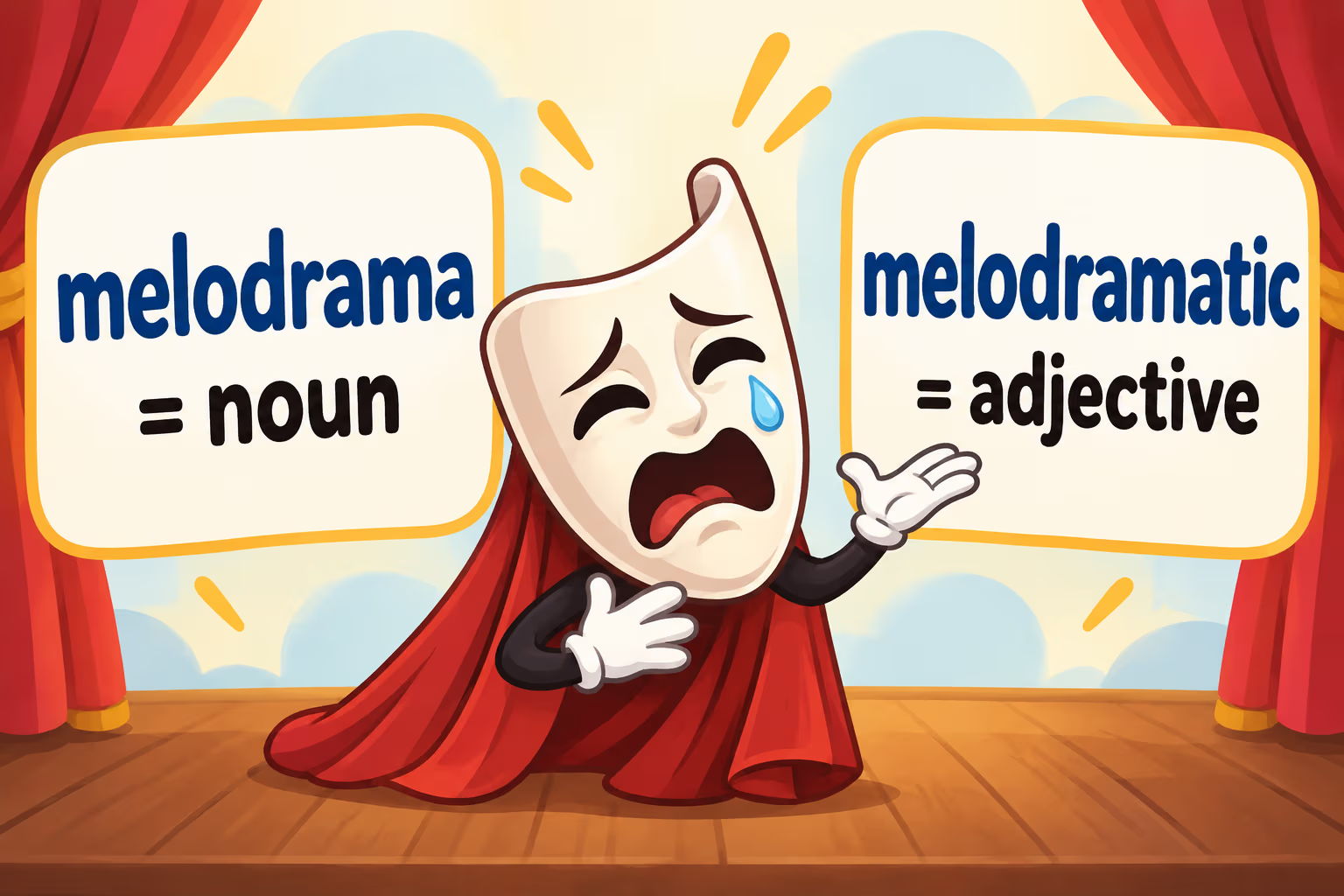
Melodrama is a noun. It can name a kind of story, play, film, or television program, or it can mean behavior treated as excessively dramatic: “The family argument became a melodrama.” The related adjective melodramatic describes a person, reaction, scene, or style: “Her melodramatic farewell lasted ten minutes.” Cambridge defines the adjective in terms of emotions stronger than a situation usually calls for; the noun also names a story or play whose characters display heightened emotion.
Use melodramatically as the adverb: “He melodramatically announced that the rain had ruined the picnic.” The forms are related, but they do different grammatical jobs. In a sentence, a noun can follow an article (“a melodrama”) or serve as a subject (“Melodrama sells tickets”); an adjective usually modifies a noun (“a melodramatic scene”) or follows a linking verb (“the scene felt melodramatic”).
| Form | Part of speech | Use | Example |
|---|---|---|---|
| melodrama | noun | A heightened story or exaggerated situation | The film’s melodrama builds toward a last-minute rescue. |
| melodramatic | adjective | Overly emotional or theatrical | His melodramatic complaint made the small delay sound disastrous. |
| melodramatically | adverb | In an overly emotional or theatrical manner | She melodramatically clutched the empty coffee cup. |
What Makes a Story a Melodrama?
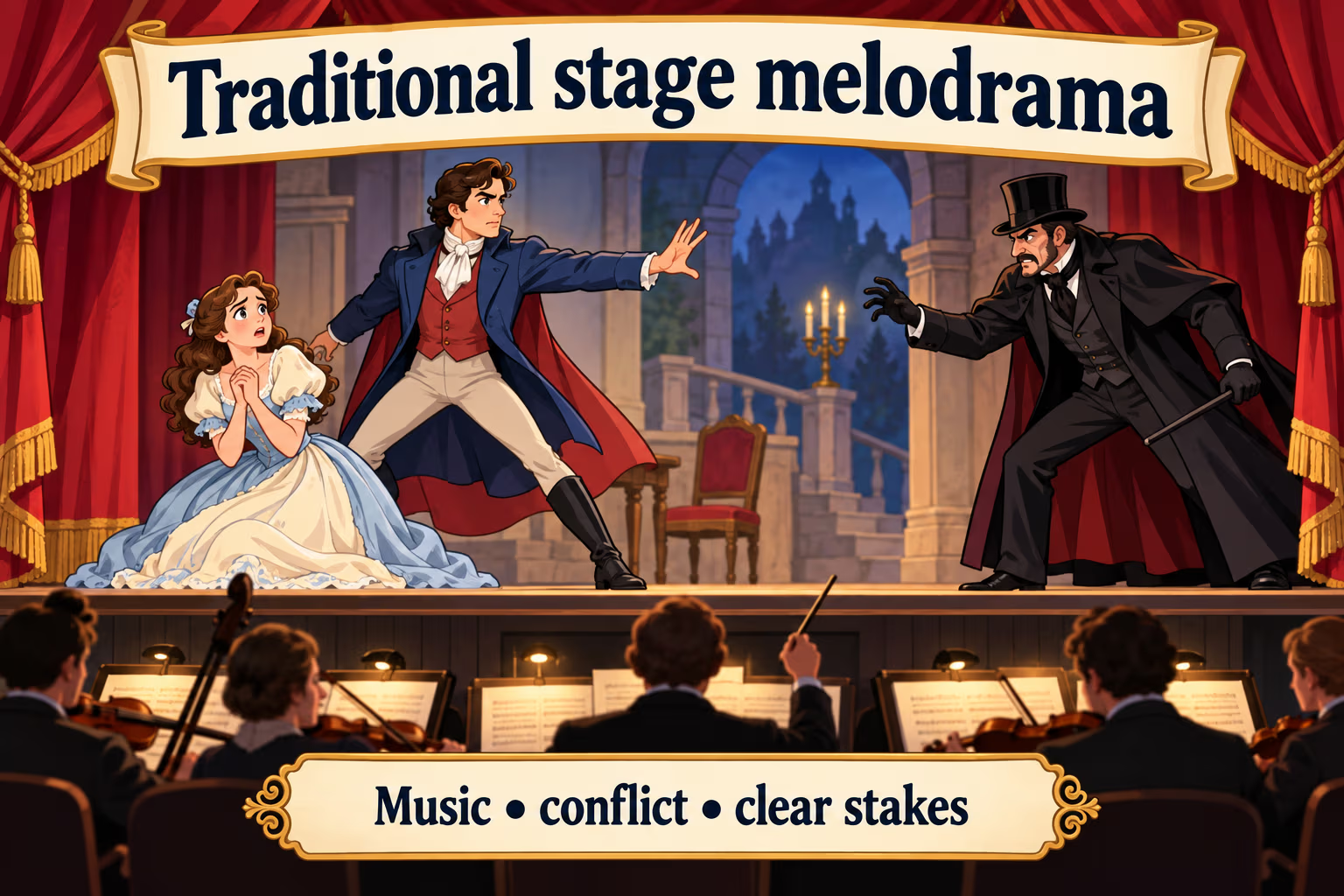
In its theatrical sense, melodrama is a genre or dramatic mode, not simply any sad story. Traditional stage melodramas often heightened emotion through music, sensational turns of plot, clear moral conflict, and strongly drawn character roles. The Victoria and Albert Museum notes that British melodrama became popular from the 1780s and describes short scenes with musical accompaniment and familiar roles such as a villain, a wronged maiden, and a hero. It identifies Thomas Holcroft’s A Tale of Mystery (1802) as the first drama in Britain labelled a melodrama.
Those are conventions, not a checklist every modern work must satisfy. Melodrama also appears in film, television, and other media, and scholars describe it as a changing form that does not have one fixed definition. A work can have melodramatic scenes without belonging wholly to the melodrama genre. The word also shifted in everyday use: calling a small disagreement “a melodrama” usually criticizes its intensity rather than classifying a play or film.
So context tells you which sense is intended: “a Victorian melodrama” points to a genre or historical style; “stop making a melodrama of the broken mug” means the speaker thinks the reaction is disproportionate. The second wording can sound dismissive, so avoid applying it to someone’s feelings when you do not know the circumstances.
How to Use Melodrama Naturally
Choose melodrama when you need a noun and melodramatic when you need an adjective. In casual criticism, the adjective often implies that a response is excessive; in arts writing, it can describe a deliberate style without automatically meaning “bad.” If you want a neutral description, try emotionally heightened, sensational, or theatrical, depending on what you mean.
- Noun, genre: The director recast the adventure as a family melodrama.
- Noun, exaggerated situation: A missing lunchbox should not become a melodrama.
- Adjective, describing a reaction: His melodramatic groan made everyone laugh.
- Adjective, describing style: The silent-film scene uses a melodramatic gesture to make the character’s fear visible.
- Adverb: She melodramatically declared that the last cookie had vanished forever.
Cambridge’s learner dictionary records melodrama as a count or uncount noun, so both “a melodrama” and “the melodrama of the situation” can be grammatical. Use the count form for a particular story or episode, and the uncount form for the quality or general experience. Cambridge Dictionary’s melodrama entry provide learner-focused definitions; the V&A theatre history overview supplies historical context. An Oxford Research Encyclopedia overview also describes the form across stage and screen, which cautions against treating it as a single rigid formula.
Frequently Asked Questions
What is a simple sentence with “melodrama”?
“The film’s melodrama kept the audience guessing.” Here, melodrama is a noun referring to the film’s heightened, sensational storytelling.
Is “melodrama” positive or negative?
It depends on context. As a genre label, melodrama can be neutral; as a casual description of someone’s response, it often implies criticism that the reaction is excessive. The surrounding words and tone clarify the speaker’s judgment.
What is the adjective form of “melodrama”?
The adjective is melodramatic, as in “a melodramatic speech.” The adverb is melodramatically: “He melodramatically waved goodbye.”
Is every dramatic story a melodrama?
No. A story can be dramatic because it has serious stakes or conflict without using melodramatic conventions. The label usually suggests heightened emotion or sensational presentation; as a historical genre term, it refers to traditions whose conventions changed over time.
Conclusion
Use melodrama as a noun for a heightened story or an exaggerated situation, and use melodramatic as an adjective for an overly theatrical style or reaction. In sentence writing, context distinguishes the genre meaning from the everyday critical one.


