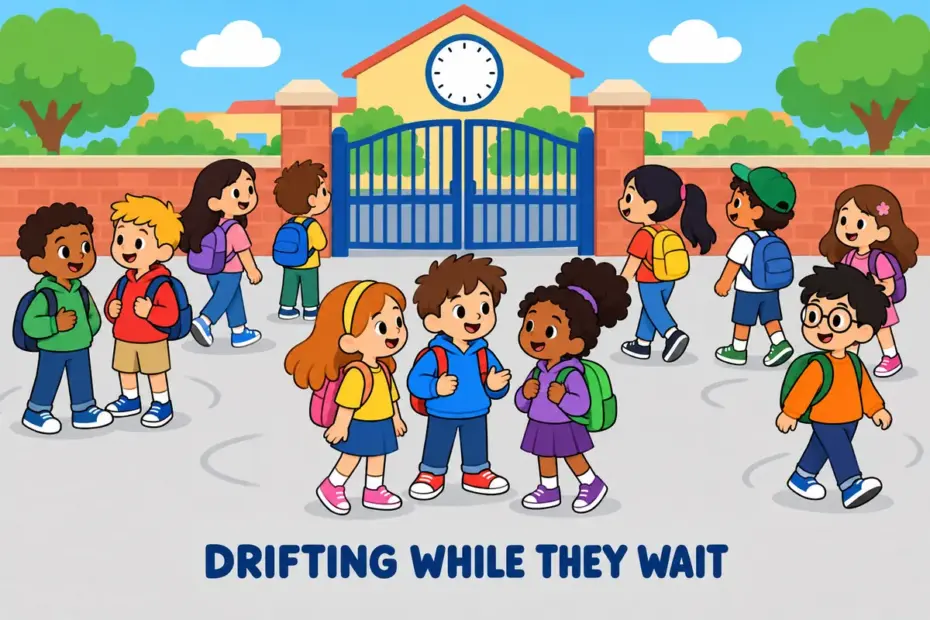
Mill around means to move about in a loose, aimless way, usually as part of a waiting crowd. To use mill around in a sentence, keep the people as the subject and add no object: “Fans milled around outside the theatre.” The phrasal verb is intransitive, so nothing follows it except a place or time phrase.
Mill around at a glance
- Mill around is an intransitive phrasal verb, so it never takes an object.
- It describes a group moving in loose circles with no fixed direction.
- The particle around stays attached to the verb and cannot be moved.
- Mill about is a common variant with the same meaning and grammar.
- The usual subjects are crowds, guests, students and waiting passengers.
What does mill around mean?
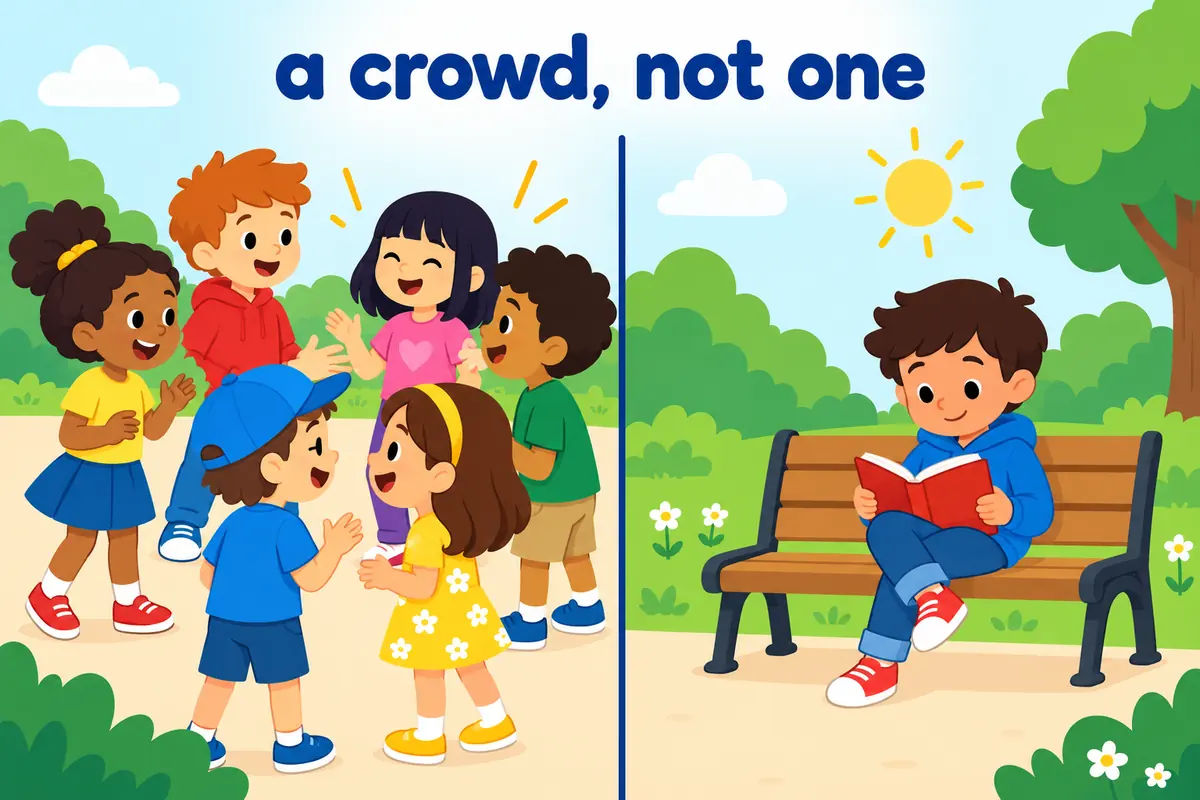
Mill around is a phrasal verb meaning to move about in an unorganised way, usually while waiting or after something has ended. The Cambridge entry for mill around groups it with mill about, and both describe a loose crowd rather than an individual: one person does not mill around, a group does. The subject is nearly always plural, or a collective noun such as crowd, audience or queue.
| Sense | What is happening | Example sentence |
|---|---|---|
| Waiting crowd | People drift with nothing to do yet | Guests milled around before the doors opened. |
| Aftermath | A confused group moves without direction | Shoppers milled around after the alarm. |
| Arrival point | People gather loosely in one place | Fans milled around outside the stage door. |
One limitation is worth stating. Mill around is not a synonym for wander, because wandering suits a single person with no deadline, while milling needs a group and a shared reason to be there. For one aimless walker, look around a new town is the closer idea, because it keeps that person at the centre of the sentence.
How do you use mill around in a sentence?
Start with a plural or collective subject, add the verb, and then stop: the crowd mills around. A place or time phrase may follow, but an object never can, because the verb is intransitive. Five patterns cover almost every real sentence.
| Pattern | Example | What it signals |
|---|---|---|
| plural noun + mill around | Students milled around the hall. | A group is the subject and no object follows. |
| mill around + place | Tourists milled around the square. | A place phrase may follow the verb. |
| mill around + time | We milled around for an hour. | A time phrase shows the aimless delay. |
| there + be + milling around | There was a crowd milling around outside. | The continuous form keeps the motion ongoing. |
| mill around + with + people | Delegates milled around with their hosts. | With introduces company, not an object. |
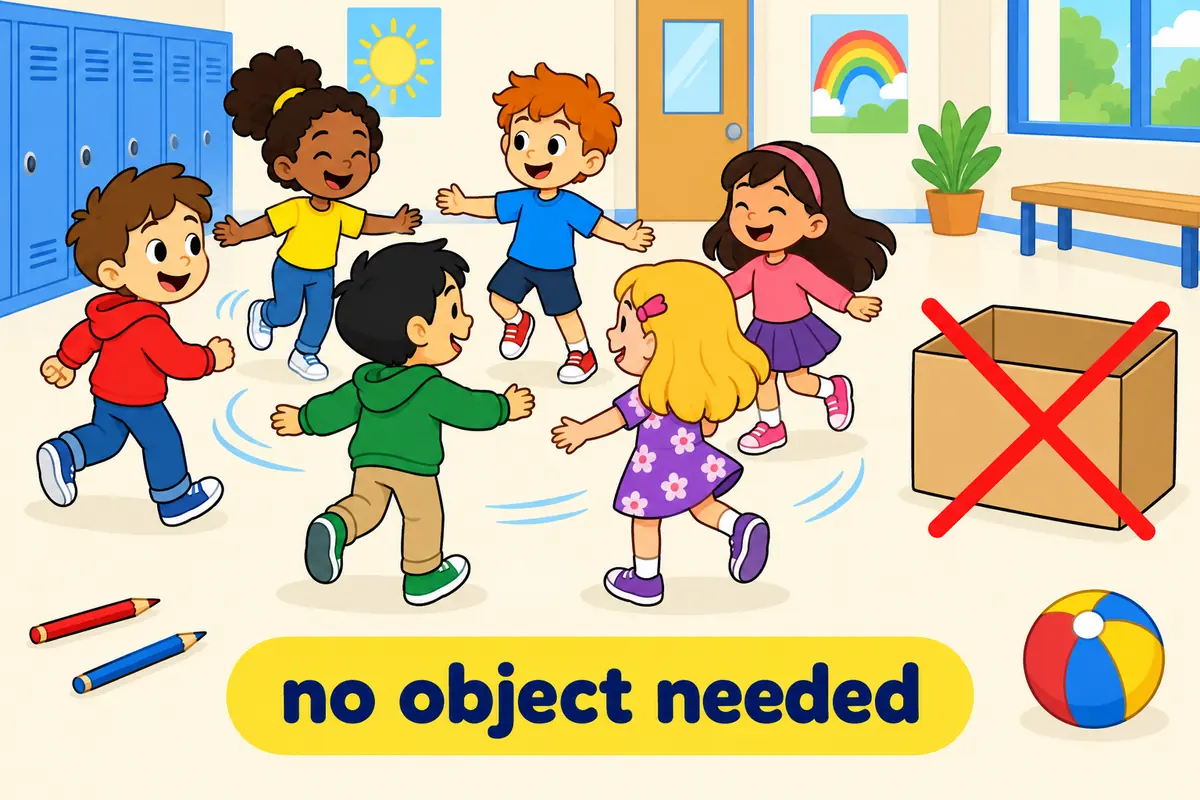
Mill around in a sentence: examples across contexts
The verb keeps the same shape everywhere but changes tone with the place. The nine sentences below move from a school hall to a hotel lobby, and each one shows a group with time on its hands.
| Context | Example sentence | Why this works |
|---|---|---|
| Classroom | Pupils milled around the gym until the whistle blew. | A place and a cue make the waiting concrete. |
| News report | Commuters milled around the platform after the cancellation. | The cause of the delay sits at the end. |
| Hotel writing | Guests milled around the lobby with their luggage. | With plus a noun adds detail without an object. |
| Conversation | We just milled around until the film started. | Just signals aimless waiting in speech. |
| Sports writing | Players milled around the tunnel before kick-off. | The group and the moment are both named. |
| Event planning | Volunteers milled around the entrance handing out maps. | A second verb adds purpose to the drifting. |
| Airport scene | Passengers milled around the gate as the board flickered. | A small visual cue replaces a stated delay. |
| Academic prose | The crowd milled around the speaker for twenty minutes. | A time phrase measures the unplanned gap. |
| Story scene | Shadows of people milled around behind the glass. | The subject stays collective even when abstract. |
Not one sentence places a thing directly after the verb. Check any doubtful line by asking what is being milled; if there is an answer, the pattern is not mill around.
Mill around vs hang around
Mill around and hang around both describe idle time, but they disagree about movement. Milling is restless and usually plural; hanging around is stationary and works for one person perfectly well.
| Attribute | mill around | hang around |
|---|---|---|
| Core meaning | Move about loosely while waiting | Stay in a place, often idly |
| Focus | Movement within a space | Staying in one spot or place |
| Number | Usually a group | One person or a small group |
| Typical subject | Crowd, guests, students | A friend, a teenager, a colleague |
| Common follow | around a hall, outside a gate | at home, with friends |
Verdict: choose mill around for a restless crowd that keeps shifting, and hang around for somebody who simply stays put. If the same crowd merely waits in one spot, turn around is not the answer either, because that verb reports a single rotation rather than a drifting group. A crowd that is joking rather than waiting might clown around, which shifts the sense from drift to play.
Word forms and grammar of mill around
Mill around keeps its particle in every tense, and the plural subject is what makes the verb sound native. The table lists the forms, including the variant mill about that many writers prefer in British English.
| Form | Part of speech | Example |
|---|---|---|
| mill around | phrasal verb, base form | Do not mill around the corridor. |
| mills around | phrasal verb, third person singular | The queue mills around the kiosk. |
| milled around | phrasal verb, past tense | The team milled around after training. |
| milling around | phrasal verb, present participle | People were milling around the square. |
| mill about | phrasal verb, variant | Guests mill about the garden. |
| mill | verb, separate meaning | They mill the grain at the old factory. |
Keep the two verbs apart. Plain get around means to travel or to avoid an obstacle, and it takes an object readily, which mill around never does.
Common mistakes with mill around
- Incorrect:
She milled around the box.Correct: She wandered around the room. Rule: mill around is intransitive and needs a group, so a lone subject does not fit. - Incorrect:
The crowd milled the streets around.Correct: The crowd milled around the streets. Rule: the particle stays after the verb; around is not separable. - Incorrect:
He milled around to the shop.Correct: He wandered around to the shop. Rule: mill around shows idle movement, not travel to a destination. - Incorrect:
The water milled around the wheel.Correct: The water swirled around the wheel. Rule: mill around describes people, not liquids or objects. - Incorrect:
One boy milled around alone.Correct: One boy idled near the gate. Rule: milling implies a crowd, so an explicitly solitary subject clashes.
Practice using mill around
Work through the six items, then check the reasoning rather than only the answer.
- Fill the gap: The visitors ______ around the courtyard until the guide arrived.
- Choose the better word: After the concert, the fans (milled / milled around) the stage door for an hour.
- Correct the error: The children milled the playground around.
- Build a sentence: use were milling around about passengers in a station.
- Spot the register: which suits a news report — crowds milled around the closed road, or a guy milled around outside?
- Rewrite as singular: The crowd milled around the fountain. Make the subject a single person and keep the sense of wandering.
Answers
- milled — the past tense matches the finished wait, and the group is the subject.
- milled around — the particle belongs after the verb, and no object may follow.
- The children milled around the playground — around stays attached to mill.
- Model answer: Passengers were milling around the platform before the announcement.
- Crowds milled around the closed road — a report keeps the plural crowd and avoids guy.
- A woman wandered around the fountain — one person wanders, because milling needs a crowd.
The bottom line
Use mill around in a sentence for a group that moves about aimlessly while it waits, and keep the verb intransitive. The two points that settle most sentences are the plural subject and the fixed particle: a crowd mills around a place, and nothing is ever milled. Where a single person is the subject, wander or wait is the honest word.
Frequently asked questions about mill around
Is mill around one word or two?
Mill around is two words. It is a phrasal verb made of the verb mill plus the particle around, and the two belong together in every tense. A single word spelled millaround does not exist, and writing the particle separately from the verb only makes sense when it stays in its fixed place.
Can mill around take an object?
No. Mill around is intransitive, so the crowd is always the subject and never the object. You can say the fans milled around the gate, but you cannot say the fans milled the gate around. A place appears only after the whole verb, as a phrase rather than an object.
What is the difference between mill around and mill about?
They mean the same thing and share the same grammar, with about and around used as interchangeable particles. British writers often prefer mill about, while American writers lean towards mill around. Both need a plural or collective subject and neither can take an object, so choose whichever sounds natural in context.
Is mill around formal or informal?
Mill around sits in the neutral middle. It appears in news reports about crowds and in ordinary conversation, so it suits most writing except very formal reports that prefer gathered or waited. Its slightly restless tone makes it livelier than stood around, which is why reporters reach for it after delays.
Have you ever observed people aimlessly wandering about in a group, seemingly without a clear purpose? This behavior is commonly referred to as “mill around.” When individuals mill around, they often move without a specific destination in mind, meandering from one place to another without haste or direction.
In various settings such as events, public places, or crowded areas, you may encounter people who mill around, creating a sense of disorganized movement. This term describes the casual and ongoing movement of individuals in a non-linear fashion, sometimes causing congestion or confusion in the surrounding space.
7 Examples Of Mill Around Used In a Sentence For Kids
- The birds like to mill around the feeder.
- Children love to mill around during playtime.
- In the park, squirrels often mill around looking for food.
- At a party, guests may mill around chatting with each other.
- Students might mill around before the bell rings for class.
- During a parade, people mill around waiting for the floats to pass by.
- At the zoo, visitors can see animals mill around in their enclosures.
14 Sentences with Mill Around Examples
- Mill around after class to discuss assignments with classmates.
- Students often mill around the library during exam week.
- It’s common to see students mill around the campus grounds between lectures.
- Before a college event, students tend to mill around to pick up tickets and find their seats.
- During lunch breaks, students like to mill around the cafeteria catching up with friends.
- Mill around the college auditorium before a guest lecture starts.
- It’s not unusual to see students mill around the coffee shop discussing group projects.
- Freshers usually mill around the campus trying to find their way to different departments.
- Before college festivals, students enthusiastically mill around planning and organizing various activities.
- During breaks, students may mill around the college courtyard to soak up some sun.
- It’s relaxing to mill around the college garden in the evening after a long day of classes.
- Before a big sports event, students often mill around the field to warm up and prepare.
- As part of a practical exercise, students might need to mill around observing a particular phenomenon on campus.
- During club recruitment drives, students eagerly mill around to sign up for the activities that interest them.
How To Use Mill Around in Sentences?
To use the term Mill Around in a sentence, follow these simple steps:
When you want to describe a situation where a group of people or animals are moving around in a disorganized or aimless manner, you can use the phrase Mill Around. For example, “After the concert ended, the audience began to mill around the lobby.”
To incorporate this term into a sentence, first identify a scenario where individuals or objects are wandering or circulating without a specific purpose. Next, place the words Mill Around in your sentence to convey this sense of random movement.
Remember to always place Mill Around after the subject of the sentence to ensure clarity and proper grammar. It is essential to use Mill Around in the correct context to effectively communicate the idea of aimless movement.
Practice using Mill Around in various contexts to become more comfortable incorporating it into your writing. By doing so, you can enhance your vocabulary and convey your message more effectively in different situations.
In conclusion, using Mill Around in a sentence is a great way to describe a scene filled with random movement or lack of direction. With practice, you can confidently incorporate this term into your writing to add depth and vividness to your descriptions.
Conclusion
In conclusion, when people mill around, they move about in a relaxed and aimless manner, often in a crowded or social setting. This behavior can be observed at events, parties, or busy public spaces where individuals are wandering without a clear purpose. Sentences with “mill around” describe instances of people casually drifting, circulating, or loitering in a particular area, reflecting a sense of informality and leisurely activity.
Whether at a concert, at a market, or in a park, the phrase “mill around” captures the image of individuals meandering, mingling, and enjoying the atmosphere without a specific destination or task at hand. Understanding the meaning and context of sentences featuring this expression provides insight into human behavior in social settings characterized by movement and interaction.


