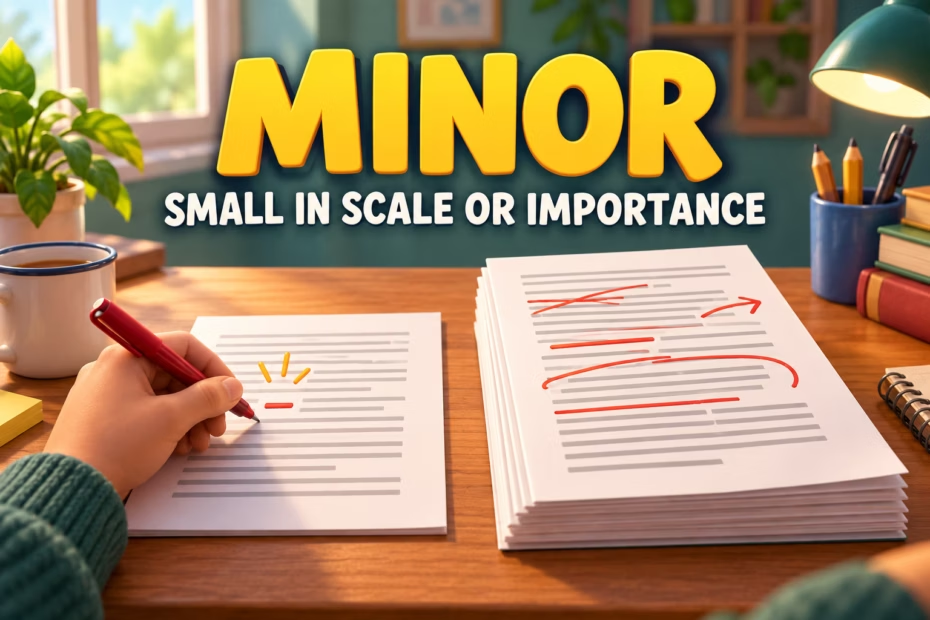
Minor in a sentence: minor can describe something small in scale or importance (“a minor change”), refer to a person below the applicable age of legal adulthood (“a minor”), or name a secondary field of study in college (“a chemistry minor”). The surrounding words show which meaning is intended.

What does “minor” mean?
As an adjective, minor usually means less important, serious, extensive, or influential than something else. “A minor delay” is limited; it is still a delay. As a noun, a minor can mean someone who has not reached the age of majority that applies in the relevant jurisdiction. In U.S. college usage, a minor is a secondary subject area alongside a student’s major. These are different uses, so use a complete phrase when context might be unclear.
The phrase minor sentence is a separate grammar term used for an utterance that does not have the usual subject-and-predicate structure. For example, in a conversation about where to meet, “Outside.” can function as a complete response even though it is not a full clause. The label and boundaries of “minor sentence” can vary across grammar references. The ordinary adjective minor does not mean “a removable sentence element.”
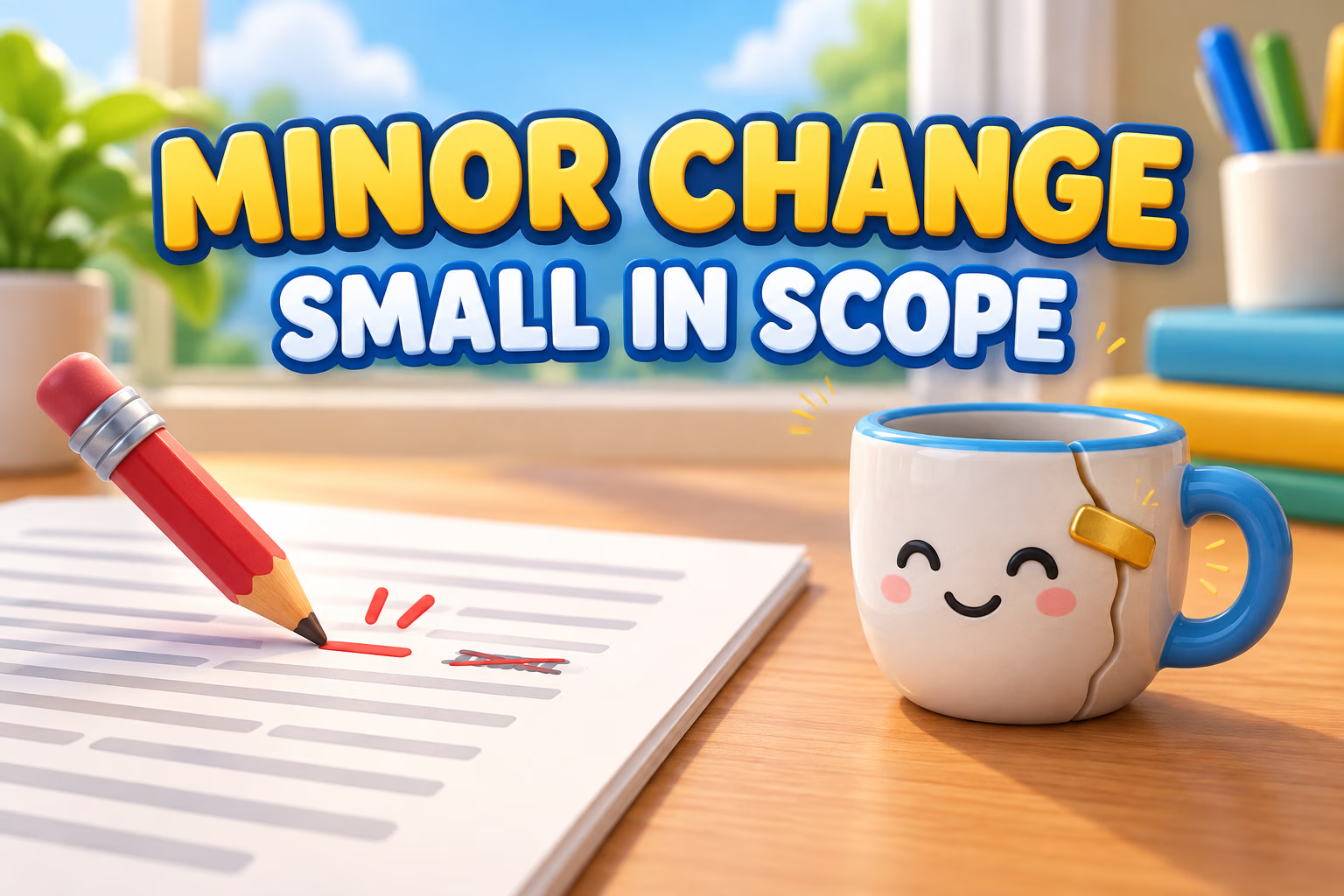
Examples of “minor” in sentences
- The mechanic found a minor problem with the brake-light switch.
- A minor revision made the instructions easier to follow.
- The storm caused minor damage to the garden fence.
- One minor concern remains before the team approves the plan.
- Our flight had a minor delay while the crew checked a sensor.
- She added a minor in biology to her history degree.
- He is completing a minor in music alongside his engineering major.
- The university lists the requirements for each minor in its catalog.
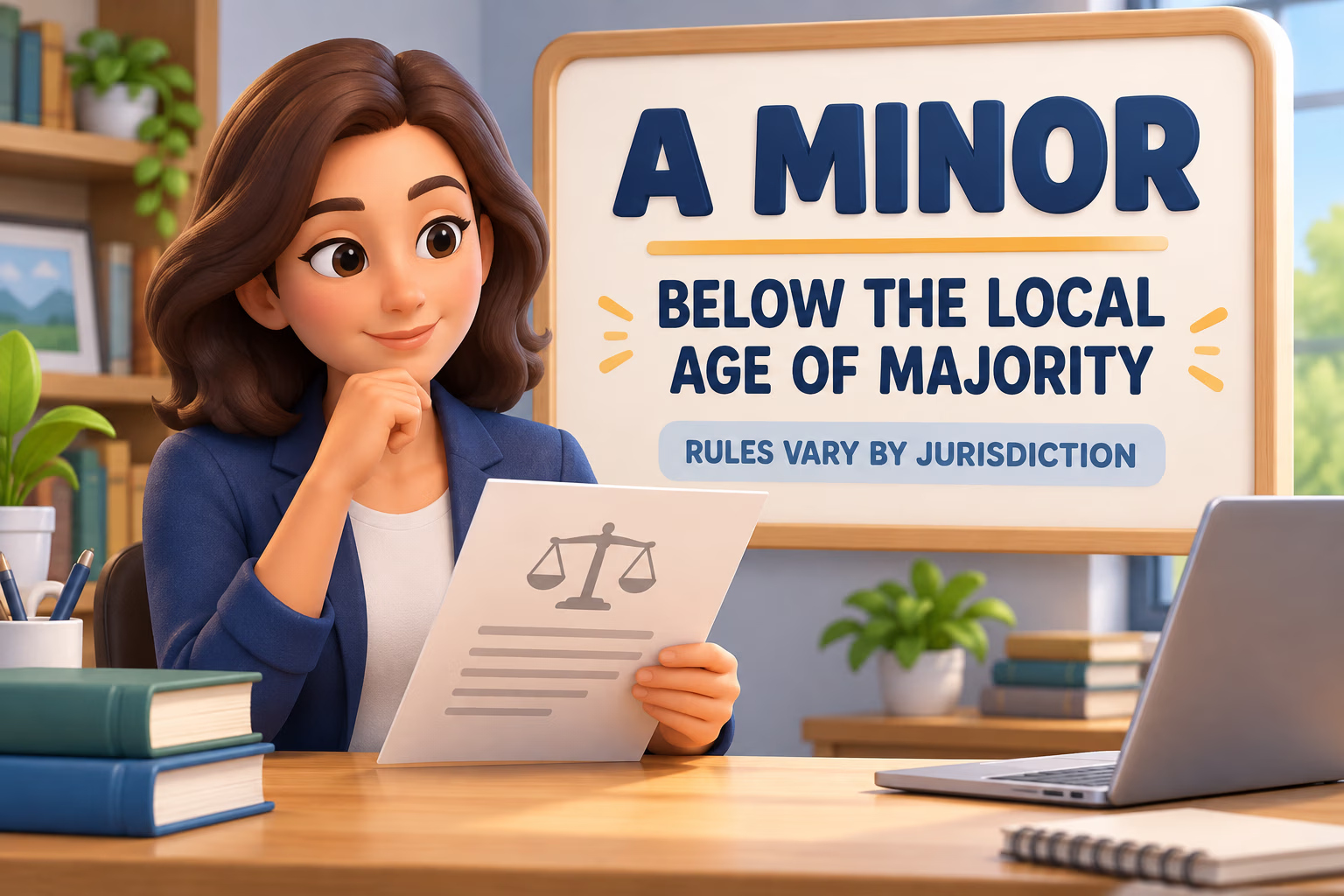
“A minor” and legal age
In legal contexts, a minor generally means a person below the applicable age of majority. That age varies by jurisdiction and can depend on the legal question. A venue’s admission rule, driving age, or another activity-specific threshold may be different from the age of majority. For that reason, “under 18” is not a universal definition of minor. Check the relevant local rule when a legal decision depends on age; this language guide is not legal advice.
- The form requires a parent or guardian’s signature for an applicant who is a minor under local law.
- The festival’s ticket policy sets its own age limit, which is separate from the legal definition of a minor.

“Minor” in college
A college minor is a secondary field of study. Requirements differ by school and program, and the word alone does not mean that the subject is unimportant. Use wording such as “She is pursuing a minor in sociology” or “Sociology is her minor.” The verb minor can also appear in “She is minoring in sociology.”
How to use “minor” clearly
- Pair the adjective with a specific noun: a minor edit, a minor injury, or a minor role.
- Use a minor for the legal-status noun only when the relevant context is clear.
- Say a college minor or name the subject to distinguish the academic meaning.
- Use minor sentence only when you mean the grammar term, not an ordinary sentence containing something unimportant.
Cambridge Dictionary describes adjective uses such as low in importance or effect and records the legal and academic noun senses (Cambridge Dictionary: minor). Cornell’s Legal Information Institute explains that the age of majority is jurisdiction-dependent (Cornell LII: age of majority). Collins records minor sentence as a separate grammar expression (Collins: minor sentence).
Have you ever wondered about the significance of the word “minor” in grammar? In English language studies, the term “minor” is often used to describe a sentence element of lesser importance compared to the main components.
A minor element in a sentence typically provides additional information or clarification, but can usually be removed without drastically altering the meaning of the sentence. Identifying minor components can help writers and speakers enhance the clarity and conciseness of their communication.
7 Examples Of Minor Used In a Sentence For Kids
- My brother has a minor cut on his finger.
- There are minor scratches on my toy car.
- The teacher asked me a minor question.
- I have a minor cold, but I am feeling better.
- My sister has a minor headache today.
- The bird has a minor injury on its wing.
- I made a minor mistake in my drawing.
14 Sentences with Minor Examples
- He was unable to attend the concert because he was a minor and the event was 18+.
- The professor mentioned that the grammatical errors in the essay were only minor issues.
- She decided to change her minor area of study from psychology to sociology.
- The group project was delayed due to a minor misunderstanding between team members.
- The cafeteria has a policy of no entry for minor students during exam week.
- The college library has a dedicated section for minor research on environmental science.
- The student union organized a workshop on minor courses available for the upcoming semester.
- The college counselor suggested taking a minor in communication studies to improve public speaking skills.
- The online platform requires users to be at least 18 years old to access minor content.
- The college magazine featured an article on the benefits of declaring a minor in business administration.
- The campus security guards reminded minor students to carry their ID cards at all times.
- The department head explained the requirements for declaring a minor in creative writing.
- The college held a seminar on the importance of including a minor specialization in resumes.
- The seniors advised the minor students to explore different areas of study before deciding on a major.
How To Use Minor in Sentences?
Minor is a versatile word that can be used in various contexts. In its simplest form, minor is an adjective that refers to something of lesser importance, seriousness, or size. For example, “The issue had a minor impact on the project timeline.” This usage of minor emphasizes that the issue did not have a significant effect.
Another common way to use minor is to describe someone who is under the legal age of adulthood. For instance, “She is still a minor and will need her parents’ permission to travel abroad.” In this case, minor is used to indicate that the person is not yet considered an adult in terms of the law.
You can also use minor as a noun to refer to a person who is studying a secondary or less important subject within their academic studies. For example, “She is majoring in Biology and minoring in Psychology.” Here, the word minoring is used to indicate that Psychology is a secondary field of study for the person.
Overall, minor is a flexible word that can be used in different ways depending on the context. As you become more familiar with its various meanings, you will be able to incorporate it effectively into your writing and conversations.
Conclusion
In this article, several examples of sentences with minor were presented to demonstrate the use of the keyword in different contexts. A minor sentence typically lacks a main verb but still conveys a complete thought or idea. These sentences may consist of one or more words and are often used for emphasis, clarity, or to create a specific effect in writing or speech.
By examining how minor sentences are constructed and employed, it becomes evident that they play a valuable role in communication by succinctly conveying information or emotions. Whether used in literature, dialogue, or everyday conversation, minor sentences offer a versatile tool for writers and speakers to enhance the impact of their message.
Reading the original examples
The original examples below are preserved as published, but some combinations are unusual or unclear in standard edited English. A minor question may mean a question of little importance, while “minor research” is usually clearer as small-scale research or a minor research project. “Minor content” is ambiguous; name the intended sense, such as content for minors or a minor content update. In an academic context, write students who are minors for legal age, or students pursuing a minor for a secondary field of study. These phrasings keep the legal and college meanings distinct.
The example about an 18+ concert combines two questions: whether someone is a minor under applicable law and whether the event admits them. An event can set its own age policy, so neither threshold should be assumed from the other.
What is a minor sentence?
A minor sentence is a grammar label for an utterance that lacks the usual full clause structure but works as a complete response in context. For example, after “Where should we wait?”, someone might answer “Outside.” The answer is understood from the exchange. In formal writing, follow the assignment or style guide: a short response that works in dialogue may not count as a complete sentence in every exercise. This grammar label is separate from the adjective in “a minor error.”
Quick answers
Does “minor” always mean unimportant?
No. The adjective often means limited in importance, seriousness, or effect, but a minor can refer to legal age or a secondary college subject.
Does “minor” always mean someone under 18?
No. The applicable age of majority varies by jurisdiction and legal context, and activity-specific age limits can differ.
Is a college minor less valuable than a major?
The word describes a secondary course of study within a program. It does not make a judgment about the value of the subject or the student’s work.
Is a minor sentence a mistake?
Not necessarily. A fragment can function as a complete utterance in conversation or a literary context. Whether it is acceptable depends on context and the writing rules in use.


