Mirage in a Sentence: Meaning & Examples
A mirage is an apparent image produced when light bends through layers of air at different temperatures, often making a road seem wet or distant objects appear displaced. In figurative use, a mirage is a hope or prospect that seems promising but cannot be achieved.
Key facts at a glance
- A literal mirage is an optical image created when light bends through air layers with different temperatures.
- The familiar road mirage can make the sky appear like water on hot pavement; the road is not covered by a pool.
- A superior mirage can distort or lift distant objects near the horizon under a temperature inversion.
- Figuratively, a mirage is a hope or prospect that seems real but cannot be achieved.
- Mirage is a count noun: write a mirage or several mirages.
What does mirage mean?
Mirage has a literal meaning and a figurative one. Literally, it is an optical phenomenon in which atmospheric refraction makes an image appear displaced, distorted, or like something that is not physically present; figuratively, it is an appealing hope or prospect that proves unattainable.
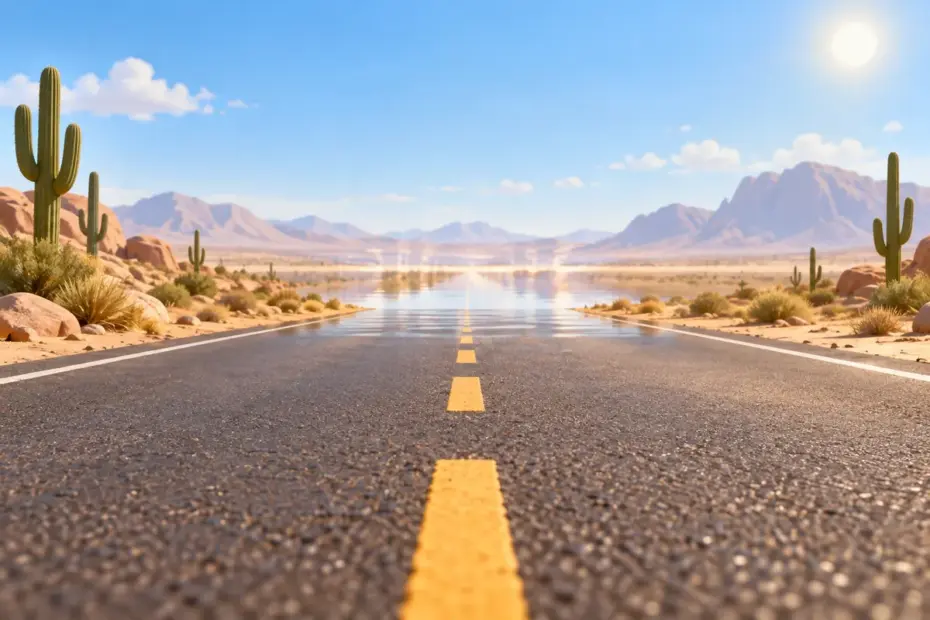
The familiar shimmer over a hot road is not a puddle waiting ahead. Light from the sky bends as it travels through air layers at different temperatures, making the surface seem reflective from a distance. The visual effect is real even though the apparent water is not.
How does a literal mirage form?
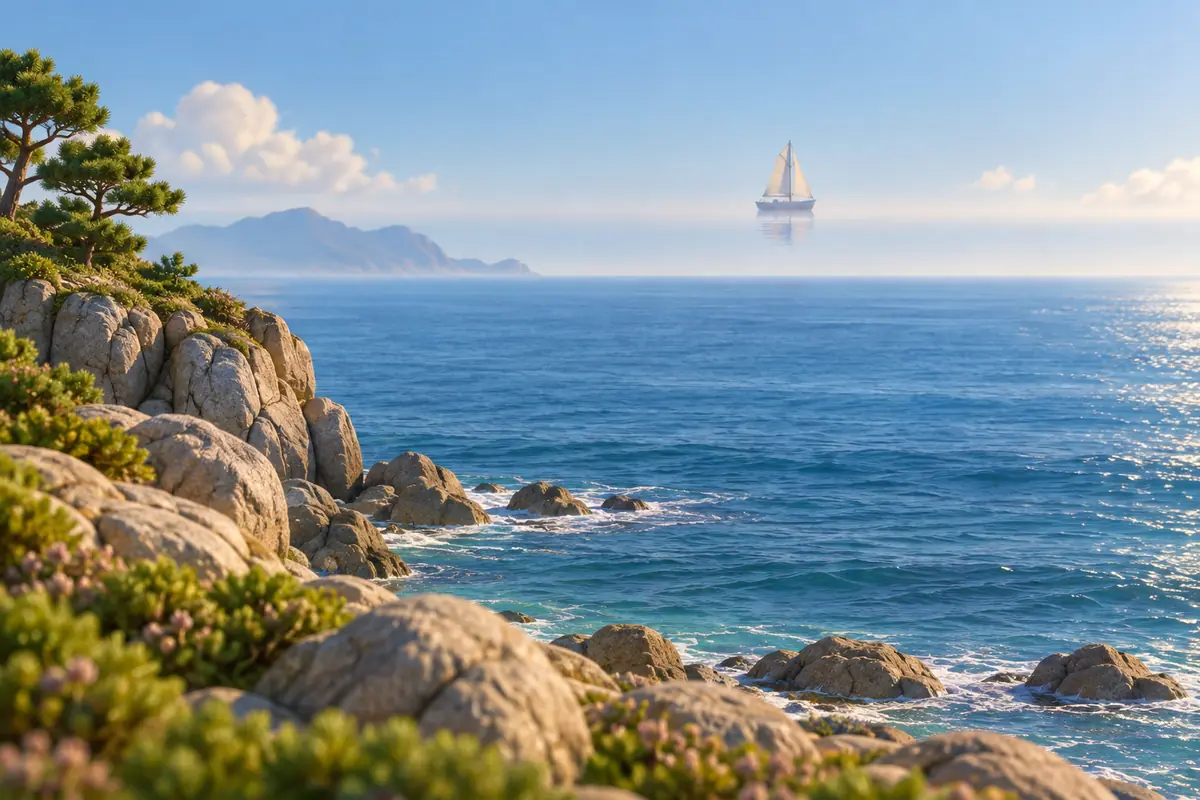
A literal mirage forms when light changes direction while passing through air layers with different temperatures and densities. The World Meteorological Organization describes the familiar inferior mirage over a hot road or desert as an apparent area of water; under other temperature conditions, a superior mirage can distort distant objects near the horizon.
For a simple sentence, readers usually need the visible effect rather than a detailed optics explanation: “Heat shimmer created a mirage that looked like water on the road.” A scientific account can name refraction, the bending of light, and specify the air conditions when those details matter.
How do you use mirage in a literal sentence?
Use mirage as a countable noun when describing an optical image. A literal sentence identifies the apparent image and the conditions or viewpoint that make it visible.
- “The travelers mistook the shimmering mirage for a lake.”
- “A mirage made the distant road seem covered in water.”
- “Across the cold sea, a mirage lifted the ship above the horizon.”
The third example describes a distorted image, not a ship that has left the water. The word can refer to more than the familiar hot-road image, so use an added phrase—such as over the pavement or above the horizon—to clarify the scene.

How is mirage used figuratively?
Figuratively, a mirage is an attractive hope, advantage, or solution that appears attainable but is not. The sentence should make clear what the person expected and why that expectation did not match reality.
- “The promise of instant success proved to be a mirage.”
- “For the exhausted hikers, a shady oasis seemed like a mirage.”
- “The budget surplus was a mirage once the unpaid costs were counted.”
The figurative use is usually negative because it highlights disappointment or unreality, but it can also be literary. A literal mirage is a physical optical effect; a figurative mirage is a comparison for an illusion or an unfulfilled hope.
What words can replace mirage?
Choose a replacement by sense: optical illusion or heat shimmer for the atmospheric effect, and false hope, illusion, or unattainable prospect for the figurative meaning. These alternatives overlap, but they do not all carry the same tone.
Hallucination is usually the wrong substitute for a road mirage because a mirage is an atmospheric optical phenomenon, not an invented image attributed to an individual’s mind. In technical writing, mirage is the precise word; in everyday figurative writing, false hope may be clearer.
What grammar patterns work with mirage?
Mirage is a singular count noun, so it usually takes an article: a mirage or the mirage. Its plural is mirages. Writers commonly use the word with verbs such as appear, create, mistake, prove to be, and vanish.
For example, “A mirage appeared above the road” uses the literal sense, while “Their plan proved to be a mirage” uses the figurative sense. The surrounding words usually tell the reader which meaning is intended.
What mistakes should you avoid?
Do not describe a mirage as a body of water physically sitting on a road. The apparent pool is an image produced by refraction; a sentence such as “A mirage looked like water across the hot highway” makes the distinction clear.
Also avoid using mirage for every mistake or surprise. The word suggests an image or prospect that seems real or attainable from a particular viewpoint. If something is simply incorrect, error or misunderstanding is more precise.
Have you ever seen a mirage in the desert? A mirage is a phenomenon where distant objects appear distorted or nonexistent, creating an optical illusion due to atmospheric conditions.
Sometimes, a mirage can trick our eyes into seeing things that aren’t really there. This fascinating occurrence is often observed in hot, arid environments, where the heat causes light to refract and create deceptive images in the distance.
7 Examples Of Mirage Used In a Sentence For Kids
- The desert heat can make you see a ____ in the distance.
- Sometimes when it’s very hot outside, you might see a shiny __ that isn’t really there.
- A __ is like a trick your eyes play on you in the desert.
- Remember, a __ is just an illusion and not a real thing.
- If you see a ____ in the distance, don’t chase after it!
- In hot deserts, you might see a shimmering __ that looks like water.
- It’s important to know that a __ is not something you can touch or play with.
14 Sentences with Mirage Examples
- After hours of studying, the oasis in the distance turned out to be just a mirage.
- He thought the perfect internship was within reach, but it turned out to be a mirage.
- The promise of easy money through online surveys was just a mirage for the struggling college student.
- The idea of a stress-free week before exams was just a mirage for the procrastinating student.
- She believed that finding the perfect part-time job would be simple, but it turned out to be a mirage.
- The dream of a well-balanced social life and good grades simultaneously felt like a mirage to the overwhelmed student.
- The promise of easy success in a competitive field turned out to be a mirage for the ambitious student.
- The image of a well-organized study schedule for the semester quickly became a mirage for the disorganized student.
- The hope of receiving timely feedback on assignments turned out to be a mirage with the overwhelmed professors.
- The idea of finding affordable housing close to campus seemed like a mirage for the budget-conscious student.
- The plan to secure a coveted spot in a popular course felt like a mirage as the student struggled to enroll.
- The thought of a peaceful campus during exam week quickly became a mirage with noisy construction nearby.
- The dream of finding a study group with similar goals and work ethic turned out to be a mirage for the lone wolf student.
- The hope of meeting a mentor in the industry felt like a mirage as the student navigated through networking events.
How To Use Mirage in Sentences?
Mirage is a term commonly used in literature to describe an optical illusion, often involving a distant object appearing as if it is closer or more substantial than it actually is. When using the word Mirage in a sentence, it is important to remember its context and meaning.
Here are a few examples of how to correctly use Mirage in a sentence:
- The shimmering heat waves created a mirage in the distance, making it difficult to distinguish between the sky and the sand.
- As they crossed the desert, the travelers were often fooled by mirages of water and oases that seemed to disappear as they approached.
- The promise of a better future turned out to be nothing more than a mirage, leaving many disappointed and disillusioned.
When incorporating Mirage into your writing, it can help to create vivid imagery and add depth to your descriptions. Just remember to be mindful of its definition and use it in a way that accurately reflects its meaning.
By practicing and exploring different ways to utilize Mirage in sentences, you can enhance your writing skills and effectively convey optical illusions or deceptive appearances in your work.
Conclusion
In conclusion, mirages are optical illusions that occur due to the bending of light rays in the Earth’s atmosphere. They often appear as shimmering, distorted images of objects that are not actually there. These phenomena are commonly seen in deserts or on hot roads, where the air near the ground is hotter than the air above, creating a temperature gradient that causes light to refract and create the mirage effect.
Understanding the science behind mirages can help us distinguish between what is real and what is an illusion in our surroundings. By recognizing the conditions that give rise to mirages, we can appreciate the fascinating ways in which light behaves and perceive the world around us more accurately.
Use mirage for an optical image or an unreal prospect
In a sentence, mirage can name an atmospheric optical effect or, figuratively, a hope that cannot be achieved. Give the context—hot pavement, a distant horizon, or a failed promise—so readers can identify the intended meaning without confusing an apparent image with a real object.
Frequently Asked Questions About Mirage in a Sentence
What does mirage mean in a sentence?
In a sentence, mirage can mean an optical image that appears because light bends through air layers, or a figurative hope that is not attainable. “The lake on the hot road was a mirage” uses the literal sense; “Easy success proved to be a mirage” uses the figurative sense.
Is a mirage real or an illusion?
A mirage is a real optical phenomenon, but the object it seems to show may not be where it appears. Refraction bends light through air layers with different temperatures, creating a displaced or water-like image. The apparent pool over a hot road is not standing water on the pavement.
What causes a mirage on a hot road?
A hot road warms the air just above its surface, creating layers through which light bends. Light from the sky can reach an observer along a curved path, so the road appears reflective or wet from a distance. This common inferior mirage is an optical effect, not a puddle.
Can mirage mean a false hope?
Yes. Figuratively, mirage describes an appealing hope or prospect that seems possible but cannot be achieved. For example, “The promise of effortless profit was a mirage” means that the promise looked attractive but was unrealistic. Use false hope when you want a plainer alternative.


