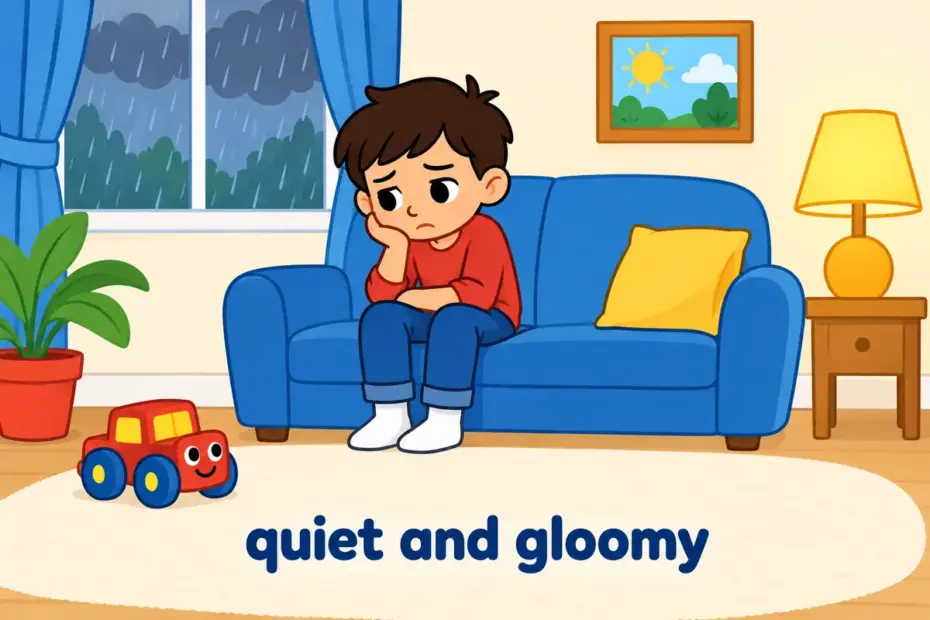
Morose means silent, serious and gloomy in a way that shows no cheerfulness. To use morose in a sentence, describe the person’s mood and usually a reason: “He grew morose after the team lost.” The word suggests a settled sadness that others can see but cannot easily lift.
Morose at a glance
- Morose is an adjective meaning silent, serious and gloomy.
- It describes a settled sadness that others can see but cannot easily lift.
- It usually follows become, grow, seem or look, or stands before a noun.
- Its commonest partners are mood, silence and expression.
- The usual mistake is using it for outward resentment, which is sullen rather than morose.
What does morose mean?
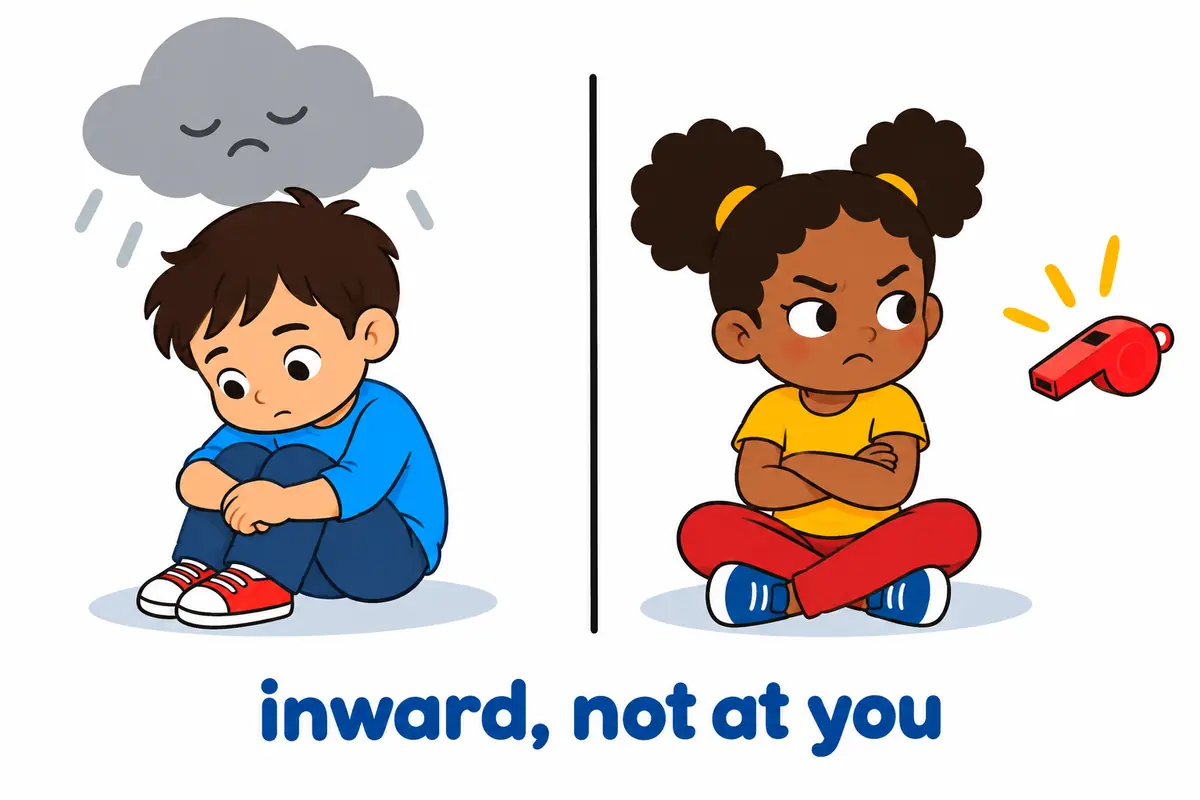
Morose is an adjective meaning gloomy, unsmiling and withdrawn in a way that shows no cheerfulness. The Cambridge entry for morose stresses the silent, sullen sadness, and that inward direction is the word’s signature. A morose person keeps the gloom to themselves, whereas sullen gloom is aimed at other people. The table separates the two shades the adjective covers.
| Sense | Plain meaning | Example sentence |
|---|---|---|
| Gloomy and unsmiling | Silent and low in spirits | He was morose at dinner. |
| Sullen and withdrawn | Gloom shown by keeping apart | A morose silence filled the room. |
One limitation is worth stating plainly. Morose is not a clinical word, and it is not a synonym for every kind of sadness. It names a visible manner rather than an inner diagnosis, so a doctor would not use it in place of a medical term such as despondent.
How do you use morose in a sentence?
Morose works like any descriptive adjective. It can precede the noun, follow a linking verb, or attach to the silence and mood that a gloomy person creates.
| Pattern | Example | What it signals |
|---|---|---|
| morose + noun | A morose silence settled over the table. | Attributive use that gives the gloom a shape. |
| be or seem + morose | She seemed morose all afternoon. | States the manner directly. |
| become or grow + morose | He grew morose after the letters stopped. | Shows the gloom deepening over time. |
| morose + about + noun | They were morose about the cancelled trip. | Names what the sadness is attached to. |
| look or sound + morose | He sounded morose on the phone. | Reports the impression without asserting a mood. |
Let a small gesture carry the mood, and the adjective will sound precise rather than heavy.
Morose in a sentence: examples across contexts
The word carries the same quiet weight from a diary to a news report. Each sentence below shows the gloom through a small detail rather than a statement of feeling.
| Context | Example sentence | Why this works |
|---|---|---|
| Classroom | The morose boy sat apart and answered only in monosyllables. | Pairs the mood with withdrawn behaviour. |
| Family conversation | She was morose all weekend after the letter arrived. | A duration shows the gloom settling in. |
| News report | A morose mood hung over the town after the closure was announced. | The adjective may describe atmosphere as well as a person. |
| Fiction | He gave a morose nod and turned back to the window. | A small gesture carries the sadness without a speech. |
| Workplace email | The manager seemed morose at the morning briefing. | Seemed keeps the observation tentative and polite. |
| Medical note | The patient appeared morose but denied feeling hopeless. | Morose reports manner while avoiding a stronger claim. |
| Academic writing | The diary entries grow morose as the winter advances. | Grow tracks a change across a written record. |
| Sports report | The captain was morose after the defeat, answering in short sentences. | Ties the mood to a recent, named event. |
| Diary | I felt morose for no reason I could name. | Morose allows a cause the speaker cannot identify. |
Morose vs sullen
Morose and sullen both describe silence and low spirits, but they point in different directions. The table separates them, and words such as gloomy and glum are milder neighbours. Moody suggests emotions that shift, while morose suggests one steady gloom.
| Attribute | morose | sullen |
|---|---|---|
| Core meaning | Silent and gloomy | Silent and resentful |
| Direction | Turned inward | Directed at other people |
| Likely cause | Often an unnamed sadness | A grievance or a sense of unfairness |
| Behaviour | Withdraws quietly | Refuses to engage and glowers |
| Register | Formal to literary | Neutral and common |
Verdict: use morose for inward gloom that asks for quiet, and sullen when the silence carries a grudge against other people.
Word forms and grammar of morose
Morose forms a small, regular family, and the adverb and noun appear mostly in written description.
| Form | Part of speech | Example |
|---|---|---|
| morose | adjective | He became morose after the news. |
| morosely | adverb | She stared morosely at the floor. |
| moroseness | noun | A quiet moroseness settled over him. |
The adverb morosely usually attaches to a verb of looking, staring or speaking, which is how the inward gloom becomes visible to a reader.
Common mistakes with morose
- Incorrect:
He was morose with the driver who cut him off.Correct: He was sullen with the driver who cut him off. Rule: Morose is inward gloom, while sullen resentment is aimed at others. - Incorrect:
She morosed all afternoon.Correct: She was morose all afternoon. Rule: Morose is an adjective; there is no verb morose. - Incorrect:
The morose upset the whole team.Correct: The morose mood upset the whole team. Rule: An adjective cannot stand alone as a noun; add the noun it describes. - Incorrect:
He felt morose with excitement.Correct: He felt elated with excitement. Rule: Morose means low-spirited, which contradicts a positive cause. - Incorrect:
Her moroseness made everyone laugh.Correct: Her cheerfulness made everyone laugh. Rule: Check the meaning, because moroseness describes sadness, not good humour.
Practice using morose
Work through the items, then compare your answer with the reasoning rather than only the key.
- Fill the gap: She became ______ when the letters stopped coming.
- Choose the better word: He was (morose / sullen) with the referee for the rest of the match.
- Correct the error: He morosed by the fire.
- Build a sentence: use morose about someone on a rainy day.
- Spot the register: which fits a formal description, a morose silence, or a super sad vibe?
- Rewrite with the adverb: He looked at the forms. Add morosely.
Answers
- morose — the adjective follows became, and the letters give the sadness a cause.
- sullen — the feeling is aimed at the referee, which is the sullen pattern.
- He was morose by the fire — morose is an adjective and needs a linking verb.
- Model answer: After the trip was cancelled he spent a morose afternoon indoors.
- A morose silence — a formal description favours precise nouns over casual phrasing.
- He looked morosely at the forms — the adverb colours the verb of looking.
The bottom line
Use morose in a sentence to describe a quiet, settled gloom that a person carries rather than announces. Two details decide most sentences: the sadness turns inward, which separates it from sullen resentment aimed at others, and the word reports manner rather than medical fact. Pair it with a small visible detail and the mood lands.
Frequently asked questions about morose
What does morose mean in a sentence?
In a sentence, morose describes someone who is silent, serious and gloomy in a settled way. It works as an ordinary adjective, so it can precede a noun such as silence or follow a linking verb such as seemed. The word names a visible manner rather than a passing emotion.
Is morose the same as sad?
Not quite. Sad is a broad, ordinary word for low spirits, while morose adds silence, seriousness and a touch of sullenness. A sad person may still talk and seek comfort, whereas a morose person tends to withdraw. Morose is also more literary, so it appears in description more than in conversation.
Can morose describe a place?
Morose describes people most naturally, but writers extend it to weather, rooms and silences that seem to share the gloom. A morose afternoon or a morose silence works because the mood belongs to the people present. It cannot describe a building or an object literally, so a morose chair is not idiomatic.
How is morosely different from morose?
Morosely is the adverb and morose is the adjective. Morosely usually modifies a verb of looking, staring or speaking, as in she stared morosely at the floor, while morose modifies a noun or follows a linking verb. The adverb shows how the gloom becomes visible through an action.
Have you ever come across a morose individual? The term “morose” describes a person who is sullen, gloomy, or ill-tempered.
When someone is feeling morose, they may appear withdrawn or uncommunicative, showing little interest in engaging with others or participating in activities. Their disposition may be characterized by a sense of sadness or melancholy, leading to a lack of enthusiasm or humor in their interactions.
7 Examples Of Morose Used In a Sentence For Kids
- I felt morose when my favorite toy broke.
- The sad puppy had a morose expression on its face.
- She became morose when her friends didn’t play with her.
- The gray clouds made the sky look morose.
- The boy felt morose after losing his crayons.
- The plant looked morose without water.
- The empty playground looked morose without children playing.
14 Sentences with Morose Examples
- Morose students sulked in the cafeteria after receiving disappointing midterm grades.
- The group project’s failure left everyone feeling morose during the college festival.
- Jane’s morose expression reflected her disappointment over not being accepted into the prestigious internship program.
- The rainy weather made the campus feel unusually morose as students hurried to their next class.
- After a long day of back-to-back lectures, the tired students returned to their dorm rooms looking morose.
- An unexpected pop quiz on a Monday morning left the entire class feeling morose.
- The cancellation of the much-anticipated college trip left everyone feeling morose.
- The realization that the deadline for the research paper was tomorrow made the students morose.
- Dormancy during exam season often leads to morose moods among college students.
- The lack of responses to the event invitation made the organizers feel morose about attendance.
- Breaking up with a long-term partner can leave college students feeling morose and isolated.
- A series of technologically challenging classes made some students feel morose about their future in the field.
- The constant pressure to perform well in exams can lead to a morose atmosphere in college libraries.
- Feeling morose after missing the deadline, the student sought advice from the professor.
How To Use Morose in Sentences?
To use the word Morose in a sentence, you can describe someone who is displaying a gloomy, sullen, or ill-tempered attitude. For example, “After receiving the bad news, Mark became morose and withdrew from social interactions.”
Another way to use morose is to describe a place or atmosphere that is filled with sadness or gloom. For instance, “The abandoned house had a morose atmosphere, with its peeling paint and broken windows.”
It’s important to note that morose is typically used to convey a sense of melancholy or despondency. Therefore, when using this word, make sure the context fits the definition of a person, demeanor, or setting that is gloomy or unhappy.
Remember to pay attention to the tone and situation when incorporating morose into your sentence. It is best used in writing or conversation that seeks to evoke a feeling of sadness or reflect a somber mood.
In summary, incorporating morose into your vocabulary adds depth and nuance to your descriptions of emotions and environments. Practice using morose in different contexts to become more comfortable with incorporating it into your spoken and written communication.
Conclusion
In conclusion, sentences with the word “morose” typically convey a sense of gloom, sadness, and melancholy. They often describe someone who is sullen, dispirited, or brooding over something, reflecting a somber and downcast mood. These sentences create a mood of heaviness and despondency, painting a picture of profound sadness or a lack of hope or optimism.
When encountering sentences with “morose,” it is important to pay attention to the underlying emotions and feelings being portrayed. Whether it’s in literature, speech, or everyday communication, understanding the nuances of these sentences can provide insight into the emotional state of the speaker or the characters being described. “Morose” sentences offer a glimpse into the darker aspects of human emotions, capturing moments of melancholy and introspection with poignant clarity.


