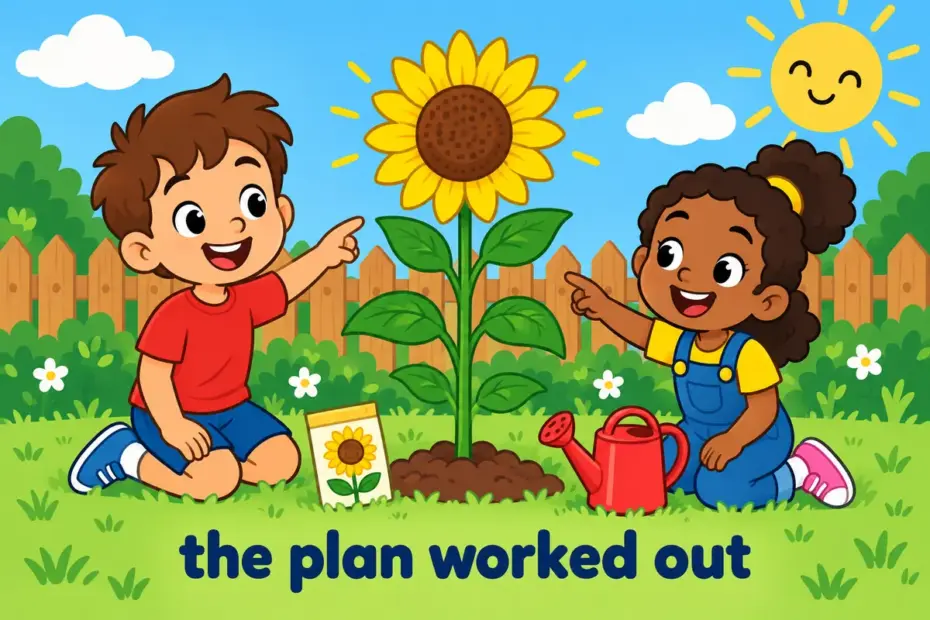
Pan out means to end up in a particular way or to succeed after a period of uncertainty. To use pan out in a sentence, make the plan or situation the subject and let the outcome follow: “The new schedule panned out well.” The verb is intransitive, so it never takes an object.
Pan out at a glance
- Pan out is an intransitive phrasal verb, so it never takes a direct object.
- Its forms are pan out, pans out, panned out and panning out.
- The particle out is fixed: a plan pans out, but nothing is ever panned out of it.
- The verb usually carries a positive outcome, so it suits hopes and plans rather than disasters.
- The commonest error is splitting the verb, as in the plan panned it out.
What does pan out mean?
Pan out means to end up in a particular way, and most often to end up well after a period of doubt. The Cambridge entry for pan out records the modern sense alongside the literal one of washing gravel in a pan. The three senses below share a single idea: something is worked through until its final shape appears. Where the outcome may be bad as easily as good, turn out is the safer choice.
| Sense | Plain meaning | Example sentence |
|---|---|---|
| Turn out well | End in success after uncertainty | The new rota panned out well. |
| Develop in the end | Finish in some final state | The trip panned out differently from the plan. |
| Sift gravel for gold | Wash earth in a pan to find metal | Prospectors panned out the creek for gold. |
One limitation is worth stating plainly. Pan out says nothing about effort or merit; it reports only how things finished. When a writer needs to say a plan failed, the negative form did not pan out is normal, but a flat disaster usually calls for a stronger verb such as collapsed.
How do you use pan out in a sentence?
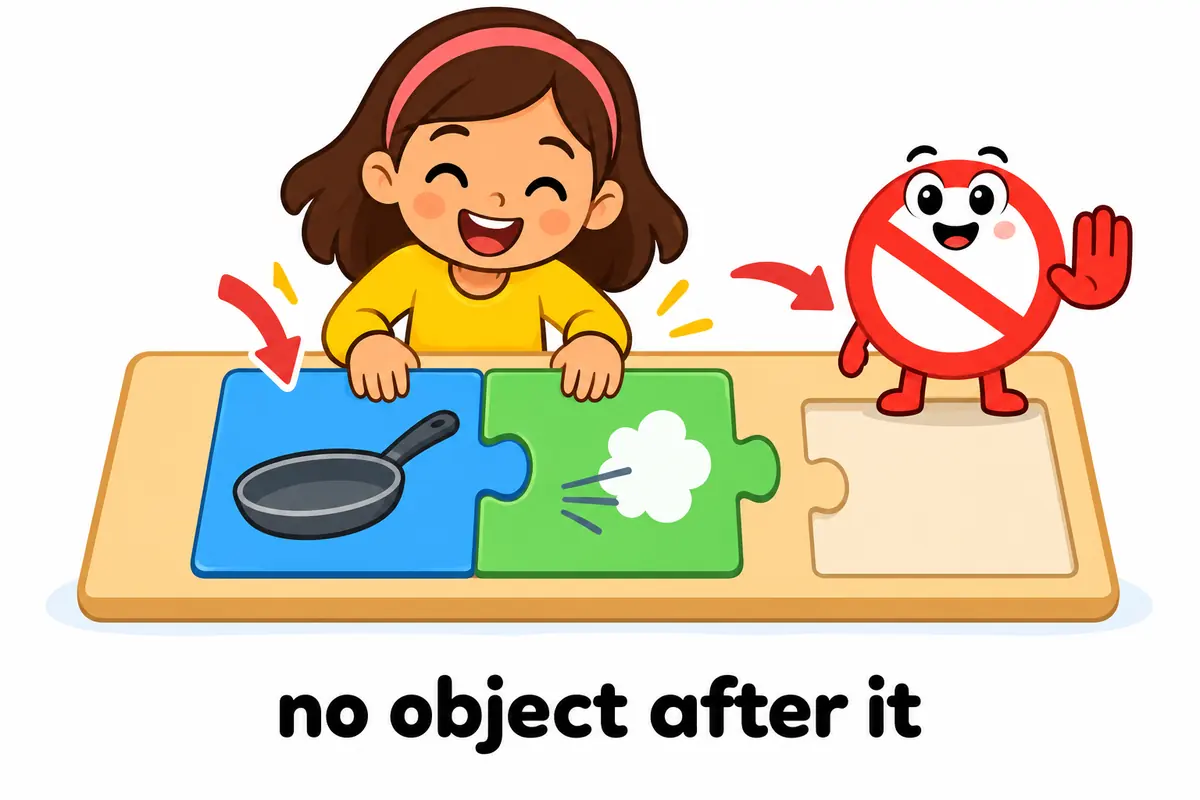
Pan out takes a subject and nothing else. The subject is the plan, scheme, project or arrangement, and the verb follows with an adverb or a prepositional phrase. Because the particle is fixed, the phrase cannot be split, and no passive form is used.
| Pattern | Example | What it signals |
|---|---|---|
| subject + pan out + adverb | The merger panned out well for both firms. | The standard success reading. |
| subject + pan out + as hoped | Things panned out as we had hoped. | Measures the result against an expectation. |
| if + subject + pans out | If the schedule pans out, we finish early. | A plan still unproven. |
| not + pan out | The venture did not pan out. | The standard negative, never passivised. |
| subject + pan out + for someone | It panned out badly for the investors. | Names who gains or loses. |
The rule of thumb is simple: if the sentence could also read turned out well, then pan out fits.
Pan out in a sentence: examples across contexts
The verb shifts register more than meaning, from a chat between friends to a research report. Every sentence below names a plan or arrangement and leaves the outcome to pan out.
| Context | Example sentence | Why this works |
|---|---|---|
| Classroom | The group project panned out better than anyone expected. | Reports the final outcome without naming an object. |
| Workplace email | If the new rota pans out, we can start earlier on Mondays. | If signals the plan is still unproven. |
| News report | The rescue panned out exactly as the coastguard had planned. | A named body and a successful end. |
| Business writing | The merger did not pan out, and both firms walked away. | Did not pan out is the standard negative form. |
| Conversation | It did not pan out, but at least we tried. | The negative fits a spoken, matter-of-fact summary. |
| Sports commentary | The switch to a younger midfield panned out handsomely. | An adverb after the verb shows how far the plan succeeded. |
| Academic writing | The hypothesis may not pan out once larger samples are tested. | May not preserves the uncertainty the verb already implies. |
| Follow-up email | The opening we discussed did not pan out as hoped. | As hoped compares the result with an expectation. |
| Personal diary | Waiting a year before moving panned out in the end. | In the end signals a verdict reached after time. |
Pan out vs turn out
The two phrasal verbs both describe an ending, but they differ in optimism and in what can follow. Work out is a third near neighbour with a more neutral tone. The table shows the split.
| Attribute | pan out | turn out |
|---|---|---|
| Core meaning | Succeed, or end in a good way | End in any way, good or bad |
| Implied success | Usually present | Absent; the result is neutral |
| Grammar | Intransitive only | Can take an adjective or a that-clause |
| Common adverbs | well, nicely, handsomely | well, badly, fine, that |
| Register | Informal to neutral | Neutral and very common |
Verdict: use pan out when you mean a plan succeeded, and turn out when you simply report how something ended, especially before an adjective or a clause.
Word forms and grammar of pan out
The verb inflects regularly, and the table also lists the pattern learners build by mistake, because splitting a fixed phrasal verb is the error that marks a non-native sentence.
| Form | Part of speech | Example |
|---|---|---|
| pan out | phrasal verb, base form | The plan may pan out after all. |
| pans out | phrasal verb, third person singular | It pans out well for careful savers. |
| panned out | phrasal verb, past and past participle | The scheme panned out in the end. |
| panning out | phrasal verb, present participle | Things are panning out as we hoped. |
| pan it out | non-standard | Correct: it panned out. |
A related result noun such as result is the natural way to name an outcome directly when the sentence needs an object. When the subject is a person, writers turn to succeed; when a hoped-for thing never appears at all, materialize is more precise; and when the point is steady movement rather than a final verdict, progress fits better.
Common mistakes with pan out
- Incorrect:
The plan panned it out.Correct: The plan panned out. Rule: The particle of a phrasal verb cannot be separated from the verb by an object. - Incorrect:
We panned out a profit.Correct: We made a profit. Rule: Pan out is intransitive, so it never takes a direct object. - Incorrect:
The deal panned out badly for everyone.Correct: The deal turned out badly for everyone. Rule: Pan out implies a good result, so a plainly bad outcome usually takes turn out. - Incorrect:
I hope the plan will pan out good.Correct: I hope the plan will pan out well. Rule: The verb needs an adverb, not an adjective, because pan out already contains the idea of turning out. - Incorrect:
The film panned out at the box office.Correct: The film did well at the box office. Rule: Pan out describes how a plan ends, not how a finished product sells.
Practice using pan out
Work through the items, then check the reasoning rather than only the answer.
- Fill the gap: The plan sounded risky, but it ______ out well.
- Choose the better word: The venture did not (pan out / work out) as the founders hoped.
- Correct the error: They panned out a tidy profit.
- Build a sentence: use panned out about a school fundraiser.
- Spot the register: which fits a friendly email, the schedule did not pan out, or the schedule failed to eventuate?
- Rewrite in the negative: The idea succeeded. Use pan out to say it almost failed.
Answers
- panned — the past tense completes the fixed phrase panned out well.
- pan out — the sentence reports a hoped-for success that did not happen.
- They made a tidy profit — pan out is intransitive and takes no object.
- Model answer: The bake sale panned out well once the rain stopped.
- The schedule did not pan out — a friendly email uses everyday words, not eventuate.
- The idea very nearly did not pan out — the negative keeps the verb intransitive.
The bottom line
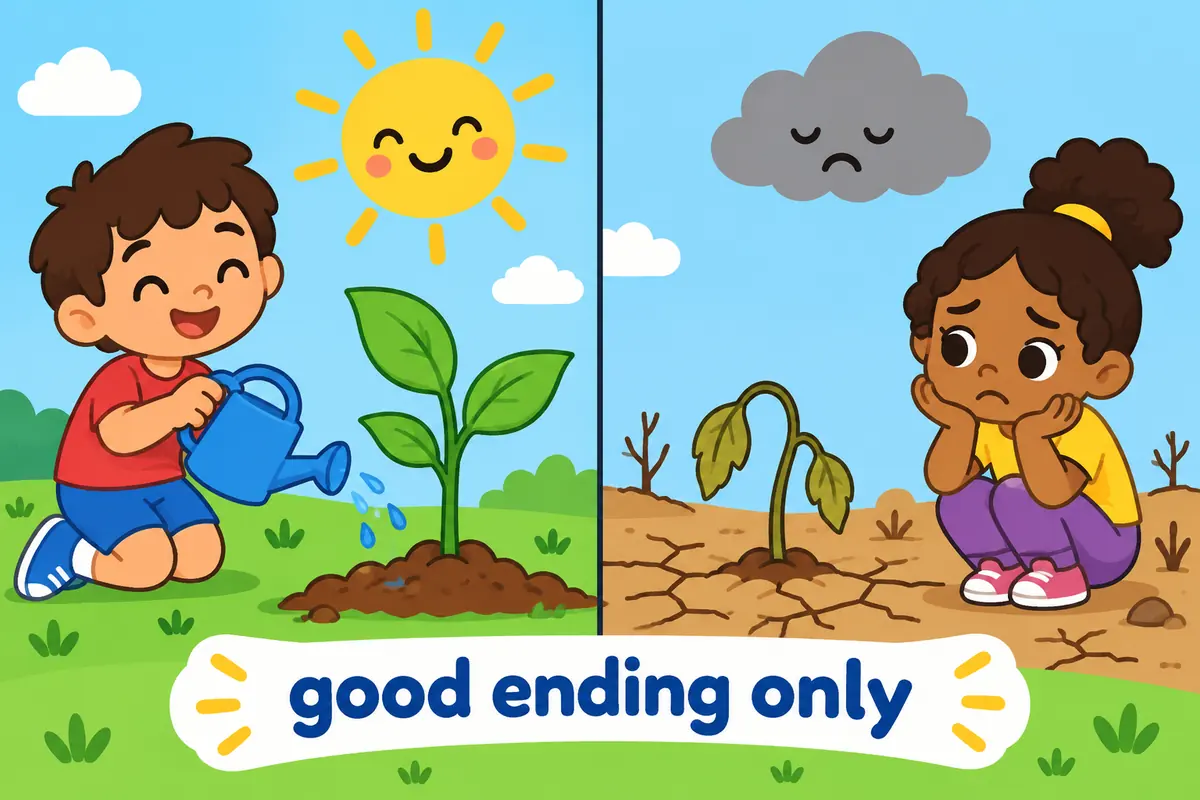
Use pan out in a sentence to say that a plan or arrangement ended, usually in a good way, after a period of uncertainty. Two details decide most sentences: the verb is intransitive, so nothing is ever panned out, and it leans positive, so a plainly bad result reads better with turn out. Keep the particle fixed and the sentence will sound native.
Frequently asked questions about pan out
Is pan out a phrasal verb?
Yes. Pan out is an intransitive phrasal verb formed from the verb pan and the particle out. Because it is intransitive, it takes no object, and because the particle is fixed, the two words stay together. You can say the plan panned out, but never the plan panned it out.
Can you say something panned out well?
Yes, and well is its commonest adverb. Pan out already suggests success, so an adverb usually fine-tunes rather than reverses the meaning. Panned out well is the standard phrase, panned out nicely is a softer variant, and panned out badly is acceptable but clashes with the verb’s optimistic tone.
Is pan out formal or informal?
Pan out sits between the two. It appears in business emails, sports reports and news writing, yet it sounds natural in conversation as well. Formal academic prose tends to prefer resulted in or proved successful, while pan out suits anyone who wants a plain, brisk way to report how a plan ended.
What is the difference between pan out and turn out?
Both report an ending, but pan out implies success and turn out stays neutral. You would say the plan panned out when it worked, and it turned out badly when it did not. Turn out also takes an adjective or a that-clause, which pan out cannot do.
Have you ever wondered what it means for something to “pan out”? This idiomatic expression is commonly used to describe the result or outcome of a situation or plan.
When we say that something “panned out,” we are referring to how successful or effective it was in the end. It essentially means that things turned out in a particular way, either positively or negatively.
7 Examples Of Pan Out Used In a Sentence For Kids
- Let’s see how things pan out when we mix colors together.
- We will pour the seeds into the soil and watch how they pan out into beautiful flowers.
- Can you guess how the story will pan out in our book today?
- Let’s plant the little sapling and see how it will pan out as it grows into a big tree.
- We can build a sandcastle and watch how it will pan out when the waves come in.
- The students will work together on the project and see how it will pan out at the end of the day.
- We will bake some cookies and wait to see how they will pan out in the oven.
14 Sentences with Pan Out Examples
- Pan out your study schedule to ensure you cover all the necessary topics before exams.
- Make sure to attend career fairs and networking events to see how your future could pan out.
- Don’t stress about every detail of a project, sometimes things just pan out naturally.
- It’s important to have a backup plan in case your original idea doesn’t pan out.
- Join study groups to improve your understanding of difficult subjects and see how things pan out.
- Keep exploring different extracurricular activities to see where your passions might pan out.
- Pan out your budget for the month to avoid running out of money before the end of it.
- Experiment with different study techniques to see which ones pan out for you.
- Get involved in research projects to see how your academic interests may pan out in the real world.
- Sometimes it’s better to let situations pan out naturally rather than trying to control every outcome.
- Pan out your internship options carefully before making a decision.
- Don’t worry too much about how things will pan out in the future, focus on the present moment.
- Always have a plan B in case your first choice doesn’t pan out as expected.
- Trust that things will pan out the way they are supposed to, even if you can’t see it right now.
How To Use Pan Out in Sentences?
Pan Out is a phrasal verb that is commonly used in casual conversation to express how a situation or plan turns out in the end. This phrase is often used to describe the final results of something, whether it was successful or not.
When using Pan Out in a sentence, keep in mind that it is typically followed by an adverbial phrase that explains the outcome. For example, “I hope all your hard work pans out in the end.” This sentence indicates that the speaker wishes for the listener’s efforts to result in success.
Here are a few more examples of how you can use Pan Out in a sentence:
- “I’m not sure if our trip will pan out due to the weather forecast.”
- “The new business venture didn’t pan out as we had hoped.”
- “Let’s see how this project pans out before we make any decisions.”
Remember to always use Pan Out to talk about the final outcome of something. Whether it’s about a job interview, a vacation plan, or a personal goal, this phrase can help you convey your hopes or expectations regarding how things will turn out.
Conclusion
In conclusion, the success or outcome of a situation can often be uncertain, and whether things “pan out” as expected or not is not always within our control. As demonstrated in the examples provided, some plans, investments, or endeavors may turn out well, while others may not go as hoped. It is important to stay adaptable and approach situations with a willingness to adjust our expectations based on the unfolding circumstances.
While we can make educated guesses and prepare as best as possible, life is unpredictable, and not everything will pan out as planned. Embracing the unknown and being open to different outcomes can help us navigate the twists and turns that come our way, enabling us to adapt and thrive even when things don’t go exactly as we had initially envisioned.


