
Paucity is a noun meaning a very small supply of something, or the state of having too little. To use paucity in a sentence, write a paucity of and then name what is missing: “The report blamed a paucity of evidence.” The noun is almost always followed by of, and it belongs to formal writing.
Paucity at a glance
- Paucity is an uncountable noun, so it stays singular and takes a or the.
- It means a smallness of quantity or number, usually one that causes a problem.
- The dominant pattern is a paucity of plus the thing in short supply.
- Typical partners are evidence, data, resources, funds and detail.
- The commonest error is writing paucity in where the pattern needs paucity of.
What does paucity mean?
Paucity is a noun meaning a smallness of quantity or number, usually one that causes a problem. The Cambridge entry for paucity places it in the pattern a paucity of something. It is close to dearth, which also means a shortage, but paucity stresses how little there is rather than how badly it is needed. The word is formal, and it nearly always follows a or the.
| Shade | Plain meaning | Example sentence |
|---|---|---|
| Shortage of evidence | Too little proof to decide a question | The inquiry found a paucity of evidence. |
| Shortage of resources | Too few means to act | A paucity of funds delayed the repairs. |
| Thinness of detail | Too little information to be useful | The early maps show a paucity of detail. |
One limitation deserves stating. Paucity is a poor fit for everyday speech, where lack or not enough does the same work with less weight. It also carries a faint judgement that the shortage matters, so describing a paucity of parking spaces in a cheerful holiday message sounds odd. The noun never names what exists; it always names what is missing.
How do you use paucity in a sentence?
Paucity is uncountable and singular, so it appears as a paucity or the paucity, followed by of and the thing in short supply. The word after of is uncountable or plural, never a single count noun, and the sentence works best when it explains why the shortage matters. A missing report can be blamed on a shortage of funds as easily as on a paucity of them.
| Pattern | Example | What it signals |
|---|---|---|
| a paucity of + noun | a paucity of evidence | Names the thing in short supply. |
| there is a paucity of | There is a paucity of reliable data. | Presents the shortage as a finding. |
| given the paucity of | Given the paucity of funds, the plan shrank. | Links the shortage to a consequence. |
| blame or explain a paucity | The report blames a paucity of training. | Makes the shortage the cause of a problem. |
| a paucity of + abstract noun | a paucity of imagination | Extends the pattern beyond physical things. |

Paucity in a sentence: examples across contexts
Paucity belongs to writing that weighs evidence and resources. These sentences keep the formal tone while moving from a laboratory to a bus stop.
| Context | Example sentence | Why this works |
|---|---|---|
| Academic writing | The study notes a paucity of long-term data on the treatment. | A research finding stated with the formal noun. |
| News report | Residents blamed a paucity of buses for the long waits. | Turns a public shortage into a quoted cause. |
| Workplace email | Given the paucity of responses, we will extend the survey. | Signals a decision made from thin evidence. |
| Legal writing | The defence argued that a paucity of evidence should end the case. | Uses the noun to weigh proof in an argument. |
| Science writing | A paucity of samples limited what the team could conclude. | Explains a limit on a conclusion. |
| Classroom | The teacher pointed out the paucity of detail in the first draft. | Names a weakness in a piece of work. |
| History essay | Historians lament the paucity of records from that decade. | Applies the noun to thin source material. |
| Conversation | There is a real paucity of good cafes near the station. | A rare informal use, softened by real. |
| Literary criticism | The novel’s paucity of dialogue makes it feel remote. | Uses the noun to describe a writing choice. |
Paucity vs scarcity
Paucity and scarcity both name a shortage, but they point in different directions. Paucity says how little there is, often of something abstract, while scarcity measures a short supply against demand. The table below separates them.
| Attribute | paucity | scarcity |
|---|---|---|
| Core emphasis | How little there is | Short supply against demand |
| Typical partner | Evidence, detail, data | Food, water, housing |
| Register | Formal, often academic | Neutral to formal |
| Implied consequence | Weakness in an argument | Pressure from limited supply |
| Article use | a paucity of | a scarcity of |
| Frequency in speech | Rare | Occasional |
Verdict: choose paucity for a formal comment on thin evidence or detail, and scarcity when the shortage is economic and presses on people’s needs.
Word forms and grammar of paucity
Paucity has no common verb or adjective form, so writers who need one reach for a plainer word such as scant or the noun meagerness. Its grammar is fixed: it is a singular uncountable noun followed by of. The table lists the forms learners try to build and the standard replacement.
| Form | Part of speech | Example |
|---|---|---|
| paucity | noun, singular | The paucity of replies worried the organiser. |
| a paucity of | fixed pattern | A paucity of funds closed the project. |
| paucities | non-standard plural | Incorrect: The paucities were obvious. Correct: The paucity of options was obvious. |
| paucity in | non-standard pattern | Incorrect: a paucity in evidence. Correct: a paucity of evidence. |
| paucity (as adjective) | non-standard | Incorrect: The data were paucity. Correct: The data were scant. |
| paucity of + clause | non-standard | Incorrect: a paucity that funds ran out. Correct: a paucity of funds. |
Common mistakes with paucity
- Incorrect:
There is a paucity in qualified nurses.Correct: There is a paucity of qualified nurses. Rule: Paucity always takes of, never in. - Incorrect:
The team faced several paucities of time.Correct: The team faced a paucity of time. Rule: The noun is uncountable and never takes a plural. - Incorrect:
The paucity evidence was clear.Correct: The paucity of evidence was clear. Rule: The pattern is fixed; do not drop of. - Incorrect:
The evidence was paucity.Correct: The evidence was scant. Rule: Paucity is only a noun; use an adjective such as scant for description.
Practice using paucity
Work through the six items, then check the reasoning rather than only the key.
- Fill the gap: The committee was surprised by the ______ of applications this year.
- Choose the better word: After the storm, the town faced a (paucity / scarcity) of clean water.
- Correct the error: The report noted a paucity in skilled staff.
- Build a sentence: use a paucity of about a small number of library books.
- Spot the register: which belongs in a research paper — the paucity of data, or there just wasn’t much info?
- Rewrite with a plainer word: The paucity of seats disappointed the fans. Use lack instead.
Answers
- paucity — a formal shortage of applications, with the pattern a paucity of.
- scarcity — water that people need is scarce; paucity suits formal observations.
- The report noted a paucity of skilled staff. — paucity takes of, not in.
- Model answer: A paucity of library books left the pupils sharing copies.
- The paucity of data — a research paper uses the formal noun and its of pattern.
- A lack of seats disappointed the fans. — lack is the plain word for everyday writing.
The bottom line
Use paucity in a sentence when you want a formal word for a shortage that weakens a case, and always give it the pattern a paucity of. Two things matter most: the noun is uncountable, so it never becomes paucities, and it takes of rather than in. Where the shortage is plain and pressing, lack or shortage reads better than the more academic paucity.
Frequently asked questions about paucity
Is paucity a formal word?
Paucity belongs to formal and academic writing, where a shortage needs to be stated as a finding. In conversation most people say a lack of or not enough, as in there was not enough evidence. Using paucity in a text message would sound stilted, but a research report can use it naturally throughout.
What preposition follows paucity?
Paucity takes the preposition of, as in a paucity of evidence or a paucity of funds. It never takes in, which is the most common mistake. The word after of is uncountable or plural, because the noun describes how little there is rather than naming a single item.
Can paucity be plural?
No. Paucity is an uncountable noun, so it stays in the singular and usually takes a or the. You write a paucity of options, never paucities of options. The verb that follows is singular too, as in a paucity of data was the main problem.
What is the difference between paucity and scarcity?
Paucity is a formal word for how little there is, often applied to evidence, data or detail. Scarcity describes a short supply measured against demand, and it is the natural word for food, water or housing. A grammarian writes of a paucity of examples; an economist writes of the scarcity of clean water.
Have you ever struggled to find enough of something? That feeling of scarcity or insufficiency is what we call a paucity. It refers to a shortage or lack of something, usually quantity or availability.
In writing, a paucity can occur when there is a deficiency of examples to support a claim or illustrate a point. It can make the argument less convincing or weaken the overall impact. In this article, we will explore how to address a paucity of examples in your writing and ways to strengthen your argument through effective illustration.
7 Examples Of Paucity Used In a Sentence For Kids
- There is a paucity of toys in the playroom.
- We have a paucity of crayons for coloring.
- The garden has a paucity of flowers.
- We are experiencing a paucity of sunshine today.
- There is a paucity of cookies left in the jar.
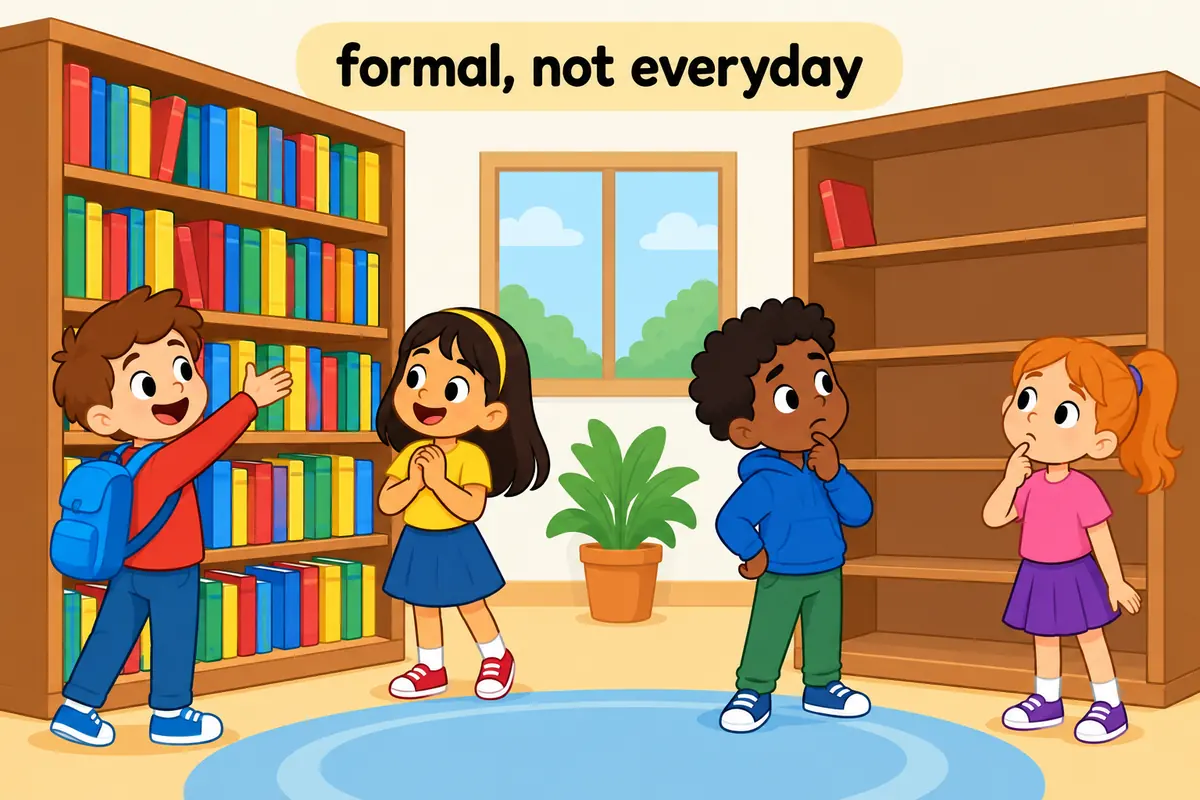
- The library has a paucity of books about dinosaurs.
- We have a paucity of balloons for the party.
14 Sentences with Paucity Examples
- The paucity of available library books made it challenging to complete my research paper on time.
- Many college students face a paucity of affordable housing options near campus.
- Due to the paucity of healthy food choices on campus, many students opt for fast food instead.
- Balancing academics, extracurricular activities, and social life can be difficult with a paucity of free time.
- The paucity of internship opportunities in our field has made it competitive to secure a placement.
- Managing finances as a college student can be tough, especially with a paucity of part-time job opportunities.
- With a paucity of study spaces on campus, finding a quiet place to focus can be a challenge.
- Time management skills are crucial for students dealing with a paucity of hours in the day.
- The constant paucity of funds makes it hard for some students to afford necessary textbooks and study materials.
- Students often struggle with a paucity of sleep due to late-night study sessions and early morning classes.
- The paucity of reliable public transportation options can make it difficult for students to commute to campus.
- Juggling multiple assignments with a paucity of organizational skills can lead to procrastination and stress.
- The paucity of academic support services makes it challenging for some students to excel in their classes.
- Social events can become scarce with a paucity of student clubs and organizations on campus.
How To Use Paucity in Sentences?
To use the word Paucity in a sentence, you can follow these simple steps. First, identify a situation where there is a lack or scarcity of something. For example, “There was a paucity of food at the party.” In this sentence, the word paucity is used to express the shortage of food available.
Next, remember to place the word paucity in the appropriate position within the sentence. It is typically used as a noun and works best when placed before the noun it is referring to. For instance, “The paucity of parking spaces made it difficult to find a spot.” Here, paucity is placed before the noun “parking spaces” to emphasize the lack of availability.
Additionally, you can enhance your sentence by providing more context or details to better convey the extent of the scarcity. For example, “The paucity of resources in the village resulted in limited access to healthcare.” This sentence not only uses the word paucity correctly but also elaborates on the consequences of the shortage.
In summary, to effectively use the word paucity in a sentence, identify a situation of scarcity, place the word appropriately in the sentence, and consider providing additional context for better clarity. With practice, you can confidently incorporate paucity into your writing to express a lack or insufficiency of something.
Conclusion
In conclusion, the paucity of resources in developing countries hinders their ability to provide adequate healthcare and education to their citizens. This results in a wide gap between these nations and their more developed counterparts. The paucity of research on this topic underscores the need for more attention and resources to be allocated towards understanding and addressing the disparities caused by limited resources.
By acknowledging and addressing the paucity of resources in certain regions, it is possible to work towards creating a more equitable global society where everyone has access to basic necessities such as healthcare, education, and economic opportunities. It is imperative for policymakers and global leaders to prioritize addressing this issue in order to bridge the gap between developed and developing countries and pave the way for a more prosperous and just world for all.


