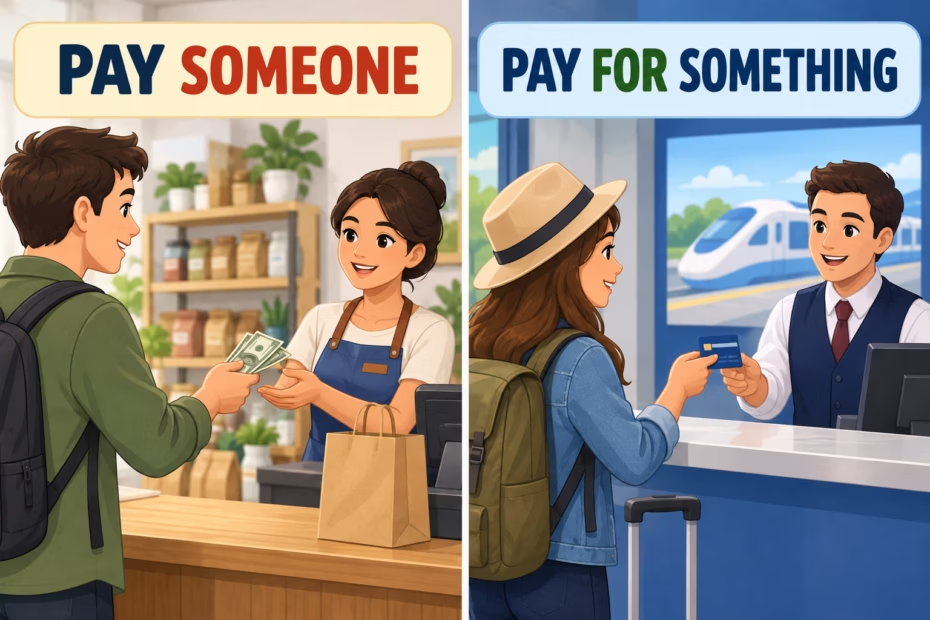
Pay is an irregular verb with several sentence patterns. You can pay someone, pay for something, or pay someone for something. It also appears in expressions such as pay attention to, where it means to give careful notice rather than money. In ordinary financial uses, its past tense and past participle are both paid.
The original “Pay Used in a Sentence” banner remains inline; the new pattern illustration is used as the page’s featured image.

Common sentence patterns with pay
| Pattern | Example | How it works |
|---|---|---|
| pay + person or organization | “I paid the driver.” | The person receiving the money is the direct object. |
| pay + amount or bill | “She paid the $12 fee.” | The amount owed or the bill is the direct object. |
| pay + person + amount | “We paid the guide $40.” | The recipient comes before the amount. |
| pay for + purchase or service | “He paid for the tickets.” | For introduces the item or service being purchased. |
| pay + person + for + work or item | “They paid Lee for repairing the fence.” | Name the recipient first, then use for to say what the payment covers. |
| pay by / pay in | “Can I pay by card?” / “She paid in cash.” | Use by for a method and commonly in cash for cash. |
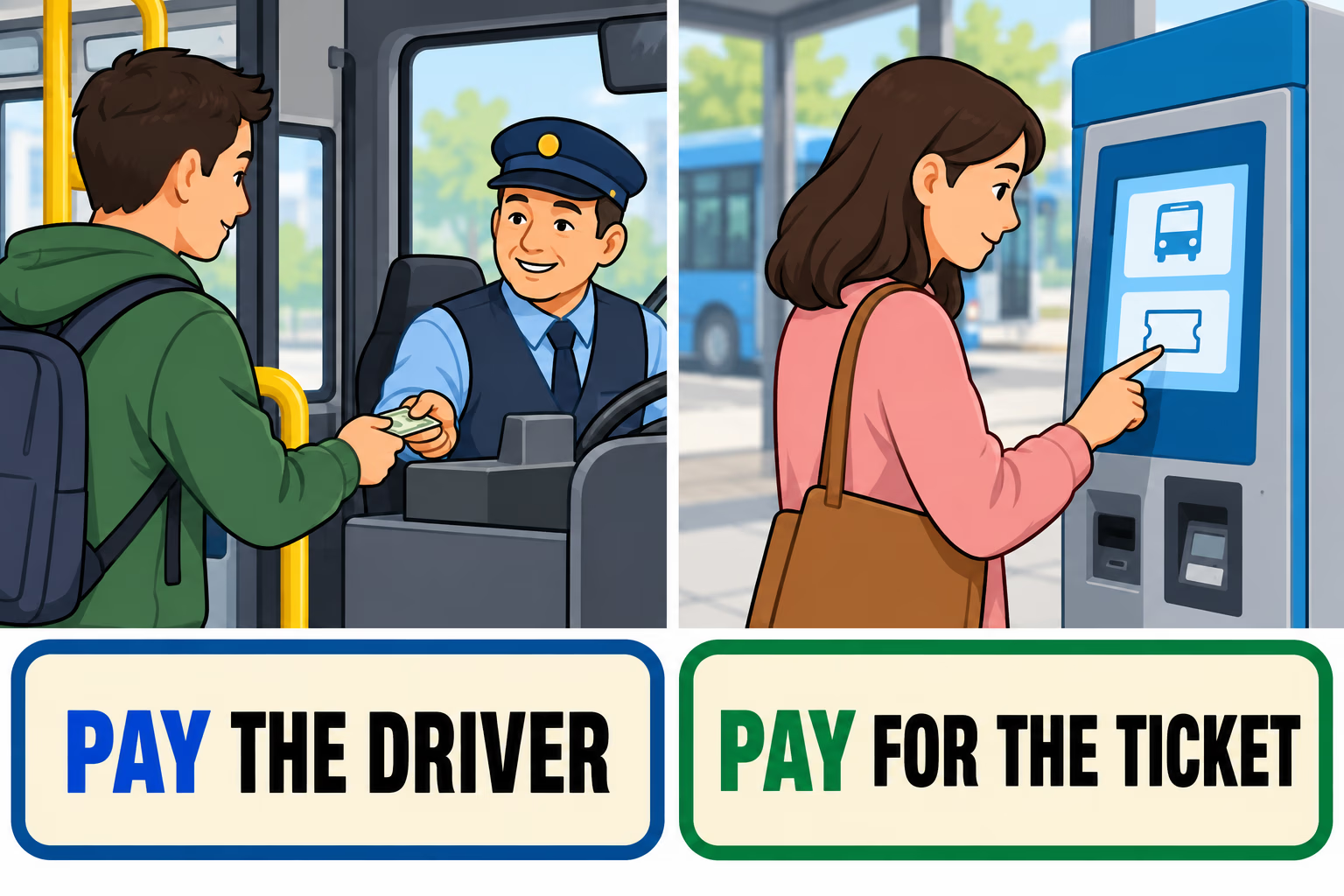
These frames help explain why the patterns are different: “I paid the mechanic” identifies who received payment, while “I paid for the repair” names the service. Both can appear in one sentence: “I paid the mechanic for the repair.” Cambridge Dictionary lists patterns such as pay somebody, pay for something, and pay somebody for something (Cambridge Dictionary: pay).
Pay, paid, paying: verb forms
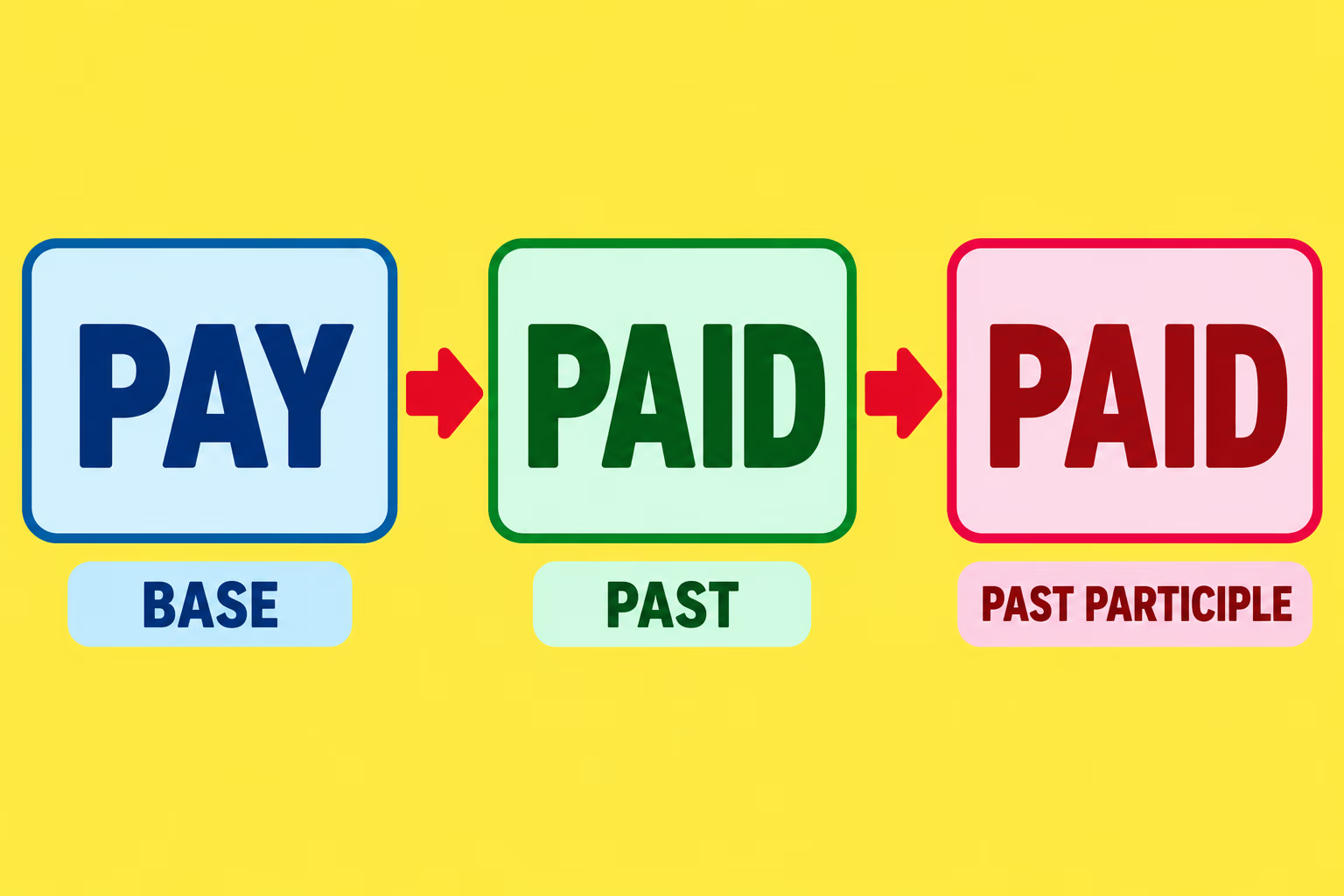
The usual forms are pay (base form), pays (third-person singular), paying (-ing form), and paid (simple past and past participle). Do not write payed for an ordinary bill, purchase, wage, or debt: “Yesterday I paid the bill,” and “The bill has been paid.” Cambridge’s grammar guide explicitly gives pay → paid (Spelling: common verb-ending mistakes).
Pay attention to, pay a visit, and other expressions
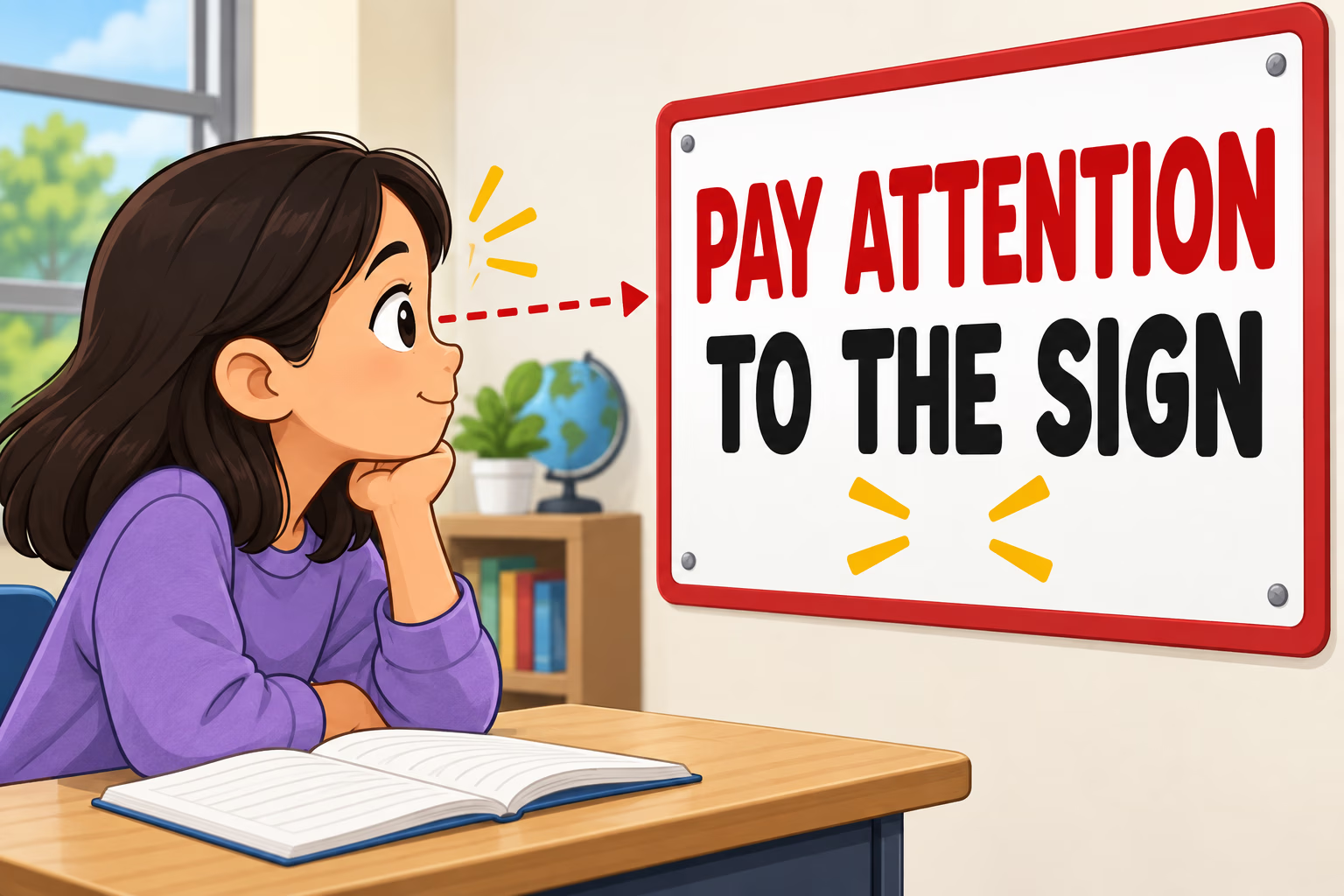
Pay attention to someone or something means to watch, listen to, or think about it carefully. Use to before the focus: “Please pay attention to the directions.” This expression is not about giving money. Cambridge Dictionary defines pay attention as noticing or thinking about something carefully (Cambridge Dictionary: pay attention to).
Other common expressions include pay someone a visit (visit someone), pay your respects (show respect or sympathy), and pay a compliment (say something admiring). In each, pay means give or offer something figuratively, not hand over cash.
Pay can also be a noun
Pay is usually a verb in sentences about transactions, but it can also be an uncountable noun meaning money earned for work: “The job offers fair pay,” or “She received her first week’s pay.” The meaning and grammar depend on how the word fits into the sentence.
Frequently asked questions
Is it “paid” or “payed”?
Use paid as the past tense and past participle for ordinary payments: “I paid for lunch,” and “The invoice has been paid.”
Do you pay someone or pay for someone?
Use pay someone when that person receives the money (“I paid the driver”). Use pay for something for the purchase or service (“I paid for the ride”). You can combine them: “I paid the driver for the ride.”
What preposition follows “pay attention”?
Use to before the person or thing receiving attention: “Pay attention to the example.”
About the original text below: It is retained unchanged as a set of examples. Its statement that you form the past by adding -ed conflicts with its own example: ordinary financial uses take the irregular forms paid and paid, as explained above.
Have you ever wondered how to use the word “pay” correctly in a sentence? “Pay” is a versatile verb that indicates giving money for goods, services, or debts. It functions as a crucial element in financial transactions and negotiations.
Understanding how to construct an effective sentence with “pay” is essential for clear communication in various contexts. Whether you are discussing salaries, bills, or purchases, knowing how to properly incorporate “pay” into your sentences can enhance your writing and speaking skills.
7 Examples Of Pay Used In a Sentence For Kids
- You have to pay for the toys you buy.
- Do not forget to pay for your snacks!
- It is important to pay attention in class.
- You can pay for your ice cream with money.
- You need to pay for your bus ticket.
- Make sure to pay for the vegetables at the market.
- Remember to pay for your school books.
14 Sentences with Pay Examples
- Pay your college tuition fees before the deadline to avoid any late fees.
- Remember to pay your hostel fees for the semester by the specified due date.
- Don’t forget to pay for your library fines if you have any overdue books.
- It’s important to pay attention in class to get a better understanding of the subject.
- Make sure to pay for your exam registration on time to secure your seat.
- Always pay for your canteen bills using digital payment methods for convenience.
- Pay for your textbooks and study materials to stay ahead in your academic journey.
- Consider splitting the bill with your friends when eating out to evenly pay for the meal.
- Don’t hesitate to pay for additional coaching classes if you need extra help with your studies.
- Use your internship earnings to pay off any outstanding student loans you may have.
- Remember to pay for your college ID card replacement if you lose your original card.
- It’s advisable to pay for professional resume writing services to polish your CV for job applications.
- Budget your monthly expenses carefully to ensure you can pay for your basic necessities.
- Make sure to pay your annual magazine subscription fees to stay updated with industry trends.
How To Use Pay in Sentences?
To use “Pay” in a sentence correctly, first identify when it is most appropriate to use this word. “Pay” is a verb that means to give someone money in exchange for goods or services.
When constructing a sentence with “Pay,” make sure to place “Pay” before the recipient of the payment and the amount being paid. For example, “I need to pay the babysitter $20 for watching my children.”
Remember that “Pay” can also be followed by a preposition like “for” to indicate what the payment is for. For instance, “She needs to pay for her groceries before leaving the store.”
To make your sentence more specific, include the method of payment being used. For example, “I will pay you through an online bank transfer for the items I purchased.”
You can also use the past tense of “Pay” by adding “-ed” to the end of the word. For example, “He paid the bill at the restaurant last night.”
Additionally, remember to conjugate the verb “Pay” based on the subject of the sentence. For example, “They have to pay their rent by the end of the month.”
By following these guidelines, you can effectively incorporate the word “Pay” in a sentence and communicate your payment intentions clearly.
Conclusion
In summary, the examples of sentences with the keyword “pay” illustrate the various ways in which the word can be used to convey different meanings and contexts. From discussing salary payments and overdue bills to highlighting the act of compensating for goods or services, “pay” is a versatile term that is crucial in everyday communication.
Whether it is referring to settling a debt, compensating a worker for their labor, or making a transaction, the word “pay” plays a significant role in expressing financial transactions and obligations. Understanding the different nuances and contexts in which “pay” is used can enhance communication and ensure clarity in discussions related to monetary exchanges.


