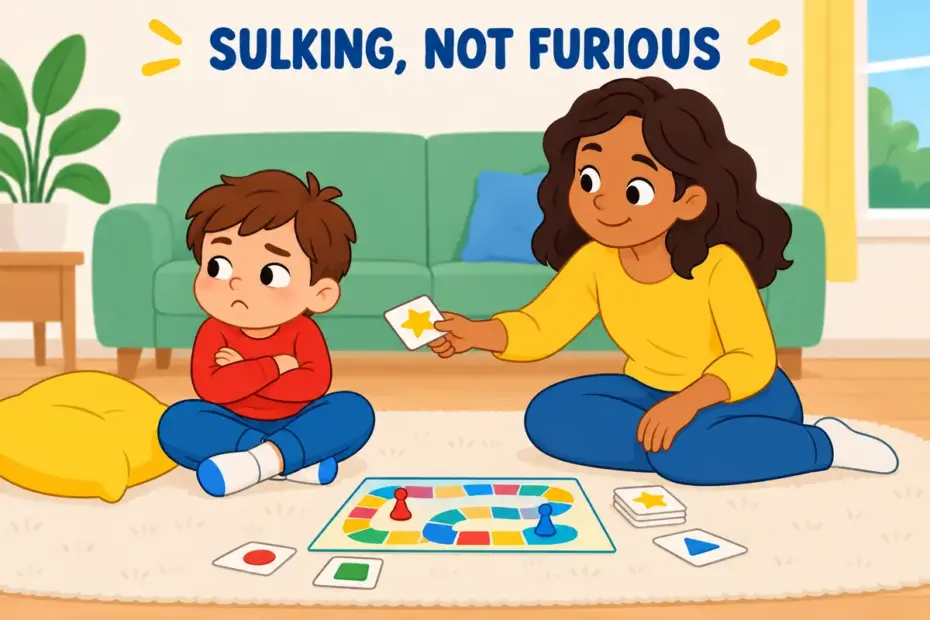
Petulant means childishly sulky or quick to take offence over something small, and it criticises the reaction rather than the person. To use petulant in a sentence, give it a person, a tone or a gesture: “A petulant shrug answered the referee.” The adjective precedes a noun or follows a linking verb such as sounded or became.
Petulant at a glance
- Petulant is an adjective; petulantly is the adverb and petulance the noun.
- It describes sulky, childish irritation, usually over a minor disappointment.
- It appears before a noun (a petulant child) or after a linking verb (she sounded petulant).
- The register is critical and slightly literary, common in reviews and narration.
- The commonest error is reaching for it when a milder word such as grumpy fits better.
What does petulant mean?
Petulant is an adjective meaning childishly sulky or bad-tempered when something small does not go a person’s way. The Cambridge entry for petulant keeps that sense of childish resentment, which separates it from plain anger: a petulant person is offended, not furious. Where the irritation is mild and passing, grumpy describes it without the note of blame.
| Sense | Plain meaning | Example sentence |
|---|---|---|
| Sulky disappointment | Childish resentment over a small setback | A petulant sigh met the news that the trip was cancelled. |
| Bad-tempered reply | A sharp, offended answer to a minor limit | He gave a petulant answer when asked to share. |
| Of a gesture or act | Showing that childish resentment | A petulant flick of the switch ended the argument. |
One limitation is worth stating plainly. Petulant is a judgement, not a neutral description, and applied to an adult it suggests the behaviour is beneath them. A factual sentence about stress, pain or illness needs a different word.
How do you use petulant in a sentence?
Petulant is an adjective, so it labels a person, a tone or a gesture rather than an event. The five patterns below show where the word sits and what each position emphasises.
| Pattern | Example | What it signals |
|---|---|---|
| petulant + noun | a petulant child | Criticises the person or thing directly. |
| linking verb + petulant | She sounded petulant. | Describes a manner, not an action. |
| petulant + about + noun | He was petulant about the seating. | Names the small thing that was resented. |
| petulantly + verb | She petulantly pushed the plate away. | Shows the manner through an action. |
| petulant + noun, of a reaction | A petulant shrug ended the discussion. | Pairs the adjective with a childish gesture. |
A sulky silence is the quieter cousin of a petulant complaint.
Petulant in a sentence: examples across contexts
Petulant keeps the same meaning while the setting changes. The nine sentences below move from a classroom to a sports report, and each one shows the small setback that the childish reaction answers.
| Context | Example sentence | Why this works |
|---|---|---|
| Classroom | A petulant mutter ran round the room when the test was moved. | The reaction follows a small change, which is where the word belongs. |
| Workplace email | Keep a petulant tone out of a message to your manager. | Shows the word flagging a register that will not be forgiven. |
| News report | The captain’s petulant protest earned him a fine. | Names a public figure whose reaction was judged childish. |
| Review | The novel’s petulant narrator tries the reader’s patience. | Applies the word to a whole created voice. |
| Conversation | Do not be petulant just because you lost the toss. | Uses the direct address that is common in speech. |
| Parenting | A tired child can sound petulant without meaning to be rude. | Shows the word softening when a cause is named. |
| Sports writing | A petulant kick at the post summed up the team’s evening. | Pairs the adjective with a single telling action. |
| Academic prose | Avoid a petulant tone when you disagree with a source. | States the register a scholarly reply should keep. |
| Fiction | A petulant curl of the lip was her only reply. | Uses a physical detail instead of naming the mood. |
Notice that five of the nine sentences name the small cause of the reaction. The word lands hardest when the cause is too slight for the sulk.
Petulant vs peevish
Petulant is often confused with peevish, which also describes low irritation but with a different cause and colour.
| Attribute | petulant | peevish |
|---|---|---|
| Core meaning | Childishly sulky over a setback | Irritably complaining about discomfort |
| Typical subject | A child, or an adult acting childishly | A tired, unwell or uncomfortable person |
| Cause | A small refusal or disappointment | Ongoing minor annoyance |
| Emotional colour | Offended and resentful | Fretful and querulous |
| Register | Critical, slightly literary | Descriptive, mildly critical |
Verdict: choose petulant for a sulky, offended reaction to a refusal, and a peevish mood for fretful complaining about ongoing discomfort.
Word forms and grammar of petulant
Petulant builds a small, regular family. The table lists the forms and the near neighbours that learners mix up.
| Form | Part of speech | Example |
|---|---|---|
| petulant | adjective | a petulant answer |
| petulantly | adverb | He answered petulantly. |
| petulance | noun | Her petulance surprised the coach. |
| petulancy | noun, rare | His petulancy faded by morning. |
| querulous | adjective — different meaning | A querulous voice asked for the manager. |
The noun petulance names the behaviour itself, which makes it useful in a report.
Common mistakes with petulant
- Incorrect:
The exhausted nurse was petulant after a twelve-hour shift.Correct: The exhausted nurse was irritable after a twelve-hour shift. Rule: Petulant blames character, so tiredness calls for a neutral word. - Incorrect:
He was petulant with rage.Correct: He was furious. Rule: Petulant is sulky resentment, not full anger. - Incorrect:
Her petulance comment spoiled the meeting.Correct: Her petulant comment spoiled the meeting. Rule: Use the adjective before a noun, not the noun. - Incorrect:
The crowd turned petulant when the band was late.Correct: The crowd grew restless when the band was late. Rule: Petulant suits one person’s sulk, not a whole crowd’s mood. - Incorrect:
She spoke petulance to the referee.Correct: She spoke petulantly to the referee. Rule: The manner needs the adverb, not the noun.
A querulous complaint nags repeatedly, which is different again from one petulant sulk.
Practice using petulant
Work through the six items, then check the reasoning rather than only the answer.
- Fill the gap: A ______ sigh greeted the news that practice was cancelled.
- Choose the better word: After a sleepless night, the commuter was (petulant / irritable).
- Correct the error: He kicked the chair in petulant fury.
- Build a sentence: use sounded petulant about a polite refusal that a child resents.
- Spot the register: which belongs in a referee’s report — the player’s answer was petulant, or the player totally sulked?
- Rewrite with the adverb: Her reply was petulant. Use petulantly instead.
Answers
- petulant — the sigh is a childish reaction to a small setback.
- irritable — tiredness is a neutral cause, so petulant would add unfair blame.
- He was petulant when the chair would not move — petulant is an adjective, not an intensifier of fury.
- Model answer: His answer sounded petulant after he was told to wait his turn.
- The player’s answer was petulant — a report keeps formal wording and avoids totally.
- She replied petulantly — the adverb carries the manner of the sulk.
The bottom line
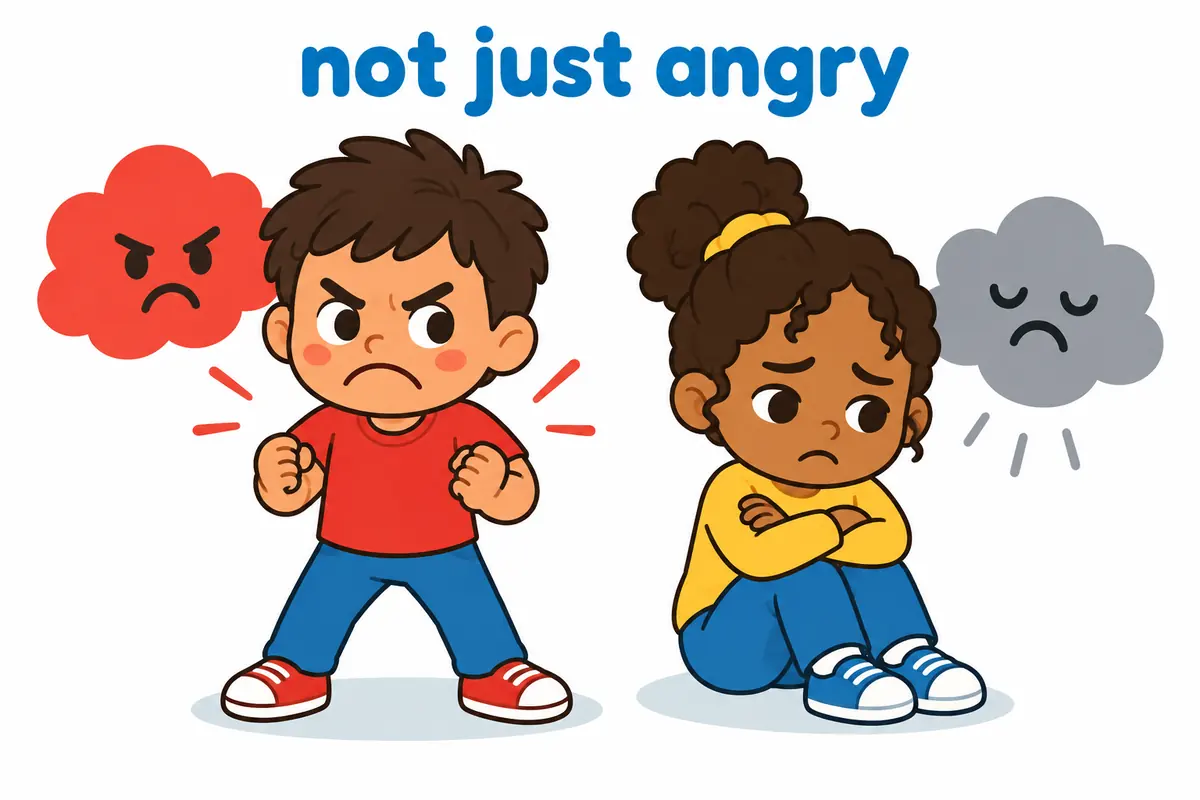
Use petulant in a sentence when a small disappointment produces a sulky, childish reaction, and name the slight cause so the reader sees why the word is a judgement. The two nuances that decide most sentences are these: petulant is narrower than angry, and it blames character, so it suits criticism rather than neutral description. For passing irritation, grumpy or sullen is the fairer choice.
Frequently asked questions about petulant
Can petulant describe an adult?
It can, and the effect is usually critical. Applied to an adult, petulant suggests the reaction is beneath them, which is why reviewers use it of a public figure and why a manager would avoid it in a written warning. A neutral description of an adult would name the cause instead, such as tired or frustrated.
Is petulant a strong criticism?
It is a firm judgement rather than a mild one, because it labels behaviour as childishly sulky. Still, it stops short of words like vicious or vicious-tempered, which imply real harm. In a review it signals that a performance or a character reads as petty rather than genuinely dangerous or cruel.
What is the noun form of petulant?
The noun is petulance, and it names the behaviour rather than the person: her petulance tired the whole team. A rarer form, petulancy, means the same thing and appears mainly in older writing. Both take a possessive or an article, as in the child’s petulance or a moment of petulance.
How is petulant different from angry?
Angry covers any strong displeasure, from a serious wrong to a minor one, while petulant narrows the feeling to sulky, childish resentment over something small. A petulant person is offended and withdrawn rather than openly furious. That is why petulant rarely appears in a sentence about a justifiable or proportionate reaction.
Have you ever encountered someone who was stubborn and easily irritated, displaying a childish attitude? This behavior can be described as “petulant.”
The term “petulant” is used to characterize individuals who are sulky, whiny, and prone to throwing temper tantrums when things don’t go their way. It reflects an immature and impatient demeanor that can be disruptive and frustrating to others.
7 Examples Of Petulant Used In a Sentence For Kids
- The petulant child stomped his feet when he didn’t get his way.
- She made a petulant face when her friend took her toy.
- The petulant boy refused to share his candy with his sister.
- He threw a petulant tantrum when he was told it was time to go home.
- The petulant girl crossed her arms and pouted when she was asked to clean up.
- The petulant student frowned and kicked the desk in frustration.
- The petulant baby cried loudly when his favorite toy was taken away.
14 Sentences with Petulant Examples
- Petulant students stormed out of the classroom after being assigned a group project they felt was unfair.
- During the debate competition, a petulant contender kept interrupting others and refused to follow time limits.
- The professor was taken aback by the petulant reaction of a student who received a lower grade than expected on their assignment.
- A group of petulant students staged a protest outside the university administration building over a sudden fee hike.
- Some students displayed petulant behavior when they were unable to register for popular elective courses due to limited availability.
- A petulant student argued with the librarian over having to pay a fine for returning a book past its due date.
- Amidst the chaos of exam week, a petulant student complained loudly about the difficulty of the test.
- Two friends had a falling out after one made a petulant remark about the other’s academic performance.
- A petulant student resorted to cheating during an online quiz out of frustration with the challenging questions.
- The group project quickly spiraled into chaos when a petulant team member refused to compromise on their ideas.
- Due to a mix-up in scheduling, a petulant student was informed they would have to wait until the next semester to take a required course.
- An argument broke out in the cafeteria when a petulant student accused their friend of eating the snack they had been saving.
- A petulant student loudly complained to the professor about the outdated textbooks being used in class.
- In a moment of petulant frustration, a student slammed their laptop shut and stormed out of the study group meeting.
How To Use Petulant in Sentences?
To correctly use the word Petulant in a sentence, you must understand its meaning and context. Petulant is an adjective that describes someone who is easily irritated, impatient, or sulky over minor issues.
Here is a guide on how to use Petulant in a sentence:
-
Identify a person’s behavior or actions that demonstrate impatience or irritability over trivial matters.
-
Use Petulant before a noun (person, place, or thing) to clearly convey the attitude or behavior of the individual. For example, “The petulant child stormed off in a huff when she didn’t get her way.”
-
Ensure that the sentence captures the essence of someone behaving in a childish or moody manner due to minor frustrations or disappointments.
-
Avoid overusing Petulant in a sentence, as it carries a strong negative connotation and should only be used when accurately depicting someone’s behavior as described above.
-
Practice incorporating Petulant into your writing to improve your vocabulary and communication skills. This will help you express yourself more effectively and expand your linguistic capabilities.
Remember, using Petulant in a sentence requires an understanding of its meaning and appropriate context. With these guidelines, you can confidently incorporate the word into your writing and conversations.
Conclusion
In conclusion, the petulant behavior displayed by the child was evident when he threw a tantrum in the store. His demanding and impatient attitude showcased his petulant nature, as he refused to wait for his turn. The teacher became frustrated with the student’s petulant outbursts, finding it challenging to handle his immature and uncooperative behavior.
It is clear that petulant behavior stems from a sense of entitlement, impatience, and an inability to control one’s emotions. Addressing these underlying issues is crucial in handling petulant individuals and helping them develop more mature and respectful attitudes. By addressing and correcting these behaviors early on, individuals can cultivate healthier and more positive relationships in various social settings.


