Plausible means seeming reasonable or likely to be true, even when it has not been proved. To use plausible in a sentence, describe the story, excuse or explanation that sounds believable: “Her excuse sounded plausible.” The adjective usually sits before a noun or after a linking verb such as sound or seem.
Plausible at a glance
- Plausible is an adjective; it forms the adverb plausibly and the noun plausibility.
- Plausible describes something that seems reasonable, not something proved true.
- It works before a noun (a plausible excuse) and after linking verbs (the excuse sounds plausible).
- Common collocations are plausible explanation, plausible reason and plausible deniability.
- The commonest error is treating plausible as a synonym for probable or true.
What does plausible mean?
Plausible is an adjective meaning seeming reasonable or likely to be true. The Cambridge entry for plausible treats this as the central sense, and every natural example keeps a small doubt in view: a plausible explanation convinces you at first hearing without proving anything. A nimble defence lawyer wins attention rather than certainty by giving the jury a convincing account that still leaves room for doubt.
| Sense | Plain meaning | Example sentence |
|---|---|---|
| Seeming reasonable | A story or excuse that sounds true | Her excuse for missing the bus sounded plausible. |
| Seemingly trustworthy | A person who appears sincere but may deceive | The caller gave a plausible account of the refund. |
| Logically possible | A theory that fits the known facts | A gas leak is a plausible cause of the smell. |
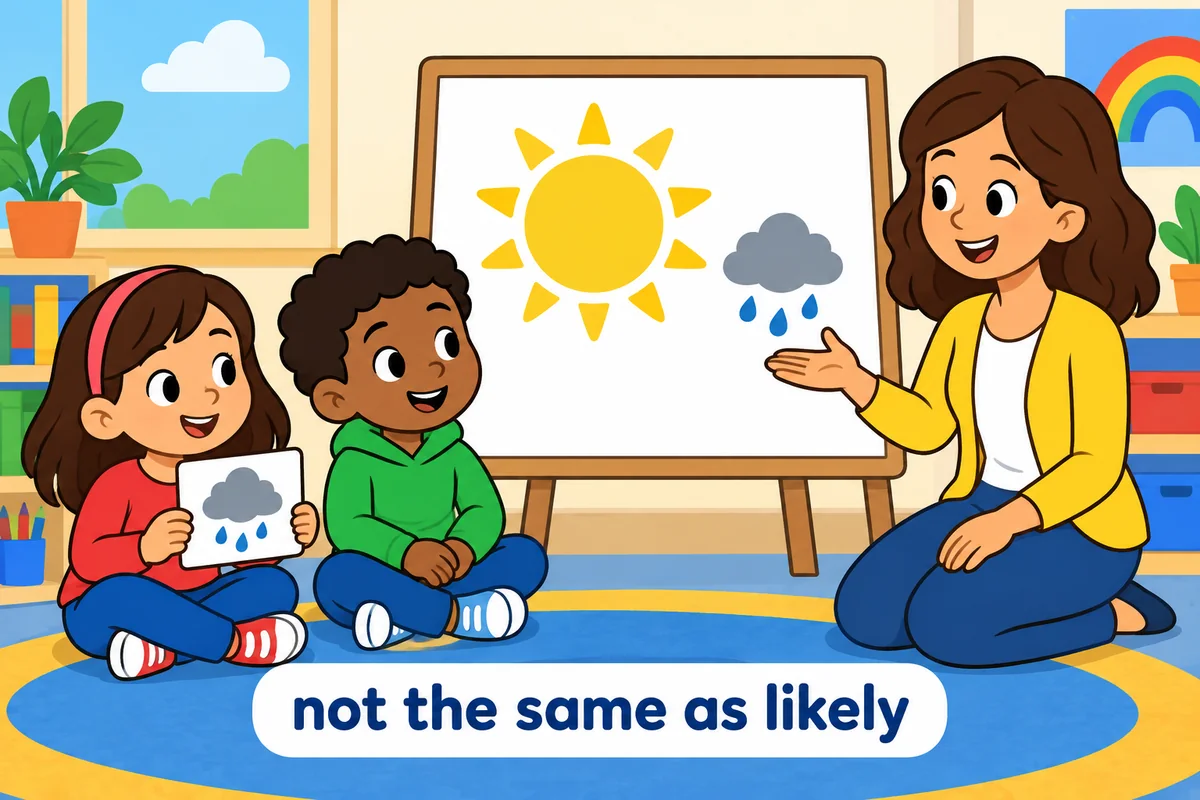
One limitation matters from the start: plausible does not mean true, proved or even probable. A story can be plausible and false at the same time, which is why detectives and editors reach for the word when they want to be careful. When proof has arrived, true, confirmed or credible states the stronger claim.
How do you use plausible in a sentence?
Plausible slots into a sentence in four main ways, and the choice usually depends on whether you are describing a noun or commenting on it.
| Pattern | Example | What it signals |
|---|---|---|
| plausible + noun | The teacher heard a plausible excuse. | Attributive use; the judgement travels with the noun. |
| linking verb + plausible | The story sounds plausible. | Predicative use; sound, seem, look and be are the usual verbs. |
| it is plausible that + clause | It is plausible that the delay was caused by snow. | Hedged, impersonal claim; common in reports. |
| the most plausible + noun | The most plausible theory won the prize. | Gradable comparison between competing explanations. |
| plausible deniability | The memo gave the minister plausible deniability. | Fixed phrase; a way to avoid responsibility. |
A learner who writes it is plausible raining is reaching for the wrong structure: the adjective needs a noun or a that-clause, never a gerund. To modify a verb, switch to the adverb and write that he explained the delay plausibly.
Plausible in a sentence: examples across contexts
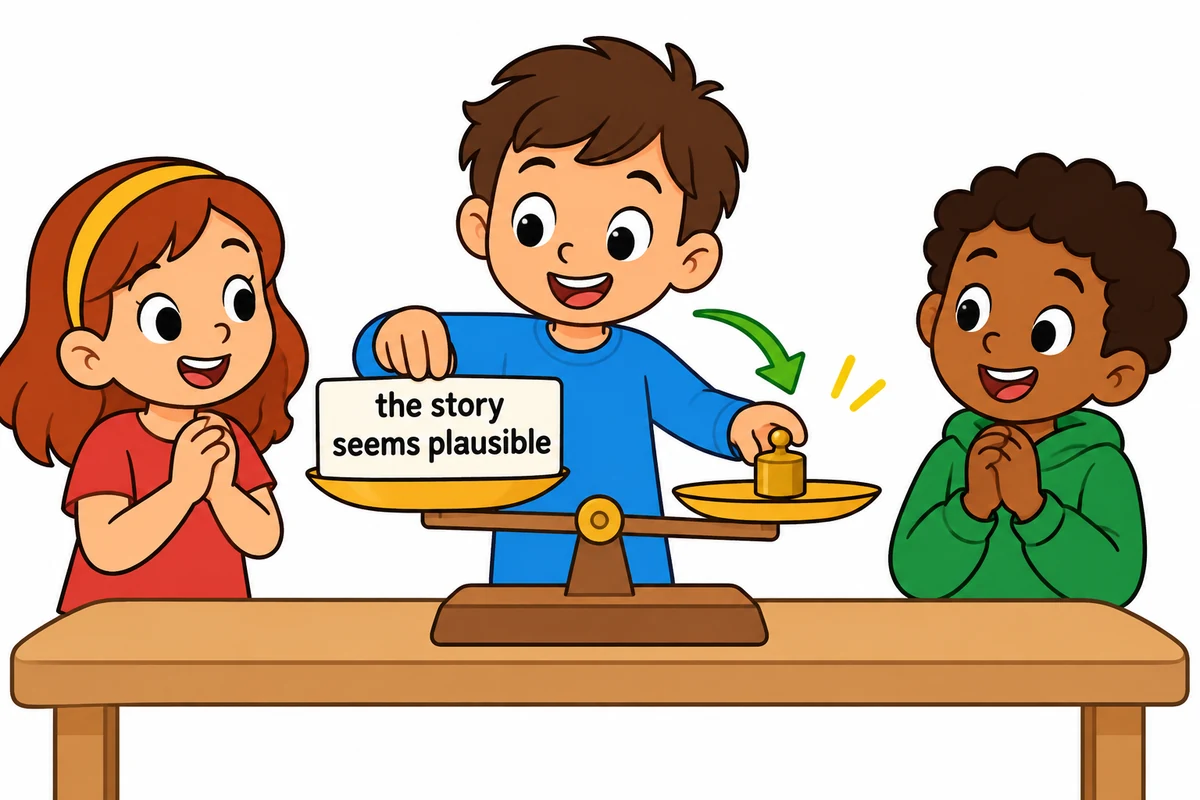
Plausible changes register more than it changes meaning. The nine sentences below keep the same adjective while moving from a classroom to a law report, and each one shows what made the claim believable.
| Context | Example sentence | Why this works |
|---|---|---|
| Classroom | The missing ruler turned up in Leo’s tray, which made his excuse plausible. | A concrete discovery supports the claim without proving it. |
| Workplace email | The supplier offered a plausible reason for the short delivery. | Formal tone; the adjective softens a claim under review. |
| News report | Police called the witness account plausible but unconfirmed. | Pairs the word with its natural companion, unconfirmed. |
| Legal writing | Counsel argued that mistaken identity was the most plausible explanation. | The superlative ranks competing accounts. |
| Science writing | The model gives a plausible path for the mineral to form in cold water. | Hedges a hypothesis that fits the data. |
| Sports commentary | A late equaliser was the only plausible outcome after that pressure. | Describes what the game itself made believable. |
| Conversation | That sounds plausible, but I want to check the dates. | Everyday use that keeps doubt alive. |
| Academic prose | A plausible reading of the poem links the storm to grief. | Interprets without asserting proof. |
| History essay | A plausible motive for the treaty was fear of a longer war. | Weighs a cause that fits the surviving evidence. |
Plausible vs probable and believable
Plausible sits between two near neighbours. Believable reports how a claim strikes you, and probable reports the odds of an outcome, while plausible keeps a judgement of reasonableness with the doubt still attached.
| Attribute | plausible | probable | believable |
|---|---|---|---|
| Core idea | Seeming reasonable | Likely to happen | Able to be believed |
| What it grades | The quality of an explanation | The chance of an outcome | The credibility of a claim |
| Typical subject | An excuse, story or theory | An event or result | A person or account |
| What it implies | Doubt remains | The odds favour it | The listener accepts it |
| Register | Neutral to formal | Neutral | Neutral |
Verdict: choose probable for odds, believable for how a claim lands, and plausible when a reasonable case exists but proof does not. When an argument survives close scrutiny it becomes tenable, which is a stronger claim than plausible.
Word forms and grammar of plausible
Plausible behaves like a regular adjective, and the table also lists the negative form learners build by mistake.
| Form | Part of speech | Example |
|---|---|---|
| plausible | adjective | A plausible reason calmed the room. |
| plausibly | adverb | He explained his absence plausibly. |
| plausibility | noun | The plausibility of the story divided the jury. |
| implausible | adjective, opposite | The implausible alibi collapsed at once. |
| unplausible | adjective, non-standard | Write implausible; unplausible is not standard English. |
| plausibleness | noun, rare | Plausibleness is a clumsy substitute for plausibility. |
Common mistakes with plausible
- Incorrect:
The forecast says rain is plausible tomorrow.Correct: Rain is probable tomorrow. Rule: Plausible judges believability, not likelihood, so it cannot describe the chance of weather. - Incorrect:
Her alibi was plausible, so the police released her.Correct: Her alibi was credible, so the police released her. Rule: Credible fits evidence that has been checked; plausible only means it seems reasonable. - Incorrect:
The idea sounded plausible true.Correct: The idea sounded plausible. Rule: Plausible is a single adjective and never takes a second adjective after it. - Incorrect:
She answered plausible and everyone believed her.Correct: She answered plausibly and everyone believed her. Rule: Use the adverb plausibly to describe how an action is done. - Incorrect:
It is plausible raining this afternoon.Correct: It is plausible that it will rain this afternoon. Rule: The adjective needs a noun or a that-clause, not a gerund. - Incorrect:
The excuse was unplausible.Correct: The excuse was implausible. Rule: The negative of plausible is implausible, never unplausible.
Practice using plausible
Work through the six items, then check the reasoning rather than only the answer.
- Fill the gap: The jury heard two accounts, and the second sounded more ______.
- Choose the better word: Rain is (plausible / probable) by evening, so take an umbrella.
- Correct the error: She answered plausible and everyone believed her.
- Build a sentence: use plausible plus a noun about a lost dog.
- Spot the register: which belongs in a science report — the result offers a plausible mechanism, or the result is kinda plausible?
- Rewrite with the adverb: His excuse was plausible. Use plausibly instead.
Answers
- plausible — it judges how believable one account seemed, not how likely it is.
- probable — rain is an outcome, and probable reports its odds.
- She answered plausibly — an adverb is needed to describe how she answered.
- Model answer: The boy gave a plausible reason for the missing homework.
- The result offers a plausible mechanism — a report avoids kinda and keeps a formal register.
- He explained his absence plausibly — the adverb replaces the adjective after a verb.
The bottom line
Use plausible in a sentence when something seems reasonable but is not yet proved, and let the word keep its built-in doubt. Two details decide most sentences: plausible describes believability rather than likelihood, so it never replaces probable, and it works both before a noun and after a linking verb. Reserve it for claims that could still turn out to be wrong.
Frequently asked questions about plausible
Is plausible a positive or negative word?
Plausible is neutral in tone but cautious in meaning. It praises an explanation only up to a point, because a plausible story still needs checking. A teacher may call your theory plausible as encouragement, while an editor uses the word to warn that the evidence is not yet strong.
What is the difference between plausible and possible?
Possible means something can happen or exist; plausible means it seems reasonable to believe. A claim can be possible yet far-fetched, so it is possible but not plausible. Use possible for bare chance and plausible when the explanation itself holds together.
Does plausible mean true?
No. Plausible means seeming reasonable or likely to be true, not proved. A detective may call a suspect’s story plausible while still gathering evidence, because the word leaves room for doubt. When proof arrives, use true, confirmed or credible instead.
Can you call a person plausible?
You can, though the effect is often critical. A plausible person seems sincere and convincing, and the word hints that the appearance may be misleading, as in a plausible rogue. For an honest, well-evidenced person, credible or trustworthy is the safer choice.
Have you ever wondered what it means when something is described as “plausible”? In the realm of language and communication, the term “plausible” is often used to refer to something that is believable or seemingly reasonable.
A plausible statement or claim is one that appears to be credible or convincing based on the information available. It is an assertion that is not obviously false and is supported by enough evidence or logic to make it worthy of consideration.
7 Examples Of Plausible Used In a Sentence For Kids
- The story about a talking rabbit is plausible.
- It is plausible to see a rainbow after the rain.
- Pretending to be a superhero is plausible in our games.
- The idea of going on a treasure hunt is plausible with a map.
- Making a castle out of sand is plausible at the beach.
- Dressing up as a princess or superhero is plausible for a costume party.
- The concept of animals talking in a cartoon is plausible.
14 Sentences with Plausible Examples
- It is plausible that the final exam schedule might get revised, so stay updated through official announcements.
- Plausible internship opportunities are often shared on the college notice board, so make sure to check it regularly.
- Balancing academics and extracurricular activities is plausible if you create a well-organized schedule.
- It is plausible to seek guidance from seniors regarding course selections and career options.
- Attending group study sessions can be a plausible way to enhance your understanding of difficult subjects.
- Joining a student organization is a plausible way to develop leadership skills and expand your network.
- Taking short breaks while studying is plausible to avoid burnout and maintain productivity.
- Exploring online courses to supplement your college education is plausible for gaining additional knowledge.
- Participating in college events and competitions is a plausible way to showcase your talents and skills.
- It is plausible to utilize the college library for research projects and assignments.
- Forming study groups with classmates is plausible for discussing complex topics and exchanging ideas.
- Asking professors for clarification on challenging concepts is plausible to improve your academic performance.
- Setting realistic goals for each semester is plausible for tracking your progress and staying motivated.
- Seeking psychological counseling services for mental health support is a plausible option for dealing with academic stress and personal challenges.
How To Use Plausible in Sentences?
To use “Plausible” in a sentence, start by understanding that it is an adjective used to describe something that seems reasonable or believable.
For example, you could say, “The detective found the witness’s account to be quite plausible given the evidence.” In this sentence, plausible is used to indicate that the detective found the witness’s account to be believable or likely to be true based on the evidence available.
Another way to use “Plausible” in a sentence is, “The student came up with a plausible excuse for being late to class.” Here, plausible is used to describe the excuse as being reasonable or credible.
When using plausible in a sentence, it is essential to ensure that the context supports the idea of something being believable or realistic. Be mindful of the fact that using plausible incorrectly might create confusion or misinterpretation in communication. Practice incorporating plausible into your sentences to become more comfortable with using the word effectively.
Overall, incorporating plausible into your vocabulary can enhance your ability to express ideas and opinions more clearly and accurately. Remember, practice makes perfect, so keep using plausible in sentences to improve your language skills.
Conclusion
In conclusion, sentences with plausible are those that are reasonable, believable, or likely to be true based on available evidence or logic. These sentences present information in a way that seems credible and persuasive, although they may not necessarily be proven as absolute truths. It is important to critically assess such sentences to discern the level of truth or validity they hold.
When encountering sentences with plausible, it is advisable to exercise caution and seek corroborating evidence or alternative viewpoints. While these sentences may appear convincing at first glance, a thorough examination and consideration of different perspectives can enhance understanding and lead to more informed judgments.


