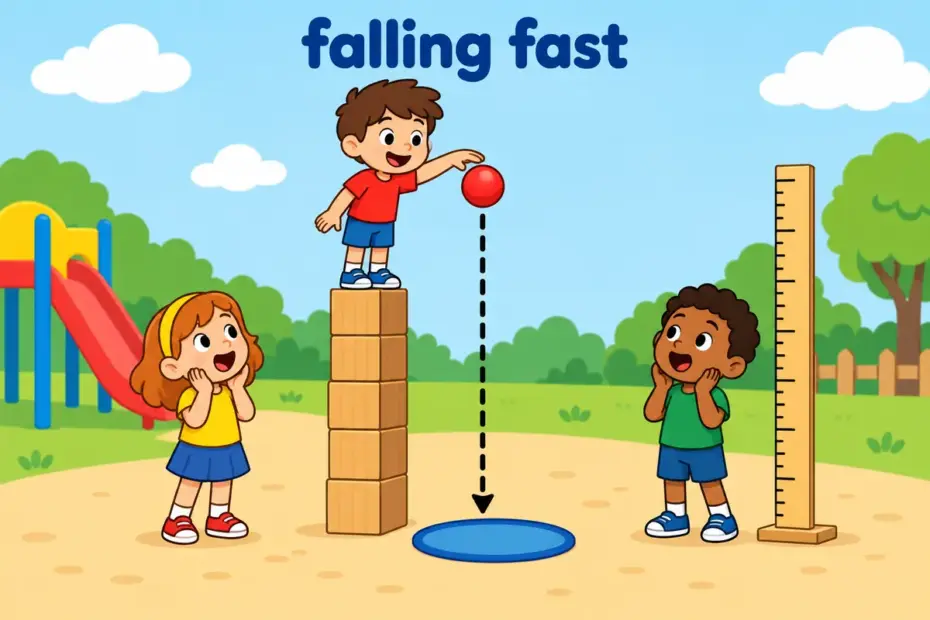
Plummet means to fall or drop suddenly and steeply, and it is most common in reports about prices, temperatures and ratings. To use plummet in a sentence, name what falls and let the verb carry the speed: “Sales plummeted in the final quarter.” Plummet is intransitive, so it never takes an object.
Plummet at a glance
- Plummet is an intransitive verb: prices plummet, but nothing plummets them.
- Its forms are plummet, plummets, plummeted and plummeting.
- The strongest collocates are prices, sales, shares, profits, temperatures and ratings.
- The verb implies speed and steepness, so plummet slowly contradicts itself.
- A separate noun, plummet, is the weighted line that builders use to test whether a wall is vertical.
What does plummet mean?
Plummet is a verb meaning to fall very quickly and steeply, and the Cambridge Dictionary entry for plummet gives both the physical sense of dropping straight down and the figurative sense of a sharp fall in value. The two senses share one idea: the movement is fast, steep and downward, with no suggestion that anyone is controlling it.
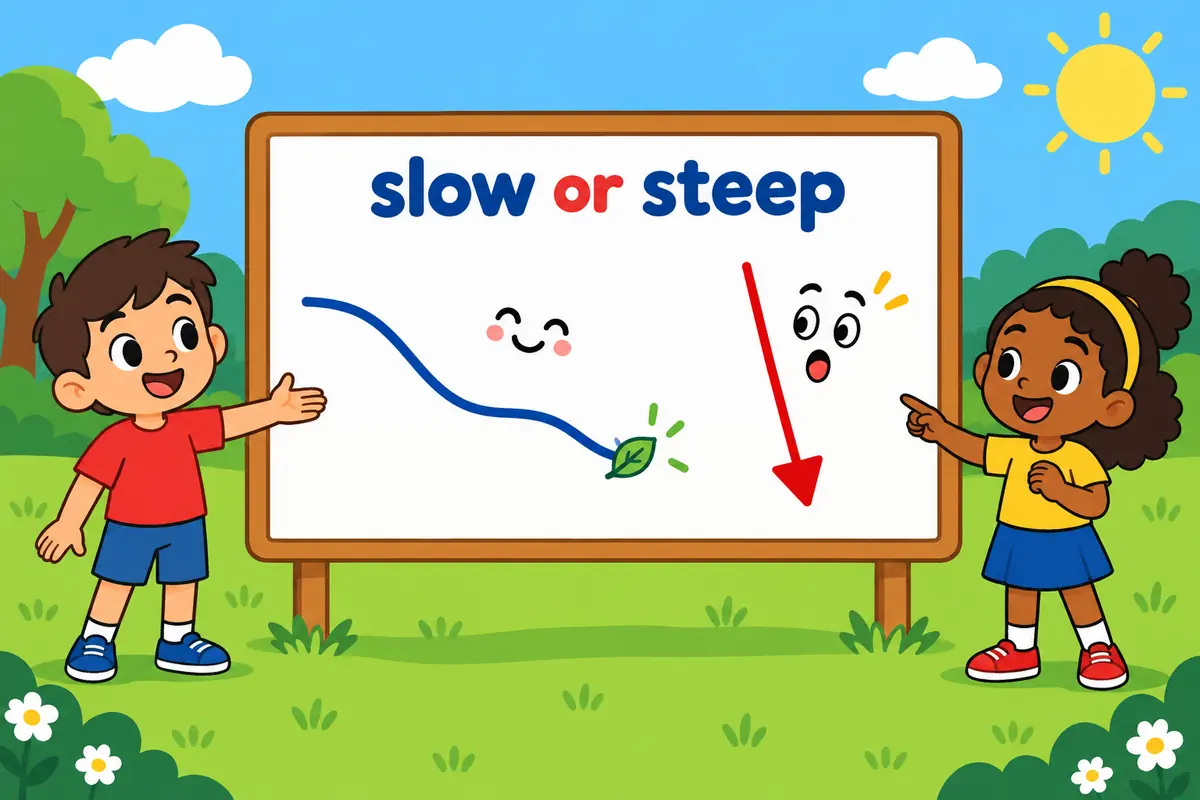
The figurative sense dominates modern writing. A mild fall is a decline, a heavy one may be a slump, but only a fall that looks close to vertical earns the word plummet. The separate noun sense is older and technical, naming the plumb weight that hangs on a line.
| Sense | Plain meaning | Example sentence |
|---|---|---|
| Fall sharply | Drop fast and steeply in value or amount | House prices plummeted after the rate rise. |
| Drop straight down | Move suddenly downward through the air or water | The anchor plummeted to the seabed. |
| Plumb weight (noun) | A weighted line used to check a vertical | The builder let the plummet hang beside the wall. |
How do you use plummet in a sentence?
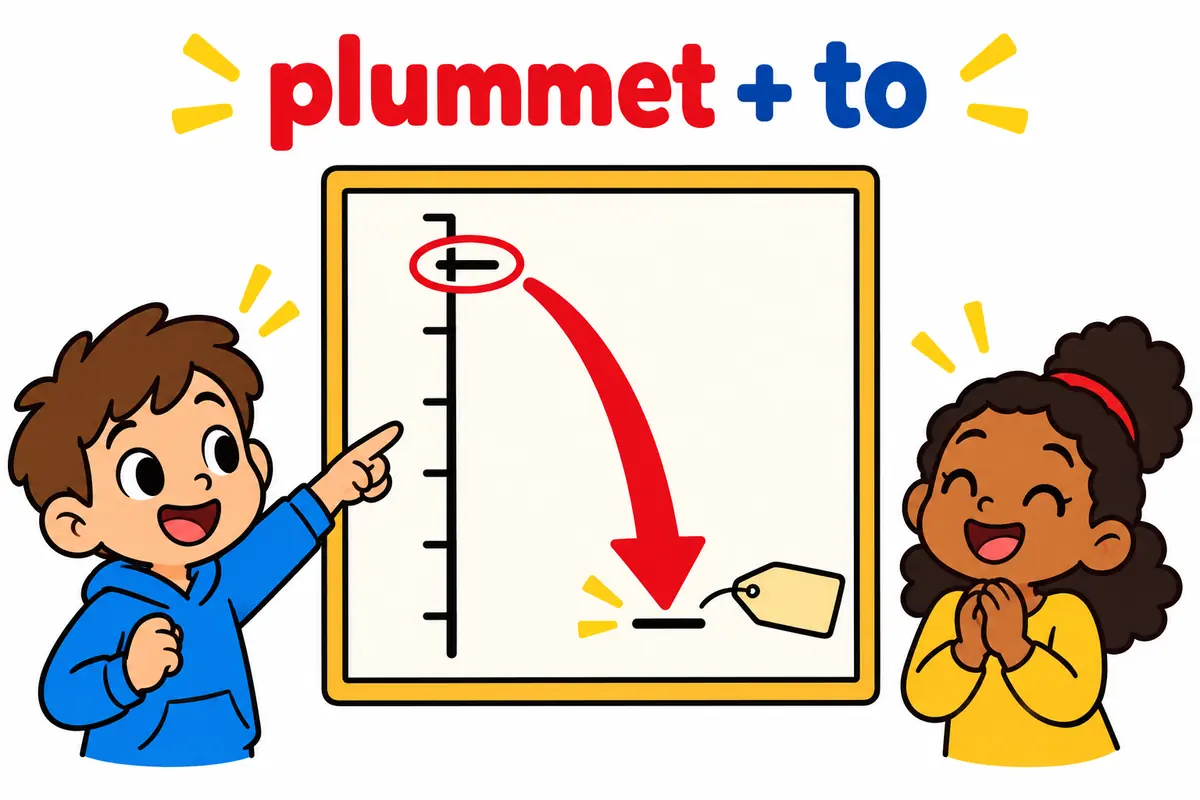
Plummet never takes a direct object, so the pattern is always subject plus verb. Direction and size are added with prepositions. The table sets out the four patterns that cover almost every real use.
| Pattern | Example | What it signals |
|---|---|---|
| plummet + to + level | Shares plummeted to a five-year low. | The level reached at the bottom. |
| plummet + by + amount | Sales plummeted by 40 percent. | The size of the fall. |
| plummet + from X to Y | Temperatures plummeted from 20 degrees to below freezing. | The full range of the drop. |
| plummet + into + noun | The bird plummeted into the water. | What it falls into, for physical movement. |
Plummet in a sentence: examples across contexts
| Context | Example sentence | Why this works |
|---|---|---|
| Finance report | Shares in the airline plummeted 18 percent in a single morning. | A steep, fast fall is exactly what the verb implies. |
| News headline | Fertiliser prices plummet as supply recovers. | Present tense gives the fall urgency. |
| Weather bulletin | Temperatures will plummet overnight across the northern counties. | Shows a predicted, rapid drop. |
| Retail update | Online orders plummeted once the free delivery ended. | Ties the fall to a clear cause. |
| Sports writing | His form plummeted after the injury. | Extends the verb to performance. |
| Academic prose | Enrolment in the evening course has plummeted since the fee doubled. | Formal register, measured claim. |
| Conversation | My battery just plummeted from ninety to twenty. | Informal use with a precise range. |
| Energy news | Demand for gas plummeted during the mild winter. | Pairs the verb with a market noun. |
| Aviation report | Cabin pressure plummeted, and the crew acted at once. | The physical sense, used calmly and factually. |
Plummet vs plunge
Plunge and plummet both describe a fast fall, and the difference is purpose. To plunge is often to move downward deliberately or into something; to plummet is simply to fall hard and fast, usually with no control at all.
| Attribute | Plummet | Plunge |
|---|---|---|
| Meaning | Fall sharply and steeply | Move suddenly downward or into something |
| Control | None; the fall just happens | Sometimes chosen or directed |
| Typical subject | Prices, ratings, temperatures | A diver, a hand, a currency, a knife |
| Prepositions | to, by, from, into | into, to, through |
| Register | Journalistic and financial | General and physical |
| What it implies | Speed and steepness | Suddenness and depth |
Verdict: use plummet for numbers that fall fast on a chart, and plunge when something travels downward into a place; for a slow fall, decline is the honest word, and for a plain neutral drop, fall is safer still. When the fall becomes a collapse, reporters reach for crash, and a sudden loss of control on the way down may bring nosedive to mind.
Word forms and grammar of plummet
| Form | Part of speech | Example |
|---|---|---|
| plummet | Base verb | Prices could plummet again. |
| plummets | Third-person singular | The share price plummets every autumn. |
| plummeted | Past tense and participle | Demand plummeted last year. |
| plummeting | Present participle | Plummeting sales forced a rethink. |
| plummet | Noun, technical | The plummet hung still on its line. |
Plummet is regular in every verb form, so there is no tricky spelling to learn. The only caution is grammatical: because the verb is intransitive, an object after it is always an error, never a variant.
Common mistakes with plummet
- Incorrect: The bad news plummeted the share price. Correct: The share price plummeted after the bad news. The rule: plummet is intransitive and cannot take an object.
- Incorrect: Profits plummeted down. Correct: Profits plummeted. The rule: the verb already contains downward movement, so down is redundant.
- Incorrect: Prices plummeted in half. Correct: Prices plummeted by half. The rule: by marks the size of a fall, while to marks the level reached.
- Incorrect: Sales plummeted gradually over a decade. Correct: Sales declined gradually over a decade. The rule: plummet implies a sudden, steep fall, so it clashes with gradual.
- Incorrect: The plummet of house prices worried lenders. Correct: The plunge in house prices worried lenders. The rule: as a noun, plummet means a plumb weight, so use plunge or fall for a price drop.
Practice using plummet
- Fill in the blank: Streaming subscriptions ______ after the price rose.
- Choose the better word: The path declined / plummeted down the cliff after the storm.
- Correct the error: The scandal plummeted the company’s reputation.
- Build a sentence: use plummet by about a temperature reading.
- Spot the register: which fits a market report, (a) Sales plummeted to a record low, or (b) Sales went down a lot, honestly?
- Fill in the blank: Shares fell slowly for a month and then ______ in a day.
Answers
- plummeted — a sharp fall in subscriptions matches the verb.
- plummeted — the physical sense of a steep descent fits, and decline is only for gentle falls.
- The company’s reputation plummeted after the scandal — plummet takes no object, so the subject must fall.
- The temperature plummeted by six degrees overnight — by marks the size of the drop.
- (a) Sales plummeted to a record low — it matches the brisk, factual tone of a market report.
- plummeted — the contrast with fell slowly signals a sudden, steep fall.
The bottom line
Plummet means to fall fast and steeply, and it almost always describes numbers rather than people. Use plummet in a sentence with no object, adding to for the level reached, by for the size of the fall, and from-to for the full range. Keep decline for a slow fall and plunge for a deliberate dive, and the verb will always sound native.
Frequently asked questions about plummet
Is plummet a verb or a noun?
Plummet is mainly a verb meaning to fall sharply, as in sales plummeted. It is also a rare noun that names the weighted line builders and anglers use to check a vertical. Those two senses are quite separate, so a price drop is a plunge or a fall, never a plummet, when you need a noun.
Is plummeted a real word?
Yes. Plummeted is the ordinary past tense and past participle of the verb, so both sales plummeted and sales have plummeted are standard. The word follows the regular pattern, adding ed without doubling the final consonant. British and American English spell it the same way, so there is no regional variant to watch for.
What does it mean when prices plummet?
When prices plummet they fall very quickly and by a large amount, usually in response to news, a policy change or a loss of confidence. The word tells you both the speed and the steepness of the fall, which a mild word such as dip or ease would not convey. Reporters use it for the sharpest drops.
Can you say a person plummeted?
You can when the person is physically falling, as in the climber plummeted down the slope. Figuratively it also works for a sudden collapse in mood, reputation or form, as in his confidence plummeted. It does not suit gradual personal change, which calls for a plainer word such as fell or slipped.
Have you ever watched an object fall freely, accelerating as gravity pulls it downward? This swift drop in speed is known as plummeting, a rapid descent or decline. It is a fundamental concept in physics and can be observed in various everyday scenarios.
When a bird swoops down from the sky, a roller coaster hurtles down a steep track, or a stock price plunges in the financial market, all these instances depict the phenomenon of plummeting. Understanding this dynamic motion can help us comprehend the forces at play and the fluctuations in speed that occur during rapid descents.
7 Examples Of Plummet Used In a Sentence For Kids
- The bird watched the apple plummet from the tree.
- The roller coaster made us plummet down quickly.
- The leaves began to plummet from the tree in autumn.
- The rain caused the water level in the river to plummet.
- The temperature started to plummet as winter approached.
- The kite began to plummet to the ground when the wind died down.
- The elevator started to plummet down to the first floor.
14 Sentences with Plummet Examples
- Plummet in attendance was noted after the announcement of a surprise test in the morning lecture.
- Students’ motivation plummeted when they found out that the college fest was canceled.
- The scores on the final exam are expected to plummet due to the lack of preparation by some students.
- The number of registrations for the upcoming workshop started to plummet as the deadline approached.
- The stock prices of the company plummeted after news of a financial scandal broke out.
- Plummeting interest in the club’s activities has led to discussions on how to re-engage members.
- The quality of group projects tends to plummet when deadlines are near.
- The number of participants in extracurricular activities usually plummets during exam season.
- Students’ grades can plummet if they neglect their studies and procrastinate.
- The enthusiasm for attending early morning classes tends to plummet as the semester progresses.
- Plummeting internet connectivity can be a major hindrance to online learning for college students.
- The morale of the football team plummeted after a series of losses in the tournament.
- As the semester came to an end, students watched their motivation plummet with the increasing workload.
- Plummeting energy levels during exams can affect students’ ability to concentrate and perform well.
How To Use Plummet in Sentences?
Plummet is a versatile verb that can be used in a variety of sentences to describe a sudden and steep decrease in something. To use plummet in a sentence, follow these simple steps:
-
Identify the subject of the sentence – this is the person, place, thing, or idea that is plummeting. For example, “the stock market.”
-
Determine the action or event that is causing the sharp decline. For instance, “after the negative economic report was released.”
-
Put the subject and action together in a sentence using the word plummet to convey the sudden and rapid descent. For example, “The stock market plummeted after the negative economic report was released.”
-
Make sure that the sentence is clear and easy to understand. Avoid using overly complicated language or unnecessary words.
-
Practice using plummet in different contexts to become more comfortable with incorporating it into your writing or conversations.
By following these steps and practicing regularly, you will soon feel confident in using plummet effectively in your sentences. Remember, the key is to convey a sudden and steep decrease in a clear and concise manner.
Conclusion
In conclusion, the examples of sentences with the keyword “plummet” showcase a significant drop or decrease in various scenarios. From stock prices plummeting after negative news to temperatures plummeting during winter storms, the word “plummet” vividly describes a sudden and steep decline. These sentences effectively convey the drastic nature of the decrease, painting a clear picture for the reader.
By using “plummet” in sentences, the writers effectively communicate the severity and suddenness of the decline being described. This word choice adds impact and emphasis to the description of a sharp decrease in values, temperatures, or other measures. Overall, sentences with “plummet” effectively capture the essence of a rapid and drastic drop in various contexts.


