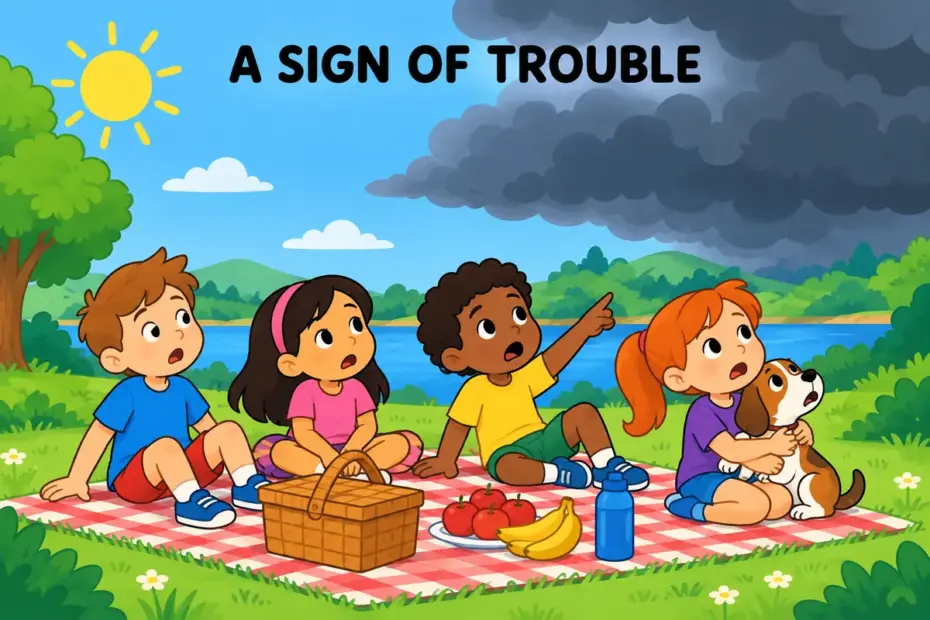
Portent is a noun meaning a sign that something important, often something bad, is about to happen. To use portent in a sentence, name the sign and what it foreshadows: “The silence was a portent of the storm to come.” The word carries a sense of foreboding, so it suits literary, historical and dramatic writing.
Portent at a glance
- Portent is a noun; the verb is portend and the adjective is portentous.
- It means a sign or warning of a future event, usually a grave one.
- The usual patterns are a portent of, portents of and a portent for.
- It appears in literary, journalistic and historical writing.
- The commonest error is confusing the noun portent with the verb portend.
What does portent mean?
Portent is a noun meaning a sign that something momentous, and often unwelcome, is approaching. The Cambridge entry for portent records the sense of a sign of a future event, and the word always points outward to an event rather than naming the event itself. A vague foreboding is a feeling inside a person, while a portent is a sign that anyone might notice, such as a sudden silence or a strange sky.
| Sense | Plain meaning | Example sentence |
|---|---|---|
| A warning sign | An event that signals something serious ahead | The silence was a portent of the storm. |
| A marvel read as a sign | An unusual thing taken as an indication | The comet was read as a portent of change. |
Portent belongs to the literary range. A neutral forecast uses sign or indication, because portent adds a shiver that plain reporting avoids. The word also does not name the coming event: a portent precedes the trouble, and the trouble still has to arrive. Finally, not every coincidence is a portent, since the word implies that the sign was read as meaningful.
How do you use portent in a sentence?
| Pattern | Example | What it signals |
|---|---|---|
| a portent of + noun | a portent of war | names what is foreshadowed |
| portents of + noun | portents of change | groups several signs together |
| read / see + noun + as a portent | they read the eclipse as a portent | shows how the sign was interpreted |
| a portent for + noun | a portent for the industry | names the party affected |
| be + a portent | the sudden drop was a portent | predicative, the sign named at once |

Portent in a sentence: examples across contexts
| Context | Example sentence | Why this works |
|---|---|---|
| Literature | A cold wind rose, a portent of the winter to come. | Ties a natural sign to a coming season. |
| Journalism | The collapse of the talks was a portent of deeper trouble. | Reads a present event as a signal. |
| History | Courtiers saw the comet as a portent of the king’s fall. | Shows how signs were interpreted. |
| Business | The empty order book was a portent for the whole sector. | Names the party the sign affects. |
| Climate writing | Record heat in spring is a portent of a hard summer. | Links evidence to a likely outcome. |
| Conversation | His sudden quietness was a portent of bad news. | Everyday use of a small sign. |
| Fantasy story | The broken sword lay on the floor, a portent of defeat. | Uses an object as a sign. |
| Analysis | Rising debt was a portent of the crash that followed. | Looks back at a sign with hindsight. |
| Diary | I took the black bird as a portent and turned back. | Shows a private act of reading signs. |
| Editorial | The vote was a harbinger and a portent of realignment. | Pairs the word with a close synonym. |
Each sentence keeps the sign separate from the event and leaves the outcome in the future, which is what makes portent feel ominous. The word appears with of more than any other link, and it rarely names a pleasant future. When the sign is read as a matter of luck rather than as a serious warning, a different noun is needed.
Portent vs omen
The everyday neighbour is omen, and the difference lies in gravity and in luck.
| Attribute | Portent | Omen |
|---|---|---|
| Meaning | A sign of something momentous, often grim | A sign of good or bad luck |
| Tone | Grave and literary | Neutral to superstitious |
| Typical sign | Silence, decline, a comet | A bird, a number, a dream |
| Register | Literary and journalistic | Folklore and everyday |
| Direction | Usually points to trouble | Can be lucky or unlucky |
| Neutral alternative | indication | sign |
Use portent for a grave signal of what is coming, and omen when the sign is read as a matter of luck, good or bad. For plain reporting that avoids superstition, indication or sign carries the same meaning without the chill.
Word forms and grammar of portent
| Form | Part of speech | Example |
|---|---|---|
| portent | noun | The crack was a portent of collapse. |
| portents | noun (plural) | The portents were impossible to ignore. |
| portend | verb | Dark clouds portend a storm. |
| portentous | adjective | The portentous silence lasted a minute. |
| portentously | adverb | He spoke portentously of the coming decline. |
| portentious | non-standard spelling | Avoid it and write portentous. |
The noun takes of, the verb takes a direct object, and the adjective describes whatever seems to carry a warning. Portentous also has a second, critical sense of pompous or self-important, so context decides which reading is meant. The spelling is portentous, never portentious, because the ending comes from the noun portent.
Common mistakes with portent
The clouds portent a storm.Correct: The clouds portend a storm. Portent is the noun; portend is the verb.The portend was clear to everyone.Correct: The portent was clear to everyone. The noun has no -d at the end.He spoke in a portent tone.Correct: He spoke in a portentous tone. The adjective carries the -ous ending.It was a portentous of war.Correct: It was a portent of war. The noun, not the adjective, takes of.The meeting was portentious.Correct: The meeting was portentous. The ending is -ous, matching the noun portent.
Practice using portent
- The sudden hush in the hall was a ______ of trouble.
- Choose the better word: Seeing a rainbow, she called it a lucky ______. (portent / omen)
- Correct the error: The falling leaves portent a cold winter.
- Build a sentence about an empty stadium using a portent of.
- Spot the register: which sentence belongs in a literary novel? A) The silence was a portent of grief. B) The silence was a sign that something bad might happen.
- Fill in the blank: Economists saw the figures as a ______ for the whole market.
Answers
- portent. The hush is a sign of something serious ahead.
- omen. A rainbow read as luck is a lucky omen, not a grave portent.
- The falling leaves portend a cold winter. The verb is portend.
- An empty stadium was a portent of the club’s decline. The of phrase names what is foreshadowed.
- A. The literary novel favours the grave noun.
- portent. The figures warn of something serious for the market.
The bottom line
Portent names a sign that something grave is on its way, and it keeps the sign and the future event in separate parts of the sentence. Using portent in a sentence is clearest with the pattern a portent of, which names exactly what is foreshadowed. The lighter omen covers good or bad luck, while portend is the verb, portentous is the adjective, and a neutral report reaches for indication or sign.
Frequently asked questions about portent
Is portent a formal word?
Portent sits at the literary end of the range. It appears in novels, editorials and history writing, and it rarely turns up in casual talk, where people say sign or warning. In a sentence such as the hush was a portent of trouble, the tone is clearly grave and written rather than spoken.
What is the difference between a portent and an omen?
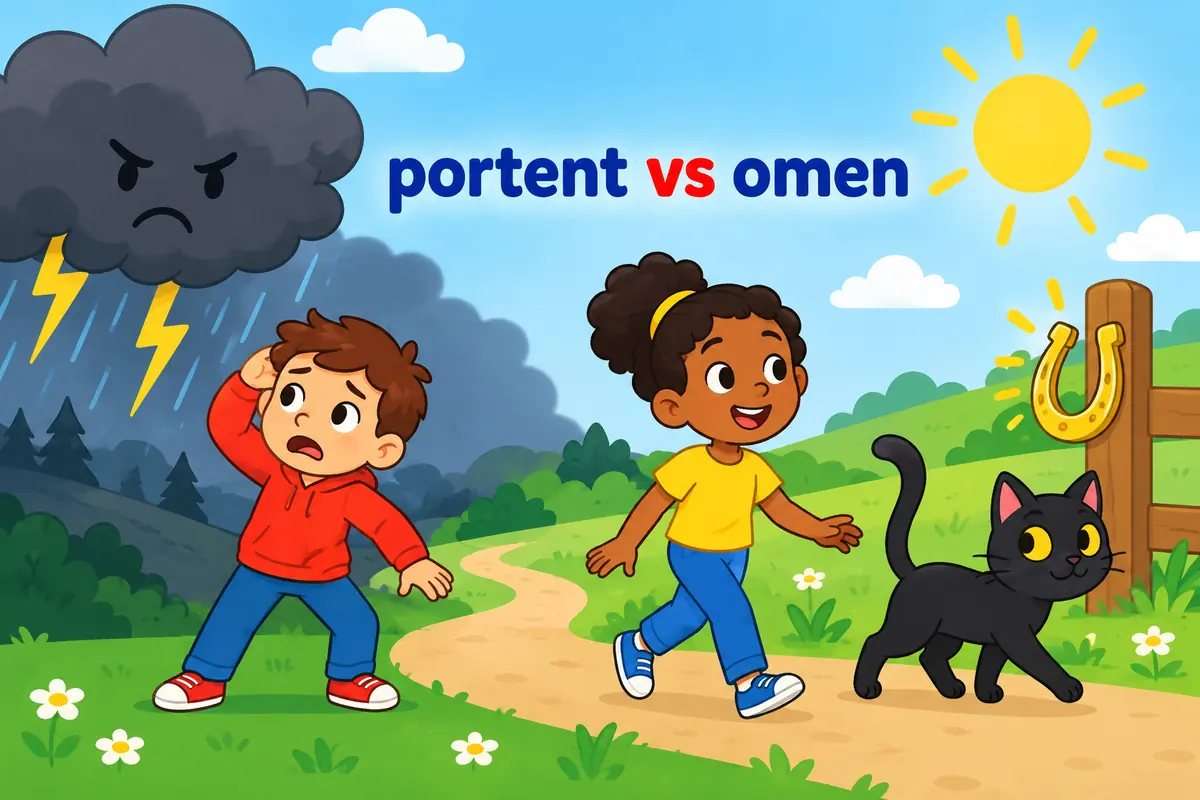
A portent usually points to something momentous and often grim, so it carries a weight of foreboding. An omen can be good or bad and belongs more to folklore and superstition. A collapsing market is a portent; a horseshoe found on a path is an omen. Both read one event as a sign of another.
What is the verb form of portent?
The verb is portend, as in dark clouds portend a storm. It takes a direct object and never takes from. The adjective is portentous, which can mean either ominous or pompous, and the adverb is portentously. The noun portent never gains a final d, which is a common misspelling on the model of portend.
Can portent be used for good news?
It can, but the word resists it. Portent is usually reserved for warnings, so a portent of boom sounds less natural than a portent of ruin. When the sign is welcome and light, omen or sign is the better choice. If the news is genuinely good and weighty, promise or sign of hope reads more naturally.
Have you ever encountered a word that seemed to carry a weight of significance or foreboding? That’s the essence of a “portent.” A portent is a sign or warning that something momentous or calamitous is about to happen, often imbued with a sense of impending doom.
Within literature and everyday language, a portent is a powerful tool used to create tension, suspense, or foreshadowing. By introducing a portentous element, writers can build anticipation and set the stage for dramatic events to unfold.
7 Examples Of Portent Used In a Sentence For Kids
- The dark clouds gathering in the sky are a portent of rain.
- Seeing a shooting star is considered a portent of good luck in many cultures.
- A loud clap of thunder can be a scary portent of an approaching storm.
- Finding a four-leaf clover is said to be a lucky portent.
- In some Indian traditions, seeing a black cat is seen as a portent of bad luck.
- A rainbow after a storm is seen as a beautiful portent of better weather to come.
- A bright full moon in the night sky can be a captivating portent of a magical evening.
14 Sentences with Portent Examples
- The sudden drop in attendance was seen as a portent of trouble ahead for the upcoming college fest.
- Finding a four-leaf clover the day before the exam was viewed as a portent of good luck by the superstitious students.
- The professor’s mysterious absence on the day of the final presentation was seen as a portent of an unexpected curveball.
- The appearance of a black cat crossing the path of the student was taken as a portent of impending bad news.
- The sudden power outage during the important seminar was seen as a portent of technical difficulties to come.
- Seeing a shooting star the night before the results were to be announced was considered a portent of success by the hopeful students.
- Receiving a bouquet of wilting flowers as a gift on the day of the college submission deadline was seen as a portent of missed opportunities.
- The unexpected arrival of a renowned guest speaker at the college symposium was seen as a portent of exciting things to come.
- Witnessing a rare celestial event during a late-night study session was seen as a portent of inspiration for the struggling students.
- Hearing the distant sound of drums during the college cultural festival was taken as a portent of an upcoming performance.
- Discovering a torn page from a book in the college library was seen as a portent of missing information for the upcoming exam.
- The sudden appearance of dark clouds before the college picnic was seen as a portent of a rainy day ahead.
- The unexpected meeting with a former classmate on the day of the college placement interviews was taken as a portent of networking opportunities.
- Receiving a scholarship offer on the same day as a difficult exam was viewed as a portent of brighter academic prospects.
How To Use Portent in Sentences?
Portent can add an interesting element to your writing. It is a literary device used to indicate or foreshadow something, often hinting at a future event or outcome. When you want to create a sense of mystery, suspense, or drama in your writing, using a portent can enhance the overall impact.
Here’s how you can use portent in a sentence:
- Begin by identifying a significant event or outcome that you want to foreshadow in your writing.
- Choose a symbol or action that can serve as a portent for this event. This could be a sudden change in weather, a particular object or animal, or a character’s behavior.
- Integrate the portent into your narrative in a subtle yet impactful way. This could be through descriptive language, character reactions, or dialogue.
- Ensure that the portent is relevant to the story and contributes to the overall tone or theme you are trying to convey.
- Allow the portent to linger in the reader’s mind, creating a sense of anticipation or curiosity about what it foretells.
By utilizing portent effectively in your writing, you can add depth and intrigue to your storytelling. Experiment with incorporating portents into your narratives to create a richer and more engaging reading experience for your audience.
Conclusion
In conclusion, the use of sentences with portent can effectively convey a sense of foreboding or significance in writing. These sentences often hint at future events or carry an ominous tone that captivates the reader’s attention. By carefully crafting sentences with portent, writers can create an atmosphere of mystery and intrigue, keeping the audience engaged and eager to uncover the full meaning behind the foreshadowed events.
Whether it’s a subtle hint of a future plot twist or a hint of impending doom, sentences with portent add depth and complexity to storytelling. Through the strategic placement of these impactful phrases, authors can build tension, create anticipation, and guide the reader on a suspenseful journey through their narrative.


