
How to Use Portrayed in a Sentence
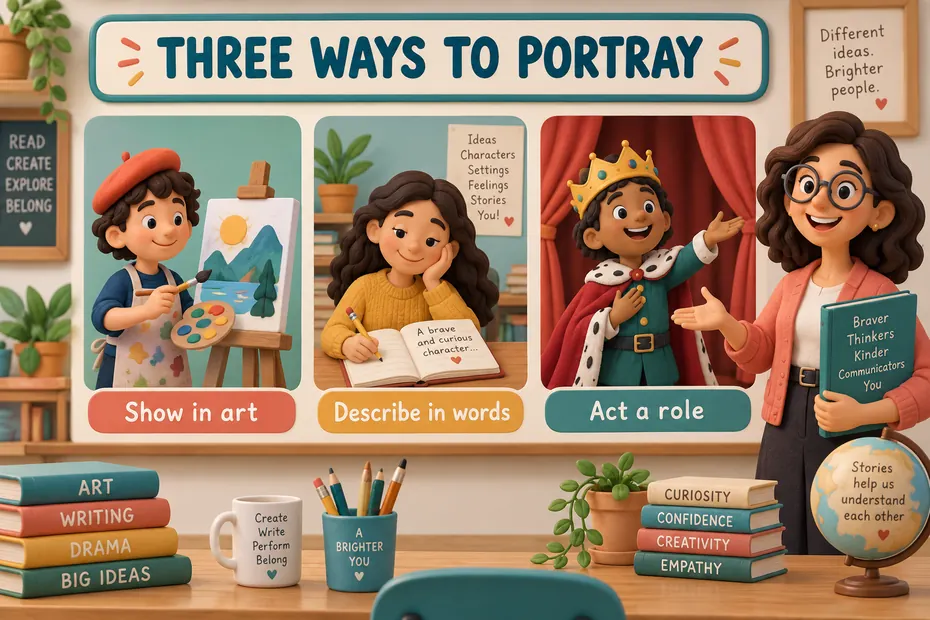
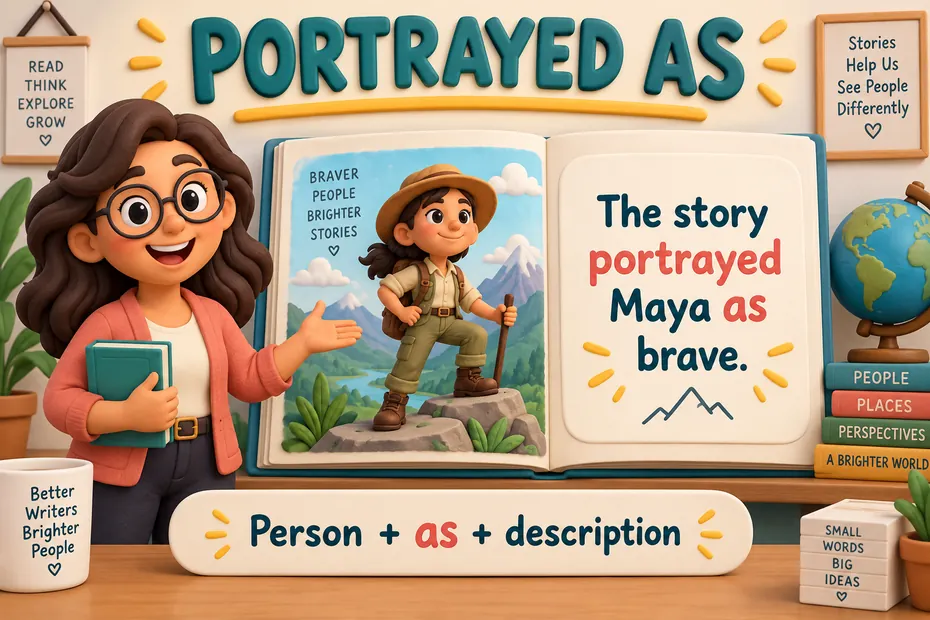
Portrayed is the past tense and past participle of portray. It means represented in art, described in a particular way, or played as a character. For example, “The actor portrayed a curious detective.” Use portrayed as when explaining the qualities a description gives someone: “The story portrayed Maya as brave.”
Choose the Meaning That Fits Your Example
The original examples below connect portrayed with paintings, stories, and performances. Those uses share the idea of representing something, but the medium changes. A painting can represent a landscape visually; a report can describe someone through words; an actor can represent a character through performance. Merriam-Webster lists these distinct senses under portray.
| Context | Original example | Meaning |
|---|---|---|
| Visual art | The mural portrayed the village at sunrise. | Showed a subject in an image. |
| Written description | The article portrayed the shopkeeper as resourceful. | Presented a particular impression. |
| Acting | Leah portrayed the gardener in the school play. | Played a character. |
| Self-description | He portrayed himself as an experienced guide. | Presented himself in a particular way. |
Active and Passive Sentences with Portrayed
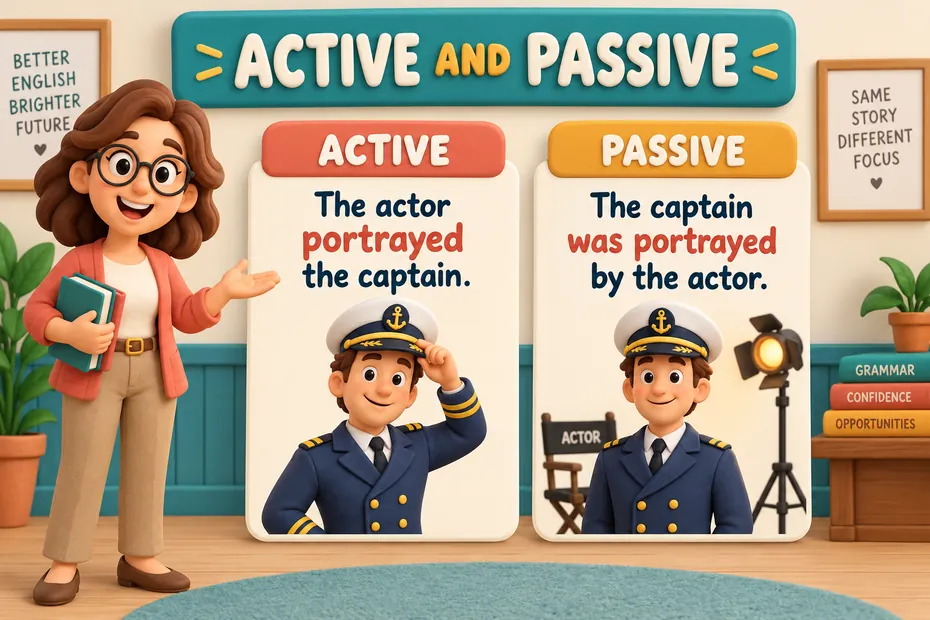
In an active sentence, name the person or work doing the representing first: “The illustrator portrayed the fox as clever.” The illustrator performs the action, and the fox receives it. This order works well when the artist, writer, or performer is the important information.
In a passive sentence, put the represented subject first: “The fox was portrayed as clever by the illustrator.” The focus moves to the fox. You can leave out the by phrase when the creator is unknown or unimportant: “The fox was portrayed as clever.” The British Council explains that passive constructions use a form of be plus a past participle.
Notice that the participle stays portrayed while the helping words carry the tense: “The town is portrayed as quiet,” “The town was portrayed as quiet,” and “The town has been portrayed as quiet.” Do not treat every occurrence of portrayed as a simple past-tense statement. Read the entire verb phrase.
When to Use Portrayed As, In, and By
- Portrayed as + description: “The novel portrayed the neighbor as generous.” The phrase tells readers what impression the representation creates.
- Portrayed in + medium or work: “The festival was portrayed in a watercolor.” The phrase identifies where the representation appears.
- Portrayed by + creator or performer: “The captain was portrayed by a local actor.” The phrase identifies who performed the action.
- Portrayed + object: “The artist portrayed a crowded marketplace.” A direct object is sufficient when no additional description is needed.
These phrases can work together: “The mayor was portrayed as impatient in the comedy.” Here, as impatient gives the characterization, and in the comedy identifies the work. Include only the details that answer the reader’s likely question. A sentence does not need every possible phrase to be complete.
Portrayed Does Not Prove That a Description Is True
“The article portrayed the organizer as careless” reports how the article presented the organizer. It does not independently establish that the organizer was careless. This distinction matters in reviews, summaries, and discussions of news coverage. Attribute the representation to the work or speaker rather than presenting its judgment as your own fact.
You can describe the quality of the representation separately: “The film portrayed the interview inaccurately,” or “The drawing portrayed the building in careful detail.” Words such as sympathetically, harshly, and accurately explain how the subject is represented. Do not add accurately merely because the image or description is vivid.
Common Form and Spelling Mistakes
Keep the y when adding -ed: portray becomes portrayed, not “portraied.” The verb ends in a vowel plus y. In the present, write “She portrays the narrator”; in the past, write “She portrayed the narrator.” For an action happening now, write “She is portraying the narrator.”
Portrayal is the noun: “Her portrayal of the narrator was thoughtful.” Compare that with “She portrayed the narrator thoughtfully.” The first names the representation or performance; the second states the action. If your sentence begins “Her,” the noun may be the form you need. If it names someone doing the action, choose the verb form.
Frequently Asked Questions
What is a short sentence with portrayed?
“The actor portrayed a teacher” is a short, complete sentence. The actor is the subject, portrayed is the verb, and a teacher is the direct object. For an art example, use “The sketch portrayed a sleepy cat.” Both sentences identify who or what creates the representation and what is represented.
Does portrayed mean acted?
Portrayed can mean played a character in a performance, but it also applies to visual art and written description. In “The actor portrayed the king,” it concerns acting. In “The poem portrayed the town as lonely,” it concerns the poem’s representation. Context tells you which meaning is intended.
Is portrayed past tense or a past participle?
It can be either. “The writer portrayed the family sympathetically” uses the simple past. “The family was portrayed sympathetically” uses portrayed as a past participle in a passive construction. The form of the word is the same, so check the helping verbs and the sentence structure.
What does portrayed as mean?
Portrayed as introduces the characterization given to a subject. “The tale portrayed the giant as friendly” means the tale presented the giant that way. The phrase can describe a real person, fictional character, place, or situation. It reports a representation rather than guaranteeing that the characterization is accurate.
Sources for Meaning and Grammar
- Merriam-Webster: portray — meanings and verb forms.
- Merriam-Webster: portrayal — the related noun.
- British Council: passives — passive structure and focus.
Have you ever wondered how to accurately portray emotions and actions in your writing? To effectively convey a character’s feelings or describe a scene, using well-crafted sentences with the word “portrayed” can make all the difference.
When an author uses the word “portrayed” in a sentence, they are presenting a vivid and detailed representation of a character or situation. This word allows readers to visualize and understand the emotions, behaviors, or settings being conveyed in the story.
7 Examples Of Portrayed Used In a Sentence For Kids
- Portrayed: The lion was portrayed as brave and strong in the story.
- The artist portrayed a beautiful sunset using bright colors.
- Portrayed: The princess was portrayed wearing a sparkly tiara in the picture.
- The actor portrayed a funny character in the play.
- Portrayed: The elephant was portrayed as gentle and kind in the painting.
- The puppeteer portrayed different animals during the show.
- Portrayed: The superhero was portrayed flying through the sky in the movie.
14 Sentences with Portrayed Examples
- The professor portrayed a complex concept using simple examples during the lecture.
- The Bollywood movie portrayed college life in a glamorous and unrealistic way.
- The student council president portrayed a strong and confident image during the speech.
- The textbook portrayed certain historical events inaccurately.
- The career counselor portrayed different job opportunities available after graduation.
- The guest speaker portrayed the importance of internships for college students.
- The art exhibition portrayed various social issues affecting college students.
- The debate team portrayed different viewpoints on a controversial topic.
- The university brochure portrayed a diverse and inclusive campus environment.
- The student newspaper portrayed student life on campus through interviews and articles.
- The college drama club portrayed a Shakespearean play with a modern twist.
- The engineering project portrayed the innovative skills of the students.
- The business competition portrayed the students’ entrepreneurial spirit and creativity.
- The campus fashion show portrayed the latest trends and styles popular among college students.
How To Use Portrayed in Sentences?
Portrayed can be used to describe how someone or something is depicted or represented in a particular way. When using “portrayed” in a sentence, it is important to keep in mind the context and intention behind the portrayal. To incorporate this word effectively, consider the following tips:
-
Identify the subject: Begin by identifying the person, character, or object that is being portrayed. This will help provide clarity and ensure that the sentence conveys the intended meaning.
-
Choose the appropriate tense: Depending on the context, decide whether to use “portrayed” in the past, present, or future tense. This will help determine the timeframe of the portrayal.
-
Provide context: When using “portrayed,” make sure to provide enough context for the reader to understand how the subject is being depicted. You can include details about the portrayal to enhance the reader’s comprehension.
-
Be descriptive: Use adjectives or adverbs to enhance the portrayal and make it more vivid and engaging. This can help create a more detailed picture of how the subject is being depicted.
-
Check for accuracy: Before finalizing your sentence, ensure that the portrayal accurately reflects the intended meaning and aligns with the overall message you want to convey.
By following these tips, you can effectively use “portrayed” in a sentence to describe how a subject is depicted or represented in a particular way.
Conclusion
In conclusion, the examples of sentences with the keyword “portrayed” illustrate how this word is commonly used to describe the depiction or representation of a character or situation. Whether in literature, film, or art, the word “portrayed” is frequently employed to communicate how something or someone is depicted in a particular medium.
Through the varied examples provided, it is evident that “portrayed” plays a crucial role in conveying the intended image or message to the audience. By highlighting the importance of how characters or subjects are portrayed, these sentences showcase the power of words in shaping our understanding and perception of the world around us.



