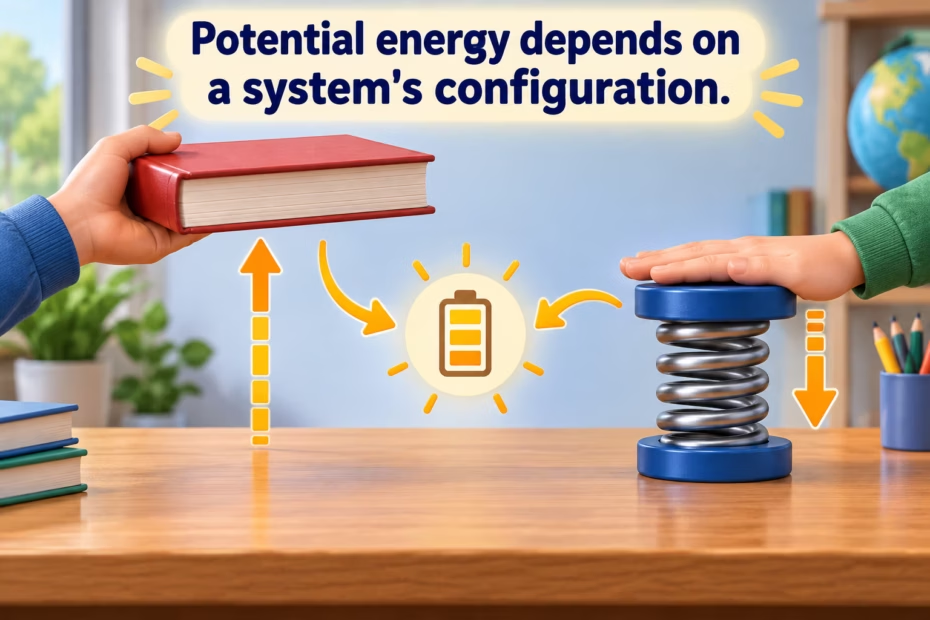
In physics, potential energy is energy associated with the position or configuration of a system, such as a book–Earth system or a spring. The phrase names a measurable energy in a physical model, so strong sentence examples identify the interacting system, energy type, and relevant position or deformation.
- Gravitational potential energy changes when a system’s height changes.
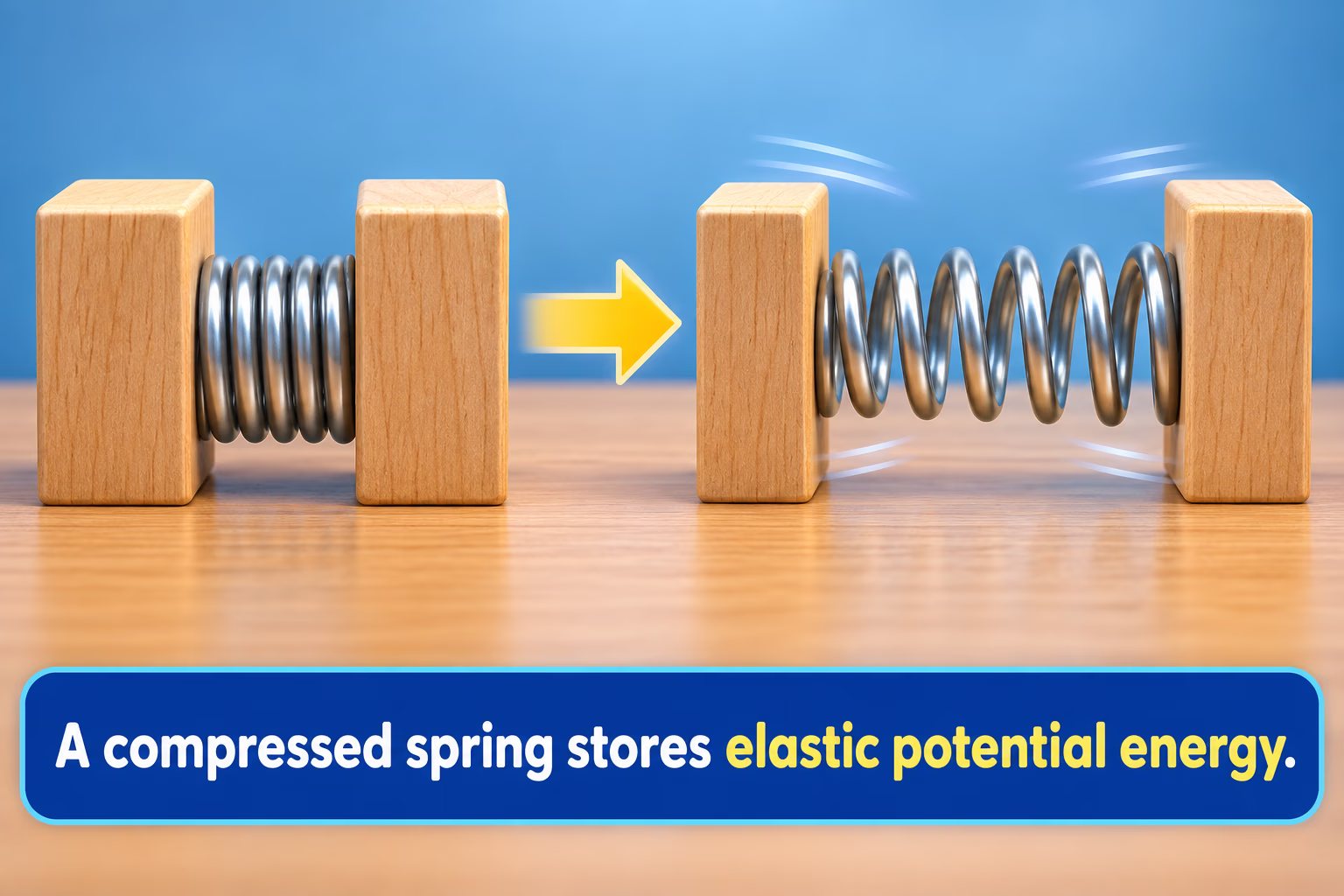
- Elastic potential energy is associated with a spring’s stretch or compression.
- Potential energy belongs to a system; “object at rest” is not its definition.
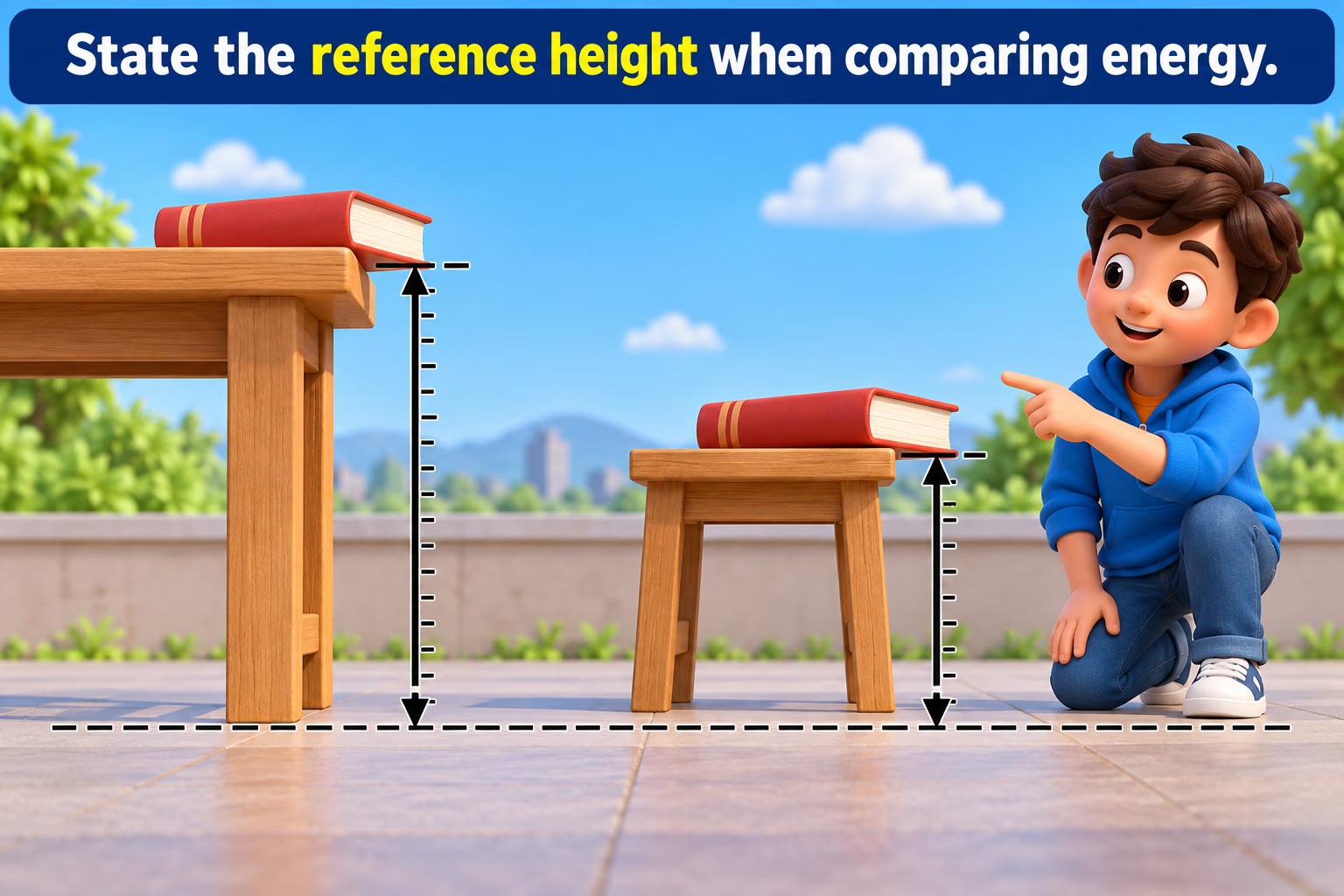
- State a reference height when comparing gravitational potential energy.
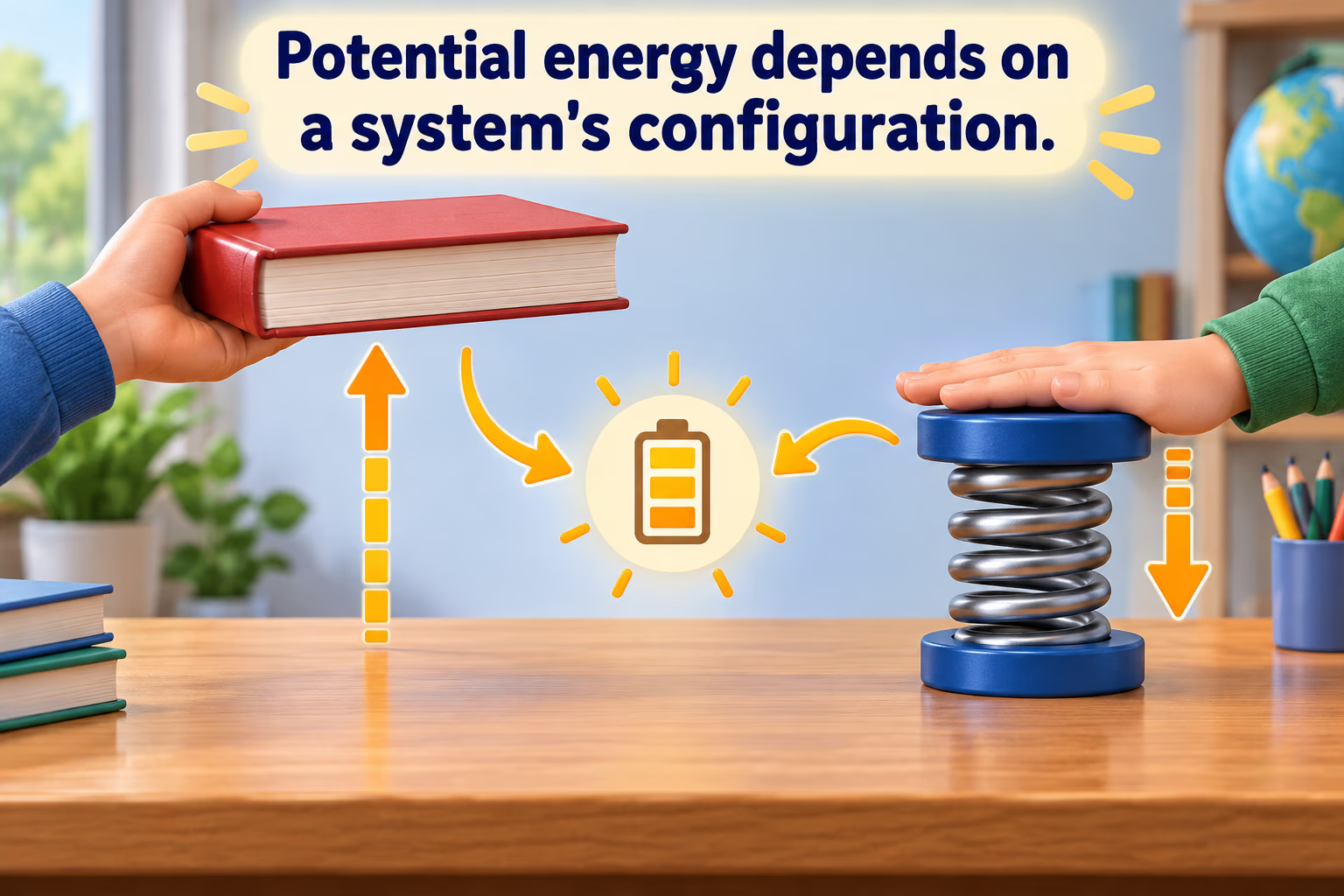

How do you use “potential energy” in a sentence?
Use “potential energy” as a noun phrase for energy associated with a physical system’s arrangement. In a clear sentence, name the energy type and the position or deformation that matters: “The raised book has gravitational potential energy relative to the floor.”
The phrase can appear as a subject, object, or modifier. For example, “Potential energy increased as the cart rose” makes it the subject; “The spring stored potential energy” makes it the object; and “gravitational potential energy” names a specific type. In physics, the term does not mean merely that an object is motionless or might do something later.
What are accurate sentence examples?
Gravitational and elastic potential energy make useful examples because each connects the energy to an identifiable system and a physical change. OpenStax defines potential energy for a system and discusses gravitational and spring examples in University Physics, Section 8.1.
| Type | Example sentence | What makes it accurate |
|---|---|---|
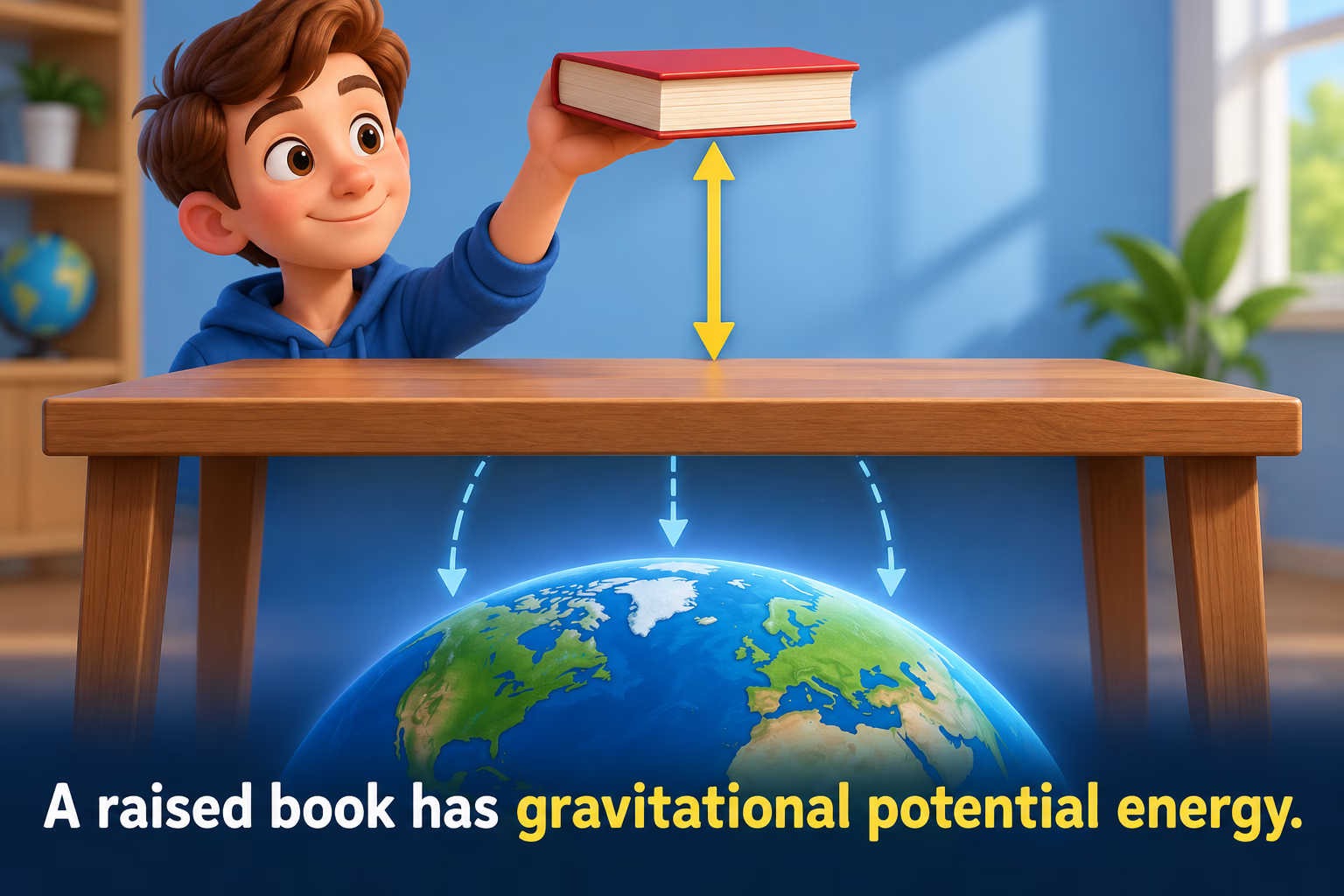
| Gravitational | “The book gained gravitational potential energy as it rose above the floor.” | The book–Earth system’s height changed relative to a stated reference. |
| Elastic | “The compressed spring stored elastic potential energy before it pushed the cart.” | The spring was deformed from its relaxed length. |
| Energy transfer | “As the sled descended, some gravitational potential energy became kinetic energy.” | The sentence names the direction of energy conversion without implying that friction is absent. |
How do height and a reference level affect the wording?
OpenStax gives the near-Earth change in gravitational potential energy as ΔU = mgΔh, where m is mass, g is gravitational acceleration, and Δh is the height change (OpenStax, Section 8.1). Because the zero point is chosen for the problem, comparisons should identify a reference such as the floor or ground; the absolute value depends on that convention, while the energy difference is what the calculation uses.
For example, “The book has more gravitational potential energy on the shelf than on the floor, using the floor as zero height” makes its comparison explicit. OpenStax notes that a convenient zero can be chosen and must be used consistently.
What does a spring example need to say?
An elastic-potential-energy sentence should say that a spring is stretched or compressed from its relaxed length. For an ideal Hooke’s-law spring, OpenStax gives the stored energy as U = ½kx² (Section 8.4), where k is the spring constant and x is the displacement from the relaxed position; a real spring may stop following this model if it is stretched beyond its elastic range.
“The compressed spring stored elastic potential energy” is concise and physically specific. “The spring had energy” is less useful because it does not identify the interaction or the condition that stores the energy.
Which common sentence mistakes should you avoid?
- Defining it as energy in a resting object: potential energy is associated with system configuration; the system can include objects that are moving.
- Putting gravitational energy only “in the muscles” during a climb: chemical energy in the body powers the climb, while the body–Earth system gains gravitational potential energy as height increases.
- Using “potential” to mean merely “possible” in a physics example: “The student raised a hand with potential energy toward asking” is metaphorical, not a literal energy claim.
- Leaving the spring state vague: say stretched or compressed, and use “elastic” when that is the intended form.
Frequently asked questions
Can an object have potential energy while it is moving?
Yes. Potential energy depends on the system’s configuration, not on the object being at rest. A moving skier can still be above a chosen zero height, so the skier–Earth system has gravitational potential energy as well as kinetic energy.
Can gravitational potential energy be zero?
Yes. A problem can choose a convenient reference height as zero. State that reference when comparing values; changing the zero shifts reported values but does not change the physical energy difference between two positions.
What is a simple sentence using potential energy?
“The raised book has gravitational potential energy relative to the floor” is a simple, specific example. It names the system, the type of energy, and the reference that gives the height comparison meaning.
Is potential energy always converted into kinetic energy?
No. A change in potential energy can accompany a change in kinetic energy, but friction and other interactions can transfer some energy into thermal or other forms. A sentence should describe the conditions instead of implying that all stored energy becomes motion.
The original 21 sentence examples and source explanation follow unchanged. The source uses simplified wording in places: potential energy is a property of a system’s interactions, not just an object at rest; gravitational potential energy during a climb belongs to the body–Earth system, not just the muscles; and the raised-hand example is figurative rather than a literal physics claim. Use the sourced explanations above for precise physical meanings.
Have you ever wondered about the hidden energy that objects possess when they are at rest? This mysterious form of energy is known as potential energy.
Potential energy is the stored energy an object has due to its position or state. This energy can be transformed into kinetic energy when the object starts moving or performs an action. Understanding potential energy is crucial in various fields, from physics and engineering to everyday activities like lifting objects or climbing stairs.
7 Examples Of Potential Energy Used In a Sentence For Kids
- Potential energy is like a superhero hiding inside a toy waiting to jump.
- When we lift a toy car up, it gets potential energy.
- A swing has potential energy when we pull it back before swinging.
- A balloon has potential energy when it is blown up and ready to fly.
- A book on a high shelf has potential energy waiting to fall down.
- When we wind up a toy, it stores potential energy to move.
- A bouncing ball has potential energy as it goes up and down.
14 Sentences with Potential Energy Examples
- Potential energy is stored when you lift a heavy book to place it on the top shelf.
- As you wind up a clock, it gains potential energy that is released when the clock runs.
- When you stretch a rubber band, it gains potential energy that can be released by letting it go.
- A basketball has potential energy when held above the ground, waiting to be dropped for a slam dunk.
- Stretching a bowstring gives it potential energy that can be released by shooting an arrow.
- You can feel the potential energy in a spring as you compress it before releasing it.
- Climbing stairs builds potential energy in your muscles that can be used for other activities.
- The water in a dam has potential energy that can be converted into electricity through hydroelectric power.
- Stretching a muscle before exercise gives it potential energy to aid in movement.
- A pendulum at its highest point has potential energy that is converted to kinetic energy as it swings down.
- As a student raises their hand in class, they have potential energy towards asking a question.
- A diver standing on a diving board has potential energy that is converted to kinetic energy as they dive into the pool.
- A student holding a pencil at the top of a desk has potential energy that is released when they drop it.
- A football at the top of a hill has potential energy waiting to be kicked down the slope.
How To Use Potential Energy in Sentences?
Potential Energy is the energy that an object possesses due to its position or state. It is a key concept in physics and can be used to describe the stored energy in an object at rest. In a sentence, potential energy can be used to explain how an object can do work when it is in a certain position.
Here is an example sentence using potential energy: “The ball at the top of the hill has a lot of potential energy because of its height.” In this sentence, the ball has potential energy because it is in a position where it can potentially do work as it rolls down the hill due to gravity.
When using potential energy in a sentence, it’s important to consider the object’s position or state and how that can affect its ability to do work. Remember that potential energy is a type of stored energy that can be converted into other forms, such as kinetic energy when the object is in motion. Practice incorporating potential energy into your sentences to deepen your understanding of this fundamental concept in physics.
Conclusion
In conclusion, sentences with potential energy are like loaded springs waiting to unleash their impact. They possess the inherent ability to captivate, inspire, and resonate with readers through their dynamic and impactful structure. Just like potential energy stores the capacity to do work, these sentences hold the power to ignite curiosity, evoke emotions, and convey powerful messages.
When crafted thoughtfully, sentences with potential energy can elevate writing to new heights, leaving a lasting impression on the reader’s mind. By harnessing the full potential of each word, punctuation mark, and structure, writers can create sentences that resonate with energy and vitality, capturing the essence of their message with precision and impact. The key to maximizing the impact of sentences with potential energy lies in thoughtful construction and strategic placement, allowing them to shine brightly among the myriad of words on the page.


