
Preserved in a Sentence: Meaning and Examples
Preserved is the past tense and past participle of preserve, meaning kept safe, maintained, or treated so something lasts longer. In a sentence, it can describe a place, object, tradition, or food: “The museum preserved the mural” and “They served preserved lemons.” Context tells readers which sense is meant.
Key facts at a glance
- Preserved is a form of the verb preserve and can also describe a resulting condition.
- Preserve can mean protect, maintain, or prevent food from spoiling.
- Use “preserved” for completed past actions and many passive constructions.
- “Preserved food” commonly describes food treated for longer storage.
- Name the object or quality that was kept to make a sentence precise.
What does preserved mean?
Preserved is the simple past and past participle of preserve. The verb can mean to protect or maintain something, or to treat food so it keeps longer. As an adjective, preserved describes something kept in a particular condition.
| Use | Meaning | Example |
|---|---|---|
| Active verb | Someone protected or maintained something | The town preserved the stone bridge. |
| Passive verb | Something was protected or maintained | The painting was carefully preserved. |
| Food adjective | Treated so it lasts longer | Preserved fruit filled the jar. |
| Condition adjective | Kept in good or unchanged condition | The archive contains a well-preserved map. |
How do you use preserved in a sentence?
Use preserved after a subject when describing a completed action, or after a form of be when the subject received that action. It can also come before a noun as an adjective.
- The gardeners preserved seeds from the strongest plants.
- The old theater was preserved as a community landmark.
- We sampled preserved lemons with the meal.
- Careful storage preserved the letters for future readers.
- The historian described the custom as a well-preserved tradition.
What kinds of things can be preserved?
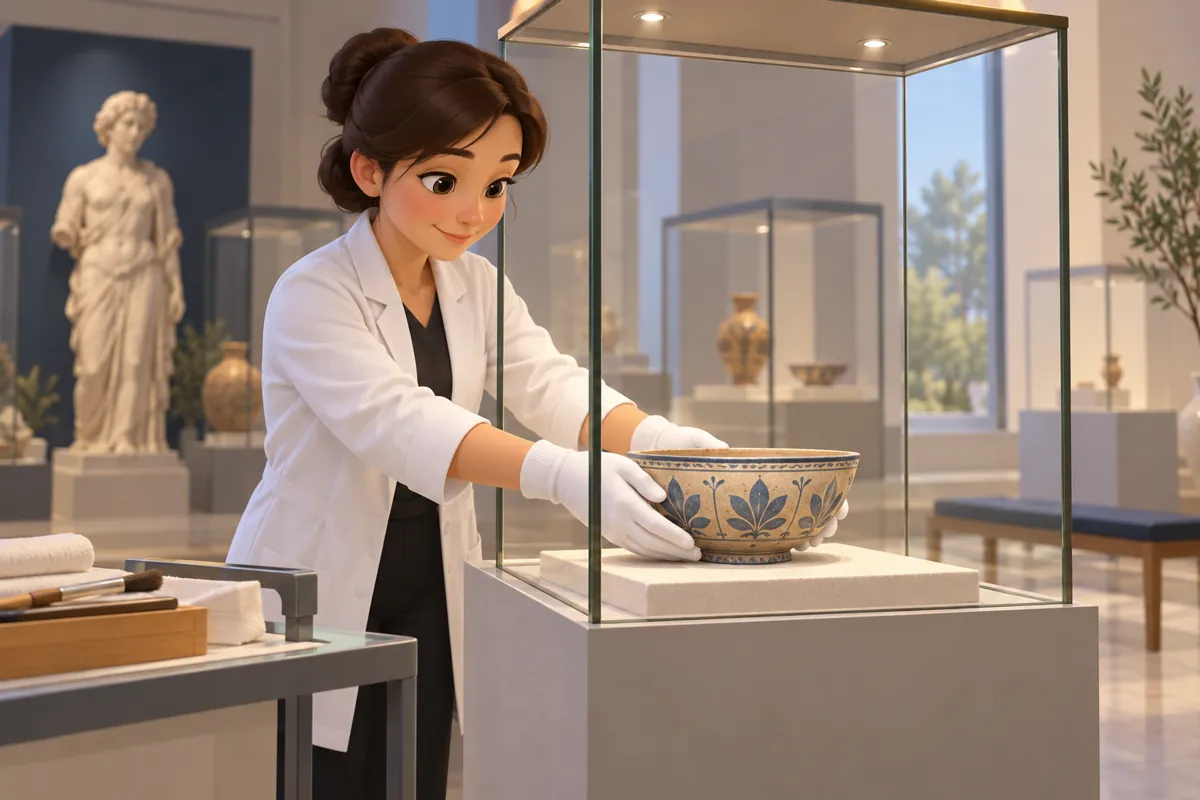
People can preserve buildings, documents, artworks, traditions, habitats, food, and memories. The method depends on the object: a historic building may be repaired and protected, while food can be treated through methods such as drying, pickling, or canning.
Choose a detail that makes the sentence exact. “The archive preserved the photograph in a cool, dry setting” describes care for an object; “The family preserved peaches in jars” describes food prepared for storage.

Is preserved a verb or an adjective?
Preserved can function as a verb form or as an adjective. In “The curator preserved the painting,” it is the past-tense verb. In “the preserved painting,” it describes the painting’s condition. In a passive clause—“The painting was preserved”—it is part of a verb phrase.
Look at the words around it to tell the role. If the sentence names who did the preserving, it is likely a verb; if it describes the condition of a noun, it may be adjectival.
Frequently asked questions
What is a simple sentence with preserved?
“The library preserved the old map” is a simple sentence with preserved as a past-tense verb. It means the library protected or maintained the map. “The preserved map is on display” uses the same word to describe the map’s condition as an adjective.
Is preserved past tense or an adjective?
It can be either, depending on the sentence. “They preserved the mural” uses the past-tense verb. “A preserved mural” uses preserved before a noun as an adjective. In “the mural was preserved,” the word is a past participle in a passive verb phrase.
What are examples of preserved food?
Preserved foods include pickled vegetables, dried fruit, canned tomatoes, and fruit stored in sugar. The treatment helps the food keep longer, though the method and storage conditions differ. In a sentence, write “The picnic basket held preserved peaches” to use preserved as an adjective.
What is the difference between preserved and conserved?
Preserved usually emphasizes keeping something safe, unchanged, or from decay. Conserved often emphasizes careful management to avoid loss or waste, especially for resources, energy, or historic objects. The words overlap, so choose based on context: a building may be preserved, while water is conserved.
Original article
Have you ever wondered what the word “preserved” really means? Simply put, when something is preserved, it is protected or kept intact to maintain its original condition or qualities over time. This could apply to food, historical artifacts, or even natural habitats.
Preserved items often undergo specific processes or treatments to extend their shelf life or ensure their longevity. From pickling and canning to fossilization or conservation efforts for endangered species, the concept of preservation is vital in various fields to maintain the integrity and existence of valuable resources.
7 Examples Of Preserved Used In a Sentence For Kids
- Preserved fruits last longer.
- We preserved the leaves by pressing them in a book.
- The museum has many preserved artifacts.
- It is important to keep food preserved in containers.
- The treasure chest was preserved for hundreds of years.
- We preserved the flowers by drying them.
- Preserved pickles are tasty to eat.
14 Sentences with Preserved Examples
- Preserved fruits are a convenient and healthy snack option for busy college students.
- It is important to ensure that lab specimens are properly preserved for accurate results in biology experiments.
- The ancient ruins of Hampi have been well preserved for future generations to admire.
- Many college library books are preserved in special temperature-controlled rooms to prevent damage.
- Specially preserved documents offer valuable insights into historical events for history students.
- The art of preserved pickles and jams can be a fun and rewarding hobby for students looking to learn new skills.
- Preserved fossils found in geological sites can provide clues to Earth’s history and evolution.
- It is crucial to follow proper food handling guidelines to ensure that leftovers are safely preserved for future consumption.
- The delicate balance of nature should be preserved and respected by all citizens, including college students.
- Digitally preserved archives of rare manuscripts provide valuable resources for students studying literature and ancient texts.
- The traditional dance forms of India must be preserved and passed down to future generations to maintain our cultural heritage.
- The historical significance of ancient monuments must be preserved to educate and inspire college students about our rich past.
- Learning about sustainable practices can help college students understand the importance of preserving the environment for future generations.
- Properly preserved museum artifacts give students a firsthand look at different cultures and time periods.
How To Use Preserved in Sentences?
Preserved means to maintain something in its original state or to protect it from harm or decay. Here is a guide on how to use Preserved in a sentence:
- Start your sentence with a subject, such as “The museum,” “She,” or “The scientists.”
- Next, add the verb “preserved” to show how the subject is maintaining or protecting something.
- Follow the verb with the object being preserved, such as “the artwork,” “the environment,” or “the historical site.”
- You can also add additional information to the sentence, like how or why the object is being preserved.
For example:
– The museum preserved the ancient artifacts by storing them in climate-controlled cases.
– She preserved the family recipes by writing them down in a cookbook.
– The scientists are working to preserve the endangered species from extinction.
By following this guide, you can easily incorporate the word Preserved into your sentences to convey the idea of maintaining or protecting something. Experiment with different subjects and objects to practice using the word correctly in various contexts.
Conclusion
In conclusion, the examples of sentences with the keyword “preserved” highlight the idea of protecting or maintaining something in its original state. Whether referring to history, nature, or food, preservation ensures that valuable aspects are safeguarded for future generations. The act of preserving can be seen in various contexts, from ancient artifacts being carefully safeguarded in museums to fruits being stored in jars to maintain their freshness.
By understanding the importance of preservation, we recognize the significance of cherishing and safeguarding valuable elements of our past, environment, and culture. Preserving allows us to honor history, protect biodiversity, and savor the flavors of traditional foods, ultimately contributing to the conservation of our heritage and resources for generations to come.


