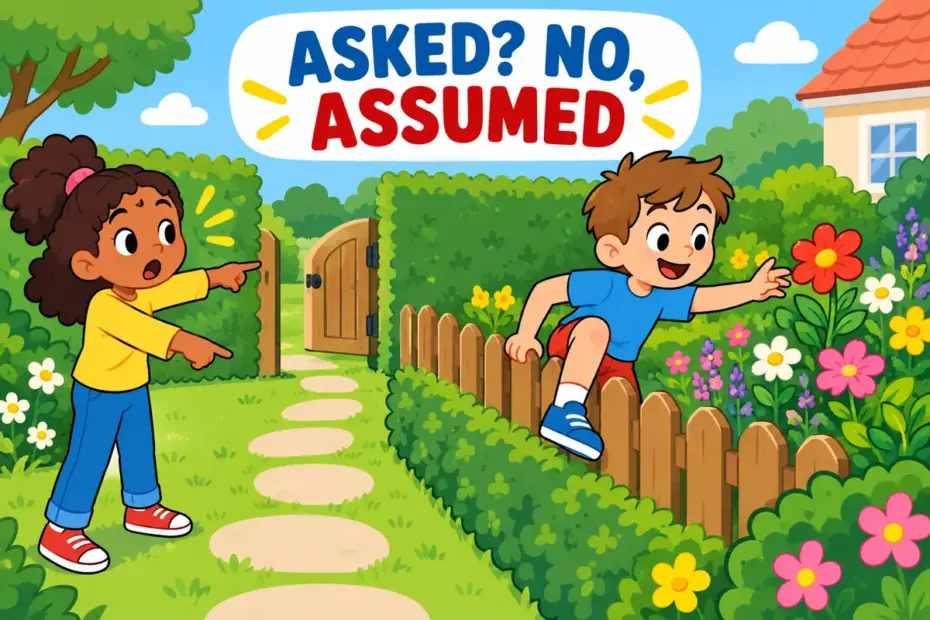
Presumptuous means failing to respect the limits of what is appropriate, usually by taking something for granted. To use presumptuous in a sentence, name the overstep: “It was presumptuous of me to book the venue without asking.” The adjective criticises the act, not the whole person.
Presumptuous at a glance
- Presumptuous is an adjective; the adverb is presumptuously and the noun is presumptuousness.
- The word describes an act that oversteps a social or professional limit.
- The fixed frame is it is presumptuous of someone to do something.
- Presumptuous is not the same as confident, and it is not the same as presumptive.
- Register is neutral but critical, so it rarely appears in formal praise.
- The commonest error is writing presumptuous where the correct word is presumptive or presumed.
What does presumptuous mean?
Presumptuous is an adjective meaning failing to respect the limits of what is appropriate, especially by assuming something you have no right to assume. The Cambridge entry for presumptuous records this sense, and the criticism always points at an act rather than a fixed character. A person who takes something for granted may be presumptuous on one occasion and perfectly polite the next, which is why the word rarely labels a whole personality.
| Sense | Plain meaning | Example sentence |
|---|---|---|
| Overstepping propriety | Acting as if a limit did not exist | It was presumptuous of him to sit at the head of the table. |
| Assuming without warrant | Treating a guess as an established fact | It would be presumptuous to assume the offer still stands. |
| Taking a liberty | Deciding something on another person’s behalf | A presumptuous guest opened the wine before the hosts arrived. |
One limitation is worth stating plainly. Presumptuous describes an overstep, not general unpleasantness, and it is not a synonym for rude. A blunt request can be rude without being presumptuous, because rudeness offends while presumption assumes.
How do you use presumptuous in a sentence?
Presumptuous attaches to an act or an assumption, and the strongest pattern names the person who took the liberty. Two structures carry almost every sentence: the impersonal frame it is presumptuous of someone to do something, and the simpler presumptuous to do something.
| Pattern | Example | What it signals |
|---|---|---|
| it is presumptuous of + person + to + verb | It was presumptuous of me to open your post. | Names both the act and the person who overstepped. |
| it is presumptuous to + verb | It would be presumptuous to speak for the whole team. | Criticises the act without blaming a named person. |
| presumptuous + noun | She asked a presumptuous question about his salary. | Attaches the criticism directly to the thing said or done. |
| be presumptuous | Asking for the file a second time might be presumptuous. | Hedged criticism, softened by might or could. |
| presumptuous of + person | That was presumptuous of him. | The spoken, verdict-like form. |
Presumptuous in a sentence: examples across contexts
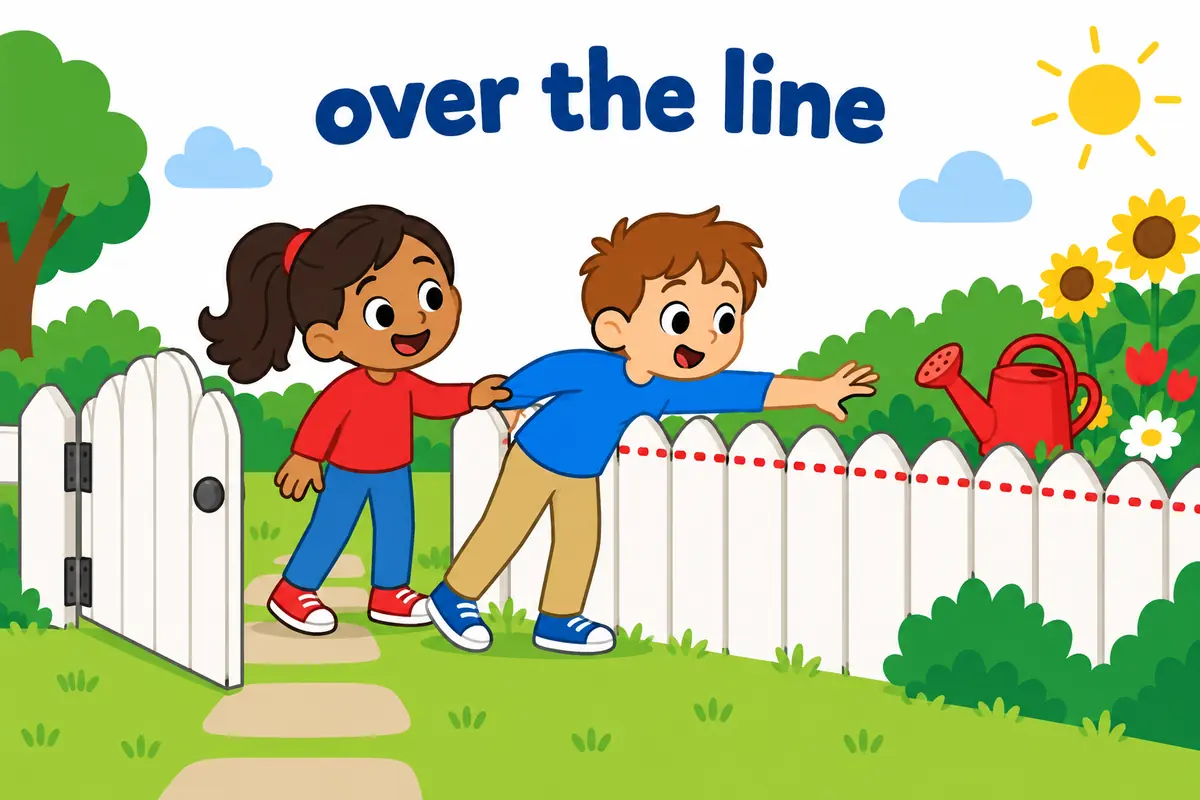
Presumptuous changes tone with the setting rather than with its meaning. The eight sentences below move from a classroom to a family gathering, and each one makes the crossed limit visible.
| Context | Example sentence | Why this works |
|---|---|---|
| Classroom | It was presumptuous of the new pupil to mark the register. | A small shared duty is taken over without being offered. |
| Workplace email | It may be presumptuous to book the meeting room for two hours without checking. | The hedge may softens a criticism of a colleague. |
| Job interview | Asking about holiday dates in the first interview can seem presumptuous. | The act looks ahead as if the job were already secured. |
| Family conversation | It was presumptuous of us to assume you wanted to host. | The speaker includes themselves in the overstep. |
| Academic writing | A presumptuous claim about causation weakens the whole argument. | Attaches the fault to the claim rather than the writer. |
| Customer service | The assistant was careful not to sound presumptuous about what the customer wanted. | Shows the word used to guard against an overstep. |
| News report | Critics called the proposal presumptuous because it assumed public support. | Reports the criticism while naming the assumption behind it. |
| Group chat | Sorry if that was presumptuous, but I went ahead and booked the table. | The apology pattern is common in casual writing. |
Only the writing contexts attach the word to a claim or a proposal; in everyday life it almost always criticises a person’s action, which is why the personal frame stays so common.
Presumptuous vs arrogant
Presumptuous and arrogant overlap in ordinary use, but they judge different things. Presumptuous criticises a single act that assumed too much, while arrogant describes a settled belief that one person matters more than others.
| Attribute | presumptuous | arrogant |
|---|---|---|
| Core meaning | Overstepping a limit by assuming something | Holding an inflated view of one’s own importance |
| What it judges | An act, a question or a claim | A lasting attitude or manner |
| Typical frame | It was presumptuous of her to decide for us | He is arrogant about his record |
| Duration | A single moment | An ongoing trait |
| Register | Neutral but pointed | Blunt and disapproving |
| Typical target | A request, assumption or decision | A person or their bearing |
Verdict: choose presumptuous for one act that took too much for granted, and arrogant for a person whose whole manner claims superiority. Where the offence is a breach of manners rather than pride, impertinent is the sharper fit.
Word forms and grammar of presumptuous
Presumptuous keeps the same form for every gender and number, and its family shares a root with presume and presumably. The table also lists the near neighbour that learners most often substitute for it.
| Form | Part of speech | Example |
|---|---|---|
| presumptuous | adjective | It was a presumptuous assumption. |
| presumptuously | adverb | He presumptuously answered for the group. |
| presumptuousness | noun | Her presumptuousness surprised the committee. |
| presumption | noun, related | The presumption that costs would fall proved wrong. |
| presumptive | adjective, different meaning | The presumptive nominee withdrew. |
| presumptous | non-standard spelling | Correct spelling: presumptuous. |
Common mistakes with presumptuous
- Incorrect:
She is the presumptuous candidate for the role.Correct: She is the presumptive candidate for the role. Rule: Presumptive means expected or assumed; presumptuous means overstepping. - Incorrect:
He was very presumptuous of the outcome.Correct: He was presumptuous about the outcome. Rule: Use about for a topic; use of only in the frame presumptuous of someone. - Incorrect:
It was presumptuous that you took my seat.Correct: It was presumptuous of you to take my seat. Rule: The frame needs of before a person and to before the verb. - Incorrect:
The plan was presumptuous of success.Correct: The plan presumed success. Rule: Presumptuous describes an act, not a plan’s expectation; use the verb presume for that. - Incorrect:
She was presumptuous enough to win the prize.Correct: She was confident enough to win the prize. Rule: Confidence is not presumption; the adjective needs a crossed limit.
Practice using presumptuous
Work through the six items, then read the reasons rather than only the answers.
- Fill the gap: It was ______ of us to assume you would drive.
- Choose the better word: The (presumptive / presumptuous) winner gave a short speech before the votes were counted.
- Correct the error: It was presumptuous that she answered for the whole class.
- Build a sentence: use it is presumptuous of about a classmate who reads another pupil’s diary.
- Spot the register: which belongs in a formal review, a presumptuous claim about causation, or he totally assumed stuff?
- Rewrite with the adverb: He acted in a presumptuous way when he answered for the group. Use presumptuously instead.
Answers
- presumptuous, because the frame names the people who assumed and the act they assumed.
- presumptive, because the winner is expected, not overstepping.
- It was presumptuous of her to answer for the whole class, since the frame needs of plus a person.
- Model answer: It was presumptuous of Tom to read the diary on the desk.
- A presumptuous claim about causation, because a review avoids totally and vague wording.
- He presumptuously answered for the group, because the adverb modifies the verb.
The bottom line
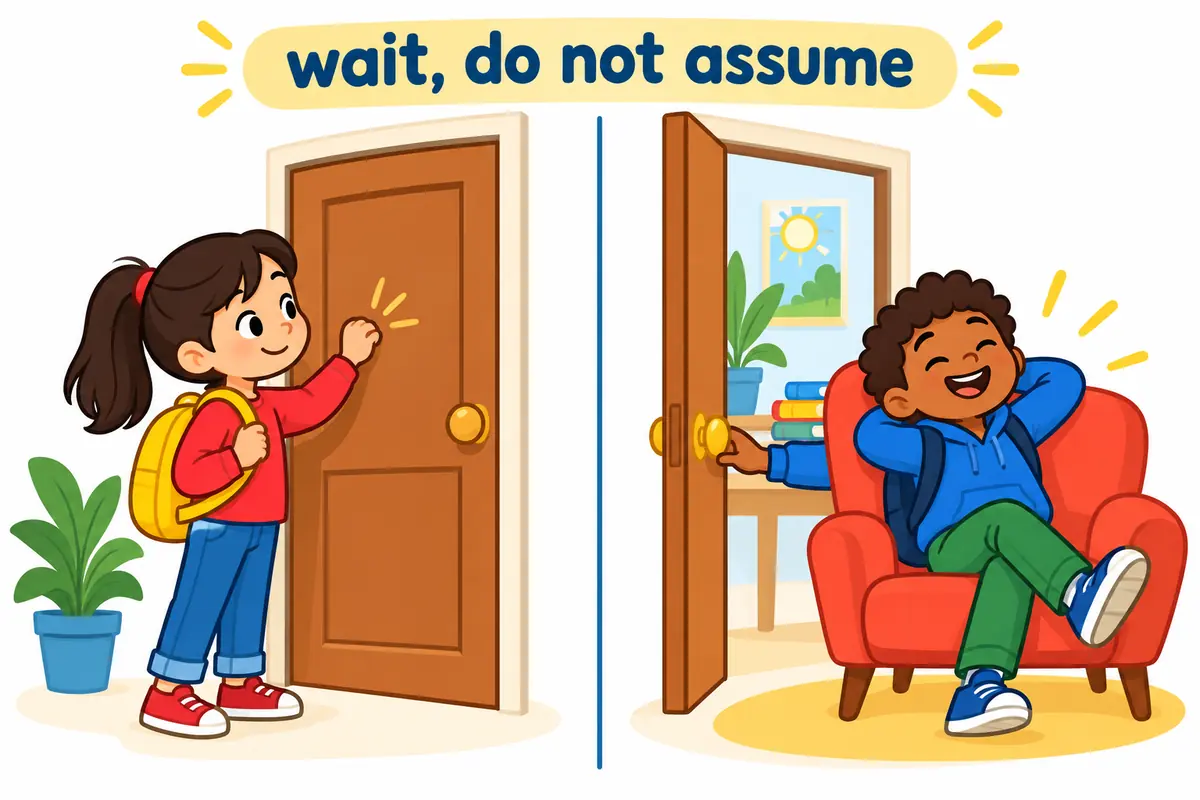
Use presumptuous in a sentence when an act assumes more than it should and crosses a limit that was there all along. The two details that decide most sentences are the frame it is presumptuous of someone to do something, and the sharp boundary with presumption, the noun for the assumption itself. Choose arrogant for a lasting attitude and presumptive for something merely expected.
Frequently asked questions about presumptuous
Is presumptuous a rude word?
Presumptuous is critical rather than abusive. It says an act ignored a limit, which is a mild reproach in most settings. Applying it to a person directly can sting, so writers often hedge with it would be or it might be. The word judges the overstep more than the person.
What does it mean to call a question presumptuous?
A presumptuous question assumes something the asker has no right to assume. Asking a new colleague what she earns is presumptuous because it takes for granted that the topic is open. The label targets the assumption inside the question, not the fact that a question was asked.
What is the difference between presumptuous and presumptive?
Presumptuous means overstepping propriety by assuming too much. Presumptive means assumed, expected or probable, and it appears in fixed phrases such as the presumptive nominee. The two adjectives share a root but point in different directions, so they are never interchangeable.
How do you apologize for being presumptuous?
Name the assumption and the person it affected, then release the decision. A sentence such as sorry, that was presumptuous of me to assume you would host does both. The apology works because it identifies the overstep instead of offering a vague sorry.
Have you ever been accused of being presumptuous? Presumptuous behavior is characterized by making hasty or unwarranted assumptions without proper evidence or justification.
When someone acts presumptuously, they often come across as arrogant or overly confident in their beliefs or actions. It’s important to be cautious of appearing presumptuous, as this can lead to misunderstandings and damage relationships.
7 Examples Of Presumptuous Used In a Sentence For Kids
- I should not be presumptuous and think I know everything.
- It is not polite to be presumptuous about someone’s feelings.
- Let’s remember not to be presumptuous and wait for our turn.
- Being presumptuous can hurt someone’s feelings.
- We should always ask questions instead of being presumptuous.
- It is important to always be kind and not presumptuous.
- Remember, it is not nice to be presumptuous and assume things about others.
14 Sentences with Presumptuous Examples
- Presumptuous of me to think I can finish this assignment in one night.
- She made a presumptuous assumption about the difficulty level of the exam.
- It was presumptuous of him to believe he could secure an internship without any prior experience.
- I felt presumptuous asking the professor for an extension on the deadline.
- He had a presumptuous attitude towards group projects, thinking he could do it all himself.
- It was presumptuous of her to assume she would automatically get a high grade without putting in the effort.
- I found it presumptuous when he spoke over the professor during class discussions.
- She had a presumptuous approach to tackling complex theories without seeking guidance from the professor.
- He made a presumptuous decision to skip class, thinking he wouldn’t miss any important information.
- It was presumptuous of him to assume he could pass the exam without studying.
- She had a presumptuous attitude towards her classmates’ opinions, believing hers was always superior.
- I felt presumptuous asking for extra credit; I should have focused on improving my grades instead.
- It was presumptuous of him to think he could ace the presentation without practicing beforehand.
- She had a presumptuous belief that she could breeze through college without putting in the necessary effort.
How To Use Presumptuous in Sentences?
To use Presumptuous in a sentence, you should understand that it is an adjective that describes behavior that is overly bold or forward, often showing excessive confidence or rudeness. Here is a guide to using Presumptuous in a sentence for beginners:
- Identify a situation where someone is behaving in a way that is overly confident or arrogant.
- Think about how their behavior can be described as presumptuous, meaning they are making assumptions or taking liberties without proper consideration or permission.
- Construct a sentence using Presumptuous to describe their behavior. For example: “It was presumptuous of him to assume he would be given the promotion without even applying for the position.”
- Make sure the context of your sentence clearly conveys the idea of someone acting boldly or rudely.
- Check your sentence to ensure that Presumptuous is used correctly and fits the tone of the situation you are describing.
Remember, using Presumptuous in a sentence adds depth and specificity to your description of someone’s behavior, emphasizing their boldness or arrogance. With practice, you will become more comfortable incorporating Presumptuous into your vocabulary to effectively communicate instances of overconfidence or forwardness.
Conclusion
In conclusion, presumptuous sentences are those that make assumptions based on incomplete information or without proper evidence. These sentences often come off as arrogant or overconfident, as they assert something as true without solid proof. The use of presumptuous language can hinder effective communication and lead to misunderstandings or conflicts.
It is important to avoid making presumptuous statements and instead aim for clarity and honesty in our communication. By being mindful of our words and ensuring that our statements are supported by facts and evidence, we can foster better understanding and cooperation in our interactions. Being aware of the impact of presumptuous language can help us communicate more effectively and build stronger relationships with others.


