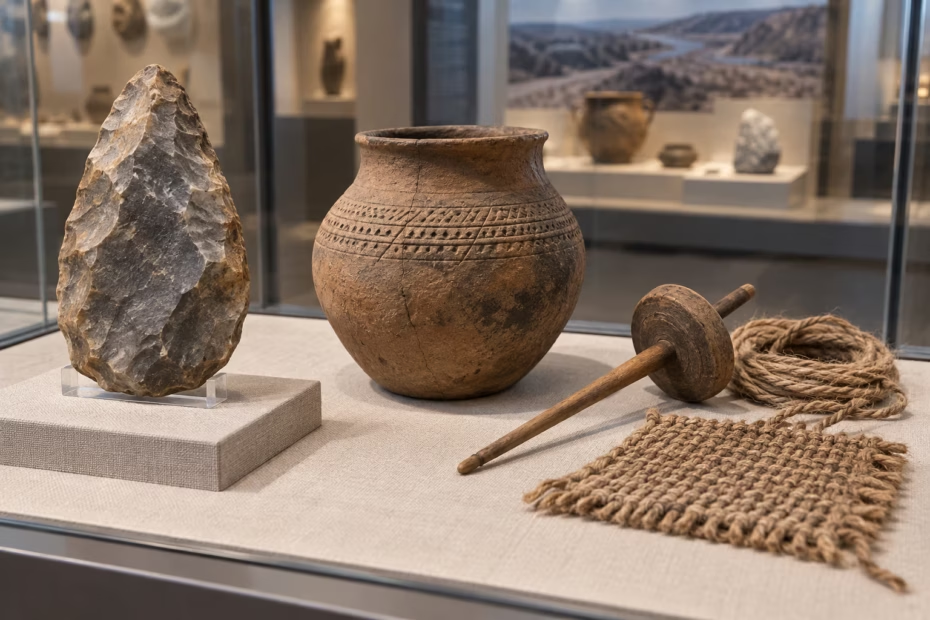
Primitive can mean early or original, basic or not highly developed, and—in some technical fields—a basic element from which more complex forms are built. The meaning depends on what the sentence describes. “A primitive tool” may refer to an early tool or a simple design; calling a people or culture “primitive,” however, can suggest an inaccurate hierarchy between societies. Use the word with care and name the specific feature you mean.
Primitive: meaning and examples
In everyday English, primitive often describes something from an early stage or something made with few parts or little complexity. Cambridge Dictionary includes senses relating to an early stage of human history, basic conditions, and an early stage in development. These senses overlap, but they are not identical: an object can be old without being simple, and a simple tool can be new.
For example, “The museum displayed a primitive stone tool” focuses on an early tool type. “The cabin had primitive plumbing” means the plumbing was basic or rudimentary, not necessarily ancient. “The device uses a primitive control system” criticizes its limited design. Add enough context for readers to tell which idea you intend.
When primitive means early or original
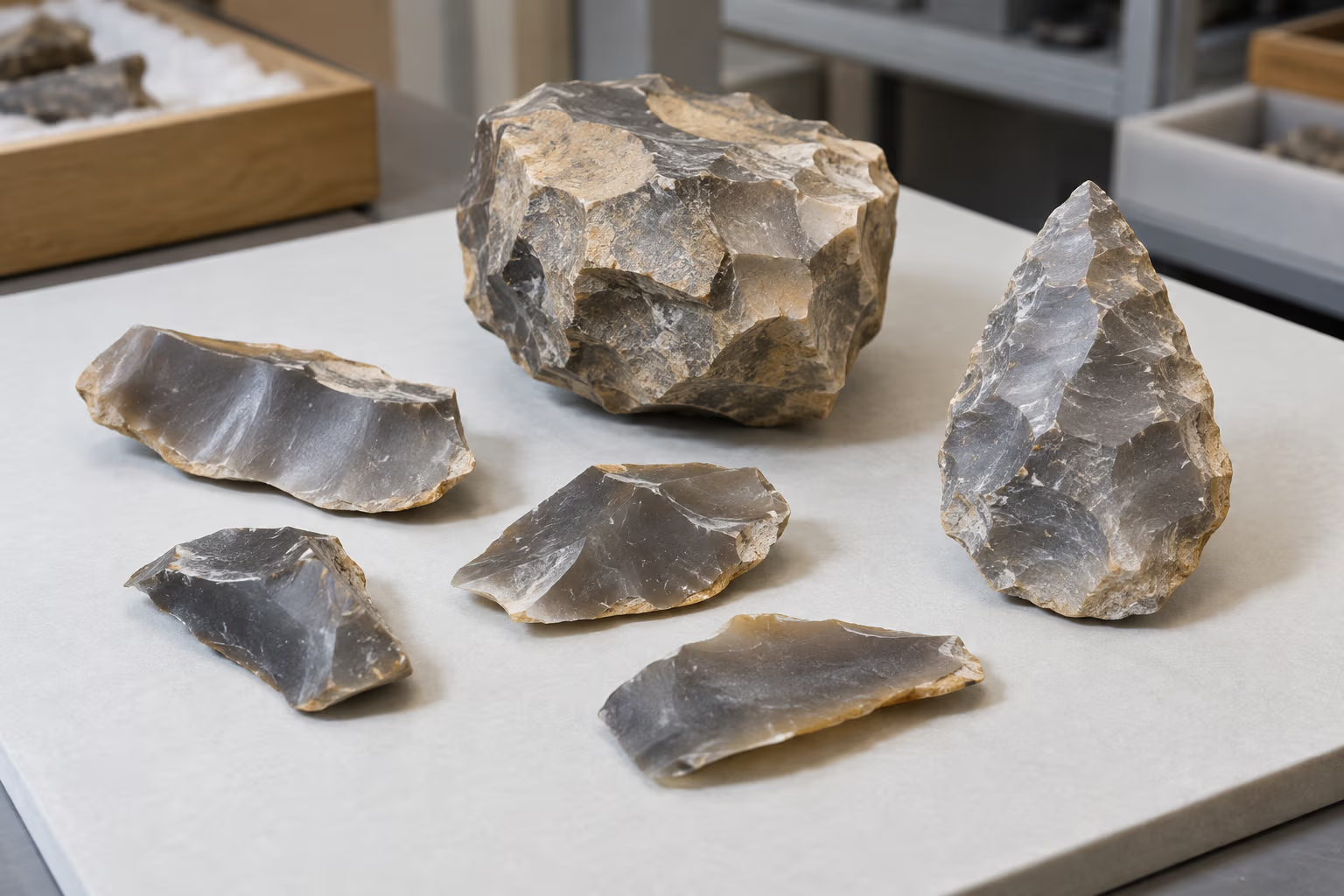
Use primitive for an early form, stage, or version when that is the relevant point. The word commonly modifies artifacts, techniques, organisms, and systems discussed in a historical or scientific context. A precise sentence identifies the evidence or period instead of leaving “primitive” to do all the work.
- Researchers compared the primitive stone blade with later tools from the same region.
- The exhibit traces how the primitive hand drill developed into more specialized equipment.
- In the novel, a primitive alarm—a rope tied to a row of tin cups—warned the family when someone approached.
- The team tested a primitive prototype before adding the sensors and safety controls.
- The oldest surviving sketch shows a primitive version of the machine’s familiar gear system.
In historical writing, words such as early, ancient, prehistoric, or a named period may be more informative. “A Bronze Age farming tool” tells readers more than “a primitive farming tool.” Prehistoric is appropriate when referring to a time before written records in a particular place; it does not mean that the people living then lacked knowledge or culture.
When primitive means basic or rudimentary
In a present-day setting, primitive can mean simple, rudimentary, or lacking features that people expect in a more developed version. The adjective often carries a critical tone, so consider whether the sentence needs that judgment. If you only mean “simple,” say basic; if the system lacks refinement, rudimentary or crude may be clearer.
- The first prototype had a primitive switch that could turn the motor on or off.
- We used a primitive cardboard model to check the size before building the cabinet.
- The campsite offered primitive facilities: a hand pump, an outdoor sink, and no electricity.
- Her primitive map showed the river, the bridge, and the safest route through the woods.
- The emergency kit included a primitive filter made from sand, gravel, and cloth, for demonstration only.
Notice that the subject matters. A primitive prototype may be an early version; primitive facilities are basic; a primitive person is a judgment about someone and is usually insulting. In technical prose, describe the limitation directly: “The controller has no automatic shutoff” is more useful than “The controller is primitive.”
A usage note about people and cultures
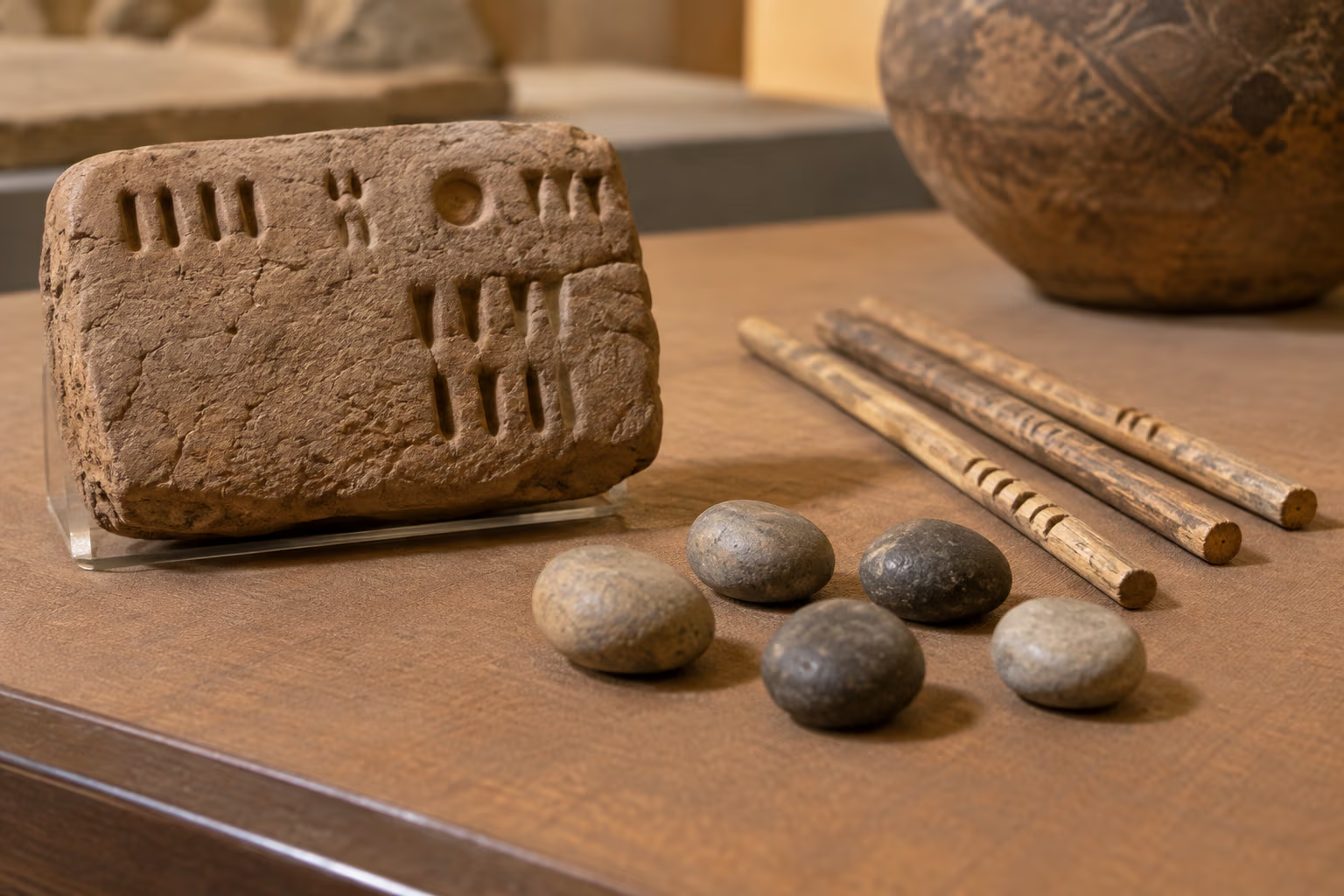
Older writing often used primitive to rank societies as if all cultures followed one path from “simple” to “advanced.” That framing is misleading: communities have different histories, technologies, values, and ways of organizing life, and the word can carry a history of colonial judgment. The Smithsonian describes how historical displays divided cultures into “primitive” and “civilized” categories and drew unwarranted conclusions about superiority.
When discussing a living people, community, or culture, do not use primitive as a synonym for uncivilized or inferior. State the relevant detail instead: “the community uses hand-built fishing equipment,” “the settlement has no electrical grid,” or “the ceremony follows a centuries-old tradition.” These descriptions avoid turning a particular technology or practice into a judgment of an entire people. When quoting a historical source that uses the word, make clear that it is the source’s language and explain its context.
The word can still be suitable when it has a defined meaning in a technical field or when a source uses it for a specific historical category. Even then, be specific about what makes the object or process primitive, and follow the terminology preferred by the relevant community or discipline.
Primitive in technical and academic contexts
In mathematics, computing, and other technical subjects, primitive can identify a basic element, operation, or form. For instance, a programming language may call certain built-in types primitive data types; the word describes their role in that system, not their age or quality. In mathematics, “primitive root” and “primitive function” have field-specific definitions, so explain the term or link to the relevant concept when writing for general readers.
- The language provides primitive data types for representing numbers and true-or-false values.
- In this graphics library, a line and a triangle are primitive shapes used to build more complex figures.
- The lesson defines each primitive operation before combining them in a longer calculation.
- In grammar, a primitive word may be discussed as a root or base, depending on the framework.
Technical terms are not always interchangeable across disciplines. If the word appears in a textbook, codebase, or specialist discussion, retain its field-specific sense and define it for the intended reader.

Primitive word forms and alternatives
| Word or phrase | Meaning or use | Example |
|---|---|---|
| primitive | early, original, basic, or a technical foundational element | The device began as a primitive prototype. |
| primitively | in a basic or rudimentary manner; sometimes with a critical tone | The shelter was primitively built from branches and canvas. |
| primitiveness | the quality of being basic or early; use sparingly because it can sound judgmental | The reviewer criticized the interface’s primitiveness. |
| primitive art | a historical or art-historical label whose meaning depends on context and can be contested | The curator explained why the older catalog’s label “primitive art” is now questioned. |
Choose a more exact alternative when it fits: early or ancient for a time period; basic or simple for low complexity; rudimentary for an incomplete or elementary form; original for the first version; and foundational for an element that supports later work. These words do not mean exactly the same thing, so choose based on the feature you want readers to notice.
How to write a clear sentence with primitive
- Name the subject. Identify the object, model, system, or concept being described.
- Choose the intended sense. Do you mean early, basic, original, or a technical building block?
- Add the evidence or comparison. Explain what is early or basic, such as its materials, features, date, or role.
- Check the tone. If the sentence describes people or a culture, replace a broad judgment with a specific, accurate detail.
- Use a more exact word when possible. “An early irrigation system” may be clearer than “a primitive irrigation system.”
Compare “The village used primitive tools” with “The archaeological site contained stone blades and bone needles dated to the early farming period.” The second sentence names the evidence and avoids treating a whole community as less developed. In fiction, the first sentence may fit a narrator’s voice, but a writer should consider what the wording implies about the people being described.
More examples with primitive
- The archive preserves a primitive draft of the instrument before the design was refined.
- At the museum, visitors can see how a primitive kiln was assembled from local materials.
- The first version of the app had a primitive search tool that matched only exact words.
- For the classroom activity, students built a primitive bridge from craft sticks and string.
- The field team used a primitive signal to communicate across the valley.
- The technical manual explains how primitive data types differ from objects in the language.
Frequently asked questions
What does primitive mean in a sentence?
It usually means early or original, basic or rudimentary, or—in a technical field—a fundamental element. Context shows which sense applies.
Is primitive always a negative word?
No. It can be a neutral, defined term for an early artifact or a technical building block. In everyday use it may suggest inferiority, especially when applied to people or cultures, so choose a precise description.
What is a good synonym for primitive?
It depends on the meaning. Try early, ancient, or original for time and origin; basic, simple, or rudimentary for limited complexity; and foundational for a building block.
Can primitive describe a modern object?
Yes. A modern prototype or interface can be called primitive if it is very basic compared with a more developed version. Name the missing or limited feature to make the criticism clear.
Should I call a culture primitive?
Generally, avoid using the word as a label for a living people or culture. Describe the particular practice, technology, or historical period instead; broad labels can imply that some cultures are inherently less advanced.
Sources and further reading: Cambridge Dictionary: primitive; Smithsonian Perspectives: the history of cultural categories.
Do you ever wonder what the word “primitive” really means? Essentially, “primitive” refers to something that is original, basic, or not yet developed to a more complex or advanced state.
When we describe something as “primitive,” we are highlighting its simplicity or natural form, often indicating a lack of sophistication or refinement. This term is commonly used to refer to objects, technology, or even societal structures that are rudimentary or ancient in their design and functionality.
7 Examples Of Primitive Used In a Sentence For Kids
- Primitive tools were used by early humans for hunting.
- Some animals still live in primitive habitats.
- Long ago, people lived in primitive caves.
- Primitive art can be found in ancient temples.
- Our ancestors wore primitive clothing made of leaves.
- Primitive societies were mainly based on hunting and gathering.
- The first bicycles were very primitive compared to the ones we have now.
14 Sentences with Primitive Examples
- Primitive cave paintings were discovered during an archaeological expedition.
- The primitive tools used by our ancestors are on display at the museum.
- As part of the anthropology course, students learned about primitive societies.
- The professor discussed the primitive forms of communication used by early humans.
- The syllabus included a section on primitive agricultural practices.
- The students conducted a study on primitive tribal communities in India.
- The lab experiments involved replicating primitive cooking techniques.
- The textbook discussed the evolution of primitive forms of government.
- The students were tasked with researching primitive hunting methods.
- The documentary showcased the primitive technologies of ancient civilizations.
- The debate focused on whether primitive cultures should be preserved or modernized.
- The field trip involved visiting a primitive village to learn about their lifestyle.
- The history class explored the impact of primitive infrastructure on society.
- The research paper analyzed the role of religion in primitive societies.
How To Use Primitive in Sentences?
Primitive refers to something that is original, basic, or fundamental. When using the word primitive in a sentence, it is essential to understand its context and meaning to convey your message clearly.
To use primitive in a sentence, you can start by identifying the subject or object that you are referring to as primitive. For example, “The cave paintings depict the primitive lifestyle of ancient humans.” In this sentence, primitive is used to describe the basic and original way of living of ancient humans.
Another way to use primitive in a sentence is by highlighting its characteristics or features. For instance, “The tools used by early humans were primitive and made from natural materials.” Here, primitive is used to describe the simplicity and basic nature of the tools.
When incorporating primitive in a sentence, make sure to provide enough context so that the reader understands what you are trying to convey. Consider using descriptive adjectives or adverbs to enhance your sentence and paint a clear picture of the primitive aspect you are referring to.
By following these guidelines and practicing using primitive in different contexts, you can improve your communication skills and effectively incorporate this word into your vocabulary.
Conclusion
In summary, the sentences with the keyword “primitive” demonstrate a variety of contexts where the term is used to describe something basic, undeveloped, or simplistic. These sentences showcase how “primitive” is often employed to denote the early stages of something, such as civilization, technology, or thought processes. Whether referring to ancient tools, simple structures, or rudimentary beliefs, the word “primitive” carries a connotation of primitiveness or inferiority.
Overall, the examples provided illustrate the versatility of the term “primitive” in characterizing a wide range of elements as rudimentary or uncultivated. Through these sentences, we see how “primitive” is utilized to describe various states of primitiveness across different domains, highlighting its significance as a descriptor of foundational or archaic attributes.


