
Privilege means a special right, advantage, or opportunity available to a person or group. It can describe a formally granted benefit, an advantage connected to social position, or the honor of being able to do something. In a sentence, context tells readers which meaning you intend.

What Does Privilege Mean?
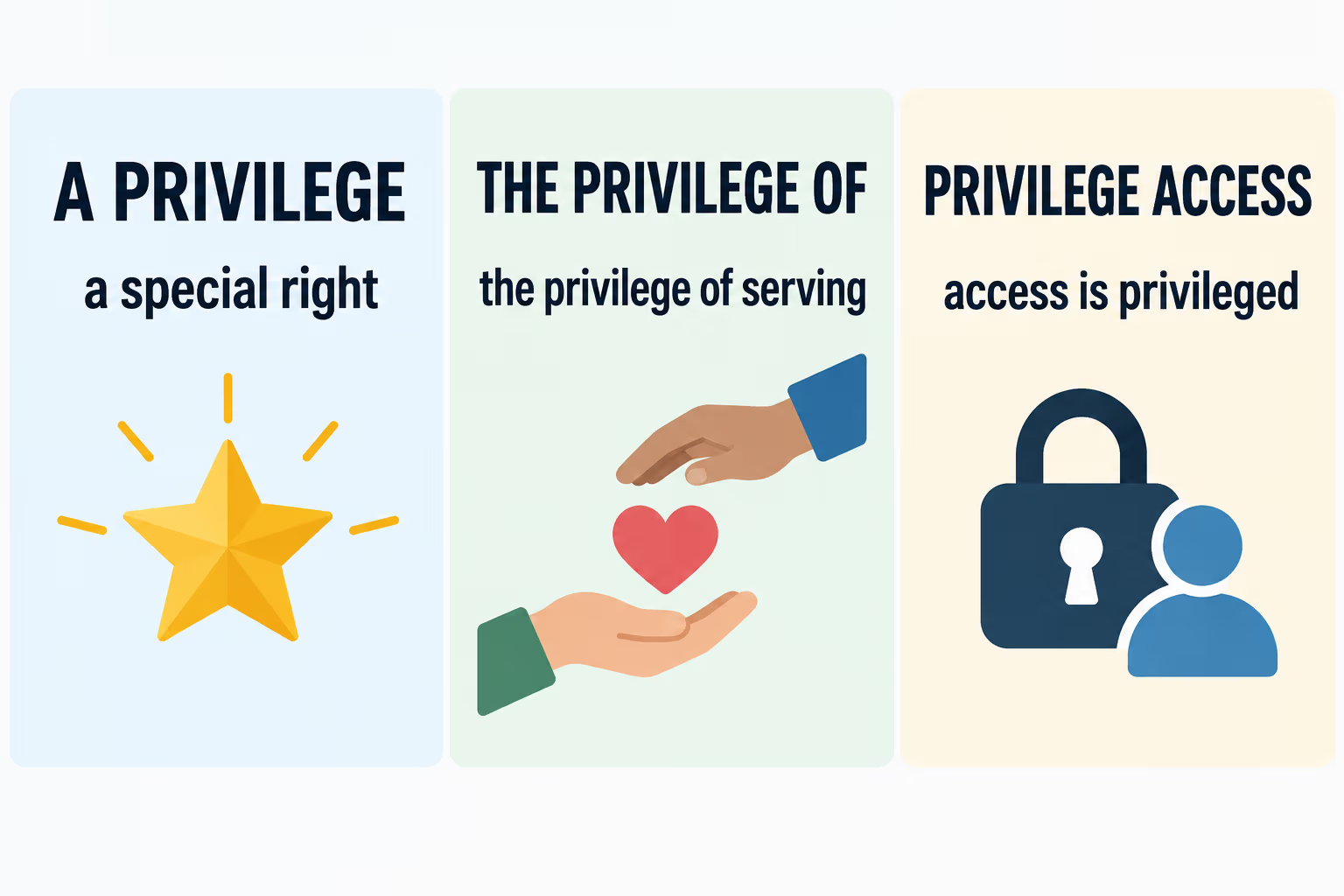
As a noun, privilege has several related meanings. It may be a special right granted to someone, an advantage a person or group has, or an opportunity regarded as an honor. The Oxford Advanced Learner’s Dictionary distinguishes these common uses and also records specialist legal and political senses, such as parliamentary privilege.
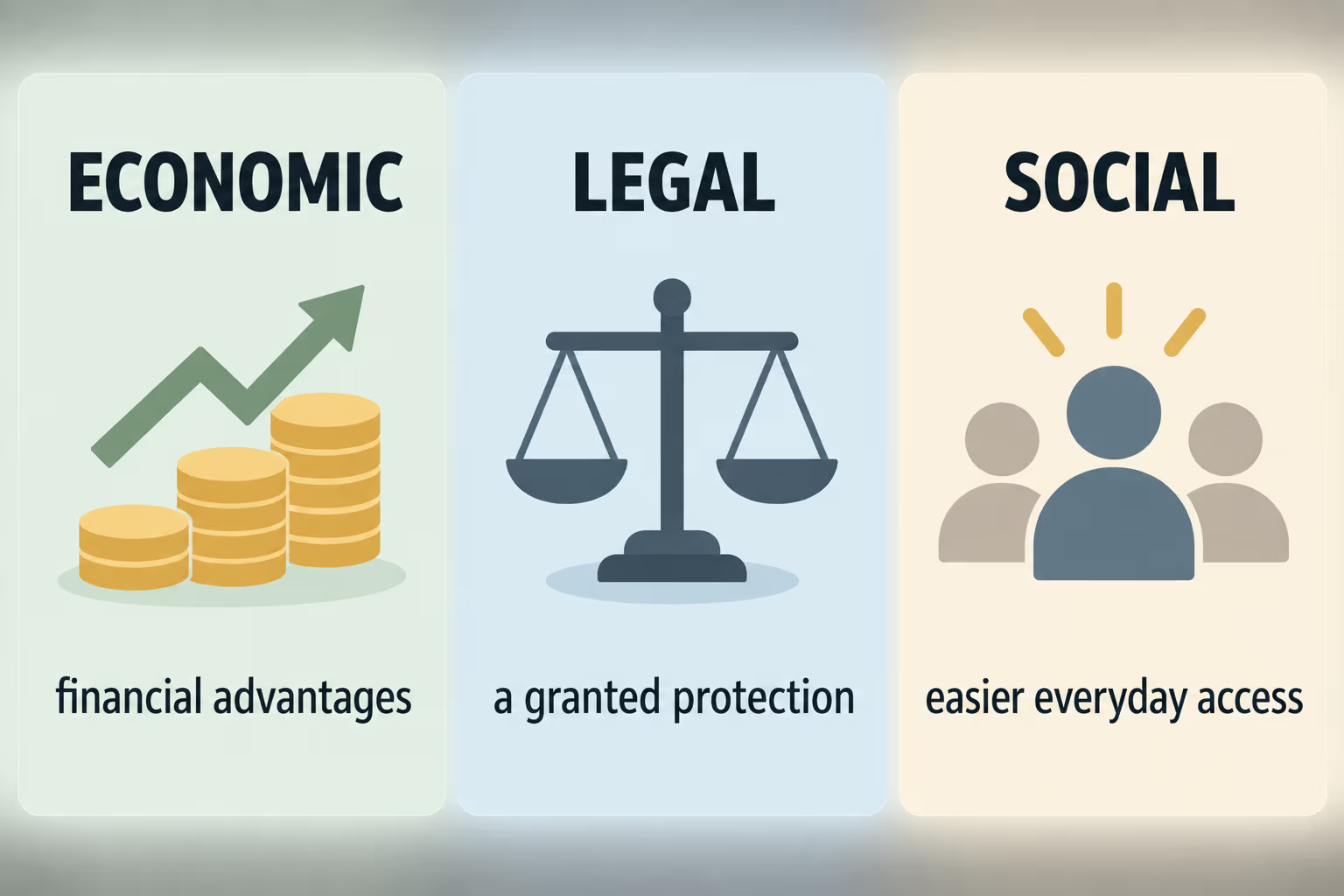
In discussions of society, privilege often refers to advantages that come more easily to some people because of how systems or institutions treat their social group. The American Psychological Association Dictionary of Psychology uses the term for unearned rights, immunities, and societal advantages associated with membership in a dominant social identity group. This is a specific social-science use; it is not the only meaning of the word.
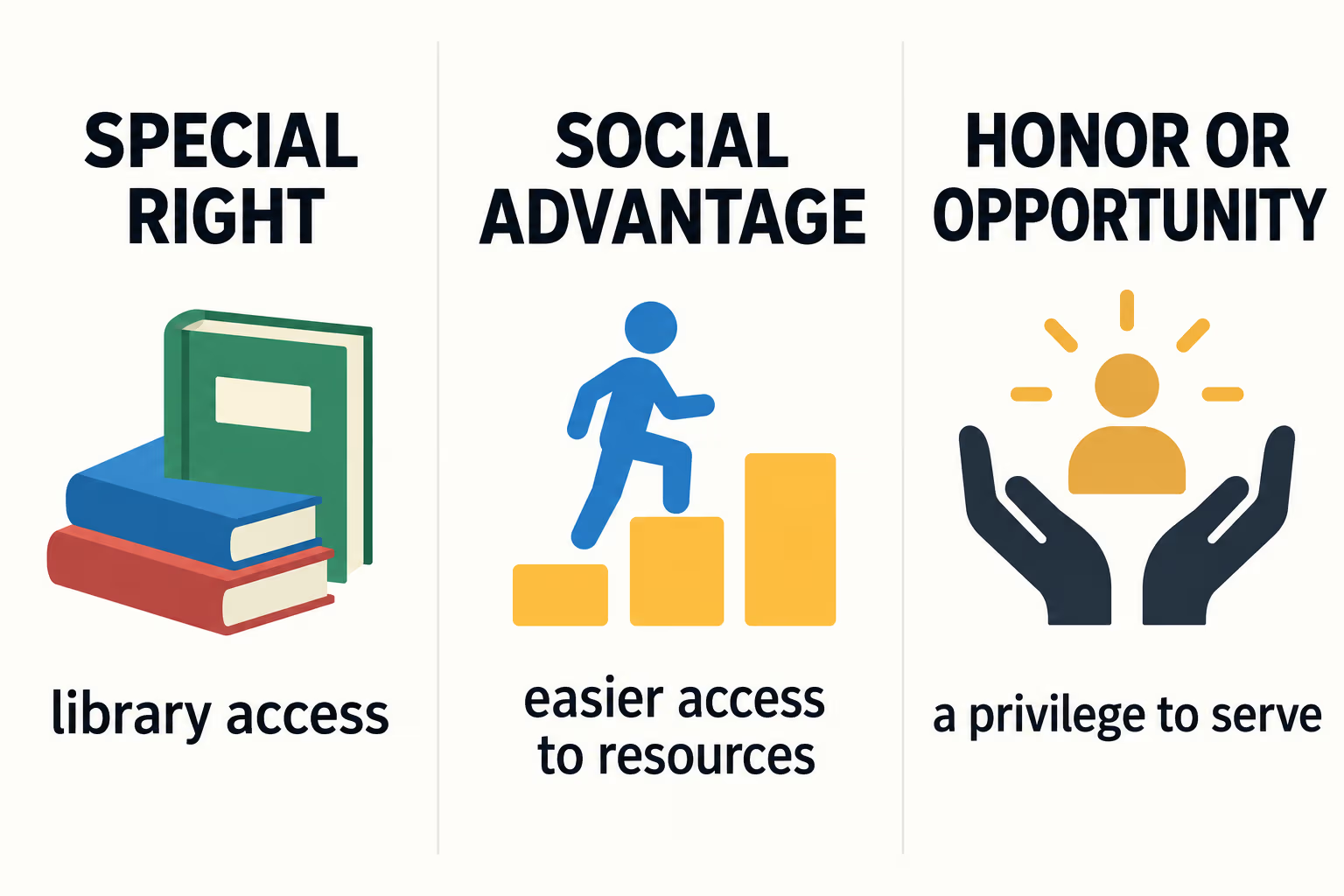
| Sense | Common pattern | Example |
|---|---|---|
| Granted right or benefit | a privilege; privileges of membership | Members have the privilege of using the study room. |
| Social advantage | economic, social, or inherited privilege | The report examines how privilege affects access to housing. |
| Honor or valued opportunity | a privilege to do something | It was a privilege to hear the elder speak. |
| Special legal protection | parliamentary or executive privilege | The committee debated whether the records were protected by privilege. |
Privilege in a Sentence: Examples by Meaning
Special rights and benefits
- Weekend access to the studio is a privilege reserved for trained members.
- The library grants researchers the privilege of consulting its archive by appointment.
- After completing the safety course, volunteers received the privilege of operating the equipment.
- Club privileges include early registration and use of the practice courts.
- The principal temporarily suspended the student’s computer privileges after repeated misuse.
Social or economic advantages
- Reliable transportation gave Maya the privilege of accepting a job across town.
- The study explores how family wealth can create educational privilege across generations.
- Recognizing her own privilege helped the manager question assumptions about who could work late.
- Access to stable housing is an advantage that policy makers should not treat as a privilege for only a few.
- The essay asks how privilege can shape whose experiences are considered typical.
An honor or valued opportunity
- It was a privilege to introduce the award-winning poet at the festival.
- We had the privilege of learning the craft from a patient and generous teacher.
- Serving as a mentor is both a responsibility and a privilege.
- She considered it a rare privilege to study the original letters.
- “I’m privileged to work with this team,” the new director said.
Legal or formal use
- The attorney explained that the conversation was protected by attorney-client privilege.
- Parliamentary privilege allows legislators to perform certain duties without ordinary legal restrictions.
- The board reviewed whether the requested documents fell within executive privilege.
Common Grammar Patterns
Privilege is usually a countable noun when it means a particular right or opportunity: a privilege, the privilege, or several privileges. When it describes a broad social condition, it is commonly uncountable: wealth and privilege or to examine privilege. Use the plural for separate benefits, permissions, or entitlements.
- the privilege of + noun or -ing verb: “She had the privilege of meeting the author.”
- a privilege to + base verb: “It was a privilege to represent the school.”
- grant, give, or extend a privilege: “The archive grants visitors the privilege of viewing the collection.”
- have, enjoy, or abuse a privilege: “He abused the privilege of borrowing equipment overnight.”
- revoke or lose a privilege: “Repeated violations may cause a member to lose that privilege.”
The related verb privilege is less common in everyday conversation. It can mean giving a person special rights or advantages, or treating someone or something as a priority: “The editor’s guidelines privilege clarity over cleverness.” Its forms are privileges, privileged, and privileging. In ordinary writing, a more direct verb such as favor, prioritize, or give access to may be clearer.
Choosing the Right Word
Privilege often sounds more formal or weighty than benefit. A benefit is generally a helpful result or feature; a privilege emphasizes restricted access, a granted right, a social advantage, or an opportunity viewed as special. If you simply mean that someone can do something, opportunity may be more neutral. If you mean a right protected by a rule or law, name that right specifically when possible.
When writing about social privilege, make the sentence precise about the setting and advantage involved. Instead of implying that every part of a person’s life is easy, describe the particular access, treatment, or protection being discussed. For example, “The hiring process gave applicants with professional referrals an advantage” identifies a mechanism more clearly than a broad statement about who is privileged. People can experience advantages in one setting and barriers in another.
Quick Answers
Is privilege positive or negative? It depends on the sense. A privilege can be a valued opportunity, a neutral granted benefit, or an unfair social advantage; nearby context makes the tone clear.
Is privilege countable? Yes, when referring to a particular right or benefit (“a privilege” or “three privileges”). It is often uncountable when referring broadly to social advantage (“class privilege”).
What is the difference between privilege and a right? A right is generally understood as something people are entitled to; a privilege is usually a special permission, advantage, or opportunity granted to someone. The distinction can depend on legal or institutional context.
Can privilege be a verb? Yes. To privilege something is to give it priority or special importance, as in “The policy privileges speed over careful review.” This use is more common in formal or academic writing.
What does “It is a privilege to…” mean? It expresses that doing something is an honor or valued opportunity: “It is a privilege to welcome the guests.”
Sources and Further Reading
- Oxford Advanced Learner’s Dictionary: privilege (noun) — noun meanings, usage patterns, and collocations.
- Oxford Advanced Learner’s Dictionary: privilege (verb) — the verb meaning “to give priority or special importance to.”
- APA Dictionary of Psychology: privilege — social-science usage relating to unearned advantages and social identity.

Privilege is a concept that refers to the inherent advantages or benefits that certain individuals or groups possess, often solely based on their social status, identity, or circumstances. It can manifest in various forms, such as economic advantages, access to resources, or societal power.
Understanding privilege is essential in unraveling the dynamics of inequality and systemic discrimination that exist in our society. By acknowledging and examining one’s own privilege, individuals can work towards dismantling oppressive structures and advocating for a more equitable and inclusive world.
7 Examples Of Privilege Used In a Sentence For Kids
- Privilege means having something special.
- We are grateful for the privilege of going to school.
- It is a privilege to have clean water to drink.
- Having a loving family is a privilege.
- We should share our privileges with others.
- Our teachers work hard to give us privileges.
- Let’s remember to appreciate our privileges every day.
14 Sentences with Privilege Examples
- Privilege is being able to attend a prestigious university without worrying about financial constraints.
- As college students, we must acknowledge our privilege of having access to quality education and resources.
- It is important for us to use our privilege to advocate for marginalized communities in society.
- Having the opportunity to study abroad is a privilege that not everyone gets to experience.
- We should never take for granted the privilege of pursuing higher education and expanding our knowledge.
- It is our responsibility to use our privilege to create positive change in the world around us.
- Attending college is a privilege that comes with great opportunities for personal and professional growth.
- It is crucial for us to recognize the privilege we have and to use it to help those who are less fortunate.
- Access to internships and networking events is a privilege that can greatly benefit college students.
- As students, we must strive to make the most out of the privilege we have been granted in pursuing higher education.
- We must not let our privilege blind us to the struggles faced by those who are not as fortunate.
- It is a privilege to have the support of family and friends throughout our college journey.
- Utilizing our privilege to advocate for social justice and equality can have a lasting impact on our communities.
- We should use our privilege as college students to contribute positively to society and uplift those in need.
How To Use Privilege in Sentences?
To use Privilege in a sentence, start by identifying a situation where someone has an advantage or benefits due to their social status, race, gender, or other factors. For example, you can say, “She was born into a wealthy family, so she had the privilege of attending a prestigious private school.”
Alternatively, Privilege can be used in a context where someone is granted special treatment or opportunities that others do not have access to. An example could be, “His position as the manager gave him the privilege of choosing his own work schedule.”
It’s important to remember that Privilege is often linked to societal inequalities and can impact how individuals navigate the world. You can also use Privilege to acknowledge and discuss the advantages or disadvantages that come with one’s social position. For instance, “As a white male, he recognized the privilege he had in society compared to women and people of color.”
Overall, using Privilege in a sentence involves recognizing and highlighting the advantages or benefits that certain individuals have based on their circumstances. By incorporating this term thoughtfully into your discussions, you can contribute to a better understanding of social dynamics and inequalities in society.
Conclusion
In exploring sentences using the keyword “privilege,” it becomes evident that privilege can manifest in various forms, such as the advantages or benefits certain individuals have due to their social status, race, or economic standing. These sentences highlight how privilege can impact opportunities, perceptions, and experiences in society.
Understanding and acknowledging privilege is crucial in promoting equity and inclusivity. By recognizing and addressing privilege, individuals can work towards creating a more fair and just society where everyone has equal access to opportunities and resources. These sentences underscore the importance of being aware of privilege and taking steps to challenge systems that perpetuate inequality, ultimately striving for a more equitable and inclusive world.


