
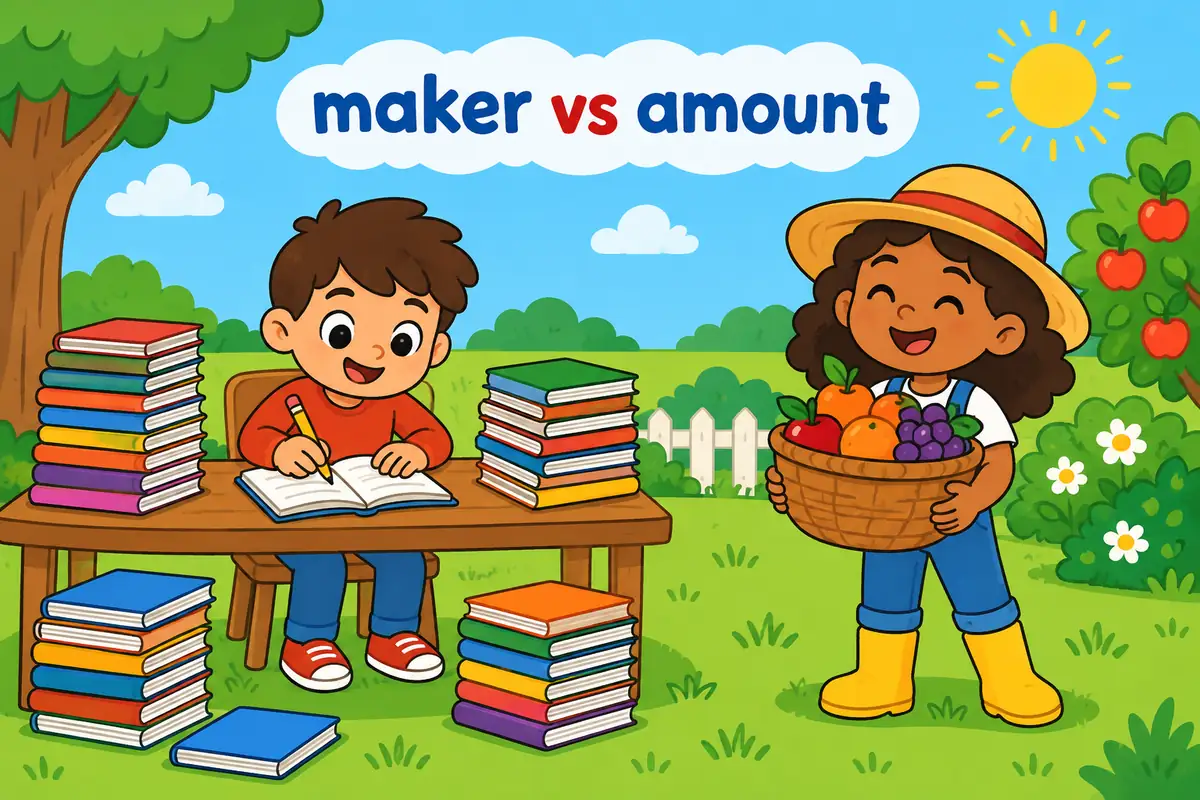
Prolific is an adjective meaning producing a great deal of something, especially works, ideas or offspring. To use prolific in a sentence, place it before the producer: “She is a prolific writer of short stories.” The adjective describes the maker, not the amount made, so it never means simply plentiful.
Prolific at a glance
- Prolific is an adjective describing a person, animal or plant that produces a lot.
- It usually comes before the noun it describes: a prolific author.
- It can also follow a linking verb: the band is prolific.
- Common partners are writer, artist, composer, goal scorer and breeder.
- The commonest error is using prolific for the product rather than its maker.
What does prolific mean?
Prolific is an adjective meaning producing a large amount of something, whether books, songs, goals or young. The Cambridge entry for prolific gives this sense of producing much. It describes the producer rather than the product, so a prolific tree bears many fruit while its crop is described as abundant. The word is neutral to admiring, and it suits artists, athletes, scientists and animals alike.
| Sense | Plain meaning | Example sentence |
|---|---|---|
| Producing many works | Creating a large output | She is a prolific novelist. |
| Producing many young | Breeding often | Rabbits are famously prolific. |
| Producing many goals | Scoring frequently | The striker had a prolific season. |
One limitation needs stating. Prolific is not a synonym for plentiful or common. A prolific farmer produces a lot; a plentiful harvest is large. Using prolific for the product, as in a prolific harvest, is the mistake that most often marks a learner. The word also implies sustained output, so one big effort does not make somebody prolific.
How do you use prolific in a sentence?
Prolific works either before a noun or after a linking verb, and it often names the field with of or in. Say a prolific writer of poetry, or prolific in her output. The comparison forms are more prolific and most prolific, and the adverb is prolifically. Where the product itself is large in amount, copious fits the output while prolific stays with the maker.
| Pattern | Example | What it signals |
|---|---|---|
| prolific + noun | a prolific composer | Attributes high output directly to the person. |
| be + prolific | The duo is remarkably prolific. | Describes a continuing habit of production. |
| prolific in + field | prolific in the sciences | Names the area of high output. |
| prolific of + noun | a prolific producer of films | Points to what is being produced. |
| more or most prolific | the most prolific scorer | Compares output between producers. |
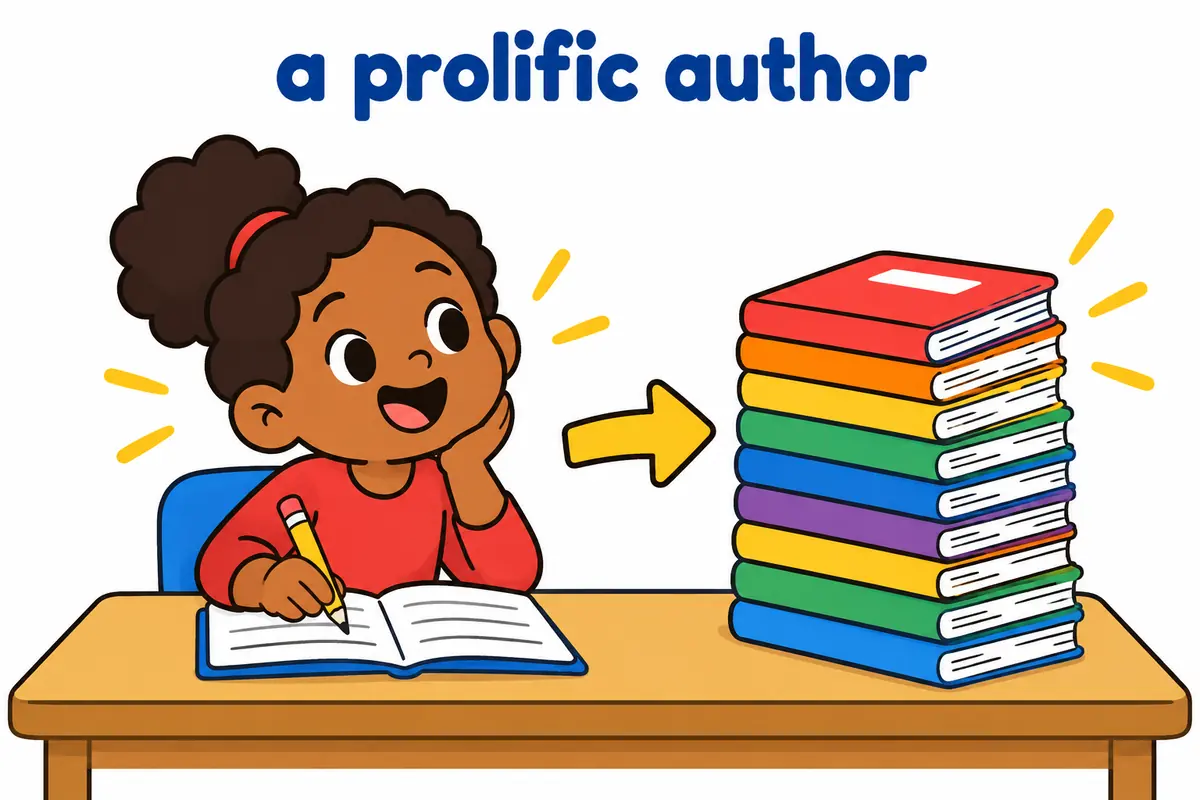
Prolific in a sentence: examples across contexts
Each sentence attaches the adjective to a different kind of producer. Notice that the maker, not the work, is always the word being described.
| Context | Example sentence | Why this works |
|---|---|---|
| Classroom | The prolific reader finished three books in a week. | The pupil is the producer of the reading. |
| Workplace email | Our most prolific contributor sent the draft early. | Compares output between colleagues. |
| News report | The city’s most prolific muralist has painted forty walls. | Names the artist, not the paintings. |
| Sports writing | The striker enjoyed a prolific season in front of goal. | A standard pairing of prolific with a scorer. |
| Science writing | She was a prolific author of short research notes. | The of pattern points to the output. |
| Nature writing | The riverbank is home to prolific breeders such as rabbits. | The adjective describes the animals. |
| Literary criticism | The novelist was prolific without ever repeating herself. | Adds a judgement about sustained output. |
| Conversation | My uncle is a prolific vegetable grower. | Everyday use before the noun. |
| Music review | The band stayed prolific after twenty years together. | The linking verb pattern, be prolific. |
Prolific vs productive
Prolific and productive measure different things. Prolific counts how much a producer turns out, while productive measures how much useful work gets done. A prolific artist may produce work nobody wants; a productive morning produces results. Only prolific needs a person, animal or plant as its subject.
| Attribute | prolific | productive |
|---|---|---|
| Focus | Volume of output | Effectiveness of output |
| Typical partner | Writer, artist, goal scorer | Worker, meeting, day, method |
| Implies quality? | No, only quantity | Often efficiency, not volume |
| Common pair | a prolific author | a productive afternoon |
| Subject | Mostly a producer | A person, period or process |
Verdict: choose prolific when the point is sheer quantity of work, and productive when the point is how much useful work gets done.
Word forms and grammar of prolific
Prolific takes the usual comparative and superlative endings, and its adverb is prolifically. There is no common noun formed directly from the adjective; the related root appears instead in the verb proliferate and the noun proliferation, which describe something spreading rather than somebody producing.
| Form | Part of speech | Example |
|---|---|---|
| prolific | adjective | A prolific inventor filed fifty patents. |
| more or most prolific | comparative and superlative | She is the most prolific of the group. |
| prolifically | adverb | He wrote prolifically for a decade. |
| prolificness | non-standard noun | Incorrect as a common noun. Correct: productivity. |
| proliferate | verb, related root | Cheap sensors proliferate each year. |
| proliferation | noun, related root | The proliferation of new apps continues. |
Common mistakes with prolific
- Incorrect:
The garden gave a prolific harvest.Correct: The garden gave an abundant harvest. Rule: Prolific describes the producer; the product is abundant or plentiful. - Incorrect:
He is a prolific of short stories.Correct: He is a prolific writer of short stories. Rule: Prolific is an adjective and needs the noun it describes. - Incorrect:
The team was prolific by winning one cup.Correct: The team had a productive season. Rule: Prolific means repeated high output, not a single achievement. - Incorrect:
The most prolific book sold quickly.Correct: The author’s most prolific period produced many books. Rule: The adjective attaches to the maker, not the object made.
Practice using prolific
Work through the six items, then check the reasoning rather than only the key.
- Fill the gap: The ______ bee visits hundreds of flowers each day.
- Choose the better word: We had a (prolific / productive) afternoon and finished the report.
- Correct the error: The orchard produced a prolific crop of apples.
- Build a sentence: use a prolific writer of about a pupil who writes poems.
- Spot the register: which suits a sports report — the prolific scorer netted again, or the scorer got lots?
- Rewrite with the adverb: She wrote many songs over the years. Use prolifically instead.
Answers
- prolific — the bee is the producer, so the adjective describes it.
- productive — the point is useful work done, not volume of output.
- The orchard produced an abundant crop of apples. — crops are abundant; producers are prolific.
- Model answer: Mia is a prolific writer of poems for the school magazine.
- The prolific scorer netted again. — a sports report favours the adjective over slang.
- She wrote prolifically over the years. — the adverb describes how she produced.
The bottom line
Use prolific in a sentence to describe a person, an animal or a plant that produces a lot, and place it before the maker or after a linking verb. The two points that matter most are that prolific describes the producer rather than the product, and that it implies sustained output rather than a single success. For the things produced, choose teeming or abundant instead.
Frequently asked questions about prolific
Is prolific positive or negative?
Prolific is mostly neutral and often admiring. It simply reports a high output, as in a prolific writer or a prolific scorer, and it says nothing about quality. A reviewer can call a filmmaker prolific and still dislike the films, so the word should not be read as automatic praise.
What is the difference between prolific and productive?
Prolific measures how much is produced, while productive measures how much useful work is done. A prolific author publishes many books, even poor ones, whereas a productive morning yields real results. Choose prolific for volume of output and productive for efficiency and results.
Can you say a prolific harvest?
No, that is a common error. Prolific describes the producer, such as a prolific farmer or a prolific tree, while the crop itself is described as abundant, plentiful or copious. So you write a prolific grower and an abundant harvest, keeping the adjective and the noun matched.
What is the adverb of prolific?
The adverb is prolifically, as in she wrote prolifically for a decade. There is no common verb form; writers use the related root in proliferate, meaning to increase quickly, and its noun proliferation. Keep the adjective for steady high output and reserve the root family for the idea of spreading.
Are you familiar with the term “prolific” but uncertain about its precise meaning? In simple terms, being prolific refers to being highly productive or fruitful in a particular area or endeavor.
When someone is described as prolific, it signifies that they have a remarkable output or success in their work or creativity. Whether it’s writing numerous books, composing an abundance of music, or generating a high volume of artwork, being prolific entails consistently producing quality results in large quantities.
7 Examples Of Prolific Used In a Sentence For Kids
- You are a prolific artist!
- The sunflowers in the garden are prolific.
- The bee is a prolific worker.
- The mango tree is prolific with fruits.
- The rainy season brings prolific greenery.
- The ant colony is prolific in gathering food.
- The cow is known for its prolific milk production.
14 Sentences with Prolific Examples
- Prolific writers like Shakespeare and Jane Austen are studied extensively in literature classes.
- Many students find it challenging to balance their prolific social lives with their academic responsibilities.
- The university’s library is a treasure trove of prolific research materials for students to utilize.
- Attending guest lectures by prolific industry experts can provide valuable insights to students.
- Joining a prolific student organization can help improve networking skills and build leadership qualities.
- Creating a prolific study schedule is crucial for achieving academic success in college.
- Students often seek guidance from prolific professors who are experts in their field of study.
- Participating in a prolific internship program can enhance practical skills and boost job prospects.
- Utilizing online resources such as educational websites and prolific databases can aid in research projects.
- Engaging in prolific extracurricular activities can help broaden a student’s horizons and develop new interests.
- Collaborating with prolific classmates on group projects can lead to innovative ideas and solutions.
- Attending workshops on prolific time management strategies can help students stay organized and efficient.
- Connecting with prolific alumni can provide valuable career advice and mentorship opportunities for college students.
- Participating in prolific academic competitions can challenge students to push their intellectual boundaries and excel in their studies.
How To Use Prolific in Sentences?
To use the word “Prolific” in a sentence, start by identifying a person or entity known for producing a large amount of creative work or accomplished in a specific field. For example, “John is a prolific writer, publishing several books each year.”
When incorporating “Prolific” into a sentence, remember to place it before the noun or verb it describes. This will help convey the idea of abundance or great productivity associated with the individual or subject in question. For instance, “The artist is prolific in creating beautiful paintings.”
It’s important to note that the term “prolific” can be used both positively and negatively depending on the context. Positive sentences may include praises for one’s creative output or achievements. Conversely, negative sentences might imply overabundance or redundancy in one’s work.
To get familiar with using “prolific” in sentences, try incorporating it into your daily conversations or written correspondence. Practicing the usage of this word will help you become more confident in expressing thoughts related to productivity, creativity, or success. Remember to observe how others deploy the term in various contexts to enhance your understanding of its nuances and applications.
In conclusion, utilizing “prolific” in a sentence involves recognizing its meaning and relevance to describe someone’s significant output or success in a particular area. Experiment with incorporating this word to articulate your thoughts effectively and accurately convey the idea of abundance or excellence.
Conclusion
In conclusion, the examples of sentences using the keyword “prolific” demonstrate its versatility in describing someone or something that is highly productive, creative, or successful in generating a large quantity of work. Whether referring to a writer consistently producing best-selling novels, a scientist publishing groundbreaking research papers, or a musician releasing hit songs regularly, the term “prolific” encapsulates a remarkable level of accomplishment and output.
Through these examples, it is evident that being described as prolific implies a high level of expertise, dedication, and creativity in one’s field. Those who are prolific are recognized for their consistent and impressive body of work, setting them apart as exceptional and influential figures in their respective domains.


