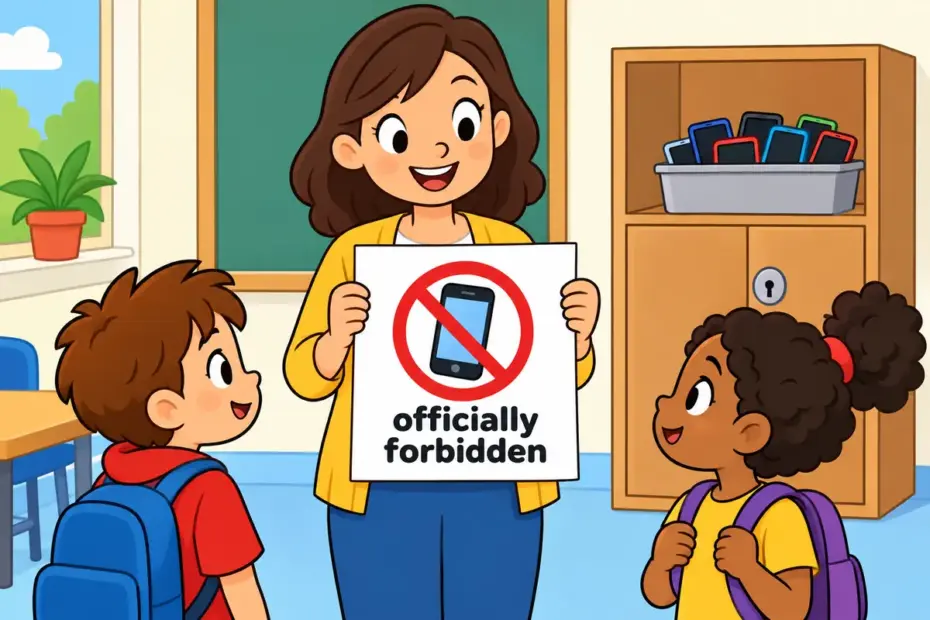
Proscribe means to forbid something officially, usually by law or rule. To use proscribe in a sentence, name the authority and the thing it bans: “The new rules proscribe mobile phones in exams.” The verb is formal and transitive, and it is most often confused with prescribe, its one-letter neighbour.
Proscribe at a glance
- Proscribe is a transitive verb meaning to forbid or outlaw officially.
- Its forms are proscribes, proscribed, proscribing and the noun proscription.
- The usual subjects are a law, a treaty, a code, a court or a ruling body.
- Proscribe belongs to legal, academic and journalistic writing rather than conversation.
- The commonest error is swapping it with prescribe, which means to order or give.
What does proscribe mean?
Proscribe is a transitive verb meaning to forbid an activity, ban an item, or declare a person outside the protection of the law. The Cambridge entry for proscribe records the forbid sense as the main one. The word nearly always names an authority, because the ban has to come from somewhere: a statute proscribes, a treaty proscribes, a governing body proscribes.
| Sense | Plain meaning | Example sentence |
|---|---|---|
| Forbid by rule | Officially ban an activity or thing | The treaty proscribes chemical weapons. |
| Outlaw a person | Declare someone outside legal protection | The regime proscribed its critics. |
| Denounce | Publicly condemn an idea or practice | The editorial proscribed the tactic as dishonest. |
One limitation is worth stating. Proscribe is not a general word for dislike or disapproval. A school that merely frowns on hats has not proscribed them; proscription needs a rule with consequences. Where the ban is plain and spoken, ban is the simpler choice, and proscribe reads as the formal register of a written code.
How do you use proscribe in a sentence?
Proscribe takes a direct object, so something is always being forbidden. The five patterns below cover legal writing, academic prose and the historical sense of outlawing a person. The passive is the form legal drafts prefer, because it keeps attention on the banned practice rather than on the body that banned it.
| Pattern | Example | What it signals |
|---|---|---|
| proscribe + noun | The code proscribes late entries. | The object is the forbidden thing. |
| proscribe + noun + from + noun | The law proscribes lobbyists from gifts. | Names who is restrained and from what. |
| be proscribed | Gambling is proscribed in the province. | Passive, standard in legal drafting. |
| proscribe + gerund | The club proscribes smoking indoors. | Presents the activity as an -ing noun. |
| proscribe + person | The senate proscribed three citizens. | The historical outlaw sense. |
The verb never takes an object and an infinitive together. Write the rule proscribes phones, not the rule proscribes students to use phones.

Proscribe in a sentence: examples across contexts
The nine sentences below keep the same verb and move from a school corridor to a treaty chamber. Each row names the part of the meaning doing the work.
| Context | Example sentence | Why this works |
|---|---|---|
| School rule | Our examination code proscribes smart watches of every kind. | A written code supplies the authority the verb needs. |
| Legal writing | The statute proscribes the sale of fireworks to minors. | Names the prohibited act with a precise object. |
| Treaty text | The treaty proscribes the testing of nuclear devices. | Formal register with an impersonal, binding subject. |
| Academic prose | Most journals proscribe the use of unpublished data. | Extends the word to a scholarly rule with consequences. |
| News report | The council proscribed street trading after a wave of complaints. | Names the body, the ban and the reason. |
| History essay | The emperor proscribed the leading families and seized their land. | Uses the outlaw-a-person sense accurately. |
| Workplace policy | The policy proscribes personal calls during client meetings. | Applies the verb to a modern, ordinary rule. |
| Sports ruling | The federation proscribed the substance without naming a single brand. | Shows the passive-friendly official register. |
| Conversation | She proscribed any mention of the merger at dinner. | An informal ban, still transitive and slightly playful. |
Notice that the sentence collapses if you remove the authority. A proscription with no code, court or council behind it sounds like an opinion, which is exactly what the verb is meant to exclude.
Proscribe vs prescribe and prohibit
Proscribe is confused with prescribe more than with any other word, because the two differ by a single letter and mean opposite things. Prohibit is the closest true synonym, and all three verbs belong to formal registers.
| Attribute | proscribe | prescribe | prohibit |
|---|---|---|---|
| Core meaning | Forbid officially | Order, recommend or give | Forbid by authority |
| Direction | Takes permission away | Gives instruction | Takes permission away |
| Typical object | Practice, weapon, conduct | Medicine, treatment, rule | Action, item, entry |
| Register | Formal and academic | Formal and medical | Formal to neutral |
| Example | The statute proscribes the practice. | The doctor prescribed rest. | The sign prohibits parking. |
Verdict: choose prescribe when someone gives or orders a remedy, prohibit when you want a familiar formal word, and proscribe when a written rule bans a practice or a person. A memory hook that works for many learners is that proscribe shares its opening with prohibit, and both take something away.
Forbid and disallow are plainer still, and both fit conversation where proscribe would sound stiff.
Word forms and grammar of proscribe
Proscribe inflects regularly, and its noun proscription is the form that appears most in headings and indexes. The noun proscription compresses the whole act of banning into one word.
| Form | Part of speech | Example |
|---|---|---|
| proscribe | verb, base form | The charter proscribes secret trials. |
| proscribes | verb, third person singular | Custom proscribes open criticism of the chair. |
| proscribed | verb, past and past participle | The practice was proscribed last year. |
| proscribing | verb, present participle | The act is proscribing a long-standing custom. |
| proscription | noun | The proscription took effect in March. |
| proscriptive | adjective | The rules are too proscriptive for a small club. |
Keep the adjective proscriptive apart from prescriptive. A proscriptive rule forbids; a prescriptive one lays down what should be done, and the second is far more common in writing about teaching.
Common mistakes with proscribe
- Incorrect:
The doctor proscribed antibiotics.Correct: The doctor prescribed antibiotics. Rule: Prescribe gives or orders a remedy; proscribe forbids one. - Incorrect:
The law prescribes smoking in hospitals.Correct: The law proscribes smoking in hospitals. Rule: The two verbs are opposites, so the one-letter swap reverses the meaning. - Incorrect:
The teacher proscribed the students to leave.Correct: The teacher ordered the students to leave. Rule: Proscribe takes a noun or gerund, never an object with an infinitive. - Incorrect:
The rule proscribes about phones.Correct: The rule proscribes phones. Rule: Proscribe takes a direct object and needs no preposition before it. - Incorrect:
He was proscribed a heavy fine.Correct: He was fined heavily. Rule: Proscribe bans something; it is not a synonym for penalise or punish.
Practice using proscribe
Work through the six items, then check the reasoning rather than only the answer.
- Fill the gap: The new charter ______ the use of private vehicles on the island.
- Choose the better word: The nurse (proscribed / prescribed) a course of tablets.
- Correct the error: The committee proscribed the members to speak at the meeting.
- Build a sentence: use be proscribed about a banned device in a school code.
- Spot the register: which fits a treaty — the treaty proscribes the weapon, or the treaty says no to the weapon?
- Rewrite with the noun: The state proscribed the society. Use proscription instead.
Answers
- proscribes — a charter is an authority, and the banned object is the vehicle use.
- prescribed — the nurse gave a remedy, which is the opposite of forbidding.
- The committee proscribed speeches at the meeting — the verb takes a noun, not an object with to.
- Model answer: Mobile phones are proscribed by the examination code.
- The treaty proscribes the weapon — it matches the formal legal register of a written agreement.
- The state imposed a proscription on the society — the noun replaces the whole verb phrase.
The bottom line
Use proscribe in a sentence when a written rule forbids a practice, an item or a person, and name the authority doing the forbidding. The two decisions that settle most sentences are which sense you mean, ban or outlaw, and whether you have confused the verb with prescribe, which gives rather than bans. In everyday writing, a plainer denounce or forbid often reads better.
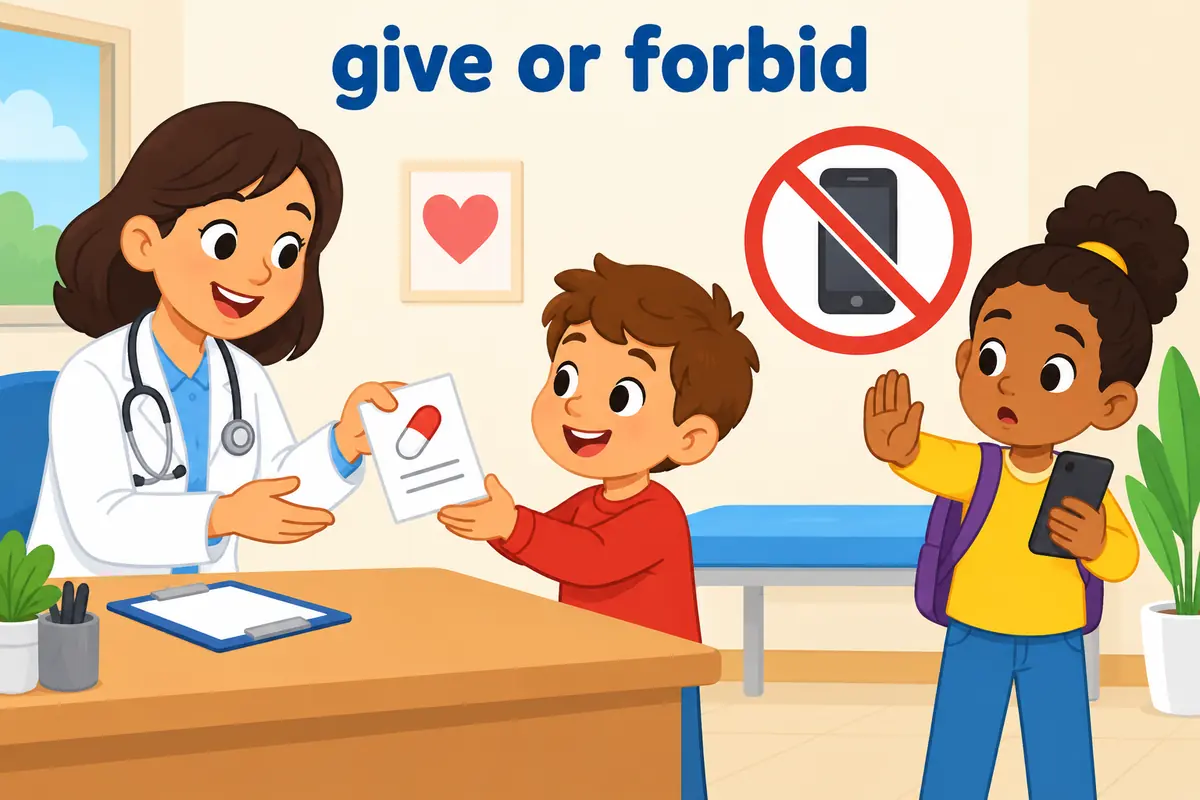
Frequently asked questions about proscribe
Is it proscribe or prescribe?
Both are real verbs and they mean opposite things. Proscribe means to forbid officially, as when a code proscribes a practice. Prescribe means to order, recommend or give, as when a doctor prescribes medicine. The one-letter difference causes frequent errors, so check which direction the sentence is moving before you write.
Does proscribe mean forbid?
Yes, forbid is the nearest everyday synonym, though proscribe adds the idea of an official or written rule. A parent can forbid a trip, but a statute or a treaty proscribes. The word also carries a second sense of outlawing a person, which forbid does not, so context decides how strong it is.
What is the noun form of proscribe?
The noun is proscription, meaning the act of forbidding or the ban itself, as in the proscription took effect in March. The adjective is proscriptive, describing a rule that forbids. Keep it apart from prescriptive, which describes a rule that tells people what they should do.
Can a person be proscribed?
Yes, in the historical sense of being declared outside the protection of law. A regime that proscribed its critics stripped them of legal standing, not merely of privileges. The usage survives in history writing, while modern documents usually proscribe practices, substances or items rather than people.
Have you ever come across the term “proscribe” and wondered what it means? In simple terms, to proscribe is to officially forbid something or to make it illegal.
When a particular action, behavior, or item is proscribed, it is prohibited by law or regulation. This term is often used in legal contexts to describe the act of prohibiting something, and can also be found in various official documents and statutes.
7 Examples Of Proscribe Used In a Sentence For Kids
- Proscribe means to say something is not allowed.
- We should not proscribe others from playing with us.
- It is not nice to proscribe someone from joining the game.
- Let’s make sure to never proscribe our friends from having fun.
- We should treat others with kindness and not proscribe them.
- Remember, it is not good to proscribe others from being included.
- If we are kind, we will not proscribe anyone from being part of our group.
14 Sentences with Proscribe Examples
- Proscribe the use of mobile phones during lectures to avoid distractions.
- Plagiarism is strictly proscribed in academic writing.
- The college has proscribed late submissions for assignments to instill discipline among students.
- The professor proscribed the use of certain online sources for research due to their unreliability.
- The dress code proscribes wearing shorts and slippers to maintain decorum on campus.
- The college proscribes the use of social media on campus computers to ensure smooth internet connectivity for academic purposes.
- A healthy lifestyle is proscribed to students as part of the college’s wellness program.
- The college proscribes drinking alcohol on campus premises to maintain a safe and conducive learning environment.
- Group discussions are proscribed in some classes to encourage individual critical thinking and analysis.
- Attendance is proscribed in certain courses to ensure students do not fall behind in their studies.
- The academic integrity policy proscribes cheating during exams to uphold the college’s reputation for fairness.
- The use of unauthorized study materials is strictly proscribed by the college administration.
- The college proscribes students from loitering in common areas outside of designated break times.
- Library rules proscribe talking loudly and disrupting others who are studying.
How To Use Proscribe in Sentences?
Proscribe means to prohibit or condemn something officially. When using Proscribe in a sentence, it is important to remember its precise meaning.
For example, you can say, “The school board decided to proscribe the use of cellphones during class hours to ensure students remain focused.”
When incorporating Proscribe into a sentence, you need to clearly communicate that something is being banned or forbidden by an authority. This helps convey the seriousness of the action taken.
To use Proscribe effectively in a sentence:
1. Identify the action or behavior that is being condemned or prohibited.
2. Clearly state that this action or behavior is being officially banned by someone in a position of authority.
3. Provide context or reasoning behind the prohibition, if necessary.
Always ensure that the word Proscribe is used correctly in the sentence to convey the intended meaning. This will help you communicate more effectively and avoid any misunderstandings.
With practice, you will become more comfortable using Proscribe in your writing, allowing you to articulate restrictions or condemnations with precision and clarity.
Conclusion
In conclusion, the use of proscribe in sentences shows its significance in conveying the idea of prohibiting or condemning something. Whether it is an activity, behavior, or substance that is disallowed or officially banned, the word proscribe effectively communicates the notion of restriction or censure. For example, “The school has proscribe the use of cellphones during class to maintain a productive learning environment” clearly demonstrates the act of setting a rule against the use of a specific device within a particular setting.
Overall, the term proscribe adds clarity and emphasis to sentences by highlighting what is not permitted or strongly discouraged. By incorporating this word into communication, it helps to convey boundaries, restrictions, and guidelines to ensure order, compliance, and the maintenance of certain standards.