Puzzle in a Sentence: Meaning and Grammar Examples
Puzzle can name a game or problem that needs solving, or be a verb meaning to confuse someone. A puzzle sentence such as “We solved the puzzle together” uses a noun; “The missing key puzzled me” uses a verb. Context distinguishes a recreational challenge from a difficult question or mystery.
- Puzzle is a countable noun in common game and mystery uses.
- Puzzle can also be a verb.
- The verb forms include puzzles, puzzled, and puzzling.
- Puzzled describes someone who feels confused.
- Puzzling describes something that causes confusion.
What does puzzle mean?
A puzzle can be a game requiring thought, such as a jigsaw or logic task, or a situation that is hard to understand. The verb puzzle describes causing confusion. “The strange message puzzled us” identifies the message as the cause and us as the people affected.
A sentence can therefore concern a physical activity, a question, or a reaction. “She finished the puzzle” suggests a solvable task, while “His sudden departure remains a puzzle” describes an unresolved mystery. Add context when the reader needs to know whether the noun is a game or an unexplained situation.
How do you use puzzle in a sentence?
Use a determiner when puzzle is a singular countable noun: a puzzle, the puzzle, or this puzzle. As a verb, match the form to the subject and tense. The original examples below show both roles and related adjective forms.
| Example sentence | Pattern |
|---|---|
| We solved the puzzle together. | A noun naming a challenge. |
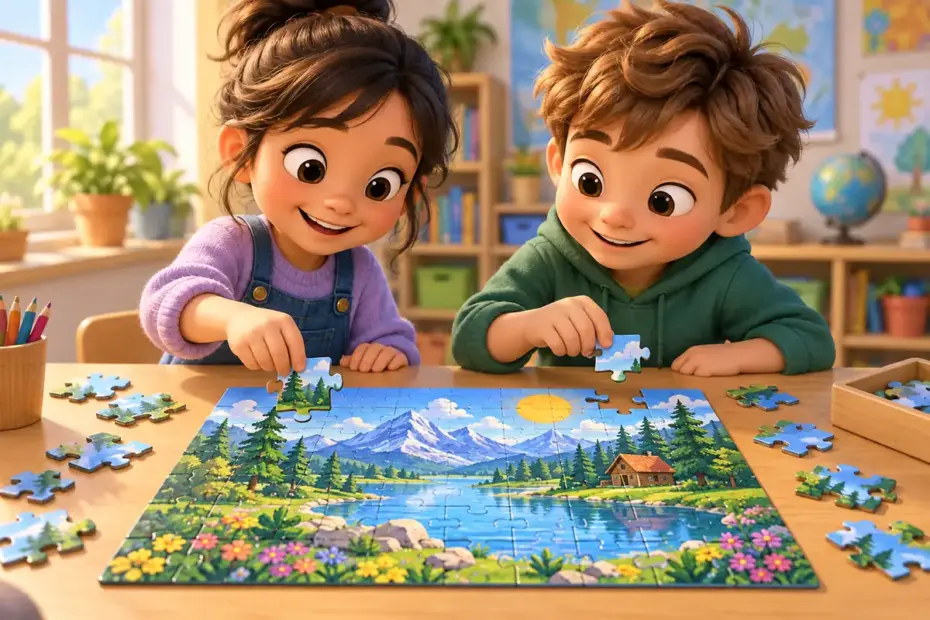
| The child finished a jigsaw puzzle. | A recreational task. |
| The missing key puzzled me. | A past verb causing confusion. |
| This clue puzzles beginners. | Third-person singular present. |
| The students were puzzled by the instructions. | A reaction adjective. |
| The instructions were puzzling. | A cause-of-confusion adjective. |
Noun patterns: solve, finish, and a piece of the puzzle
Solve a puzzle works for a challenge with an answer. Finish a puzzle can describe completing a jigsaw or another task. “A piece of the puzzle” can be literal, naming one jigsaw part, or figurative, naming a fact that contributes to understanding a larger situation.
“The letter was the final piece of the puzzle” usually means the letter supplied missing information. It does not necessarily mean a physical jigsaw was present. For literal examples, name a board, pieces, or picture; for figurative examples, identify the question being explained.
Verb forms: puzzle, puzzled, and puzzling
Puzzle is a regular verb. Its past tense and participle are puzzled, and its -ing form is puzzling, with the final e removed. “The clue puzzled me” reports a past reaction; “The clue has puzzled me” uses an auxiliary and participle.
After can or did, use the base form: “This clue can puzzle beginners” and “Did the clue puzzle you?” In the simple present, a singular third-person subject takes puzzles: “The clue puzzles me.” Avoid “The clue puzzle me” in a standard present-tense statement.
Puzzled versus puzzling
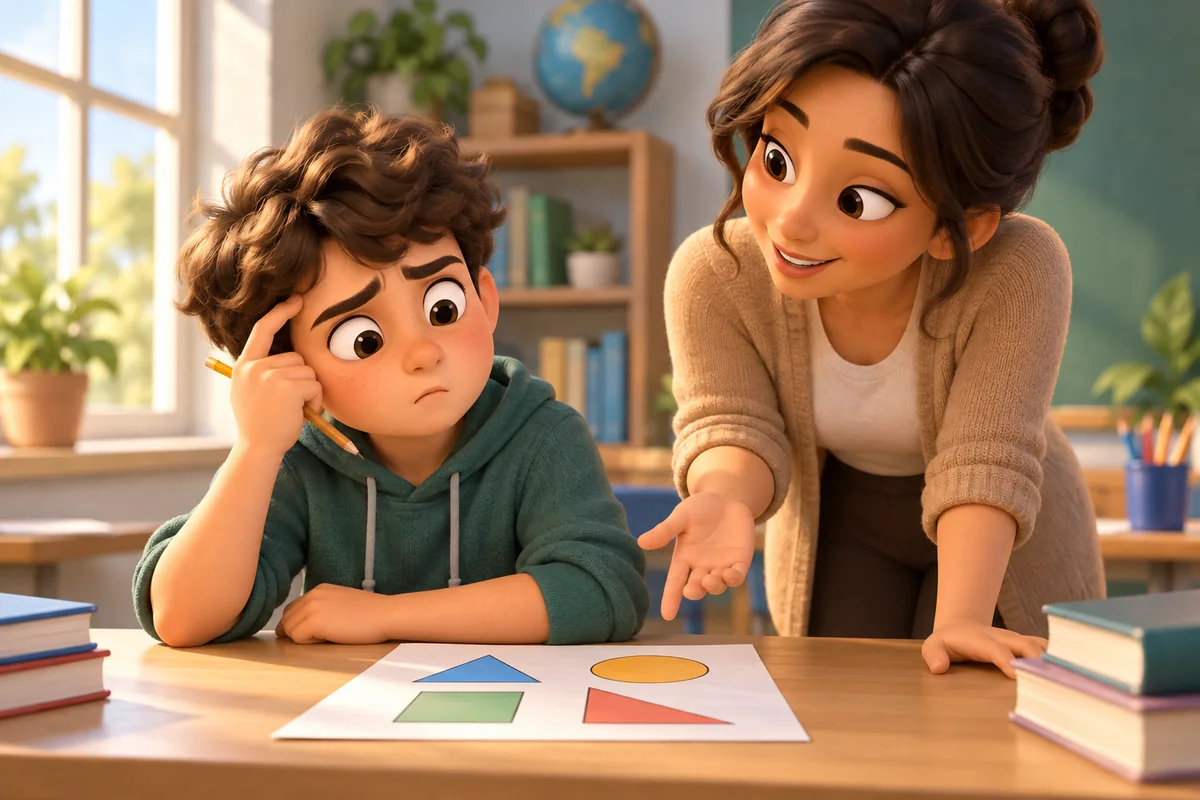
Puzzled describes someone experiencing confusion, while puzzling describes something causing it. “The students were puzzled” names their reaction; “The instructions were puzzling” evaluates the source of confusion. A person can also be puzzling if their behavior confuses others.
Decide whether the subject causes or experiences the reaction rather than relying only on whether it is a person or object. “A puzzling student” suggests a student who is hard to understand; “a puzzled student” suggests a student who does not understand something. The endings change the meaning.
Write a precise puzzle sentence
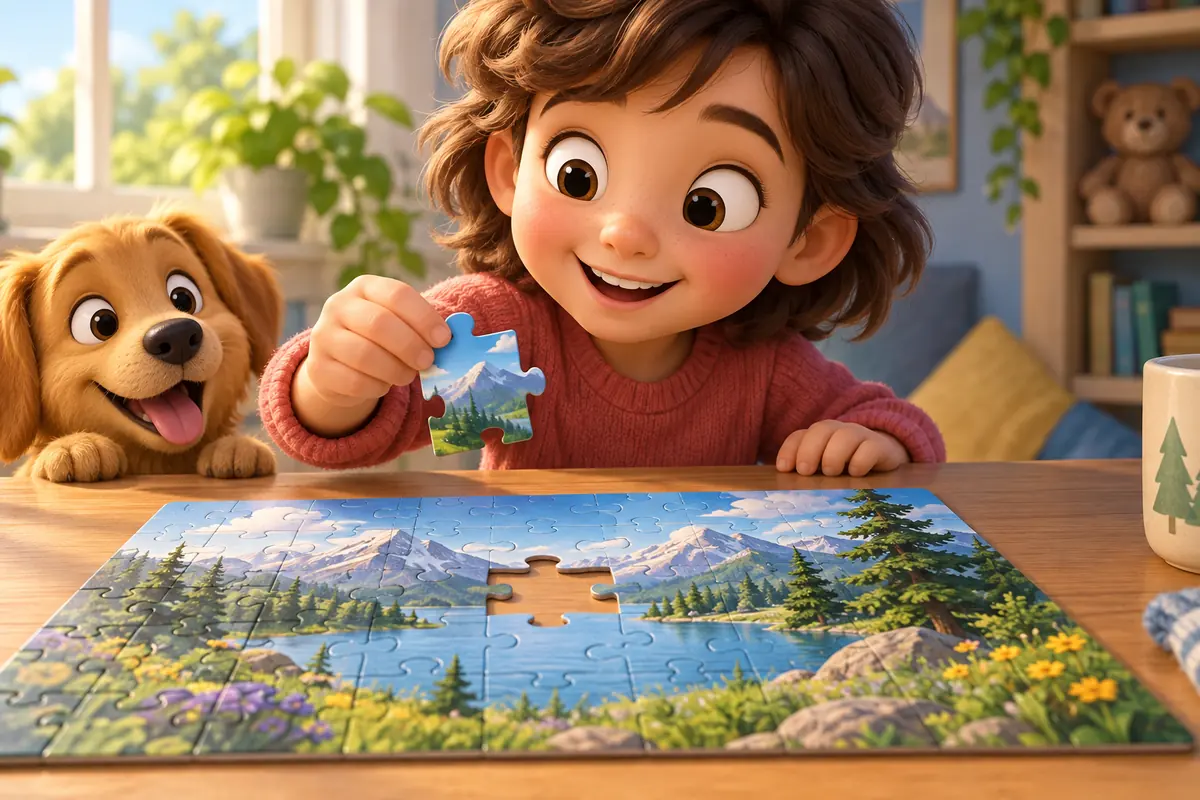
Name the task or uncertainty. “We worked on a puzzle” is broad; “We fitted the corner pieces of the jigsaw puzzle first” states an action. “The result puzzled us” becomes clearer when you explain what was unexpected.
Puzzle over means think carefully about something difficult: “They puzzled over the final clue.” It differs from puzzle someone, which describes causing confusion. For a useful puzzle sentence, choose the noun or verb pattern that matches your intended role and supply the missing question or activity when context requires it.
Practice writing your own sentence
- Choose a subject: a person, animal, object, or group.
- Decide whether the event is present, past, or connected to the present.
- Add the verb form and a meaningful completion.
- Read the sentence aloud and check what the verb describes.
Try changing one detail at a time. Replace the subject first, then the time expression, and check whether the verb must change. This keeps the meaning stable while making the grammatical difference visible. Compare your new sentence with the examples rather than copying a pattern whose meaning you do not understand.
Sources and usage references
- Cambridge Dictionary: puzzle: Noun and verb meanings.
- Cambridge Essential Dictionary: puzzle: Learner-friendly game and confusion senses.
Frequently asked questions
Can puzzle be plural?
Yes. The noun plural is puzzles, as in “We completed two puzzles.” The same spelling can be a verb with a singular subject: “The question puzzles me.” Determine the role from the whole sentence. A number or determiner often introduces the noun, while an affected object helps reveal the verb.
What is a simple puzzle sentence for children?
“I finished the puzzle” is a short example with a subject, verb, and object. Add jigsaw if you want to name the game more precisely. To show the verb meaning, use “The question puzzles me,” then explain that the question is confusing rather than a physical game on the table.
Is puzzled the same as angry?
No. Puzzled means confused or unable to understand something. A person may be both puzzled and angry, but one reaction does not imply the other. “She looked puzzled by the map” describes uncertainty. Add angry separately only if that emotion is part of the situation you intend to describe.
Can a puzzle be an unsolved mystery?
Yes. “The missing photograph remains a puzzle” uses the noun for a situation that is difficult to explain. The sentence does not describe a game. Context such as a missing item, unexpected result, or unanswered question makes the mystery sense clear and prevents readers from assuming a recreational activity.
More examples and sentence practice
Do you ever find yourself puzzled by the complexity of certain situations or problems? A puzzle is a challenging task or problem that requires clever thinking and perseverance to solve.
Puzzles come in various forms, such as jigsaw puzzles, brain teasers, or riddles, and are popular among people of all ages for their ability to stimulate the mind and provide a sense of satisfaction upon completion. Engaging with puzzles can improve cognitive skills, boost problem-solving abilities, and enhance critical thinking.
7 Examples Of Puzzle Used In a Sentence For Kids
- Can you puzzle out which piece goes in the middle?
- Let’s all work together to solve this puzzle.
- The puzzle has many bright colors on it.
- I like to do a puzzle with animals on it.
- The corners of the puzzle are easy to find.
- This puzzle has a picture of a big, red apple.
- The puzzle is almost finished, we just need one more piece.
14 Sentences with Puzzle Examples
- Solving a puzzle together with friends can be a fun way to bond during study breaks.
- Completing a difficult puzzle can feel like a rewarding mental workout.
- Some students enjoy starting their day with a cup of coffee and a challenging puzzle to wake up their minds.
- Taking a break from studying to work on a puzzle can help students relax and destress.
- Joining a puzzle club on campus is a great way to meet new people with similar interests.
- Challenging yourself with a new type of puzzle can improve cognitive skills and problem-solving abilities.
- Setting aside time each week to tackle a puzzle can be a rejuvenating break from academic stress.
- Participating in a puzzle competition can test your speed and accuracy in solving complex problems.
- Sharing puzzle tips and tricks with classmates can strengthen the sense of community within your study group.
- Collaborating with classmates on a group puzzle project can enhance teamwork and communication skills.
- Decorating your dorm room with framed puzzle art can add a unique and creative touch to your living space.
- Using puzzle apps on your phone during short study breaks can keep your mind sharp and engaged.
- Attending a campus puzzle workshop can provide valuable strategies for tackling different types of challenges.
- Taking a break from screens and electronics by solving a puzzle the old-fashioned way with pen and paper can be a refreshing change of pace.
How To Use Puzzle in Sentences?
Puzzle can be used as a noun or a verb in a sentence.
When using puzzle as a noun, it refers to a game, problem, or toy that tests someone’s knowledge, skill, or ingenuity. For example, “Solving the jigsaw puzzle was a fun challenge for the group.”
When using puzzle as a verb, it means to confuse or perplex someone. For example, “The mysteries surrounding the missing keys continue to puzzle the investigators.”
To incorporate puzzle into a sentence, start by identifying whether you intend to use it as a noun or a verb. Once you have made this determination, place the word appropriately in your sentence. Make sure the context of the sentence aligns with the meaning of puzzle you are using.
As you become more comfortable with using puzzle in sentences, you can experiment with different sentence structures and contexts to enhance your mastery of the word. Remember to pay attention to the surrounding words in the sentence to ensure that puzzle is being used correctly. Practice makes perfect, so continue to incorporate puzzle into your writing and speaking to deepen your understanding and usage of the word.
Conclusion
In conclusion, sentences with the keyword “puzzle” illustrate a range of contexts where the word can be used, from describing the complexity of a problem to highlighting the enjoyment of solving a mystery or a game. These sentences showcase the versatility of the word “puzzle” in conveying both challenges and intrigue.
Whether it’s unraveling a cryptic message or piecing together a jigsaw puzzle, the word “puzzle” encapsulates the essence of mental engagement and problem-solving. By exploring the diverse ways in which this keyword can be incorporated into sentences, one gains a deeper understanding of its nuances and its ability to capture the essence of a conundrum or a source of fascination.


