
Robust is an adjective meaning strong, healthy and able to withstand hard use or difficult conditions. To use robust in a sentence, describe what is strong and why: “The bridge has a robust steel frame.” The word is approving, so it praises endurance rather than size.
Robust at a glance
- Robust is an adjective; the adverb is robustly and the noun is robustness.
- It describes things that endure: structures, systems, health, economies and arguments.
- The word is approving, so it praises strength under strain rather than size.
- Common collocations are robust health, a robust system, robust growth and a robust defence.
- The commonest error is using robust for something merely large or expensive.
What does robust mean?
Robust is an adjective meaning strong, healthy and hard to weaken. The Cambridge entry for robust records both the physical sense and the figurative one; a body, a machine or an argument can all be robust, because all three must hold up under pressure.
| Sense | Plain meaning | Example sentence |
|---|---|---|
| Physically strong | Healthy, vigorous and full of stamina | After a summer of training she looked robust. |
| Sturdily built | Made to withstand rough use or wear | The crate has a robust plywood base. |
| Sound and resilient | Able to keep working under stress | The economy proved robust during the downturn. |
One honest limitation: robust is not simply a grander word for large. A heavy chair can be flimsy, and a small umbrella can be robust. If nothing is being tested or stressed, strong or well made is usually the plainer choice.
How do you use robust in a sentence?
Place the adjective before the noun it strengthens, usually a system, a structure, a body or an argument. For comparison, the pattern is as robust as or more robust than, and robust enough introduces the test it survives. Where the sense is durability rather than vigour, durable is the nearer adjective.
| Pattern | Example | What it signals |
|---|---|---|
| robust + noun | The team built a robust booking system. | Direct praise of something built to last. |
| be + robust | Her recovery has been robust. | Reports a state of health or strength. |
| as robust as | The old engine is as robust as a new one. | An explicit comparison of toughness. |
| robust enough to | The shelter is robust enough to survive a storm. | Names the test the thing must pass. |
| remain robust | Demand remained robust through the winter. | Signals strength maintained over time. |
For a body that is simply healthy rather than tough, healthy is the more literal word. Robust adds the idea of strength that lasts.

Robust in a sentence: examples across contexts
Robust moves easily between the physical and the abstract, which is why it appears in engineering, medicine and business alike. Each sentence below uses it for something genuinely tested.
| Context | Example sentence | Why this works |
|---|---|---|
| Classroom | The cardboard model needed a robust base to hold the tower. | A short, concrete test makes the word clear. |
| Workplace email | We need a robust plan before the launch date slips. | Names the pressure the plan must resist. |
| News report | Analysts described the recovery as robust. | The figurative economic sense, very frequent. |
| Engineering | The housing is robust enough to survive a two-metre drop. | Ties the adjective to a measurable test. |
| Medicine | The patient was robust despite the long illness. | The healthy, vigorous sense of the word. |
| Technology writing | The protocol is robust against dropped connections. | Praise for a system that keeps working. |
| Debate | She offered a robust argument for the change. | The abstract sense of an argument that holds. |
| Sports writing | His robust defending kept the lead intact. | Physical strength applied to a contest. |
| Conversation | That old flask is still robust after ten years. | Everyday praise for lasting toughness. |
In every row the thing described has to endure something. That single condition separates robust from a plain compliment about size.
Robust vs sturdy
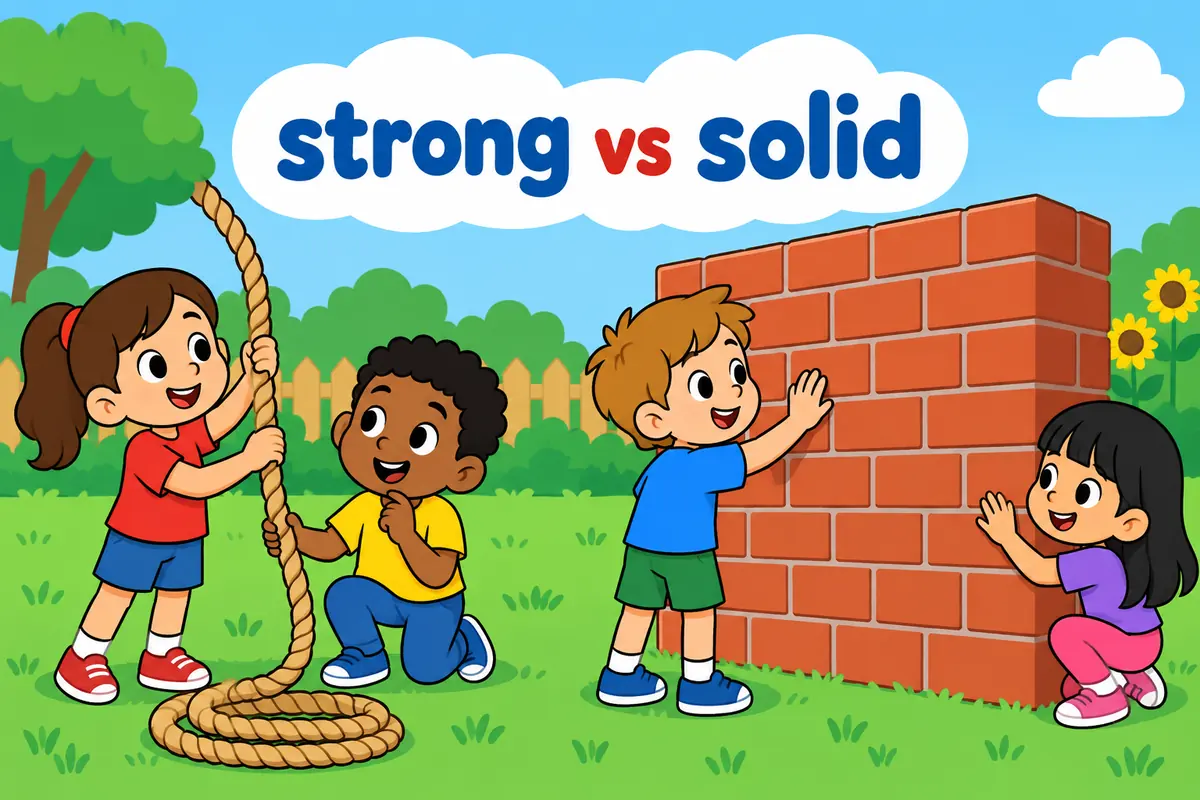
Robust and sturdy both praise strength, but they answer different worries. Sturdy is about a solid, steady build; robust is about performance under strain.
| Attribute | robust | sturdy |
|---|---|---|
| Core job | Strong and able to withstand stress | Firmly built and hard to knock over |
| Typical subject | Systems, health, economies, arguments | Furniture, boots, walls, frames |
| What it stresses | Endurance under pressure | Solidity and stability |
| Figurative use | Very common | Rare |
| Register | Neutral to technical | Neutral and everyday |
| What it implies | It will keep working | It will not fall apart |
Verdict: choose sturdy for a solid physical object and robust when the point is strength that survives a real test.
Word forms and grammar of robust
Robust stays an adjective and rarely changes shape, but it has a useful adverb and noun. For a person who recovers quickly rather than merely resists, resilient adds the idea of bouncing back.
| Form | Part of speech | Example |
|---|---|---|
| robust | adjective | The frame is robust in cold weather. |
| robuster | comparative, rare | A steel version is robuster than the plastic one. |
| robustest | superlative, rare | They chose the robustest design on the shelf. |
| more robust | comparative, usual | This layout is more robust than the first. |
| robustly | adverb | The proposal was robustly defended. |
| robustness | noun | Engineers tested the robustness of the joint. |
| robustious | archaic, avoid | The old adjective meant noisy and boisterous. |
For strength that is full of energy rather than merely lasting, vigorous is the better adjective, because robust can also mean quietly dependable.
Common mistakes with robust
- Incorrect:
The lecture hall was robust and seated five hundred.Correct: The lecture hall was large and seated five hundred. Rule: Size is not strength; robust needs a test it resists. - Incorrect:
The plan is robust, so it will definitely succeed.Correct: The plan is robust and should cope with delays. Rule: Robust means able to withstand strain, not guaranteed to win. - Incorrect:
He is very robust at maths.Correct: He is very strong at maths. Rule: Robust describes endurance, not a skill or aptitude. - Incorrect:
The robust fragile vase was valuable.Correct: The delicate vase was valuable. Rule: Do not pair robust with an adjective that contradicts it. - Incorrect:
The system is robustly.Correct: The system is robust. Rule: Use the adjective after is; the adverb robustly needs a verb to modify. Compare strong, a simpler synonym when no stress is implied.
Practice using robust
Work through the six items, then check the reasoning with each answer.
- Fill the gap: The tent was robust enough to ______ a night of strong wind.
- Choose the better word: The wooden stool is old but still (robust / robustly).
- Correct the error: The car is robust, so it is very expensive.
- Build a sentence: use robust enough to about a bicycle used on rough paths.
- Spot the register: which belongs in an engineering report — the joint is robust under load, or the joint is super tough?
- Rewrite with the noun: The design is robust. Use robustness instead.
Answers
- survive — robust enough to names the strain the tent must endure.
- robust — the adjective follows is; robustly would need a verb.
- The car is robust, so it should last for years — robustness is about endurance, not price.
- Model answer: The bicycle is robust enough to handle gravel tracks.
- The joint is robust under load — a report avoids slang such as super.
- The design’s robustness was tested before production.
The bottom line
Use robust in a sentence when something must stay strong under real strain, and let the sentence name the test it survives. Two nuances settle most choices: robust is approving and implies endurance rather than size, and it suits systems and arguments as readily as bodies. When the point is vitality rather than toughness, stout or vigorous may fit better.
Frequently asked questions about robust
Is robust a positive word?
Yes. Robust is a compliment, because it says something keeps working or stays healthy under pressure. Calling a plan robust means it can absorb shocks, and calling a person robust means they are strong and hardy. The word would only sound negative if strength were somehow unwanted.
Can robust describe a person?
It can, and it usually refers to health and stamina rather than muscle. A robust older patient is one who recovers well and withstands treatment. In everyday speech people more often say strong or healthy, reserving robust for writing about health, sport or public figures.
What is the difference between robust and sturdy?
Sturdy praises a solid, stable build, so it suits furniture, boots and walls. Robust praises strength that survives a real test, so it suits systems, economies and arguments. A sturdy table resists being knocked over, while a robust system resists failure under heavy use.
How formal is the word robust?
Robust sits in the neutral middle, but it leans formal. It is standard in business, engineering and journalism, and slightly stiff in casual chat, where strong or tough would come more naturally. Spoken aloud, a robust defence sounds like a report, not a remark.
Have you ever come across the term “robust” while reading an article or listening to a presentation? A robust example sentence is one that is strong, sturdy, and able to withstand scrutiny.
When it comes to communication or writing, a robust example sentence is one that effectively illustrates a point or concept, leaving no room for confusion or misinterpretation. Let’s explore the characteristics of robust example sentences and how they can enhance your own writing.
7 Examples Of Robust Used In a Sentence For Kids
- Robust trees provide shade and fruits in the garden.
- Let’s eat robust vegetables to stay healthy and strong.
- A robust house is built with strong bricks and cement.
- Lions have a robust roar that can be heard from far away.
- Remember to drink milk every day for robust bones.
- Elephants have robust bodies and big ears.
- The sun helps plants grow tall and robust.
14 Sentences with Robust Examples
- The university library offers robust resources for research and studying.
- It is important to maintain a robust immune system during exam season.
- Students should engage in robust physical activity to stay healthy and relieve stress.
- The campus cafeteria serves robust and nutritious meals for students.
- Joining a study group can help students develop a robust understanding of complex subjects.
- Developing good time management skills is crucial in maintaining a robust academic schedule.
- The college offers robust internship opportunities for students to gain real-world experience.
- Attending workshops and seminars can help students build a robust professional network.
- Utilizing online resources can provide students with robust study materials and practice tests.
- Engaging in extracurricular activities can help students build a robust skillset outside of academics.
- It is important for students to have a robust support system of friends and mentors.
- The college’s career center offers robust resources for resume building and job placement.
- Staying organized with a robust planner or calendar can help students stay on top of their assignments.
- Prioritizing self-care and mental health is essential for maintaining a robust state of well-being.
How To Use Robust in Sentences?
Robust means strong, resilient, or effective. To use it in a sentence, start by identifying a situation where something is strong or well developed. For example, “The company implemented a robust cybersecurity system to protect sensitive information.”
Another way to use robust is to describe a person or object that is sturdy or powerful. For instance, “The athlete had a robust physique, enabling them to excel in multiple sports.”
You can also use robust to talk about something that is thorough or comprehensive. For instance, “The research study had a robust methodology, ensuring accurate results.”
When incorporating robust into a sentence, consider using adverbs like very or extremely to emphasize the strength or effectiveness of the subject. For example, “The fortress had a very robust defense system, deterring any potential threats.”
Remember that robust is a versatile word that can be applied in various contexts to convey strength, resilience, or effectiveness. Whether describing a system, a person, or a method, using robust can help emphasize the power or reliability of the subject.
Conclusion
In conclusion, incorporating sentences with robust structure and content in writing enhances clarity, coherence, and effectiveness. Robust sentences feature strong construction, clear organization, and compelling content that captivate the reader’s attention and deliver the intended message efficiently. By utilizing robust sentences, writers can convey ideas with precision, maintain reader engagement, and inspire understanding.
Overall, employing robust sentences in writing is pivotal for achieving clarity and ensuring effective communication. Whether in academic papers, business reports, or creative works, robust sentences serve as the foundation for conveying information with accuracy and impact. Thus, mastering the art of crafting robust sentences is essential for producing compelling and cohesive written pieces that resonate with the audience.


