Sheep in a Sentence: Singular and Plural Grammar
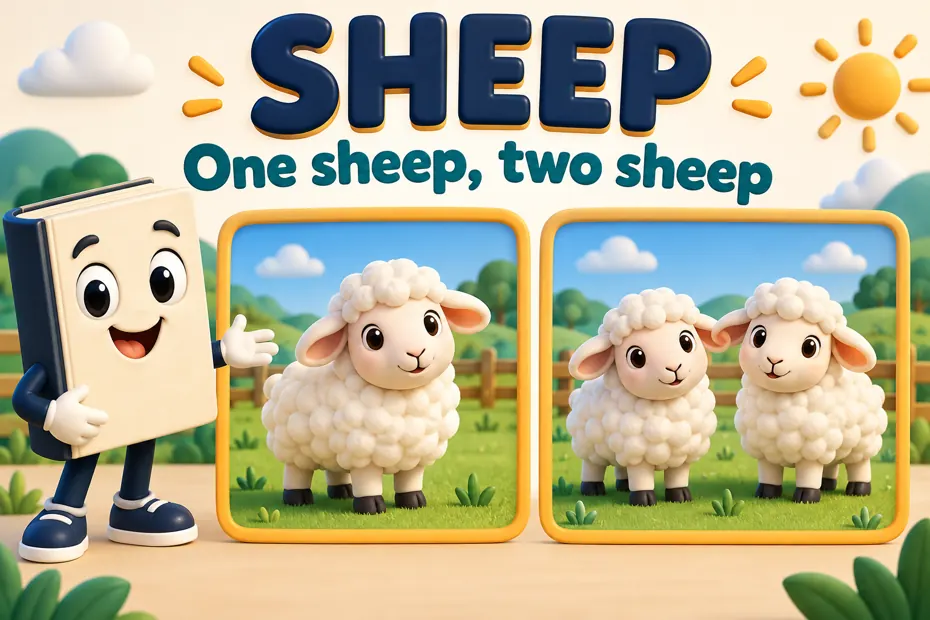
Sheep is a countable noun with the same singular and plural form: one sheep, two sheep, and many sheep. Use a singular verb for one animal—“The sheep is grazing”—and a plural verb for several—“The sheep are grazing.” Numbers and surrounding words tell readers which meaning you intend.
At a glance: the ordinary plural is sheep, not sheeps; a sheep refers to one animal; these sheep refers to several; and a flock of sheep names a group. Sheep remains lowercase inside an ordinary sentence unless it forms part of a proper name.
How can readers tell whether sheep is singular?
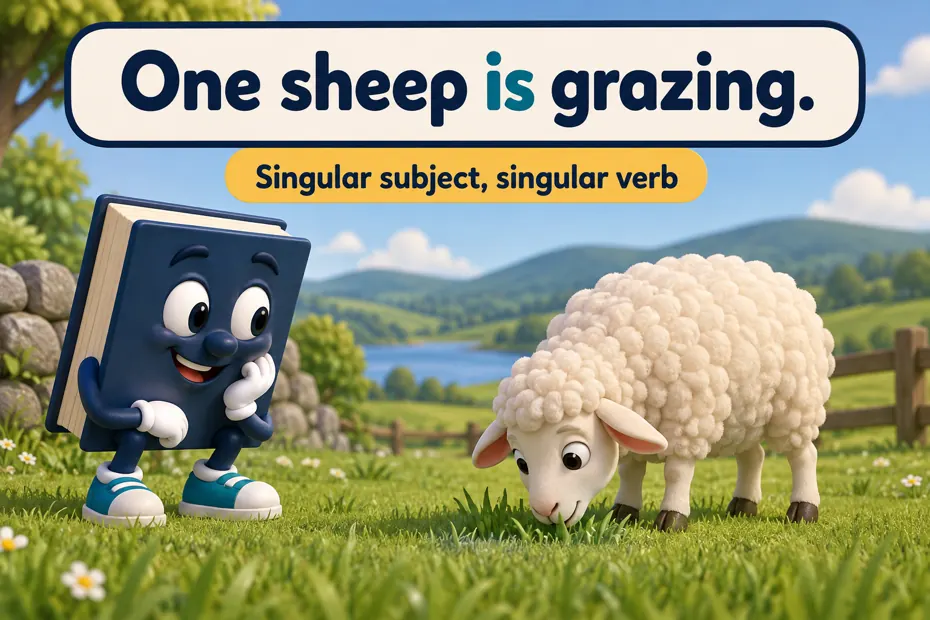
A number, determiner, pronoun, or verb can identify the number of animals. “This sheep is resting” clearly describes one; “These sheep are resting” clearly describes several. Without those clues, “I saw the sheep” can refer to either one animal or a group. Add the number if the distinction matters.
| Singular | Plural | Clue |
|---|---|---|
| One sheep is near the gate. | Three sheep are near the gate. | The number and verb agree. |
| This sheep has a dark face. | These sheep have dark faces. | This becomes these; has becomes have. |
| That sheep follows the farmer. | Those sheep follow the farmer. | The determiner and verb indicate number. |
| A sheep was resting. | Several sheep were resting. | The article or quantity word gives the clue. |
Compare sheep with a regular plural such as goats. “One goat, two goats” changes the noun; “one sheep, two sheep” does not. The unchanged ending does not make sheep uncountable. You can still count the animals directly and use many, several, a few, and exact numbers.
What happens with each sheep and a flock of sheep?
Each sheep takes singular agreement because each considers the animals individually: “Each sheep has a tag.” Several sheep takes plural agreement: “Several sheep have tags.” The same principle applies to every sheep: “Every sheep is inside the fence.” Do not choose the verb from the imagined size of the flock when the grammatical subject is each or every sheep.
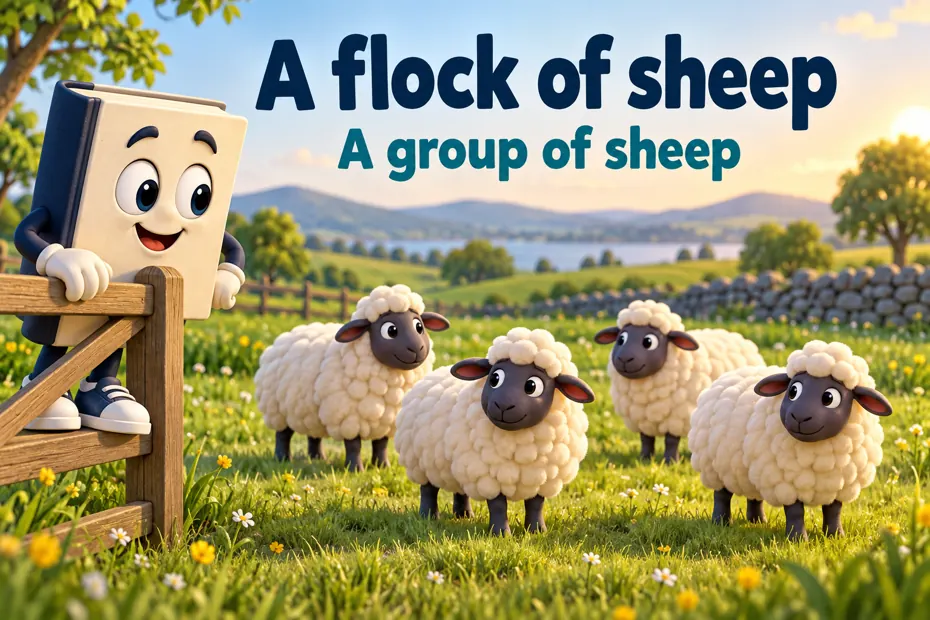
In “A flock of sheep is moving across the field,” the subject is flock, and the sentence treats the group as a unit. British English can use plural agreement with collective nouns when emphasizing the members. For an elementary exercise that avoids that variation, write “The sheep are moving across the field” or “The flock is moving across the field.”
A flock is a group, not a special plural spelling of sheep. “Two flocks of sheep” describes two groups; “two sheep” describes two animals. This distinction helps learners count accurately without adding an s to the animal noun.
How do you write sheep in possessive phrases?
Add apostrophe-s to sheep for both singular and plural possession: “the sheep’s coat” can mean one animal’s coat, and “the sheep’s coats” can refer to coats belonging to several animals. Because the noun looks the same in both numbers, surrounding wording must make the intended meaning clear.
For clarity, write “the coat of one sheep” or “the coats of the three sheep” when ambiguity would distract readers. Do not write sheeps’ as the ordinary plural possessive. The familiar rule for a regular plural ending in s, such as goats’, does not apply to sheep because its plural has no final s.
Sheep can also modify another noun, as in sheep farming, sheep wool, and sheep shearing. These combinations describe the activity or material rather than ownership by an identified animal. An apostrophe is therefore unnecessary in “a sheep farm.”
Frequently asked questions
Can you say a sheep?
Yes. “A sheep stood beside the fence” is a correct sentence about one animal. Sheep is not a plural-only noun. To talk about an unspecified group, say “some sheep stood beside the fence.” The form stays sheep, but the article a restricts the first sentence to a single animal.
Is sheep a good example for children?
Yes, especially for practicing irregular plurals and verb agreement. “One sheep is eating” and “Two sheep are eating” make the grammatical contrast easy to see. A picture should show the correct number of animals. Avoid labeling every sheep white, since color is a description of a particular animal rather than a grammar rule.
What does calling a person a sheep mean?
The figurative use criticizes someone for following others without independent judgment. It can sound insulting, so it is unsuitable for a neutral description of a classmate. “They followed the group’s decision” states the behavior more directly. The metaphor concerns the speaker’s judgment of the person, not a literal animal.
Does counting sheep guarantee sleep?
No guarantee follows from the expression. Counting sheep describes imagining and counting animals, traditionally as a bedtime activity. The older examples illustrate an expression rather than establish that it works for everyone. A sentence exercise can use “He imagined counting sheep” without making a medical claim about its effectiveness.
Sources: Cambridge Dictionary and Oxford Learner’s Dictionaries confirm the noun’s plural sheep and flock usage. The practice sentences are original.

Have you ever wondered what the word “sheep” means? In its simplest form, a sheep is a domesticated ruminant animal with a thick woolly coat that is raised for its meat, milk, and wool.
The term “sheep” can also be used metaphorically to describe someone who mindlessly follows others, without using their own judgement.
7 Examples Of Sheep Used In a Sentence For Kids
- The sheep have fluffy white wool.
- Sheep say “baa” when they talk.
- The sheep like to eat green grass.
- A sheep gives us wool for warm clothes.
- The sheep live in a pen on the farm.
- The sheep like to follow their leader.
- We count the sheep to fall asleep.
14 Sentences with Sheep Examples
- Sheep farming is a common occupation in rural India.
- The students visited a local farm to see the sheep up close.
- The college students learned about the importance of sustainable sheep farming practices.
- The agricultural college organized a workshop on sheep shearing techniques.
- The veterinary students were taught how to examine and treat sheep for various illnesses.
- The college canteen introduced a new dish featuring sheep meat.
- The students debated the ethics of using sheep wool in clothing production.
- The environmental science class discussed the impact of sheep farming on land degradation.
- A group of students volunteered at a sheep shelter to help care for rescued animals.
- The college organized a field trip to a sheep breeding center to learn about genetic diversity.
- The agriculture students conducted a survey on the nutritional needs of sheep for optimal growth.
- The economics students analyzed the market trends for sheep wool exports in India.
- The students organized a fundraiser to support a local sheep farming community.
- The college hosted a festival celebrating the traditions of sheep rearing in India.
How To Use Sheep in Sentences?
To use the word Sheep in a sentence, remember that Sheep is both the singular and plural form of the word. Here are a few examples to help you get started:
- Singular: “The sheep is grazing in the field.” (One animal)
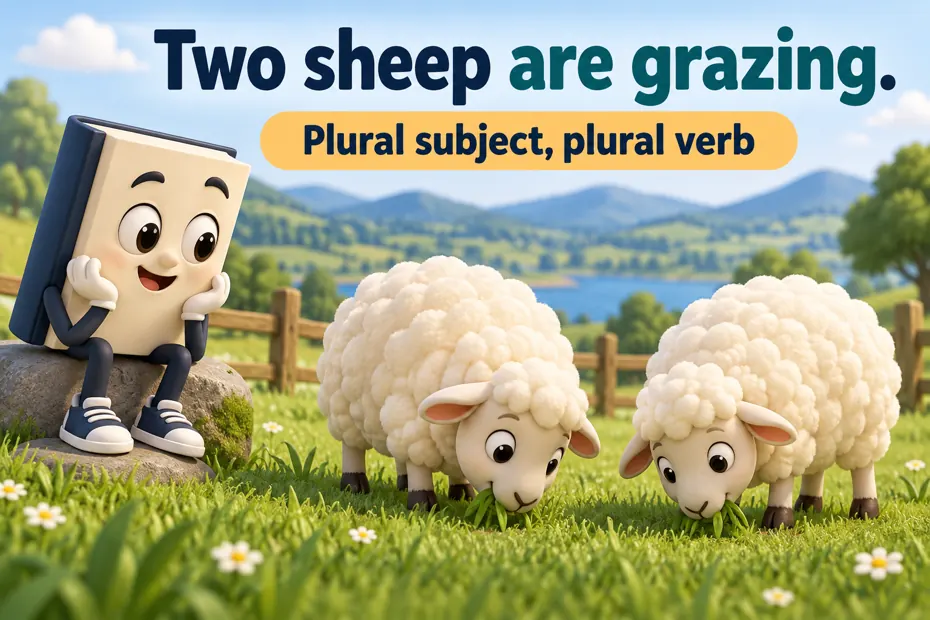
- Plural: “The sheep are grazing in the field.” (Multiple animals)
When constructing a sentence with Sheep, make sure to pay attention to the verb conjugation. For example, when referring to one Sheep, use “is” as in the first example. When referring to multiple Sheep, use “are” as in the second example.
Additionally, it is helpful to provide context for the Sheep in your sentence. You can describe what the Sheep are doing, where they are located, or any other relevant details to make your sentence more informative.
Remember to capitalize the word Sheep at the beginning of a sentence and to use appropriate punctuation at the end. Practicing writing sentences with Sheep will help you become more comfortable with using the word in various contexts.
Conclusion
In conclusion, the various examples of sentences with “sheep” demonstrate the versatility and use of this word in different contexts. From describing a flock of sheep grazing peacefully in a meadow to referencing the counting of sheep to aid in falling asleep, the word “sheep” has been utilized in various ways in the English language. These examples highlight the imagery associated with sheep, depicting scenes of rural tranquility or serving as a metaphor for a common sleep remedy.
Overall, the examples of sentences with “sheep” showcase the diverse applications of this word, from literal descriptions of the animal to more figurative use in everyday language. Whether invoking pastoral scenes or invoking a peaceful mental exercise, the word “sheep” remains a familiar and evocative term in the English lexicon.


