So help me God in a sentence: “I will keep my promise, so help me God.” The phrase invokes God while reinforcing a statement, promise, or oath. In ordinary dialogue, it can also convey strong determination or frustration. Its effect depends on context and tone; it is stronger than a neutral “I promise.”
So help me God at a glance
- The phrase can reinforce an oath or a determined statement.
- God normally takes a capital letter in this expression.
- A comma can separate the phrase from the main statement.
- The religious wording may not fit every speaker or audience.
- A language example does not establish the wording required by any official procedure.
What does the phrase add to a statement?
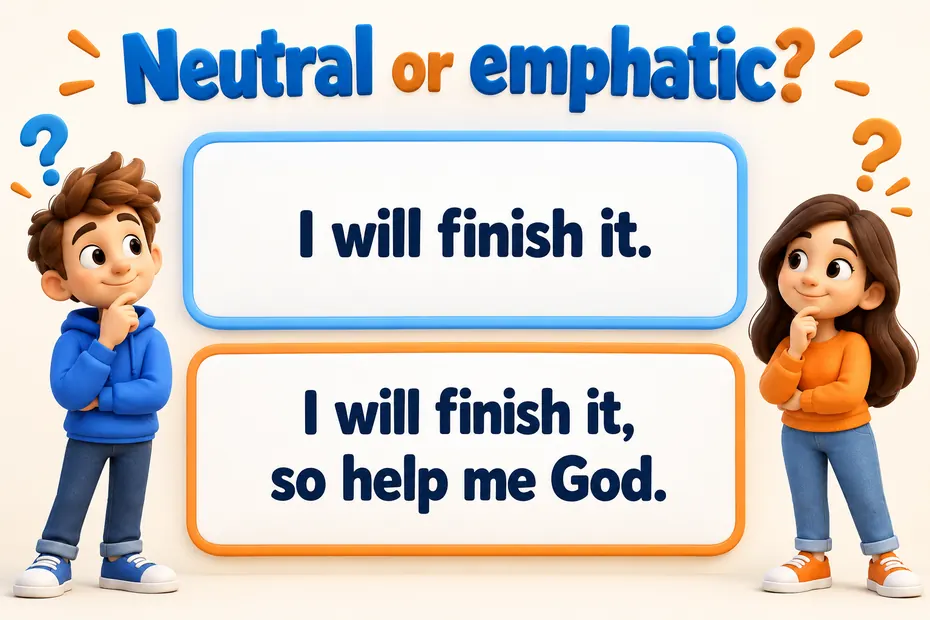
“I will finish the task” states an intention. “I will finish the task, so help me God” adds force and an invocation of God. Depending on the situation, a listener may hear a solemn promise, intense resolve, or an exasperated declaration. The extra phrase changes the tone even when the intended action stays the same.
Merriam-Webster’s so help me entry connects the shorter expression with a strong assurance. The full wording retains a religious reference. Do not assume that adding it proves a statement true; it communicates the speaker’s emphasis or commitment, which readers still assess from context and evidence.
How do you place it in a sentence?
A common pattern puts the phrase after a complete main clause: “I will return the book, so help me God.” A comma makes the added emphasis easy to read. When the phrase interrupts a sentence, paired commas can show the interruption: “I will, so help me God, return the book tomorrow.”
| Purpose | Original teaching example | Effect |
|---|---|---|
| Promise | I will keep my word, so help me God. | Strong commitment. |
| Determination | I will solve this puzzle, so help me God. | Emphatic resolve. |
| Quoted discussion | The narrator ends the vow with “so help me God.” | Discusses the wording itself. |
| Neutral alternative | I will keep my word. | States the commitment without the added invocation. |
Do not join the expression to an incomplete phrase when a complete sentence is needed. “My assignment, so help me God” leaves the action unstated. Write “I will finish my assignment, so help me God.” A fragment can appear deliberately in dialogue, but it is not the clearest model for basic grammar practice.
How strong is the tone?
The expression is emphatic enough that it can sound theatrical in an ordinary scheduling message. “I will send the file this afternoon” usually supplies all the necessary information. Adding “so help me God” can suggest frustration, dramatic determination, or a solemn personal promise that the situation does not require.
For cooperative messages, name the action and deadline. For fiction, the stronger wording can help reveal a character’s personality or emotional state. Describe the character’s situation so readers can tell whether the phrase is sincere, exaggerated, or angry. A phrase lesson should explain these possibilities rather than treating every example as an equally appropriate everyday pledge.
Original examples with clear context
- “I will find the missing key, so help me God,” the character said.
- The memoir quotes a promise ending with “so help me God.”
- She said, “I will keep this promise, so help me God.”
- The actor softened the phrase “so help me God” to make the line sound sincere.
- The editor asked whether “so help me God” suited the narrator’s voice.
- The grammar lesson compared an ordinary promise with the more emphatic phrase.
- He removed “so help me God” from the email and kept the deadline.
- The dialogue used the phrase to emphasize the character’s determination.
The quotation examples identify who is speaking or what text is being discussed. This is useful when teaching a religious expression to a varied audience: learners can understand the phrase without being asked to adopt it as their own pledge. The preserved children’s examples below demonstrate wording, not a requirement that children make religious promises.
Frequently asked questions about so help me God
Must God have a capital letter?
In this expression, God conventionally names the deity, so a capital G is the straightforward spelling. The other words are lowercase in ordinary mid-sentence use. A heading may capitalize more words under title styling, but that does not change the normal spelling of the phrase inside a sentence.
Does the phrase always sound solemn?
No. It can be solemn in an oath-like promise, but ordinary dialogue can use it for dramatic resolve or frustration. Tone, situation, and the surrounding statement guide the interpretation. A narrator may also quote it ironically. Do not infer a single emotional effect from the wording alone.
Can I omit it from an ordinary promise?
Yes. “I promise to return the book” is a complete everyday statement without the phrase. Omitting the invocation can suit a speaker’s beliefs or a less dramatic situation. This is advice about ordinary language examples; a vocabulary page should not determine what wording applies to a specific official procedure.
Is so help me the same expression?
The shorter wording can also provide strong emphasis, and it appears as a dictionary phrase in its own right. The full wording explicitly includes God, so the religious reference is clearer. Choose the expression according to the intended speaker and context, rather than assuming the two versions carry identical associations.
Additional dictionary reference: Collins describes so help me (God) as wording that asserts a solemn vow or sincere declaration.
More so help me God sentence examples

Have you ever wondered about the significance of the phrase “so help me God”? This commonly used expression is a solemn pledge often recited in legal and official settings as a way to affirm the truthfulness and seriousness of one’s statements.
In its essence, “so help me God” is a declaration that invokes a divine entity to witness and uphold the promise being made. It adds a layer of gravity to the words spoken, emphasizing the speaker’s sincerity and accountability.
7 Examples Of So Help Me God Used In a Sentence For Kids
- I promise to always be kind to my friends so help me God.
- I will try my best to study hard in school so help me God.
- I promise to listen to my teachers and parents so help me God.
- I will take care of my toys and keep my room clean so help me God.
- I will share my snacks with my classmates so help me God.
- I promise to be polite and say please and thank you so help me God.
- I will always be truthful and not tell lies so help me God.
14 Sentences with So Help Me God Examples
- I will study hard and ace this exam, so help me God.
- I promise to submit my assignment on time, so help me God.
- I will handle my stress in a healthy way, so help me God.
- I commit to attending all my classes regularly, so help me God.
- I vow to be honest and accountable in all my academic dealings, so help me God.
- I will manage my time effectively to balance my studies and social life, so help me God.
- I promise to seek help and guidance when I feel overwhelmed, so help me God.
- I will strive for continuous improvement in my learning journey, so help me God.
- I pledge to treat my classmates and professors with respect, so help me God.
- I will make wise choices in selecting my extracurricular activities, so help me God.
- I vow to uphold the integrity of my college by not engaging in any form of academic dishonesty, so help me God.
- I commit to staying focused and disciplined in my studies, so help me God.
- I promise to stay true to my values and beliefs, so help me God.
- I will cherish the opportunities and experiences that college offers me, so help me God.
How To Use So Help Me God in Sentences?
To use “So Help Me God” in a sentence, follow these steps:
-
Understand the Meaning: “So Help Me God” is a phrase commonly used to affirm the truthfulness of a statement, vow, or promise. It is often used in legal contexts, such as in courtrooms during oath-taking.
-
Placement in Sentence: The phrase “So Help Me God” is typically placed at the end of a statement or oath to emphasize its sincerity and convince others of its truth.
-
Example Sentences:
- “I swear to tell the truth, the whole truth, and nothing but the truth, so help me God.”
- “I promise to always be there for you, so help me God.”
-
Tone and Intention: When using “So Help Me God” in a sentence, consider the seriousness of the context. This phrase is often used in solemn situations to invoke a higher power’s assistance in fulfilling a promise or oath.
-
Respect Others’ Beliefs: Keep in mind that the phrase “So Help Me God” may have religious connotations for some individuals. Be respectful of others’ beliefs when using this phrase in conversation.
By following these steps, you can confidently and appropriately use “So Help Me God” in a sentence in various situations.
Conclusion
In conclusion, the phrase “so help me God” is often used in legal contexts and oaths to solemnly affirm the truthfulness of one’s statements or promises. This phrase is a traditional appeal to a higher power for guidance and honesty in fulfilling obligations or commitments. It carries a strong sense of moral accountability and invokes divine assistance in upholding the spoken words.
Whether used in courtrooms, government ceremonies, or personal pledges, “so help me God” underscores the importance of sincerity and integrity in our words and actions. By invoking the help of a higher authority, individuals emphasize their commitment to truth and integrity, making it a powerful declaration of honesty and responsibility.


