
Solicitous means showing attentive care or concern for another person’s welfare, and it appears in the pattern solicitous about someone. To use solicitous in a sentence, name the person and the care: “The nurse was solicitous about every patient.” The adjective sounds formal and slightly old-fashioned.
Solicitous at a glance
- Solicitous is an adjective; the adverb is solicitously and the noun solicitousness is rare.
- The dominant patterns are solicitous about and solicitous of before a noun.
- Typical subjects are hosts, nurses, parents, managers and officials.
- The register is formal and a little literary, so it suits letters and description.
- The commonest error is confusing solicitous with solicit, which means to ask for.
What does solicitous mean?
Solicitous is an adjective meaning full of attentive care for someone’s comfort or well-being, or, in a rarer sense, eager to do something. The Cambridge entry for solicitous records the caring sense and the eager sense. A plain attentive listener pays close heed, while a solicitous one actively looks after your welfare.
| Sense | Plain meaning | Example sentence |
|---|---|---|
| Caring and attentive | Concerned for a person’s welfare | The nurse was solicitous about her comfort. |
| Eager to please | Formally desirous of doing something | He was solicitous to help the visitors. |
How do you use solicitous in a sentence?
| Pattern | Example | What it signals |
|---|---|---|
| be solicitous about + noun | She was solicitous about his recovery. | Concern for a person’s state. |
| be solicitous of + noun | The host was solicitous of every guest. | Care toward someone’s comfort. |
| solicitous + to + verb | He was solicitous to please. | The formal eager sense. |
| solicitously (adverb) | She asked solicitously after his family. | The manner of the care. |
| too solicitous | His questions felt too solicitous. | Care that starts to smother. |

Solicitous in a sentence: examples across contexts
| Context | Example sentence | Why this works |
|---|---|---|
| Everyday conversation | My neighbour was solicitous when I broke my arm. | Natural spoken use of the adjective. |
| Workplace email | The manager was solicitous about the team’s workload. | Formal care at work. |
| Academic writing | The author is solicitous of the reader’s patience. | Literary critical voice. |
| News feature | Officials were solicitous of the victims’ privacy. | Public-register care. |
| Hospitality | The host was solicitous to every guest. | Old-fashioned politeness. |
| Personal letter | Thank you for your solicitous enquiries. | Formal warmth. |
| Caregiving | A caring nurse stayed solicitous about her comfort. | Shows the medical register. |
| Novel | He grew solicitous, fetching water and blankets. | Characterization through action. |
Solicitous vs concerned
Solicitous and concerned both point at another person, but the feeling differs.
| Attribute | Solicitous | Concerned |
|---|---|---|
| Core meaning | Actively attentive to someone’s welfare | Worried about a problem |
| Emotional shade | Warm and caring | Uneasy and serious |
| Typical structure | solicitous about or of a person | concerned about a person or issue |
| Register | Formal and literary | Neutral |
| What it implies | A helpful response | An anxious feeling |
| Strength | Gentle but deliberate | Can be mild or strong |
Choose solicitous when the care is attentive and active, and concerned about a delay when worry is the main feeling.
Word forms and grammar of solicitous
| Form | Part of speech | Example |
|---|---|---|
| solicitous | adjective | The host was solicitous. |
| solicitously | adverb | She asked solicitously. |
| solicitousness | noun, rare | His solicitousness touched them. |
| solicitude | noun | Her solicitude for the guests was obvious. |
| solicit | verb, different meaning | The charity solicited donations. |
The noun solicitude names the care itself, but the verb solicit means to ask for something, so the two share a root without sharing a meaning.
Common mistakes with solicitous
- Incorrect:
The charity solicitous donations.Correct: The charity solicited donations. Rule: solicit is the verb for asking; solicitous is the adjective for care. - Incorrect:
She was solicitous to his health.Correct: She was solicitous about his health. Rule: use about or of before the noun. - Incorrect:
solicitous of a problemCorrect: solicitous of a guest’s needs. Rule: the care is directed at a person’s welfare, not at an abstraction. - Incorrect:
He is solicitous, so he is always well-chosen.Correct: He is felicitous in his wording, so his phrases land well. Rule: felicitous means well-chosen, not caring.
Practice using solicitous
- Fill in the blank: The teacher was ______ about the new pupil’s first week.
- Fill in the blank: The hotel staff behaved ______ toward every guest.
- Choose the better word: The charity ______ donations at the fair. (solicit / solicitous)
- Correct the error: She was solicitous to her father’s health.
- Build a sentence: use solicitous about a neighbour who is ill.
- Spot the register: which sentence belongs in a formal letter? A) Thank you for your solicitous enquiries. B) Thanks for checking on me, that is nice.
Answers
- solicitous – the adjective follows was.
- solicitously – the adverb modifies behaved.
- solicited – solicit is the verb for asking.
- She was solicitous about her father’s health. – use about, not to.
- Sample: The whole street was solicitous about the neighbour who was ill. – the care names a person.
- A – the formal adjective suits a letter.
The bottom line
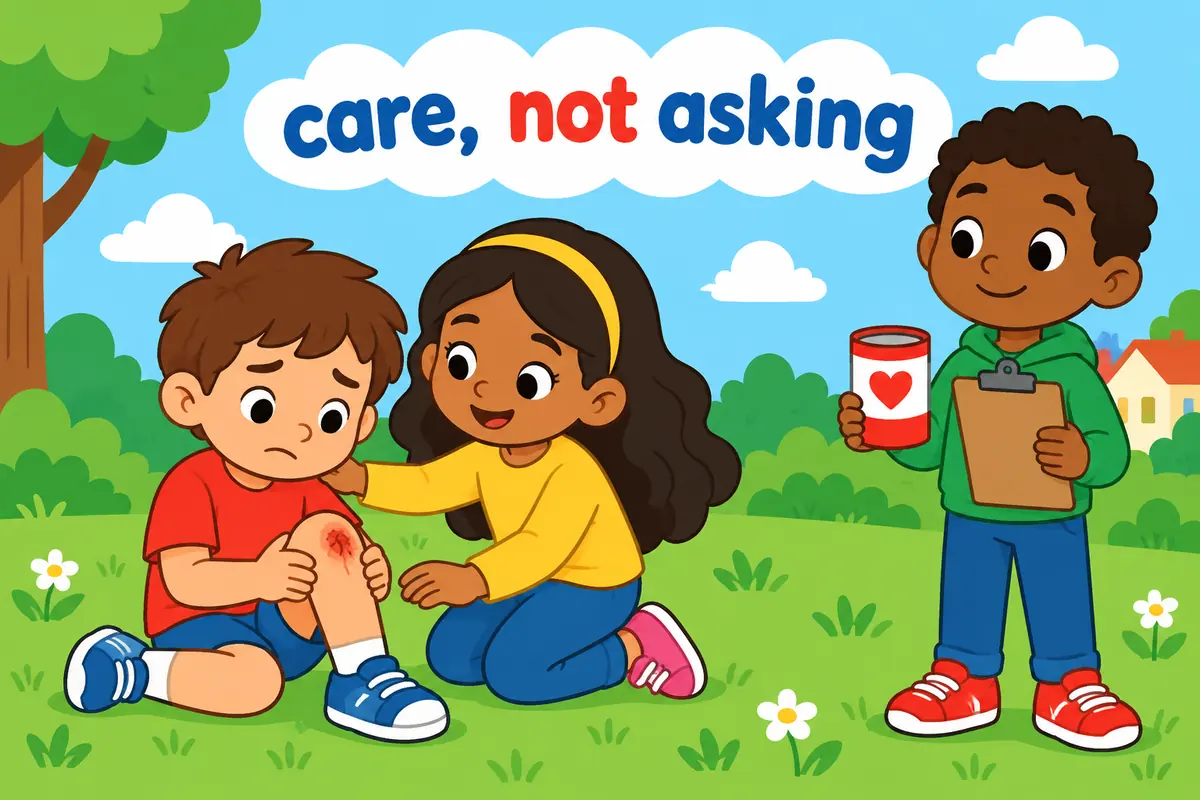
Solicitous describes warm, active attention to someone’s welfare, and it usually follows the patterns solicitous about and solicitous of. The adjective is formal and a little literary, so it fits letters, description and careful workplace writing. A host, a nurse or a teacher can all be solicitous, and the word rewards a concrete example of the care. Keep it apart from solicit, which means to ask for something, and from concerned, which centres on worry.
Frequently asked questions about solicitous
Is solicitous a positive word?
Yes, solicitous is generally positive, because it describes attentive care for someone’s welfare. It can turn faintly critical when care smothers, as in too solicitous, but the base meaning is warm. The word rarely carries the anxious edge that worried or concerned does.
What preposition follows solicitous?
Use about or of before the person or need, as in solicitous about her health or solicitous of the guests. Both are standard, though about is commoner in modern prose. Before a verb, use to, as in solicitous to help, which belongs to the rarer eager sense.
What is the difference between solicitous and solicit?
Solicitous is an adjective meaning caring and attentive, while solicit is a verb meaning to ask for something, as in solicit donations. They share a root but not a meaning, so a caring host is solicitous and a charity solicits. Mixing the two is the commonest mistake with this word.
Is solicitous the same as anxious?
No, and the difference is worth keeping. Anxious centres on a person’s own unease, while solicitous centres on care for someone else’s comfort. A solicitous nurse watches over a patient calmly; an anxious nurse feels tense. Only one of the two describes steady, outward attention.
Have you ever encountered a sentence where someone showed great care or concern? This kind of sentence can be described as “solicitous,” indicating a level of thoughtfulness and attentiveness towards others.
Solicitous sentences often display a genuine interest in someone’s well-being or feelings, making them a powerful tool in communication. Whether in writing or speech, using solicitous sentences can convey empathy and understanding towards the listener or reader.
7 Examples Of Solicitous Used In a Sentence For Kids
- Solicitous means caring and thoughtful.
- We should always be solicitous towards our friends.
- It’s nice to be solicitous and help others.
- Teachers are often solicitous about their students’ well-being.
- Being solicitous means showing kindness and concern.
- We can make the world a better place by being solicitous.
- Remember to be solicitous and considerate of others.
14 Sentences with Solicitous Examples
- Solicitous professors are always available to provide guidance and support to students during office hours.
- It is important for college students to be solicitous towards their peers’ mental health and offer a listening ear when needed.
- Participating in volunteer work shows a solicitous attitude towards social issues and community welfare.
- Students should be solicitous in following academic deadlines to ensure their work is submitted on time.
- Attending career counseling sessions can help students become more solicitous in planning their future professional paths.
- Joining a study group can help students become more solicitous in understanding difficult subjects through group discussions.
- It is essential for college students to be solicitous in maintaining a healthy work-life balance to prevent burnout.
- Engaging in campus activities can help students become more solicitous in building a strong network of friends and connections.
- Being solicitous towards international students can help promote cultural exchange and understanding on campus.
- Reaching out to campus health services shows a solicitous approach towards prioritizing one’s physical and mental well-being.
- Attending workshops on campus can help students become more solicitous in developing new skills and knowledge.
- Building a strong relationship with academic advisors can make students feel more supported and solicitous in their academic journey.
- Taking the initiative to assist classmates who may be struggling with coursework demonstrates a solicitous attitude towards collective learning.
- Developing good communication skills can make students more solicitous in expressing their thoughts and ideas effectively in academic and professional settings.
How To Use Solicitous in Sentences?
Solicitous means showing concern or care for someone’s well-being. It can be used in various contexts to express a thoughtful or attentive attitude towards others.
Here are some examples of how to use solicitous in a sentence:
-
“She was very solicitous towards her elderly neighbor, always checking in on her and offering to help with chores.”
-
“The manager was solicitous of her employees’ comfort and well-being, making sure they had everything they needed to do their jobs effectively.”
-
“His solicitous nature makes him a great friend to have during difficult times, as he is always there to lend a listening ear and offer support.”
-
“It was evident from her solicitous actions that she truly cared about the happiness and welfare of her friends and family.”
-
“The doctor’s solicitous demeanor put the patient at ease, assuring them that they were in good hands.”
Remember, when using the word solicitous, consider the context in which you are using it to ensure it accurately conveys the sense of care and concern for others.
Conclusion
In modern society, individuals often appreciate solicitous gestures from others, as these expressions of care and concern can create a sense of support and connection. Examples of solicitous behavior include offering help to someone in need, showing empathy towards others’ feelings, and actively listening to their concerns. By being solicitous, people can strengthen relationships and foster a sense of community and trust.
Moreover, the act of being solicitous can have a positive impact on one’s own well-being, as it promotes a culture of kindness and understanding. It encourages individuals to be more mindful of others, fostering a more empathetic and compassionate society. Ultimately, practicing solicitous behavior can lead to strong interpersonal relationships and a more harmonious and supportive community.


