Positive Words to Describe a Company: Examples & Guidance
Quick answer: Positive words to describe a company include adaptable, customer-focused, ethical, innovative, and reliable. Choose a term that matches a specific practice or result, then state its scope and time period. A word alone is an impression; when it makes an objective U.S. advertising claim, the FTC expects it to have a reasonable basis.
Match the descriptor to a real company practice, service, policy, or documented result.
For objective advertising claims in the United States, the FTC says advertisers need a reasonable basis before publication.
For environmental marketing, broad unqualified claims such as “green” and “eco-friendly” are difficult to substantiate; name a specific benefit and qualify it.
The alphabetical tables have 299 filled entries and 297 distinct labels; they also contain neutral and critical terms, so they are a vocabulary bank rather than an endorsement list.
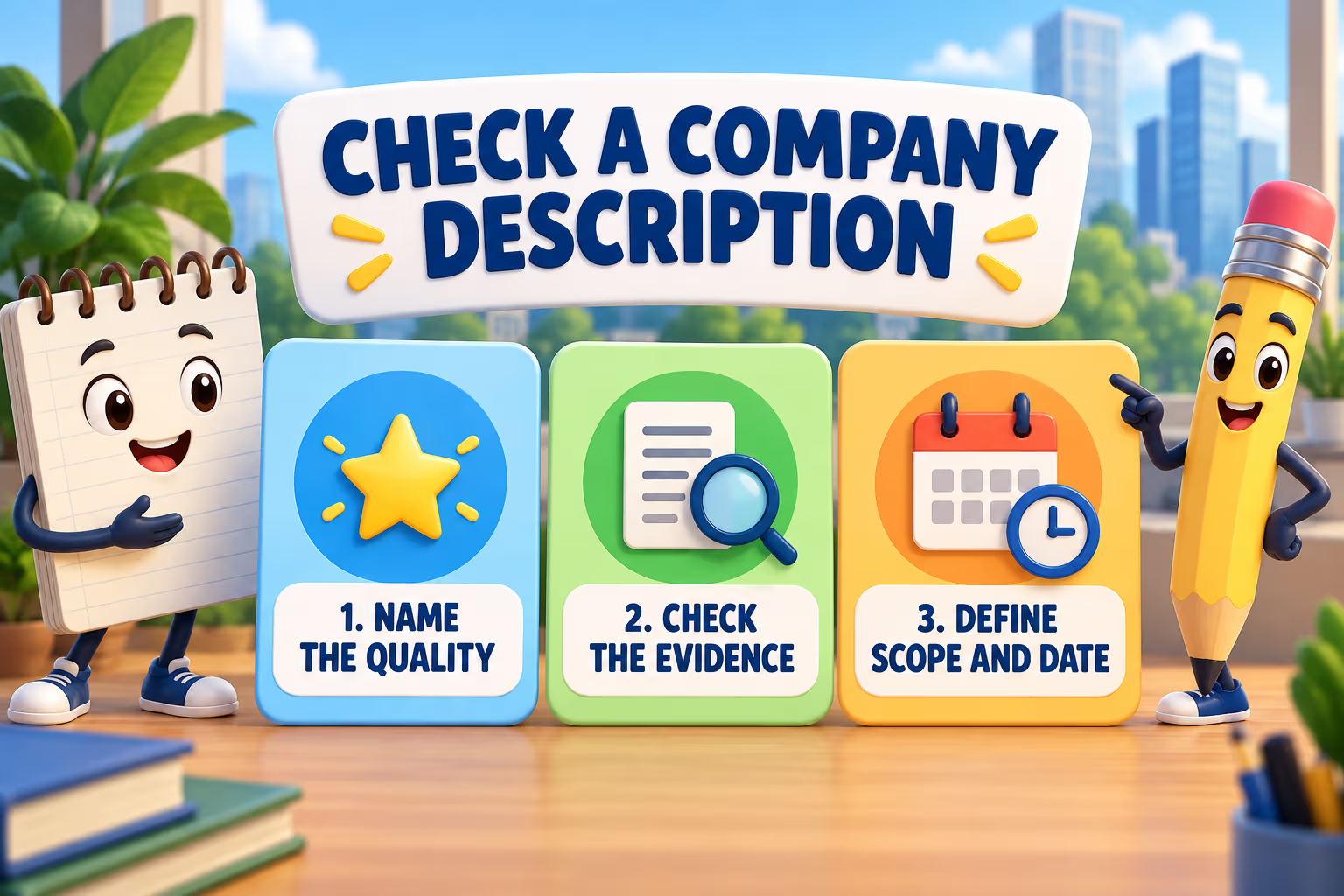
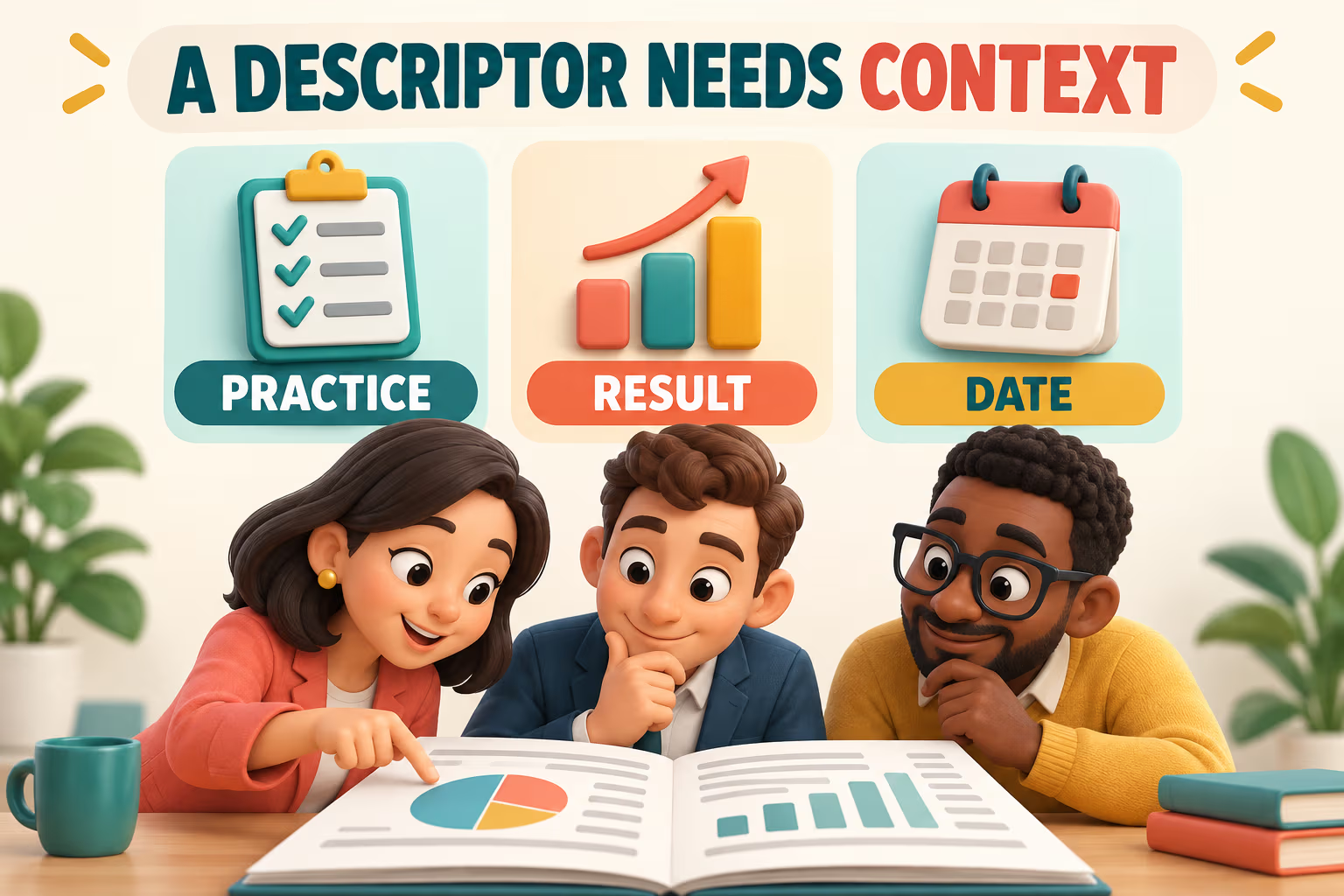
Move from a broad adjective to a specific, checkable description.Words such as reliable or innovative are clearer when the supporting practice and time period are stated.
The FTC guidance below applies to advertising claims in the United States; an adjective in a personal conversation or editorial description is not automatically an advertisement. The distinction matters when a business presents an objective claim to consumers. For a people-focused word list, see positive words to describe a team.
In today’s dynamic business landscape, the words we use to describe a company can significantly influence its reputation, appeal, and overall perception in the marketplace. Positive words can illuminate a company’s strengths, highlight its values, and create an inviting image that attracts potential clients, partners, and employees. In this article, we dive into a curated selection of positive words that can be used to describe a company. From ‘innovative’ and ‘reliable’, to ‘sustainable’ and ‘customer-centric’, these descriptors encapsulate a wide array of corporate virtues and strengths.
Whether you’re a business owner seeking to elevate your company’s profile, a marketing professional crafting compelling brand narrative, or an analyst providing insightful company reviews, this guide will offer you a rich vocabulary to effectively portray a company in a positive light. So, join us as we delve into the dynamic domain of descriptive business language, and explore the power of positivity in shaping corporate perceptions.
How we describe a company can significantly influence the perceptions of employees, stakeholders, customers, and the general public. When using positive words to portray a company, we contribute to creating a positive image that can foster trust, respect, and admiration. This article will explore a variety of positive words that can be used to describe a company, emphasizing its qualities, achievements, values, and culture.
Adaptable: An adaptable company is one that can adjust quickly to changing market conditions, customer demands, or internal challenges. Adaptability is a vital characteristic in today’s fast-paced business world.
Bold: Bold companies are unafraid to take calculated risks, push boundaries, and innovate. They tend to stand out in the marketplace and are often recognized for their ambitious strategies and courageous decisions.
Committed: Committed companies display dedication to their mission, values, and stakeholders. They stick to their promises and are persistent in their pursuit of goals.
Diverse: A diverse company recognizes the value of having a variety of perspectives and experiences in their workforce. They embrace differences and create an inclusive environment where everyone feels valued.
Ethical: Ethical companies prioritize doing what’s right over making a profit. They adhere to a strong moral code, ensuring fairness, honesty, and respect in all their business dealings.
Flexible: Flexible companies can accommodate different needs and adjust to unexpected situations. This might include offering flexible working hours or being open to changes in strategies or processes.
Generous: Generous companies give back. They might offer excellent benefits to their employees, donate to charities, or commit resources to community projects.
Human-centric: Companies that are human-centric prioritize people — employees, customers, and communities — above all else. They understand that their success is driven by the people involved in and affected by their business.
Innovative: Innovative companies are pioneers in their industry. They introduce new ideas, processes, or products, constantly seeking to improve and disrupt the status quo.
Just: A just company treats everyone fairly. They uphold equality, ensure fair treatment for all employees, and stand against discrimination and bias.
Knowledgeable: Knowledgeable companies have a deep understanding of their industry, customers, and competition. They use this knowledge to make informed decisions and offer valuable solutions.
Leader: Being a leader in the industry means setting the standard for others. Leader companies are at the forefront of their industries, consistently outperforming their competition.
Motivated: A motivated company is driven to achieve its goals. The drive can be seen in its enthusiastic employees, proactive strategies, and persistent pursuit of success.
Nurturing: Nurturing companies care about the growth and well-being of their employees. They invest in training, offer opportunities for advancement, and foster a supportive and positive work environment.
Optimistic: Optimistic companies have a positive outlook on their future. They see opportunities in challenges and are confident in their ability to achieve their vision.
Proactive: Proactive companies anticipate and prepare for the future. They take the initiative to improve their operations, solve problems before they escalate, and seize opportunities.
Quality-focused: Companies that are quality-focused are committed to excellence. They prioritize high standards in their products, services, and internal processes.
Resilient: Resilient companies are able to withstand or recover quickly from difficult situations. They have strategies in place to deal with challenges and can bounce back from setbacks.
Sustainable: Sustainable companies prioritize environmental responsibility. They implement practices that reduce their environmental impact and contribute to the well-being of the planet.
Transparent: Transparent companies are open about their operations, decisions, and practices. They communicate honestly with stakeholders and foster an environment of trust.
User-friendly: User-friendly companies make it easy for customers to interact with them. This might be through intuitive products, accessible customer service, or clear, straightforward communication.
Visionary: Visionary companies look ahead. They anticipate future trends and needs, setting long-term goals that keep them moving forward and evolving.
Welcoming: A welcoming company creates an inclusive and warm environment. They make people feel valued and included, whether they’re employees, customers, or visitors.
X-factor: Companies with an X-factor have a special characteristic that sets them apart. This could be a unique product, an exceptional leader, or an outstanding company culture.
Youthful: Youthful companies are energetic, modern, and open to new ideas. They often have a fresh approach to business and aren’t afraid to challenge traditional norms.
Zealous: Zealous companies are passionate and enthusiastic about what they do. Their strong commitment to their mission and values can be seen in their products, services, and culture.
How to Support Company Descriptions With Evidence
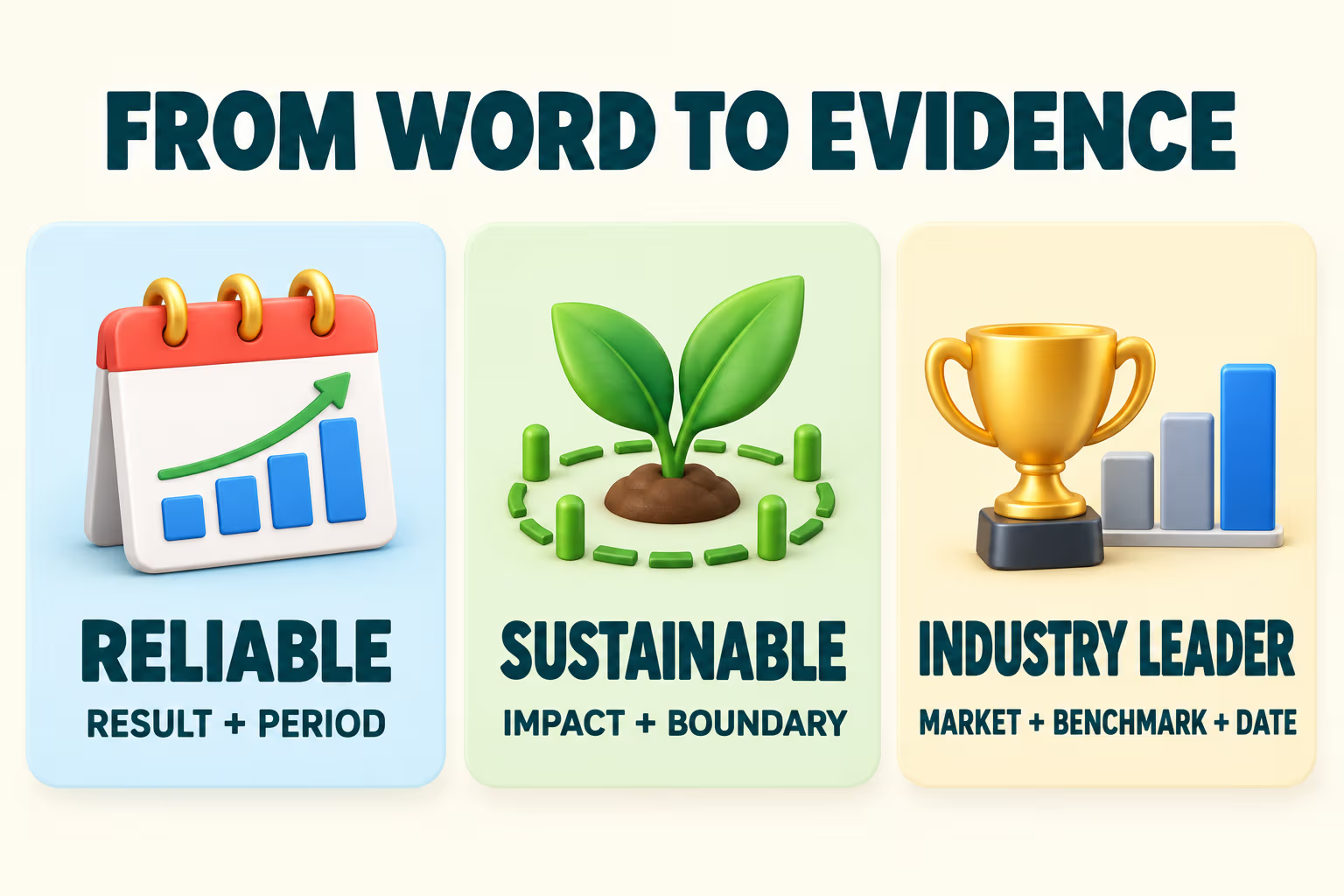
Before using a descriptor as a factual claim about a business, ask what a reader could verify. The U.S. Federal Trade Commission says advertisers should have a reasonable basis for objective express or implied claims before they are disseminated. Environmental claims need particular care: the FTC advises marketers against broad, unqualified terms such as “green” or “eco-friendly,” and recommends clear, specific qualifications.
Descriptor
Useful support to add
Reliable
A defined service commitment and performance record for a stated period.
Transparent
A dated policy, report, or public disclosure that supports the specific point.
Innovative
The named product or process and what it changed; substantiate any “first” or superiority claim.
Ethical
The relevant policy, oversight, or practice, with evidence; the adjective alone does not establish ethical conduct.
Sustainable
The environmental attribute, boundary, and period, with credible support; avoid an unqualified general “green” claim.
Industry leader
Define the market, comparison group, benchmark, and time period before making a leadership claim.
Specific examples make business descriptors easier for readers to assess.
Use the FTC’s advertising-substantiation policy for the reasonable-basis principle and its Green Guides summary for environmental marketing examples. These sources discuss U.S. advertising; they do not certify a company or make a descriptor true by itself.
Practical check: Replace a broad sentence such as “We are an industry leader” with the comparison group, metric, market, and date that support it. If those details are not available, choose a narrower description rather than implying a ranking you cannot document.
How to use this list: It is a vocabulary reference, not a recommendation to apply every entry to a company. The 297 distinct labels include positive descriptors, critical terms such as abusive, hostile, toxic, and unfair, and neutral labels such as leader, licensed, and team. Choose a word that fits the context and support factual descriptions with relevant information.
List Of Positive Words to Describe a Company
A
Abundance
Abundant
Abusive
Accepting
Accessible
Accountable
Achievement
Adaptability
Adaptable
Adapting
Addition
Adventurous
Ageless
Agile
Aimless
Allure
Alluring
Ambitious
Antagonistic
Appreciative
Archaic
Attentive
Authentic
Autonomous
B
Balanced
Bankable
Belittled
Belonging
Beneficial
Biased
Bitter
Boring
Bountiful
Brave
Breakthrough
Brilliance
Bureaucratic
Busy
C
Captivating
Caring
Caring
Casual
Challenging
Challenging
Change Leader
Charmismatic
Cliquey
Collaborate
Collaborative
Combative
Comfortable
Commited
Commitment
Communicators
Community
Compassionate
Competent
Competitive
Complete
Composed
Confident
Connected
Consistent
Controlling
Creative
Critical
Curious
Customer-Focused
Cutthroat
Cutting-Edge
D
Dated
Dear
Deceitful
Dedicated
Definitive
Demanding
Dependable
Desirable
Destructive
Devoted
Different
Dignity
Diplomatic
Direct
Discipline
Disengaged
Disrespectful
Diverse
Durable
E
Eager
Educational
Efficient
Elite
Empathetic
Empowered
Empowering
Encouraging
Energetic
Engaged
Engaging
Enthusiastic
Enticing
Entrepreneurial
Established
Ethical
Exciting
Expendable
Experienced
Experts
F
Fair
Faithful
Familiar
Family
Family-Orientated
Fast
Fastidious
Fast-Paced
Fearful
Feedback Rich
Fierce
Flexible
Focus
Focused
Formal
Frantic
Free
Freedom
Fresh
Friendly
Fun
G
Gain
Generous
Genuine
Goal-Oriented
Grateful
Growing
Growth-Centered
Guaranteed
H
Happiness
Happy
Harmonious
Harmony
Healthy
Hero
Hierarchical
High-Quality
Honest
Honorable
Hostile
Humane
Humorous
I
Ideal
Immaculate
Improved
Inclusive
Incorruptible
Incredible
Independent
Industrious
Inexpensive
Infallibility
Innovative
Insightful
Inspirational
Inspired
Inspiring
Integrity
Intense
Intuitive
Invaluable
Inventive
Inviting
Isolating
J, K, L
Joy
Judicial
Just
Kindness
Leaders
Leadership Ability
Learning
Liberty
Licensed
Listeners
Logical
Loyal
Loyalty
M, N
Machiavellian
Marvelous
Memorable
Micromanaged
Motivating
Motivational
Multi-Purpose
Natural
New
Nimble
Notable
Nurturing
O
Old
On Edge
Open
Optimism
Optimistic
Organic
Organized
Original
Outdated
Outstanding
P
Passionate
People-Focused
People-Orientated
Perfect
Permanent
Polished
Pompous
Positive
Powerful
Power-Hungry
Practiced
Predictable
Priceless
Principled
Productive
Professional
Proficient
Progressive
Proud
Punctual
Pure
Q, R
Qualified
Quality
Recognition
Relaxed
Reliable
Reputable
Resilient
Respected
Respectful
Respecting
Restrictive
Results-Driven
Revolutionary
Reward
Rewarding
Rich
Rigid
Rigorous
Risk-Averse
S
Safe
Secretive
Secure
Sensible
Service-Driven
Siloed
Skilled
Skillful
Sound
Special
Staunch
Steadfast
Stimulating
Strategic
Stressful
Structured
Successful
Suitable
Supportive
Sustainable
T
Talented
Team
Team-Players
Teamwork
Thankful
Thoughtful
Toxic
Traditional
Transparent
Trust
Trusting
Trustworthy
Truthful
U
Unapproachable
Unfair
Unified
Unique
Unsupportive
Uplifting
Upright
Useful
V, W
V.I.P.
Valid
Valued
Virtuous
Visionary
Vital
Volatile
Warm
Welcoming
Workable
Conclusion
In conclusion, how we describe a company can significantly impact its reputation and success. The words we use can highlight a company’s strengths, differentiate it from competitors, and communicate its value to various stakeholders. By choosing positive words that accurately reflect a company’s characteristics and values, we can create a powerful narrative that resonates with employees, customers, and the broader community. Companies are complex and multifaceted, and the language we use to describe them should capture this complexity, highlighting not just what they do, but who they are and what they stand for. From “Adaptable” to “Zealous”, these positive words provide a rich vocabulary for describing a company in a positive light.
Choose a Company Descriptor That Fits
A company descriptor is a starting point for explaining a business, not proof of its qualities. Add the practice, policy, comparison, or result that gives the word meaning, and include the scope or date where they affect the claim. Keep environmental statements specific, and distinguish a general impression from an objective advertising claim.
Frequently Asked Questions
What are positive words to describe a company?
Examples include adaptable, customer-focused, innovative, reliable, transparent, and sustainable. The right word depends on what the company actually does and what the reader needs to know. Add a specific practice, policy, service record, or product detail so the adjective describes something concrete rather than functioning as an unsupported slogan.
How do I choose a word for a company profile?
Choose a term that matches the profile’s purpose and can be explained with a verifiable example. A customer overview might emphasize response time or service coverage; a culture profile might describe a documented workplace practice. Avoid listing several broad adjectives when one precise word and a relevant detail would give readers a clearer picture.
How can I describe a company as sustainable?
Name the specific environmental attribute, its boundary, and the period it covers, then provide credible support. The FTC’s Green Guides warn marketers against broad, unqualified general claims such as “green” or “eco-friendly” because they are difficult to substantiate. A narrow, clearly qualified statement helps readers understand what the company is actually claiming.
What evidence supports “industry leader”?
State the market, comparison group, metric, and time period behind a leadership claim. For example, a ranking needs a named benchmark and date; “industry leader” alone leaves the comparison undefined. When used as an objective U.S. advertising claim, the FTC says an advertiser should have a reasonable basis for the claim before publication.
Are all entries in the alphabetical list positive?
No. The preserved bank contains positive descriptions alongside critical terms such as “abusive,” “hostile,” and “toxic,” and neutral labels such as “licensed” or “team.” Treat it as a broad word reference, not an endorsement of every entry. Check a term’s meaning and tone before applying it to a real company.
Robin founded StartsWithy in 2022 to make English words easier to understand and use. Robin oversees our 30,000+ guides, checks meanings and grammar against trusted dictionaries such as Cambridge, Oxford Learner’s and Collins, and is accountable for every correction we make.