Positive Words to Describe Personality Characteristics
Positive words to describe personality characteristics include patience, honesty, curiosity, and dependability. Choose a descriptor that fits a person’s observable behavior across relevant situations, then give a concrete example; one generous act can be kind without proving a permanent personality trait.
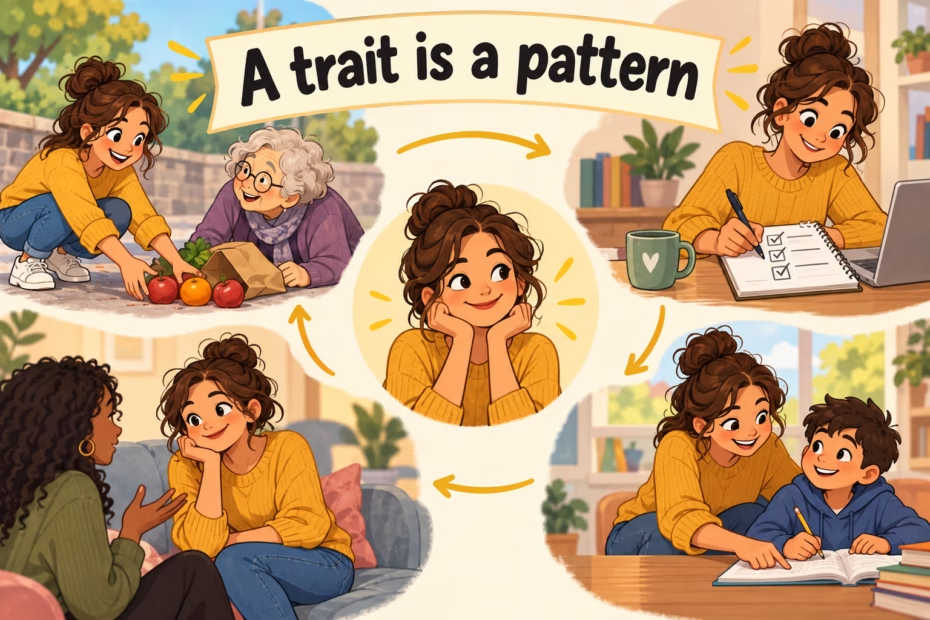
- A personality trait describes a tendency or pattern, not a diagnosis.
- Words such as quiet, strict, or ambitious can be helpful or unhelpful depending on context.
- Specific behavior makes praise and feedback clearer than a broad label.
- For work, describe actions related to the role instead of treating one adjective as a complete performance assessment.
How do you choose a positive personality word?
Start with what the person repeatedly does, identify the quality that best explains those actions, and match the word to the setting. The American Psychological Association describes personality as a configuration that includes traits and other characteristics; a short adjective list can help with wording, but it cannot capture a whole person.

For example, “Maya is reliable” is more informative when paired with “she sent the revised schedule before the deadline and flagged a conflict early.” The U.S. Department of Labor’s O*NET Work Styles framework uses specific work tendencies such as dependability, cooperation, empathy, and adaptability; these are role-related descriptions, not guarantees about a person in every setting.
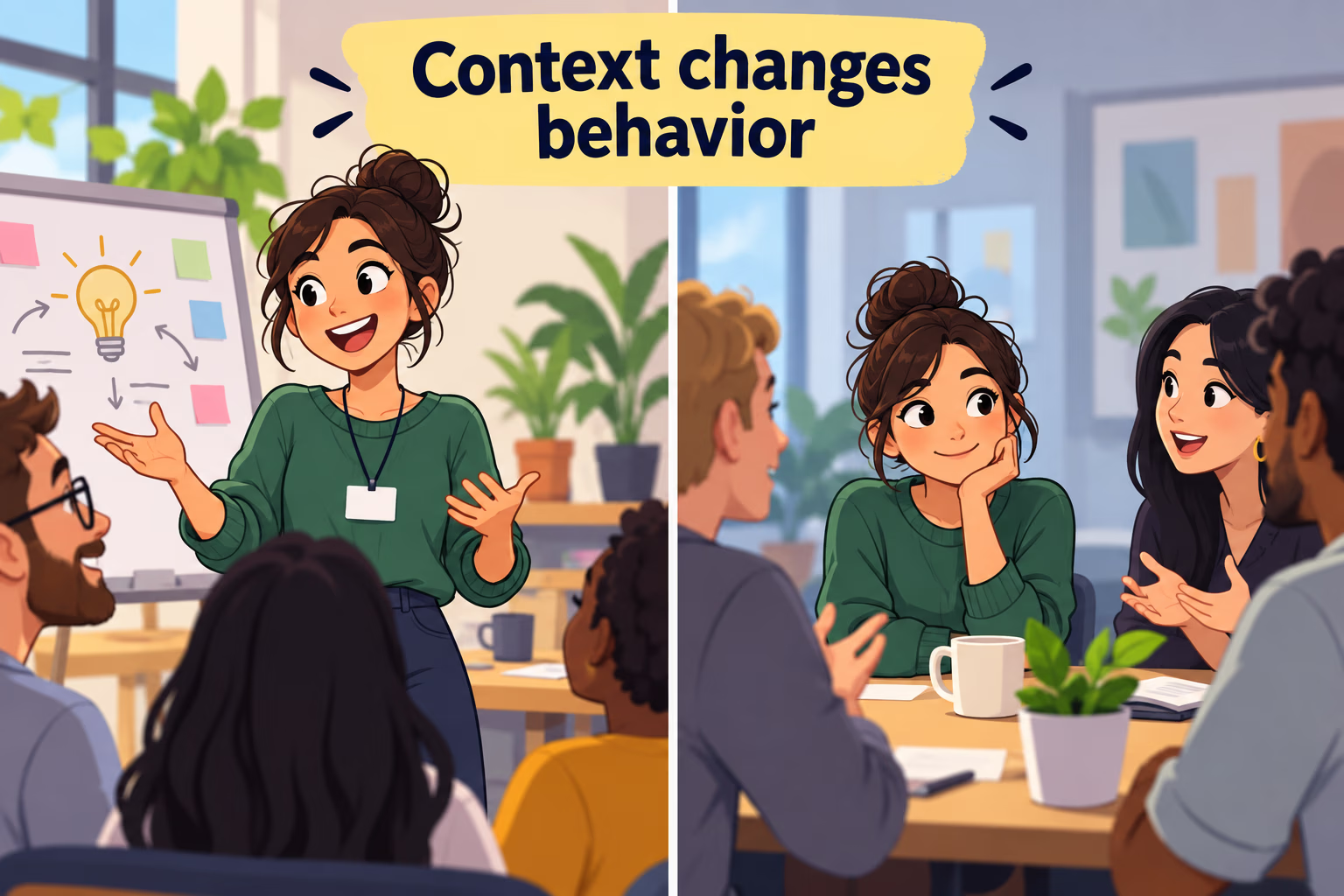
Positive traits depend on context
Many personality adjectives describe a strength only when the word fits the situation. Assertive can mean communicating a boundary clearly; persistent can mean continuing through a useful challenge, but repeating an ineffective approach after new evidence may call for a different description. Neither the list nor the example below is a psychological assessment.
| Quality | Useful positive words | Example to make the word concrete |
|---|---|---|
| Dependability | reliable, responsible, conscientious | “They confirm the plan and deliver the agreed work on time.” |
| Consideration | thoughtful, respectful, compassionate | “She asks what support would help before making assumptions.” |
| Learning and ideas | curious, imaginative, resourceful | “He tests a second approach when the first one fails.” |
| Social energy | friendly, sociable, communicative | “They welcome new teammates and make space for others to speak.” |
| Persistence | patient, resilient, tenacious | “She adjusts the plan and keeps working toward the shared goal.” |

Use positive descriptors fairly
Positive description is most credible when it is specific, proportionate, and relevant. In a recommendation, character sketch, or performance review, cite the behavior and its effect rather than presenting a label as a fixed fact. O*NET’s work-style categories are explicitly about tendencies at work, which is a useful reminder to keep work feedback tied to work behavior.
- Prefer evidence: “He shared the research notes with the group” is clearer than “He is selfless.”
- Keep scope accurate: say “patient during the customer call” if the evidence is limited to that interaction.
- Avoid false opposites: a person can be both quiet and considerate, or confident and willing to ask for help.
- Use neutral terms carefully: words including ambitious, strict, and serious can be positive or negative depending on the action and audience.
The alphabetized vocabulary tables below are retained from the original article. They are a brainstorming resource rather than a verified taxonomy: some entries are neutral or critical in many contexts, and “positive” depends on meaning, evidence, and use.
Words, when used wisely, hold the ability to intricately depict an individual’s personality, highlighting their unique characteristics and attributes. Positive words are particularly impactful, as they emphasize the strengths and virtues that make each person unique.
In this article, we delve into a curated list of positive words that can be used to describe personality characteristics. From ‘adaptable’ and ‘courageous’, to ‘compassionate’ and ‘tenacious’, these words encapsulate a variety of traits that can illuminate the positive aspects of an individual’s personality.
Perfect for writers wanting to add depth to their characters, employers conducting performance reviews, or anyone looking to express their admiration for someone’s unique personality traits, this exploration will provide a valuable resource. So, come with us on this journey through the enriching world of positive descriptors, and discover their transformative power in shaping perceptions of personality.
What are Personality Characteristics Positive Words?
Personality characteristics, or traits, are distinguishing qualities or characteristics that make up an individual’s unique personality. These traits dictate how an individual behaves, feels, and interacts with the world around them. In this extensive exploration, we delve into an array of positive words that can be used to describe various personality characteristics, enhancing our understanding and communication about human character and behavior.
- Adaptable: People with this trait are flexible and adjust quickly to new situations and environments. They can handle change with ease and remain calm under pressure.
- Brave: Brave individuals are courageous and unafraid to face challenges or confront difficult situations. They take risks and aren’t deterred by fear.
- Compassionate: Compassionate people show a deep empathy and understanding towards others. They care about the well-being of those around them and tend to be kind and considerate.
- Diligent: Diligent individuals are hardworking and committed to their tasks. They pay attention to detail and are dedicated to achieving high-quality results.
- Energetic: Energetic people are full of vigor and enthusiasm. They are active and lively, often bringing a sense of dynamism and vitality to their surroundings.
- Fearless: Fearless individuals aren’t easily frightened. They are willing to confront fears, take risks, and step outside their comfort zones.
- Generous: Generous individuals are unselfish and willing to give of their time, effort, and resources to help others. They derive joy from giving and sharing.
- Humorous: People with a sense of humor have the ability to perceive and appreciate humor. They can make others laugh and often bring joy and laughter to those around them.
- Inventive: Inventive individuals are creative and innovative. They can think outside the box and come up with new and original ideas.
- Joyful: Joyful people have a cheerful disposition. They radiate happiness and positivity, often lifting the spirits of those around them.
- Kind: Kind individuals treat others with empathy and respect. They are considerate and show concern for the well-being of others.
- Loyal: Loyalty is a strong feeling of support or allegiance. Loyal individuals stand by their friends, family, and commitments.
- Motivated: Motivated individuals have a strong desire to achieve their goals. They are driven and ambitious, often displaying a high level of energy and determination.
- Nurturing: Nurturing individuals care for and encourage the growth and development of others. They are supportive and compassionate, often playing a pivotal role in helping others succeed.
- Optimistic: Optimistic people have a positive outlook on life. They expect the best possible outcome and see the positive side of things.
- Patient: Patience is the capacity to accept or tolerate delay, trouble, or suffering without getting angry or upset. Patient individuals can wait calmly and persevere when facing challenges.
- Quick-witted: Quick-witted individuals can think quickly and intelligently. They have a sharp mind and are often good at finding clever and inventive solutions to problems.
- Resilient: Resilient people are able to withstand or recover quickly from difficult situations. They are strong individuals who can bounce back from adversity.
- Sincere: Sincerity is the quality of being free from pretense, deceit, or hypocrisy. Sincere individuals are genuine and honest in their words and actions.
- Tolerant: Tolerance is the willingness to accept opinions, behaviors, or characteristics that are different from your own. Tolerant individuals respect and appreciate diversity.
- Understanding: Understanding individuals are capable of comprehending others’ perspectives and emotions. They are empathetic, offering comfort and support during difficult times.
- Versatile: Versatile individuals are adaptable and have many skills. They can handle various tasks and situations, often demonstrating a wide range of abilities.
- Wise: Wisdom is the ability to use knowledge and experience intelligently. Wise individuals make sound decisions and offer insightful advice.
- eXpressive: Expressive individuals effectively convey their thoughts and feelings. They are open and communicative, often using various forms of expression to share their ideas and emotions.
- Youthful: Youthful individuals maintain the positive qualities associated with youth. They are energetic, enthusiastic, and open to new experiences.
- Zealous: Zealous individuals are full of zeal, characterized by great energy or enthusiasm in pursuit of a cause or objective. They are passionate and dedicated, often inspiring others with their fervor.
List of Positive Words to Describe Personality Characteristics
A, B
| Active | Adaptable | Adventurous |
| Affable | Ambitious | Amiable |
| Amicable | Amusing | Annoyed |
| Bossy | Brave | Bright |
| Brilliant |
C
| Calm | Carefree | Careful |
| Cautious | Charming | Circumspect |
| Communicative | Compassionate | Conceited |
| Conscientious | Considerate | Cooperative |
| Courageous | Courteous | Creative |
| Curious |
D, E
| Daring | Dauntless | Demanding |
| Determined | Diligent | Diplomatic |
| Discreet | Dynamic | Eager |
| Empathetic | Energetic | Enthusiastic |
F, G, H
| Faithful | Fearless | Foolish |
| Friendly | Funny | Generous |
| Gentle | Good | Gregarious |
| Grumpy | Gullible | Hardworking |
| Helpful | Honest | Hopeful |
| Humble | Humorous |
I, J, K, L
| Imaginative | Independent | Intelligent |
| Intuitive | Inventive | Jealous |
| Joyful | Kind | Lazy |
| Leader | Lonely | Loquacious |
| Loving | Loyal | Lucky |
M, N, O
| Mannerly | Mature | Mischievous |
| Miserable | Motivated | Mysterious |
| Neat | Nice | Optimistic |
P, Q
| Passionate | Patient | Patriotic |
| Persistent | Plucky | Polite |
| Popular | Powerful | Practical |
| Proud | Quiet |
R
| Rational | Realistic | Reliable |
| Resilient | Resourceful | Respectful |
| Responsible | Rich | Romantic |
| Rude |
S
| Self-Confident | Selfish | Sensible |
| Serious | Shy | Sincere |
| Skillful | Sly | Smart |
| Sociable | Strict | Stubborn |
| Studious | Successful | Sympathetic |
T, U, W
| Talented | Tenacious | Thoughtful |
| Tidy | Timid | Tolerant |
| Trustworthy | Understanding | Weak |
| Willing | Wise | Witty |
Conclusion
In conclusion, these positive words to describe personality characteristics offer a comprehensive look into the diverse qualities that make up human character. They range from “Adaptable” to “Zealous”, showcasing the vast array of positive traits individuals can possess. Understanding and using these descriptors can enhance our ability to communicate about personality and character. It can contribute to more meaningful, insightful, and appreciative interactions, helping us to better recognize and value the unique traits and strengths of those around us.
Personality trait, characteristic, and behavior
A characteristic is a distinguishing quality, while a personality trait is commonly used for a relatively enduring tendency in how someone thinks, feels, or acts. A behavior is a particular observable action. Calling someone “thoughtful” summarizes an interpretation; noting that they remembered a colleague’s preference and adjusted a plan describes the evidence behind it.
Personality descriptions are not the same as diagnoses, and a single trait word cannot tell you why someone acted a certain way. People respond differently as roles, relationships, pressures, and cultural expectations change. Use a descriptive list to find language, then check that the chosen word fits the person and situation.
Examples of specific positive descriptions
- Adaptable: “When the room changed, Jordan rearranged the activity so everyone could still take part.”
- Conscientious: “Riley checked the figures against the source before sending the report.”
- Empathetic: “Sam listened, asked what kind of help was wanted, and followed that lead.”
- Resourceful: “After the first tool failed, Lee found a safe alternative and explained the trade-off.”
These sentences show why positive is not a synonym for universally suitable: the strongest descriptor is one that fits the actual evidence and purpose.
Sources and further reading
- American Psychological Association: Personality — overview of personality as a configuration of traits and other characteristics.
- O*NET OnLine: Work Styles — U.S. Department of Labor resource defining role-related work tendencies.
- Cambridge Dictionary: trait — learner dictionary entry for “trait.”
- Cambridge Dictionary: characteristic — learner dictionary entry for “characteristic.”
Frequently asked questions
What is the difference between a trait and a behavior?
A behavior is an action someone takes; a trait is a broader description of a tendency inferred from patterns of behavior. “She asked if the new colleague needed help” reports an action, while “she is considerate” summarizes an interpretation that should be supported by more than one moment.
Can a quiet person be sociable or friendly?
Yes. Quietness describes how much someone speaks in a particular setting, while friendliness and sociability describe different qualities. A person may be reserved in a large meeting and warm in a one-to-one conversation, so describe the setting rather than treating silence as proof of attitude.
Are personality adjectives suitable for a performance review?
Use them only when they are job-relevant and supported by examples. “Dependable” becomes useful when paired with specific actions such as meeting agreed deadlines or warning the team about a delay; a personality label alone is not a full assessment of performance.
Are all the words in the original list positive?
No. The original vocabulary tables include words that may be neutral, context-dependent, or critical, such as jealous, rude, and weak. Check each meaning and use a word only when it accurately describes the intended quality.