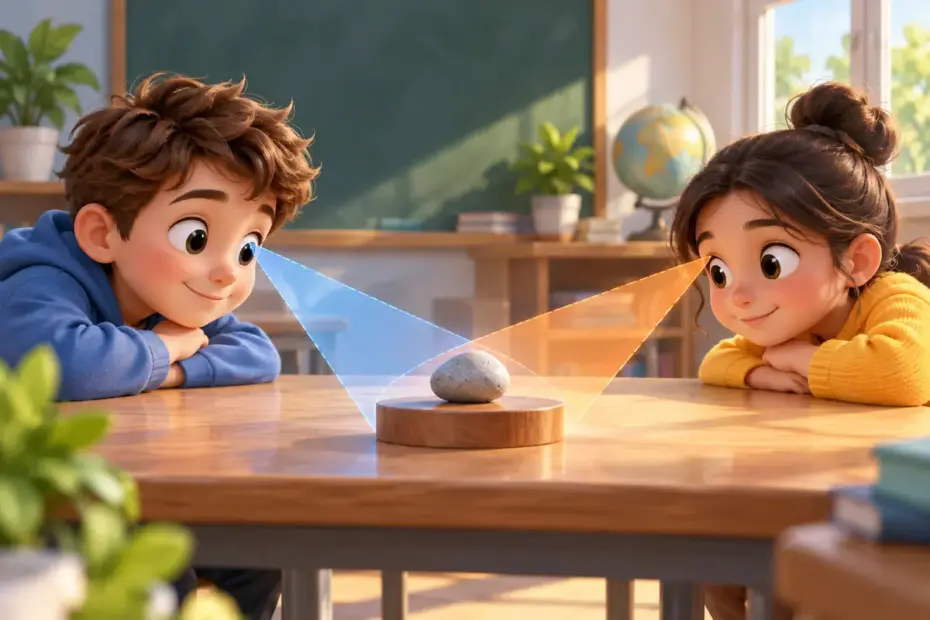
Stereoscopic vision in a sentence refers to depth perception based on differences between the views received by the two eyes. For example, “Stereoscopic vision helps the observer judge depth.” shows the meaning in context. Choose the noun phrase for the intended sense, and make the surrounding action or situation clear enough for readers to understand the word without guessing.
At a glance
- Stereoscopic vision is used here as a noun phrase.
- Stereoscopic vision concerns a binocular contribution to depth perception, using differences between the images received by the eyes.
- Do not assume stereoscopic vision is the only source of depth perception or that an image labeled 3D automatically demonstrates it.
- Context should identify the intended meaning.
- A complete example needs a subject and a finite verb.
Stereoscopic vision in a sentence: contextual examples
| Use | Example sentence | Why it works |
|---|---|---|
| Example 1 | Stereoscopic vision helps the observer judge depth. | Context shows the intended use. |
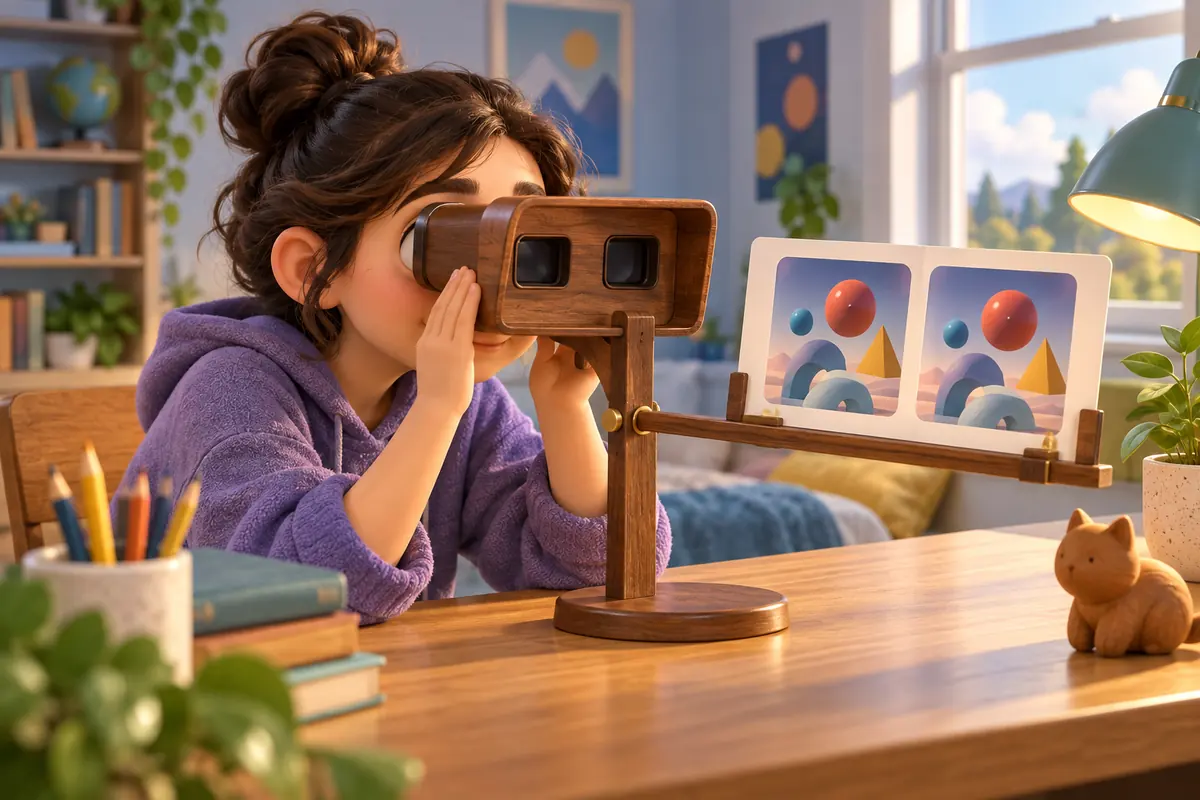
| Example 2 | The lesson explained stereoscopic vision using paired images. | Context shows the intended use. |
| Example 3 | The model demonstrated how stereoscopic vision uses two viewpoints. | Context shows the intended use. |
| Example 4 | The researchers studied stereoscopic vision in the experiment. | Context shows the intended use. |
| Example 5 | The display created a stereoscopic vision demonstration. | Context shows the intended use. |
| Example 6 | The article distinguished stereoscopic vision from other depth cues. | Context shows the intended use. |
What does stereoscopic vision mean?
Stereoscopic vision concerns a binocular contribution to depth perception, using differences between the images received by the eyes. A vocabulary example can describe a demonstration with two viewpoints. The phrase does not mean that all depth information comes exclusively from stereopsis; perspective and other cues also contribute to judging a scene.
How does its grammar work?
Stereoscopic vision is a noun phrase: stereoscopic modifies vision. Use it as the subject or object of a sentence, such as “The lesson explained stereoscopic vision.” Stereoscopic alone is an adjective and may modify a display or image. Keep the phrase distinct from a claim about a particular person’s visual abilities.
Which distinction helps avoid confusion?
Stereoscopic and ordinary three-dimensional descriptions are related but not identical. A flat picture can suggest depth through perspective without providing a stereoscopic pair. A paired-image demonstration illustrates binocular disparity. This language guide explains terminology rather than assess vision or imply that one simple classroom activity can diagnose an individual’s visual function.
How do you write a clear example?
- Choose the meaning that fits your situation.
- Select a subject and an action that demonstrate that meaning.
- Use the appropriate grammatical form in a complete sentence.
- Read the example again and remove details that do not clarify the idea.
Compare a vague statement with a specific one. “Stereoscopic vision helps the observer judge depth.” identifies a concrete context rather than merely announcing that the word is useful. When revising, check what the reader can infer from the action, then add one detail only if it explains the intended sense. An example should demonstrate meaning rather than repeat a definition word for word.
Sources and usage notes
The American Academy of Ophthalmology EyeWiki: stereopsis provides the reference definition and usage context. The sentences in this guide are original teaching examples. They illustrate grammar and word choice; they are not reports of real events or evidence that a particular person, community, or organization behaved in the way described.

Frequently asked questions
What is a simple sentence with stereoscopic vision?
“Stereoscopic vision helps the observer judge depth.” is a clear example with stereoscopic vision in context. The surrounding words identify what happens and make the intended meaning easier to recognize. For a classroom exercise, keep that context rather than shortening the example until the relationship between the word and the situation disappears.
What grammatical role does stereoscopic vision have?
In these examples, stereoscopic vision functions as a noun phrase. Check the surrounding phrase before replacing it with a related word, because a synonym may need a different construction. A complete sentence should preserve both the intended meaning and a grammatical relationship between the subject, action, and description.
What is a common mistake with stereoscopic vision?
Do not assume stereoscopic vision is the only source of depth perception or that an image labeled 3D automatically demonstrates it. The term concerns a binocular mechanism using differing eye views. Keep language examples separate from claims about an individual’s visual function; a vocabulary sentence is not a diagnostic assessment.
How can I make a stereoscopic vision sentence more precise?
Name the person, action, object, or situation relevant to the meaning of stereoscopic vision. Avoid adding unrelated details simply to lengthen the sentence. A specific context helps the reader understand the word and provides a better vocabulary example than a general statement that leaves its sense uncertain or ambiguous.
Have you ever wondered how our brains perceive depth and distance when we look at the world around us? This fascinating phenomenon is known as stereoscopic vision, a remarkable ability that allows us to perceive and gauge the spatial relationships between objects.
Stereoscopic vision, also termed 3D vision, is the brain’s unique way of processing two slightly different images from each eye to create a single, three-dimensional image. This depth perception is what enables us to accurately judge distances, catch objects thrown at us, and navigate through the world with precision.
7 Examples Of Stereoscopic Vision Used In a Sentence For Kids
- Stereoscopic vision helps us see things in 3D with both our eyes.
- When we use our stereoscopic vision, objects look closer or farther away.
- Animals like owls have excellent stereoscopic vision to hunt for food.
- With stereoscopic vision, we can tell how far an object is from us.
- Try closing one eye to see how stereoscopic vision works with both eyes.
- Our brains combine the images from each eye for stereoscopic vision.
- Let’s practice using our stereoscopic vision to find hidden pictures in books.
14 Sentences with Stereoscopic Vision Examples
- Stereoscopic vision is crucial for accurately perceiving depth and distance when studying architectural designs.
- College students in India can enhance their understanding of biological concepts by exploring stereoscopic vision in virtual reality simulations.
- Stereoscopic vision allows engineering students to visualize complex structures in 3D models with greater clarity.
- Understanding the principles of stereoscopic vision can aid in creating more realistic animations and special effects for multimedia projects.
- By experiencing stereoscopic vision, medical students can observe detailed anatomical structures in a way that mimics real-life surgery scenarios.
- Stereoscopic vision technology can provide psychology students with insights into how the brain processes visual information.
- Utilizing stereoscopic vision in geological studies enables students to analyze rock formations and landscapes in more depth.
- When studying astronomy, having a grasp of stereoscopic vision can help students comprehend the vast distances between celestial objects.
- The use of stereoscopic vision in art and design classes allows students to explore innovative techniques for creating immersive experiences.
- By practicing with stereoscopic vision, geography students can improve their ability to analyze topographical maps and geographical features.
- Stereoscopic vision is instrumental in developing computer games and simulations that provide an engaging and realistic user experience for gaming students.
- College students in India can gain a deeper insight into history by using stereoscopic vision to explore ancient artifacts and historical sites.
- Understanding the concept of stereoscopic vision can help mathematics students visualize geometric shapes and spatial relationships more effectively.
- By using stereoscopic vision, environmental science students can examine ecosystems and environmental impacts in a more interactive and comprehensive manner.
How To Use Stereoscopic Vision in Sentences?
Stereoscopic vision is the ability to perceive depth and three-dimensional characteristics of objects by processing two slightly different images captured by each eye. To make the most of stereoscopic vision, it is important to focus on the object or scene in front of you and allow your eyes to naturally converge on the same point. By doing this, you can experience a sense of depth and realism in the visual information you are observing.
A helpful tip for beginners is to practice looking at stereoscopic images or videos, such as 3D movies or virtual reality experiences. These materials are specifically designed to showcase the power of stereoscopic vision and can help you train your eyes to work together to create a three-dimensional effect.
Another key aspect of using stereoscopic vision is to maintain proper eye alignment. Ensure that both eyes are working together to create a unified image, rather than seeing two separate images. This can be achieved by holding a consistent viewing position and allowing your eyes to adjust to the different perspectives provided by each eye.
By following these tips and practicing regularly, you can improve your ability to utilize stereoscopic vision and enhance your overall visual experience.
Conclusion
In conclusion, sentences with stereoscopic vision refer to statements that encapsulate the ability of humans and some animals to perceive depth and spatial relationships due to having two eyes. This unique vision allows for the brain to combine images from each eye to create a three-dimensional view of the world. Examples of sentences with stereoscopic vision include “With its powerful stereoscopic vision, the hawk can accurately judge distances while hunting prey” and “The surgeon relies on their stereoscopic vision to accurately manipulate instruments during delicate surgery.”
Understanding the concept of sentences with stereoscopic vision can help appreciate the intricate workings of the human visual system and how it shapes our perception of the environment. It highlights the importance of having two eyes, working in synchrony, to provide us with a comprehensive view of the world around us.


