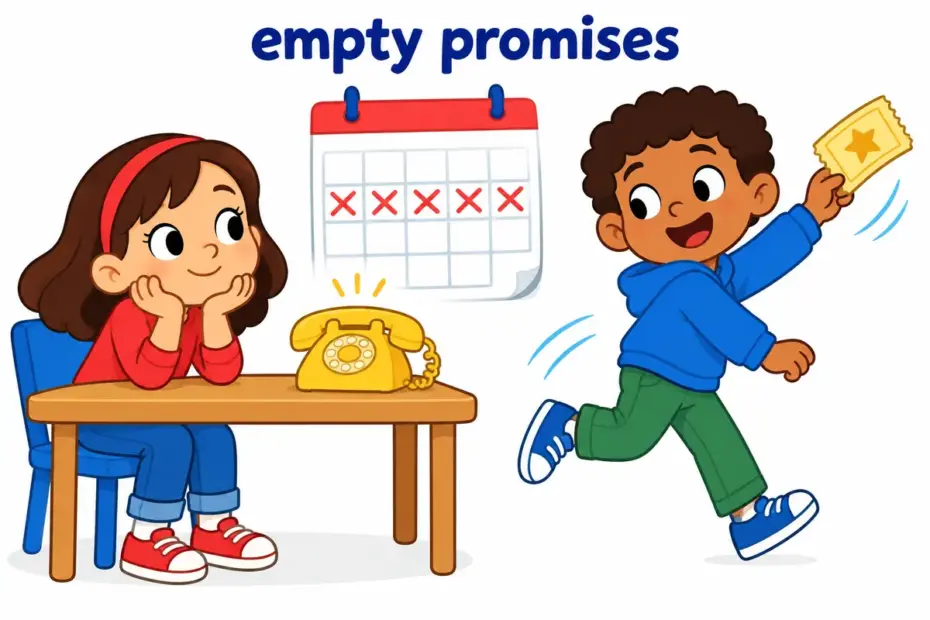
String along means keeping someone waiting with promises you do not intend to keep, or deceiving them while pretending to help. To use string along in a sentence, name the person and the false hope: “The agency strung us along for months.” The verb is transitive, so it always takes the person who is kept waiting.
String along at a glance
- String along is a transitive phrasal verb; its forms are strings along, strung along and stringing along.
- The separated order, string someone along, is the most natural placing of the object.
- The main sense is keeping someone waiting with false hope; a second sense means to accompany a group.
- Typical subjects are people and bodies that control a decision: an employer, a landlord, a supplier.
- The commonest error is reaching for string along when a plain delay is honest and accurate.
What does string along mean?
String along is a transitive phrasal verb meaning to keep someone waiting by making promises you do not mean to keep, or to deceive someone while appearing to include them. The Cambridge entry for string along records both the false-hope sense and the quieter sense of going along with a group. Only the first accuses anyone of bad faith. A promise made with no intention of keeping it can deceive the person who trusts it, while a genuine delay does not deceive anyone at all.
| Sense | Plain meaning | Example sentence |
|---|---|---|
| Keep waiting | Hold someone in false hope so they stay | The club strung the fans along all summer. |
| Deceive | Mislead someone who trusts a promise | He strung her along about the promotion for a year. |
| Accompany | Go along with a group, often without enthusiasm | She strung along with the walking group for one morning. |
One limitation is worth stating plainly. String along always implies that somebody was kept in the dark, so it is the wrong verb for a neutral postponement that everyone understands. A council that publishes a new date has not strung anyone along; a council that keeps promising a date it never sets has.
How do you use string along in a sentence?
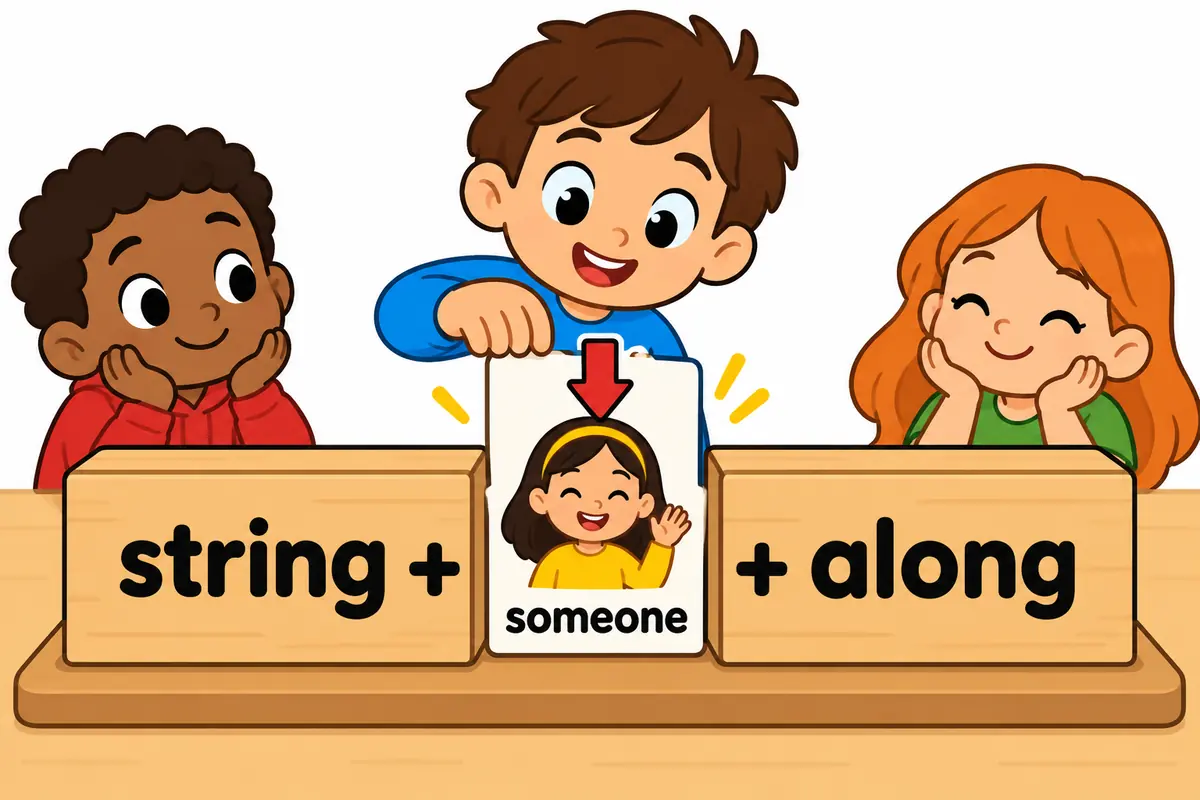
Put the person between the two halves of the verb: string someone along. The phrasal verb is transitive and the particle can be separated from its verb. The joined order string along someone is possible but sounds stiff, and no sentence needs it. Five patterns cover nearly every real use.
| Pattern | Example | What it signals |
|---|---|---|
| string + someone + along | They strung the interns along for weeks. | Object between verb and particle; the natural order. |
| string along + someone | The company strung along the applicants. | Joined order; grammatical but heavier. |
| be strung along | We were strung along by a supplier who never shipped. | Passive voice, pointing at the deceived party. |
| string + someone + along + with + noun | He strung his family along with vague promises. | Names the tool of deception. |
| string along with + someone | She strung along with the choir for a term. | Second sense; here the particle stays fixed to with. |
A neutral postponement reads better with a single verb: choose stall when a decision is simply parked, and reserve string along for the case where false hope is the whole point.
String along in a sentence: examples across contexts
String along changes its tone with the context rather than its meaning. Each example below names who held the false hope, and each shows why the verb carries an accusation that a plain delay does not.
| Context | Example sentence | Why this works |
|---|---|---|
| Classroom | The team strung the substitute teacher along about the missing homework. | A group misleads one adult, so the plural subject fits. |
| Workplace email | The vendor strung our department along with delivery dates it kept moving. | Business writing tolerates the accusation when the facts support it. |
| Customer service | The helpline strung the caller along for an hour before admitting the order was lost. | Names the duration, which measures the cost of the deception. |
| News report | The inquiry found that managers had strung staff along over the merger. | Reported speech keeps the verb distant and factual. |
| Family conversation | Stop stringing your brother along about the trip. | The imperative is common in speech and takes a direct object. |
| Sports reporting | The club strung its season-ticket holders along until the last fixture. | A collective object shows the scale of the false hope. |
| Business negotiation | Do not delay the signature while stringing the buyer along. | Contrasts an honest delay with the dishonest version. |
| Academic writing | The study describes how recruiters string candidates along without ever closing the file. | An impersonal subject suits the formal register. |
| Online review | The agency strung me along for two months and then stopped replying. | First person is normal in a complaint. |
String along vs lead on
lead on is the closest rival and the one writers substitute most often. Both describe keeping someone interested under false pretences, but lead on centres on hopeful or romantic expectation, while string along stresses time passing through promises that keep being deferred. Where the aim is only to state something untrue, mislead is broader and carries no promise of duration.
| Attribute | string along | lead on |
|---|---|---|
| Core meaning | Keep someone waiting through broken promises | Raise hope that will not be met |
| What is promised | A decision, date or outcome | Interest, affection or a chance |
| Typical object | A person kept waiting | A person given false hope |
| Duration focus | Long, measured in weeks or months | Brief, often one conversation |
| Register | Neutral to business | Personal and conversational |
| What it implies | Deliberate, repeated deferral | Flirtation or empty encouragement |
Verdict: choose lead on when the false hope is personal or romantic, and string along when the deception is drawn out over time by promises that are never meant to land.
Word forms and grammar of string along
String along inflects through its base verb, so only string changes. The past tense is strung, never stringed. The adjective stringent shares the root string but means strict, so it has nothing to do with false hope.
| Form | Part of speech | Example |
|---|---|---|
| string along | phrasal verb, base | They will string the buyer along again. |
| strings along | phrasal verb, third person singular | She strings him along every weekend. |
| strung along | phrasal verb, past and past participle | The landlord strung them along for a year. |
| stringing along | phrasal verb, present participle | He is stringing the committee along. |
| string along with | phrasal verb, second sense | We strung along with the parade. |
| stringent | adjective, different meaning | Stringent rules apply to the tender. |
Common mistakes with string along
- Incorrect:
The council strung along.Correct: The council strung the residents along. Rule: String along is transitive, so the person kept waiting cannot be left out. - Incorrect:
She was stringing along by his promises.Correct: She was strung along by his promises. Rule: The passive needs the past participle strung. - Incorrect:
He stringed her along for months.Correct: He strung her along for months. Rule: The past tense of string is strung, not stringed. - Incorrect:
They strung along the decision.Correct: They stalled the decision. Rule: The object of string along must be a person, not a plan or a date. - Incorrect:
We strung him along to finish the report.Correct: We strung him along with vague praise. Rule: Use with to name the means, not to to name a purpose.
Practice using string along
Work through the six items, then read the reasoning rather than only the answer.
- Fill the gap: The landlord ______ the tenants along about the repairs for a whole year.
- Choose the better word: The schedule slipped, but nobody was (strung along / delayed) on purpose.
- Correct the error: The manager stringed the candidate along about the start date.
- Build a sentence: use be strung along about a customer waiting for a refund.
- Spot the register: which belongs in a news report — managers were accused of stringing staff along, or the boss totally strung us along?
- Rewrite with a neutral verb: He strung the buyer along for three months. Replace the phrasal verb with a single honest verb.
Answers
- strung — the past tense of string is strung, and the tenants are the object kept waiting.
- delayed — a slipped schedule with no false promise is a delay, not deception.
- The manager strung the candidate along about the start date — never stringed.
- Model answer: The customer was strung along for weeks before the refund appeared.
- Managers were accused of stringing staff along — a report avoids the casual intensifier and the first person.
- The buyer was stalled for three months — stall drops the accusation of bad faith.
The bottom line
Use string along in a sentence when somebody is kept waiting by promises that are never meant to be kept, and put the person between the two halves of the verb. The two details that settle most sentences are these: the verb is transitive and separable, so string someone along is the natural order, and the phrase carries an accusation, so an honest delay needs different words.
Frequently asked questions about string along
Is string along separable?
Yes. The object can sit between the verb and the particle, and that is the natural order in most sentences. Writers usually prefer they strung the interns along to the joined form they strung along the interns, which is grammatical but reads more heavily. In the passive the two halves stay together.
Is string along the same as lead on?
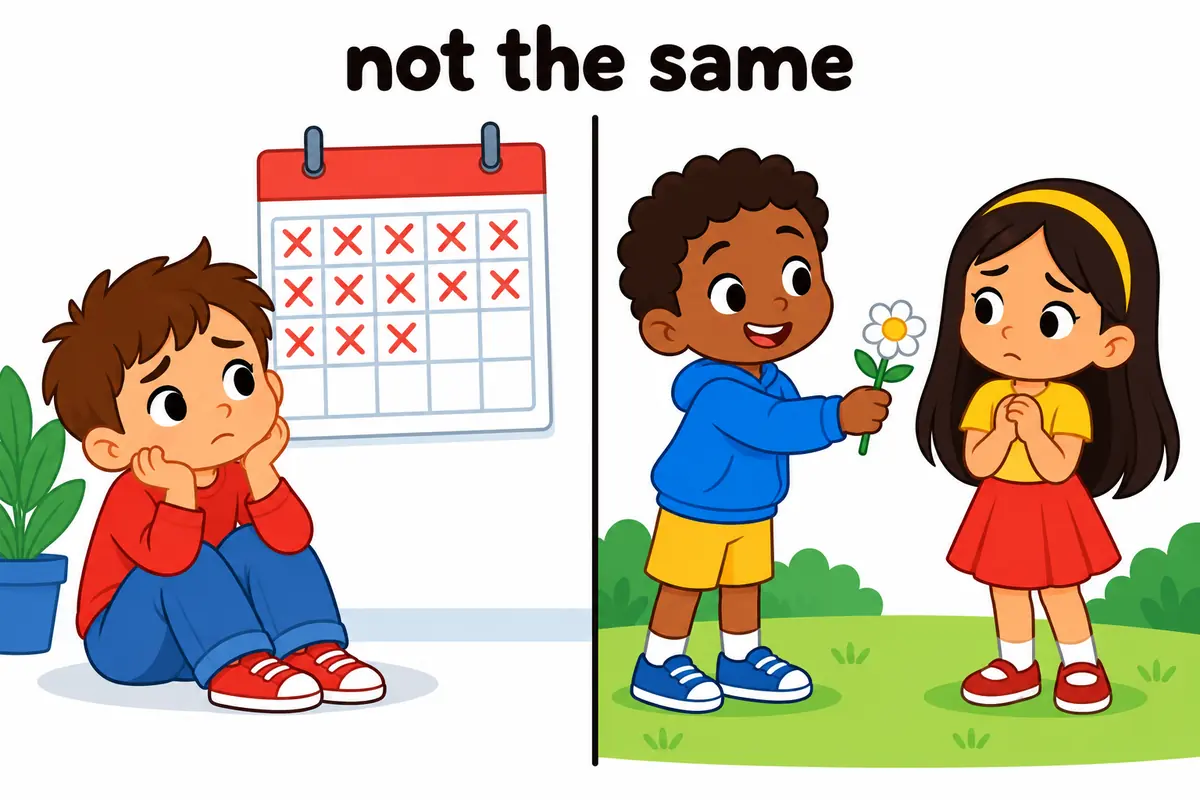
The two overlap but are not the same. Lead on centres on false hope that is often romantic or personal, while string along stresses time passing through promises that keep being deferred. A person can be led on in one conversation, but stringing someone along usually lasts weeks or months.
Can string along mean something positive?
Only in its rarer second sense, where it means to accompany a group rather than to deceive anyone. In that use the verb is followed by with, as in she strung along with the choir. Every other modern use carries the idea that somebody was kept in the dark and misled.
What is the past tense of string along?
The past tense and past participle are both strung, so the correct forms are he strung her along and she was strung along. Stringed is a mistake that appears because the verb looks regular, but stringed survives only as an adjective for instruments, as in a stringed quartet.
Have you ever heard someone use the phrase “string along” in a conversation and wondered what it meant? In essence, to “string along” someone is to deceive or manipulate them into continuing a relationship or activity, often by giving false hope or leading them on.
Imagine if someone is not being completely honest with you or is keeping you engaged without any real intention of committing. This is like stringing you along, leaving you unsure of where you stand or what their true intentions are.
7 Examples Of String Along Used In a Sentence For Kids
- String along beads to make a pretty necklace.
- Let’s string along colorful paper to make a beautiful garland.
- You can string along shells to create a lovely bracelet.
- Use a needle to string along buttons for a fun craft activity.
- We can string along leaves to make a fantastic nature mobile.
- String along pom poms for a playful decoration.
- String along bells to make a jingly wind chime.
14 Sentences with String Along Examples
- String along with your classmates during group projects to ensure everyone stays on the same page.
- Make sure to string along with the current syllabus to stay updated with the course requirements.
- It’s important to string along with study groups to share resources and study materials.
- Don’t forget to string along with the deadlines for assignments and exams to avoid last-minute stress.
- String along with networking events to connect with professionals in your field of study.
- Join clubs and organizations on campus to string along with extracurricular activities.
- It’s beneficial to string along with internships to gain practical experience in your field.
- String along with time management techniques to balance academics and personal life effectively.
- Don’t hesitate to string along with career fairs to explore job opportunities and internships.
- Utilize online resources and webinars to string along with the latest trends and developments in your industry.
- Stay connected with alumni networks to string along with potential job prospects and mentorship opportunities.
- Take advantage of workshops and seminars to string along with skill development and personal growth.
- Stay engaged in class discussions and debates to string along with academic discourse and critical thinking.
- Use study apps and online platforms to string along with digital tools for enhanced learning and productivity.
How To Use String Along in Sentences?
String Along is a phrase that means to deceive or manipulate someone by giving false hope or promises while actually having no intention of following through. To use String Along in a sentence, start by identifying a situation where someone is leading another person on. For example, “He always tells her he’ll come visit, but he never does; he’s just stringing her along.”
Another way to use String Along in a sentence is to describe a situation where someone is being taken advantage of by being misled. For instance, “The salesperson kept stringing along the customer with promises of a big discount, but in the end, the price remained the same.”
When using String Along in a sentence, it is important to accurately convey the sense of false hope or manipulation being portrayed. You can also use it in past or future tenses, such as “She felt foolish for allowing herself to be stringed along for so long” or “I suspect he will continue to string her along with empty promises.”
Overall, using String Along effectively in a sentence requires an understanding of its meaning and context. Remember to always provide a clear example of how someone is being deceived or led on to accurately convey the term’s intention.
Conclusion
In conclusion, when someone is “stringing along” another individual, they are leading them on with false hope, promises, or intentions. This can often result in confusion, frustration, and emotional hurt for the person being strung along. It is essential to be honest and transparent in all relationships to avoid stringing someone along and causing unnecessary pain.
Being mindful of how our actions and words may affect others is crucial in building and maintaining healthy relationships. To prevent stringing someone along, clear communication, honesty, and respect are vital components. By being open and upfront about intentions and feelings, we can foster trust, understanding, and genuine connections with those around us.


