
Suck up has two lives in English: as an informal phrasal verb it means to flatter someone in authority to win favour, as in a pupil sucking up to a teacher, and as a literal verb it means to draw up liquid or dust by suction. The two senses follow different grammar and different registers.
Suck up at a glance
- Suck up is a phrasal verb; its forms are sucks up, sucked up and sucking up.
- The figurative sense always takes to before a person: suck up to the boss.
- The literal sense takes a direct object, as in suck up the water.
- The figurative sense is informal and disapproving, so it belongs in speech and commentary, not in a report.
- The commonest error is writing suck up for a person instead of suck up to a person.
What does suck up mean?
Suck up is a phrasal verb meaning either to flatter someone in authority in order to gain an advantage, or to draw up a liquid, gas or loose material by suction. The Cambridge entry for suck up marks the flattery sense as informal and disapproving, which is the single most useful thing to know about it. The literal sense is neutral and common in science and home repair. A third, looser sense describes a system that swallows resources, as when costs suck up a budget.
| Sense | Plain meaning | Example sentence |
|---|---|---|
| Flatter for advantage | Praise a superior to win favour | He sucks up to the new manager at every meeting. |
| Draw up by suction | Lift liquid, dust or air | The pump sucks up water from the well. |
| Swallow resources | Consume money, time or attention | Repairs sucked up the whole maintenance budget. |
One limitation matters. The flattery sense accuses somebody of a motive, so it is too blunt for a performance review or an email that might be forwarded; flatter or ingratiate carries the same idea with less sting. The verb also says nothing about whether the praise was deserved.
How do you use suck up in a sentence?
Keep the two senses apart by their grammar. The figurative sense is inseparable and takes to before the person; the literal sense takes a direct object and may split around it.
| Pattern | Example | What it signals |
|---|---|---|
| suck up to + person | She sucks up to the coach before every match. | The disapproving sense; the person is senior and the motive is gain. |
| suck up + thing | The vacuum sucked up the crumbs. | Literal suction, with the stuff lifted as the object. |
| suck + object + up | He sucked the last drop up through a straw. | The literal sense is separable, so the object may sit inside the phrase. |
| be sucked up | All the loose sand was sucked up by the machine. | Passive voice, common in technical description. |
| suck it up | The team sucked it up and played on. | A separate fixed idiom meaning endure, where it is required. |
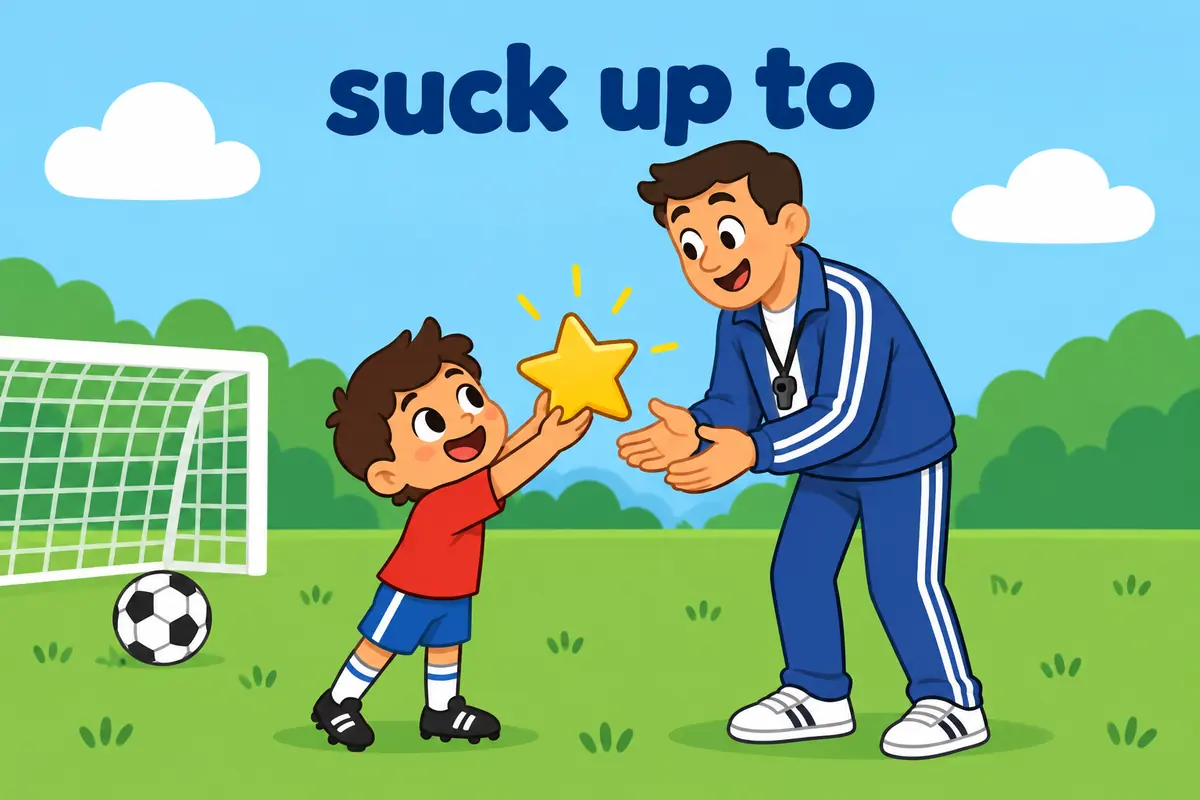
Suck up in a sentence: examples across contexts
The same words behave very differently depending on which sense is active. The eight sentences below move from a science bench to a sports column, and each one makes clear whether suction or flattery is meant.
| Context | Example sentence | Why this works |
|---|---|---|
| Science lesson | The straw sucks up the coloured water in the beaker. | A clear physical demonstration of the literal sense. |
| Home repair | The wet vacuum sucked up the spilled milk in one pass. | The object is the mess, so suction is unmistakable. |
| Workplace chat | He sucks up to the director every time she visits. | The to pattern marks the informal flattery sense. |
| School playground | Stop sucking up to the teacher and do your share. | A spoken rebuke, which is where this sense belongs. |
| News report | Interstate pipelines suck up most of the local water supply. | The resource sense in a factual, public register. |
| Economics writing | The grant was sucked up by administrative costs. | The passive shows money disappearing into overheads. |
| Gardening guide | A mature oak can suck up hundreds of litres in a dry week. | The literal sense used as neutral, technical description. |
| Sports column | Fans accused the captain of sucking up to the owners. | The disapproving sense in commentary, stated as an accusation. |
Only two of these sentences describe liquid, yet all eight keep the same core image of something being drawn upward, which is why the metaphor for flattery still feels literal.
Suck up vs flatter and fawn
Suck up is the blunt, spoken member of a small family of words about praise. Readers often reach for flatter, which can be sincere, or for fawn, which usually describes visible devotion rather than words.
| Attribute | suck up | flatter | fawn |
|---|---|---|---|
| Core job | Praise a superior for gain | Praise, sincerely or not | Show exaggerated devotion |
| Motive | Always self-interested | May be honest admiration | Seeks approval |
| Grammar | suck up to a person | flatter a person | fawn over a person |
| Register | Informal, disapproving | Neutral | Disapproving, literary |
| Typical behaviour | Well-timed compliments | Compliments or praise | Attention, gifts, imitation |
Verdict: choose suck up when you mean self-interested flattery of a superior in plain speech, flatter when the praise may be genuine, and fawn when the behaviour is visible devotion rather than words. The formal noun for a person who sucks up is a toady, which suits written criticism better than the phrasal verb.
Word forms and grammar of suck up
Suck up inflects regularly and has a noun form that drops the space. The table also lists the idiom that learners confuse with it.
| Form | Part of speech | Example |
|---|---|---|
| suck up | base phrasal verb | Do not suck up to the referee. |
| sucks up | third person singular | She sucks up to whoever is in charge. |
| sucked up | past and past participle | The hose sucked up the leaves. |
| sucking up | present participle | He was sucking up to the judge. |
| suck-up | noun, informal | The new intern is a suck-up. |
| suck it up | fixed idiom, endure | She sucked it up and finished the race. |
Writers who want a formal equivalent often turn to ingratiate, which takes oneself with, as in ingratiate oneself with the board.
Common mistakes with suck up
- Incorrect:
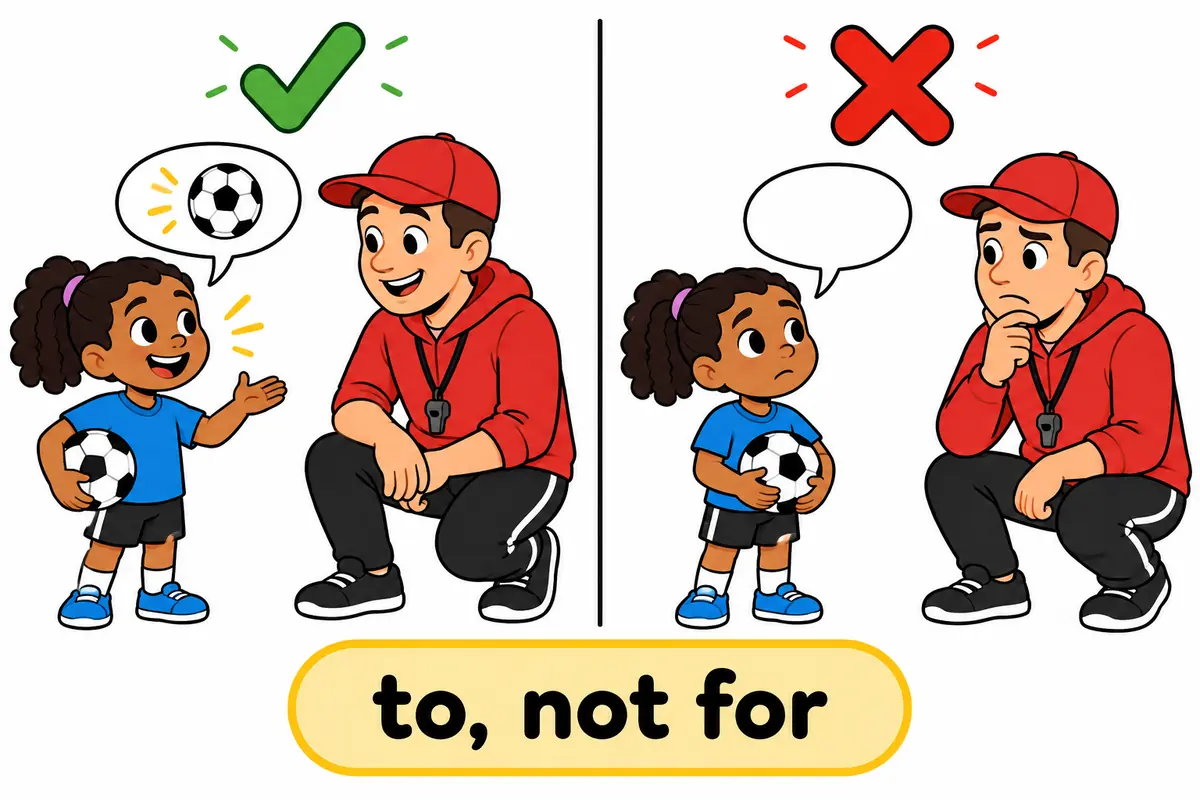
He is always sucking up for the boss.Correct: He is always sucking up to the boss. Rule: The flattery sense marks the person with to, never for. - Incorrect:
Just suck up and finish the race.Correct: Just suck it up and finish the race. Rule: The idiom about enduring hardship needs the pronoun it. - Incorrect:
He sucked the manager up before the meeting.Correct: He sucked up to the manager before the meeting. Rule: Only the literal sense is separable; the flattery sense never splits. - Incorrect:
The annual report notes that staff suck up to management.Correct: The annual report notes that staff flatter management. Rule: Suck up is informal and disapproving, so formal writing uses a neutral verb.
Practice using suck up
Work through the six items, then read the reasons, because the sense matters more than the form.
- Fill the gap: The old drain ______ rainwater from the whole yard.
- Choose the better word: The intern was clearly (sucking up / flattering) to win a permanent contract.
- Correct the error: She has been sucking up for the principal all term.
- Build a sentence: use suck up in its literal sense about a sponge and a spill.
- Spot the register: which belongs in a formal review, The report notes that staff flatter senior managers, or The report notes that staff suck up to senior managers?
- Rewrite with the noun: He always flatters the coach. Use suck-up instead.
Answers
- sucks up – a drain physically draws water, so the literal sense and a singular subject are correct.
- sucking up – the motive is gain and the register is spoken and disapproving.
- She has been sucking up to the principal all term – the person is marked with to.
- Model answer: The sponge sucked up the spilled juice in seconds.
- The report notes that staff flatter senior managers – a formal review avoids the informal, accusatory verb.
- He is such a suck-up – the noun is hyphenated and needs an article.
The bottom line
Use suck up in a sentence as either a literal verb about suction or an informal, disapproving verb about flattery, and let the grammar tell the reader which one you mean. The two details that decide most sentences are that flattery takes to before a person and that the flattery sense never splits. If the sentence must stay formal, choose flatter or ingratiate instead.
Frequently asked questions about suck up
Is suck up formal or informal?
The flattery sense is informal and disapproving, so it belongs in speech, chat and commentary rather than in reports or essays. The literal sense about suction is neutral and appears freely in science and home-repair writing. Match the sense to the register: suck up to the boss is spoken, while water is sucked up a pipe is technical.
What does it mean to suck up to someone?
To suck up to someone is to praise or please a person in authority in order to gain an advantage, and the phrase carries clear disapproval. The praise is usually well timed and aimed at a superior, such as a manager or a teacher. A neutral alternative is flatter, and a formal one is ingratiate oneself with.
Is suck up one word or two?
As a verb it is two words, suck up, as in suck up the water. The noun is hyphenated and informal, a suck-up, meaning a person who flatters for gain. Keep the two forms apart, because the noun takes an article and the verb does not.
What is the difference between suck up and suck it up?
Suck up means to flatter someone for advantage, or to draw something up by suction. Suck it up is a separate idiom meaning to endure something unpleasant without complaint. The words look similar but share no meaning, so say suck it up and finish when you mean tolerate, and suck up to the coach when you mean flatter.
Have you ever heard of the term “suck up”? This colloquial expression refers to someone who tries excessively hard to gain favor or approval from others, often through flattery or insincere gestures.
“Suck up” can be used to describe a person who ingratiates themselves to authority figures or peers in order to advance in a particular situation, whether it be in the workplace, school, or social settings.
7 Examples Of Suck Up Used In a Sentence For Kids
- The vacuum cleaner can suck up all the dirt on the floor.
- I don’t like when people try to suck up to the teacher for better grades.
- The straw can suck up the juice from the glass.
- Don’t forget to suck up the spilled milk with a paper towel.
- The machine can suck up leaves from the garden.
- Be careful not to suck up too much water with the sponge.
- The spider can suck up its prey with its web.
14 Sentences with Suck Up Examples
- The college professor seems to appreciate when students suck up to him by participating actively in class discussions.
- Some students suck up to their classmates to form study groups and get help with their coursework.
- It’s common for students to suck up to their internship supervisors in the hope of securing a job offer after graduation.
- Some students suck up to the college canteen staff to get extra servings or discounts on food.
- It’s not uncommon to see students suck up to senior students to get access to previous years’ exam papers for reference.
- Students often try to suck up to guest speakers during seminars or workshops to network and potentially secure future job opportunities.
- Some students suck up to college administration to get special permissions or favors for certain events or projects.
- Students might suck up to the college librarian to get priority access to study materials or reserve study rooms.
- It’s not unusual to see students suck up to guest lecturers visiting from other universities in the hopes of gaining valuable insights or recommendations.
- Some students might suck up to academic advisors to get preferential treatment when it comes to course selections or project assignments.
- Students often suck up to student council members to have their voices heard on important college matters or to influence decision-making processes.
- It’s common for students to suck up to senior professors to secure recommendation letters for further studies or job applications.
- Some students suck up to college event organizers to get free passes or VIP treatment at various cultural or sports events.
- It’s not uncommon for students to suck up to college alumni to gain insights into potential career paths or internship opportunities.
How To Use Suck Up in Sentences?
To use “Suck Up” in a sentence, you can follow these steps:
-
Identify Relationship: Think about the relationship between two people where one person is trying to gain favor with the other.
-
Understand Meaning: “Suck Up” means to try to please or impress someone, especially in order to get some benefit.
-
Form Sentence: Start the sentence with the person doing the sucking up. For example, “Jane tried to suck up to her boss by complimenting his work.”
-
Context: Provide context to make the sentence more meaningful. For instance, “During the meeting, John kept trying to suck up to the professor in hopes of getting a better grade.”
-
Tone: Consider the tone of the sentence. Is it playful, serious, or neutral? Adjust the tone accordingly. “I noticed how Lisa always tries to suck up to our manager when she wants time off.”
-
Practice: To get comfortable using “Suck Up” in a sentence, try incorporating it in various contexts and with different people.
Remember that using “Suck Up” in a sentence should be done tactfully and appropriately in conversation. By following these steps, you can effectively incorporate this term into your language skills.
Conclusion
In various contexts, “suck up” is used to describe someone ingratiating themselves with another individual in a flattering or obsequious manner. This behavior is often perceived negatively, as it can be seen as insincere or manipulative. Examples of “suck up” sentences include “She always sucks up to the boss to secure promotions” and “He has a reputation for sucking up to teachers for better grades.”
Overall, “suck up” sentences highlight how people may attempt to gain favor or advantages through flattery or excessive compliments. This behavior can lead to distrust and resentment from others, as genuine relationships are built on mutual respect and honesty rather than attempts to manipulate or gain an unfair advantage.


