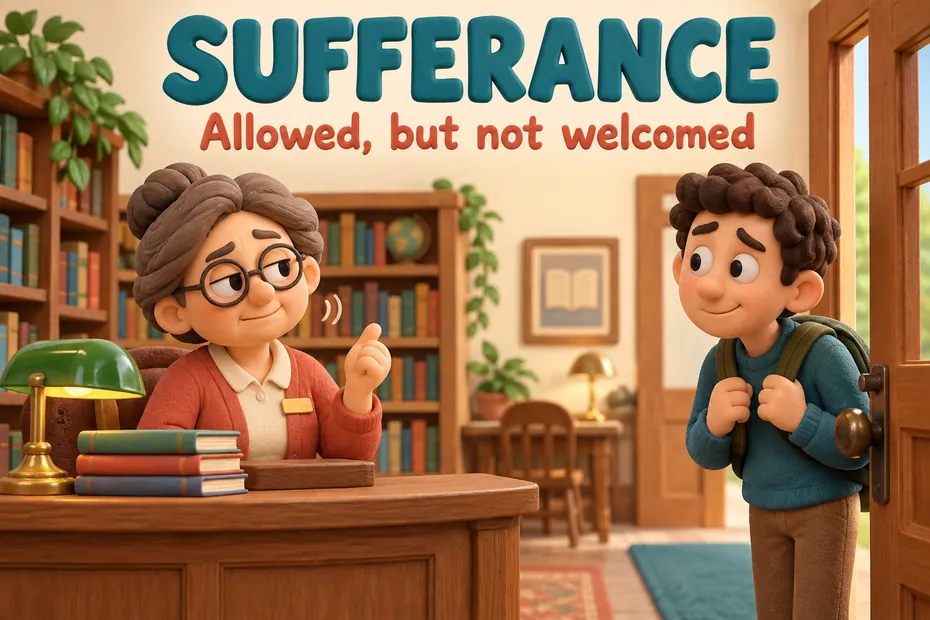
How do you use sufferance in a sentence?
Sufferance is a noun that can mean patient endurance or permission implied by someone’s willingness to tolerate something. In the phrase on sufferance, a person or activity is allowed to remain, usually without enthusiastic approval. For example: “The visitors stayed on sufferance until the meeting ended.”
- Use on sufferance for tolerated presence or activity.
- By someone’s sufferance identifies the person allowing something.
- Patient sufferance emphasizes endurance in a more formal register.
- For everyday pain or distress, suffering usually sounds more natural.
What does on sufferance mean?
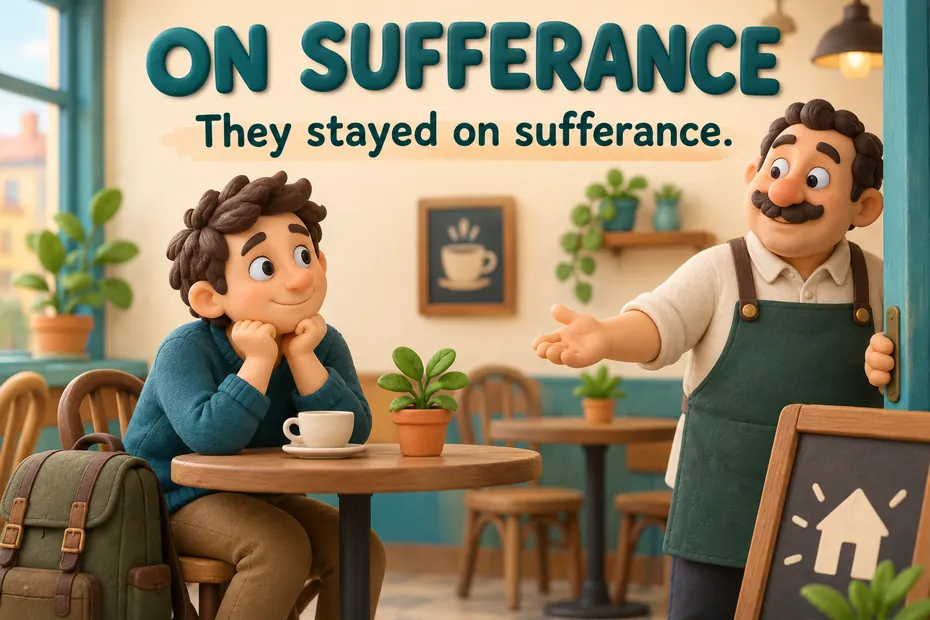
On sufferance means that something continues because another person permits or tolerates it. The permission may be reluctant, conditional, or simply implied by an absence of interference. The phrase focuses on the arrangement between people, rather than on how much pain someone experiences.
Imagine a club member bringing an uninvited friend to a planning session. The organizer lets the friend remain but makes clear that the invitation does not extend to future sessions. You could write, “The extra guest attended on sufferance.” That sentence does not say the guest suffered; it says the organizer tolerated the attendance.
Contrast “The guests remained with our approval” and “The guests remained on sufferance.” The first sounds positive or neutral. The second suggests that the guests’ welcome is limited. This difference makes the phrase useful in fiction, commentary, and formal descriptions of uneasy relationships.
Sufferance sentence patterns and original examples
| Pattern | Original example | Meaning |
|---|---|---|
| Remain on sufferance | The noisy group remained in the reading room on sufferance. | The group was tolerated. |
| Exist on sufferance | The unofficial committee existed on sufferance. | Others allowed it to continue. |
| By someone’s sufferance | The stall stood beside the gate by the owner’s sufferance. | The owner did not interfere. |
| Patient sufferance | The narrator describes the villagers’ patient sufferance. | The villagers endured hardship. |
The table’s examples illustrate distinct senses. Do not automatically interpret every occurrence as reluctant permission: the surrounding words determine the intended meaning. On sufferance is a strong signal for toleration; patient sufferance points toward endurance. A sentence about distress without either signal may be clearer with suffering.

Is sufferance the same as suffering?
Sufferance and suffering overlap in some dictionary senses, but they are not interchangeable in every sentence. Merriam-Webster records endurance and pain senses as well as permission implied by noninterference. Its entry therefore supports more than one meaning. The practical distinction for learners is to recognize the familiar permission phrase and choose clear everyday wording elsewhere.
The older examples below are preserved, but some use sufferance where modern conversational English would more naturally use suffering, patience, or endurance. “The lack of funds caused suffering” clearly describes distress. “We showed patience while waiting” clearly describes behavior. “The visitors stayed on sufferance” clearly describes tolerated presence. Selecting the intended meaning first prevents an impressive-looking word from obscuring a simple message.
For example, “She displayed sufferance during the delay” is possible in an endurance sense but sounds formal and unusual in ordinary conversation. “She waited patiently during the delay” is easier to understand. By contrast, replacing sufferance with suffering in “The visitors stayed on sufferance” would destroy the intended permission meaning.
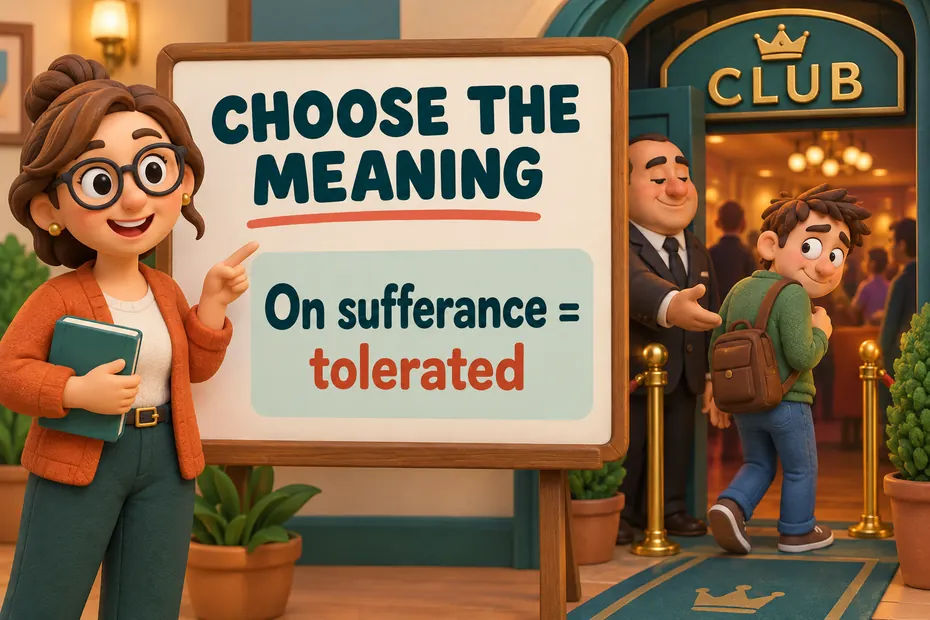
How can you write a clear sentence with sufferance?
- Decide whether you mean toleration or endurance.
- For toleration, identify who is allowed to remain or continue.
- Add on sufferance after the action or state: “The arrangement continued on sufferance.”
- If necessary, name the person providing permission: “The arrangement continued by the director’s sufferance.”
- Read the sentence aloud. If the word creates confusion, replace it with a plainer phrase.
A useful editing test is to substitute “only because someone tolerated it.” If that paraphrase preserves the meaning, on sufferance probably expresses the right idea. “The arrangement continued only because the director tolerated it” explains the example without requiring the reader to infer a connection with pain.
Frequently asked questions about sufferance
Is sufferance a noun or a verb?
Sufferance is a noun. Use it in a noun phrase such as “on sufferance” or “patient sufferance.” The related verb is suffer. Avoid making sufferance perform a verb’s job: write “They endured the delay” rather than “They sufferanced the delay.”
Does on sufferance always mean someone is unwelcome?
The phrase often suggests a limited or reluctant welcome, but context supplies the precise attitude. A speaker may emphasize tolerance without describing outright hostility. If your meaning is ordinary, willing permission, “with permission” is usually clearer and avoids implying a strained relationship.
Can I use sufferance in casual writing?
You can, especially in the phrase “on sufferance,” but readers may find the word formal. Choose it when the distinction between a full welcome and mere toleration matters. In a simple message about waiting, pain, or difficulty, familiar words will usually communicate faster.
What is a short example of sufferance?
“The guest remained on sufferance” is a short, complete example. The guest is the subject, remained is the verb, and on sufferance explains the conditions of the stay. Adding “until noon” would specify how long the tolerated visit lasted.
Source: Merriam-Webster’s sufferance entry documents the noun’s senses. The examples and editing exercises above are original teaching examples.
Have you ever heard of the term “sufferance”? Sufferance can be described as the state of enduring pain, hardship, or adversity without complaint. It involves bearing through challenging circumstances with patience and resilience.
In our daily lives, we may encounter moments of sufferance, whether it be dealing with physical discomfort, emotional distress, or difficult situations at work or home. Learning how to navigate these periods of sufferance can help us build character, strength, and a greater sense of empathy towards others facing their own struggles.
7 Examples Of Sufferance Used In a Sentence For Kids
- Sufferance means enduring a little bit of discomfort.
- Sometimes we have to show sufferance when things don’t go our way.
- We should not cause others sufferance with our actions.
- Sufferance helps us become stronger and patient.
- Showing sufferance can make us kinder and more understanding.
- It’s important to have sufferance when waiting for our turn.
- Let’s practice sufferance by being polite and helpful to others.
14 Sentences with Sufferance Examples
- Sufferance is not an option when it comes to staying up all night to finish an assignment.
- As college students, we often have to endure sufferance during exam week.
- The lack of funds makes sufferance a common experience for many students trying to make ends meet.
- Group projects can sometimes lead to feelings of sufferance if not everyone pulls their weight.
- Balancing academics and extracurricular activities can sometimes result in sufferance in terms of personal time and relaxation.
- The long queues at the cafeteria during lunchtime can cause a sense of sufferance for hungry college students.
- The limited parking spots on campus often lead to students having to park far away, contributing to feelings of sufferance.
- The strict attendance policy enforced by some professors can lead to students feeling a sense of sufferance when they have emergencies or other obligations.
- Juggling multiple deadlines for assignments and projects can result in a sense of sufferance for college students.
- The slow internet speed in the hostel can cause sufferance for students trying to complete online assignments or research.
- Roommate conflicts can create an atmosphere of sufferance in the dormitory, affecting the well-being of college students.
- The pressure to excel in academics and secure a good job after graduation can lead to feelings of sufferance among students.
- The intense competition for internship opportunities can result in sufferance for college students trying to gain valuable work experience.
- Being away from family and friends can sometimes lead to feelings of sufferance and loneliness for out-of-town college students.
How To Use Sufferance in Sentences?
Sufferance is used to describe the act of enduring pain, distress, or hardship without complaining. In a sentence, this word can be used when talking about tolerating something difficult or unpleasant.
Here is a beginner’s guide on how to use sufferance in a sentence:
- Start your sentence with a subject (e.g., “She” or “He”).
- Use the word sufferance directly after the subject to show who is enduring the hardship.
- Add a verb after sufferance to explain the action that is being endured.
- Provide context or details to complete the sentence and make it clear.
For example, “She endured the pain with great sufferance while waiting for the ambulance to arrive.”
Remember that sufferance is usually followed by an action or situation that is causing discomfort. It is important to use this word to express the idea of enduring something, especially when it is challenging.
It is also helpful to read and listen to how others use sufferance in sentences to get a better sense of its meaning. Practicing using the word in various sentences will help you become more comfortable incorporating it into your everyday vocabulary.
Conclusion
In conclusion, the concept of “sufferance” is evident in various contexts, where individuals endure pain, hardship, or distress. Through sentences such as “He bore the loss with great sufferance” and “The patients showed immense sufferance during their treatments,” the word highlights the resilience and tolerance exhibited in challenging situations. These examples showcase how sufferance can be a test of one’s ability to endure and persevere through difficulties. Understanding sufferance allows us to acknowledge the strength and fortitude required to face adversity, emphasizing the importance of resilience in overcoming life’s obstacles.



