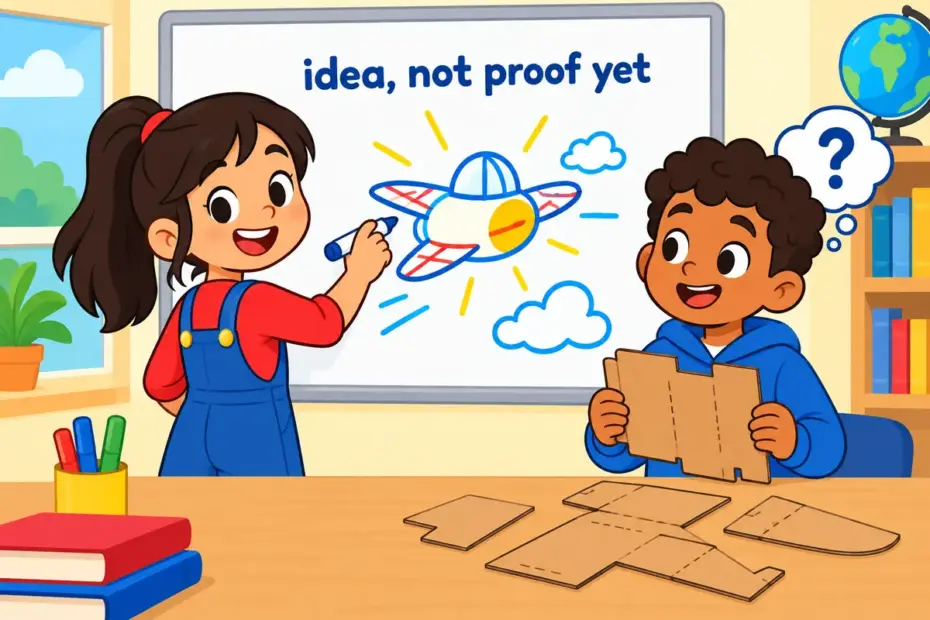
Theoretical means based on ideas or possible situations rather than on practice or proven fact. To use theoretical in a sentence, contrast it with what actually exists: “The savings are theoretical until the plan is funded.” It is the standard adjective for an unproven possibility or a subject studied as pure knowledge.
Theoretical at a glance
- Theoretical is an adjective meaning based on ideas or possible situations rather than practice.
- It has two main senses: studied as pure knowledge, and possible in principle but not yet real.
- It usually follows be, remain or stay, or stands before a noun such as framework or risk.
- Its commonest partners are model, framework, risk and possibility.
- The usual mistake is using it for something merely unlikely or imaginary.
What does theoretical mean?
Theoretical is an adjective meaning concerned with ideas and principles rather than with practice or proven fact. The Cambridge entry for theoretical records both senses, and they answer different questions. The first sense labels a subject studied as pure knowledge, as in theoretical physics; the second marks a possibility that has not yet been tested. Where a scenario is invented only to explore consequences, hypothetical is the more exact word. The table keeps the senses apart.
| Sense | Plain meaning | Example sentence |
|---|---|---|
| Based on ideas | Concerned with principles rather than practice | Theoretical physics studies models, not machines. |
| Possible in principle | Not yet real or proven | The risk is theoretical until the fault is found. |
One limitation is worth stating plainly. Theoretical does not mean false or useless, and it does not mean unlikely. It marks the distance from practice, so a theoretical benefit may still be genuine once it is tested. In an everyday sentence, abstract is the closer word for something hard to picture, and where an idea cannot survive real conditions at all, impractical is the harsher word.
How do you use theoretical in a sentence?
Theoretical behaves like a regular adjective, and the contrast with practice is usually what gives the sentence its point. The table shows the patterns that carry that contrast clearly.
| Pattern | Example | What it signals |
|---|---|---|
| theoretical + noun | A theoretical model guides the search. | Labels knowledge that rests on ideas. |
| be or remain + theoretical | The savings remain theoretical for now. | Marks a benefit not yet realised. |
| purely or merely + theoretical | The danger was purely theoretical. | Signals that no case has been observed. |
| theoretical + rather than + alternative | The paper is theoretical rather than experimental. | Sets one kind of work against another. |
| in theory / theoretically | Theoretically, the bridge can hold. | Introduces the idea before testing it. |
Name the gap explicitly, and the adjective becomes a precise comment on how far an idea has travelled toward proof.
Theoretical in a sentence: examples across contexts
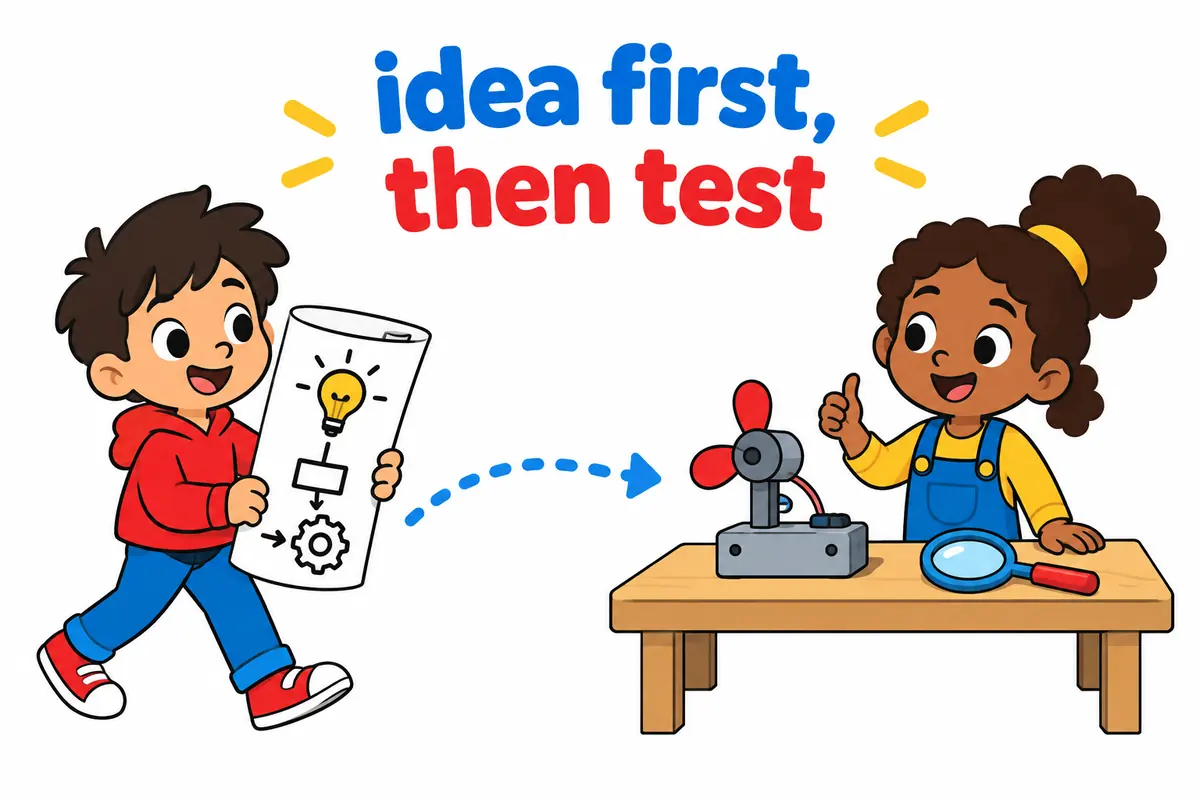
The adjective keeps one job everywhere: it marks the gap between an idea and its proof. Each sentence below shows that gap in a different setting.
| Context | Example sentence | Why this works |
|---|---|---|
| Classroom | The lesson stays theoretical until the pupils run the experiment themselves. | Contrasts book knowledge with hands-on practice. |
| Science writing | Theoretical models predict a particle that no detector has yet seen. | Labels work that rests on mathematics rather than observation. |
| Business email | The savings are theoretical until the supplier signs the contract. | Marks a benefit that exists only on paper. |
| News report | Officials dismissed the risk as theoretical rather than immediate. | Sets up the contrast between possible and present danger. |
| Legal writing | The court dealt with a theoretical point that did not affect the outcome. | Describes a question of principle rather than practice. |
| Conversation | In theory it works, but that is theoretical, is it not? | Repeats the word to stress the gap between idea and reality. |
| Academic writing | The paper offers a theoretical framework rather than new data. | Names the kind of contribution the work makes. |
| Sports report | Once the score was settled, the last over was purely theoretical. | Signals a contest whose result no longer matters. |
| Product note | A theoretical battery life of ten hours rarely survives real use. | Flags a figure based on ideal conditions. |
Theoretical vs hypothetical
Theoretical and hypothetical both describe things that are not yet real, but they come from different directions. The table sets out the split, and academic names the register both words tend to belong to.
| Attribute | theoretical | hypothetical |
|---|---|---|
| Core meaning | Existing in idea, not yet in practice | Imagined for the sake of argument |
| Connection to reality | May become real once tested | Assumed, and often never intended |
| Typical use | Science, economics and principle | Tests, teaching and thought experiments |
| Common phrase | a theoretical risk | a hypothetical question |
| Register | Neutral and academic | Neutral and common in speech |
Verdict: use theoretical for ideas that have not yet been tested in practice and hypothetical for a scenario invented to explore what would follow.
Word forms and grammar of theoretical
Theoretical belongs to the family of theorem, and the noun theory supplies the root for several related forms. The table lists the ones a learner is most likely to meet.
| Form | Part of speech | Example |
|---|---|---|
| theory | noun | The theory explains the pattern. |
| theoretical | adjective | A theoretical model guides the search. |
| theoretically | adverb | Theoretically, the bridge can hold. |
| theoretic | adjective, rare | A theoretic objection was raised. |
| theoretician | noun | The theoretician published a proof. |
The noun theoretician names a person who works mainly with ideas, and it is the natural subject for a sentence about pure research.
Common mistakes with theoretical
- Incorrect:
Theoretical, the machine should work.Correct: Theoretically, the machine should work. Rule: The sentence needs the adverb theoretically, not the adjective. - Incorrect:
A theoretical of gravity explains the orbit.Correct: A theory of gravity explains the orbit. Rule: The noun is theory; theoretical is the adjective. - Incorrect:
It is only theoretical that it will rain, so take a coat.Correct: It may rain, so take a coat. Rule: Theoretical describes ideas, not everyday weather forecasts. - Incorrect:
She is very theoretical in her friendships.Correct: She is very thoughtful in her friendships. Rule: Theoretical describes knowledge and models, not personal warmth. - Incorrect:
The plan is theoretical for the team.Correct: The plan remains theoretical for the team. Rule: The adjective needs a linking verb such as is or remains.
Practice using theoretical
Work through the items, then compare your answer with the reasoning rather than only the key.
- Fill the gap: In theory the route is faster, but that advantage is purely ______.
- Choose the better word: The (theory / theoretical) explains the pattern.
- Correct the error: Theoretical, the savings are large.
- Build a sentence: use theoretical about a risk mentioned in a report.
- Spot the register: which fits an academic paper, a theoretical framework, or a made-up framework?
- Rewrite with the adverb: The engine can run on the fuel. Add theoretically.
Answers
- theoretical — the advantage exists only on paper so far.
- theory — the sentence needs the noun, and theoretical is the adjective.
- Theoretically, the savings are large — a sentence opener needs the adverb.
- Model answer: The report notes a theoretical risk that no inspection has yet found.
- A theoretical framework — an academic paper favours the precise term over casual phrasing.
- Theoretically, the engine can run on the fuel — the adverb marks an untested claim.
The bottom line
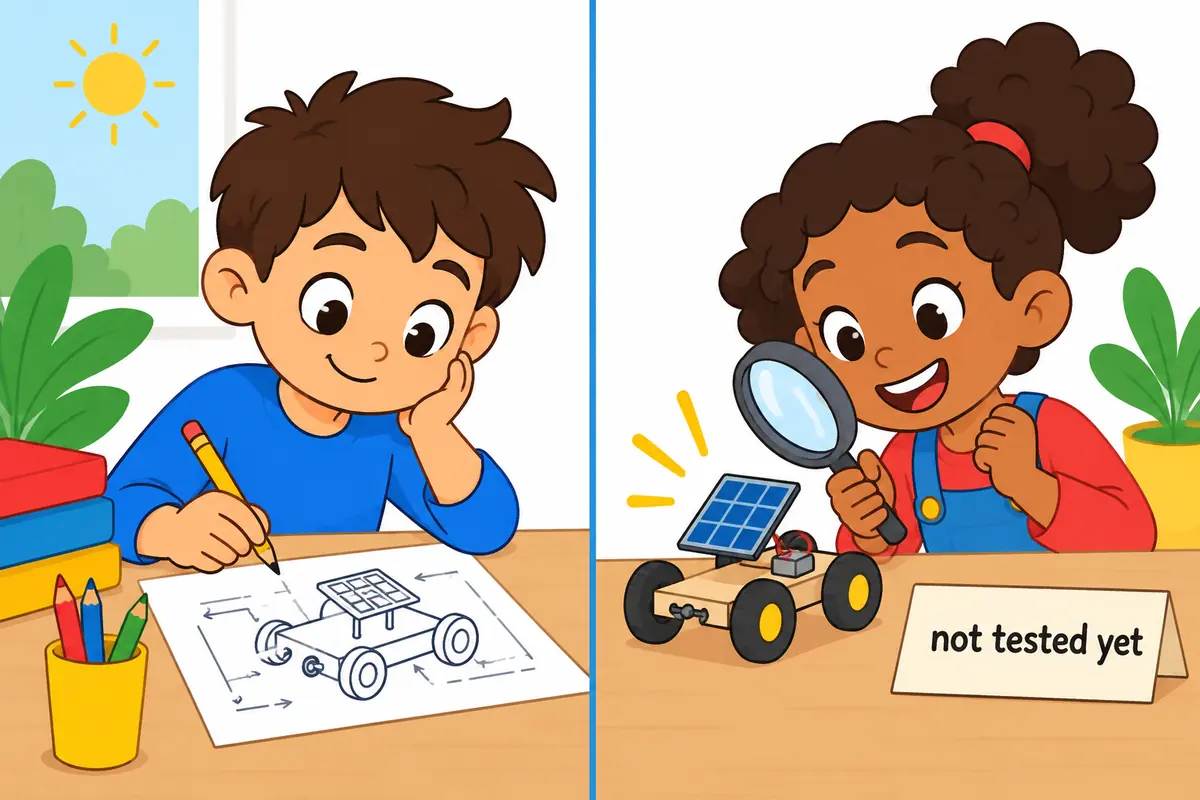
Use theoretical in a sentence to mark the gap between an idea and its proof, whether the subject is pure knowledge or a possibility not yet tested. Two details decide most sentences: the word needs a linking verb when it is used predicatively, and it means untested rather than false or unlikely. For a scenario invented to explore consequences, hypothetical is the sharper choice.
Frequently asked questions about theoretical
What does theoretical mean in simple terms?
In simple terms, theoretical means based on ideas rather than on practice or proof. A theoretical explanation has not yet been checked against the world, and a theoretical benefit exists only on paper. The word does not mean the idea is wrong; it means the idea has not been tested.
Is theoretical the same as hypothetical?
They are close but not identical. Theoretical describes something that exists in idea and may yet become real, often through study or testing. Hypothetical describes a scenario invented for the sake of argument that may never be intended to happen. Theoretical leans toward knowledge; hypothetical leans toward an imagined example.
Can theoretical mean unlikely?
No. Theoretical says nothing about probability. A theoretical risk may be remote or quite real once conditions change, because the word marks distance from practice, not low odds. If you mean unlikely, say unlikely; if you mean not yet tested, theoretical is the right word.
How do you use theoretically in a sentence?
Theoretically is the adverb, and it usually stands at the start of a sentence to frame an untested claim, as in theoretically, the scheme pays for itself. It can also follow a verb, as in the engine theoretically runs on the fuel. The adverb signals that the statement rests on reasoning rather than a demonstrated result.
Have you ever wondered what the term “theoretical” really means in academic and scientific contexts? In simple terms, a theoretical concept or framework is an idea or model based on abstract reasoning rather than empirical evidence.
Theoretical discussions often involve exploring hypothetical situations, constructing models, or delving into philosophical debates without necessarily relying on real-world data or experiments. Understanding theoretical principles can shed light on complex subjects and provide a foundation for further research and analysis in various fields of study.
7 Examples Of Theoretical Used In a Sentence For Kids
- Theoretical means something we learn about in books.
- We can use our imaginations to understand theoretical things.
- Theoretical concepts help us solve problems in school.
- Scientists study theoretical ideas to make new discoveries.
- It’s fun to think about theoretical stories and characters.
- Theoretical knowledge helps us learn new things every day.
- We can pretend to be theoretical explorers discovering new worlds.
14 Sentences with Theoretical Examples
- Theoretical physics classes can be challenging, but they provide a strong foundation for understanding the laws of the universe.
- Understanding theoretical concepts in sociology is crucial for analyzing and interpreting societal issues.
- Theoretical computer science courses help students develop problem-solving and critical thinking skills.
- Many college students struggle to apply theoretical economics principles to real-world scenarios.
- Theoretical mathematics courses lay the groundwork for more advanced topics in calculus and algebra.
- It’s important for architecture students to grasp theoretical design principles before moving on to practical projects.
- Theoretical psychology classes delve into the complexities of the human mind and behavior.
- Students studying literature often explore theoretical frameworks to analyze and interpret texts.
- Theoretical chemistry courses provide a deeper understanding of how atoms and molecules interact.
- Theoretical linguistics courses introduce students to the principles underlying language structure and communication.
- It’s essential for engineering students to master theoretical concepts before applying them in practical projects.
- Theoretical philosophy classes challenge students to question their beliefs and think critically about complex ideas.
- Theoretical biology courses explore the fundamental principles of evolution and genetics.
- Grasping theoretical concepts in finance is essential for making informed decisions in the business world.
How To Use Theoretical in Sentences?
To Theoretical is to discuss or explain something based on ideas or principles rather than practical applications. When using Theoretical in a sentence, it is important to consider the context in which it is being used. Here is a helpful guide for beginners on how to use Theoretical in a sentence:
-
Define the context: Make sure you understand the meaning of Theoretical in the specific situation before using it in a sentence.
-
Provide an example: For example, “The physicist proposed a Theoretical framework to explain the behavior of subatomic particles.”
-
Use in academic writing: Theoretical concepts are often used in academic writing to discuss ideas or hypotheses. For instance, “The study presented a Theoretical analysis of the impact of climate change on biodiversity.”
-
Distinguish between theoretical and practical: Remember that Theoretical refers to concepts, ideas, or principles, while practical refers to something that can be applied or implemented.
-
Be clear and concise: When using Theoretical in a sentence, be clear and concise to convey your message effectively.
By following these guidelines, you can effectively use Theoretical in a sentence and communicate your ideas in a coherent and precise manner.
Conclusion
In conclusion, the examples of sentences with the keyword “theoretical” illustrate the use of theoretical concepts or ideas in various contexts. These sentences show how theoretical frameworks can be applied to analyze and explain phenomena, formulate hypotheses, and guide research. By grounding discussions in theoretical perspectives, a deeper understanding of complex topics can be achieved.
Overall, these sentences demonstrate the importance and relevance of theoretical frameworks in academic and scientific discourse. They highlight how theoretical perspectives provide a foundation for exploring and interpreting phenomena, guiding empirical investigations, and fostering critical thinking. In essence, theoretical frameworks serve as essential tools in shaping our understanding of the world around us and advancing knowledge in diverse fields of study.


