Though in a Sentence: Contrast and Sentence Position
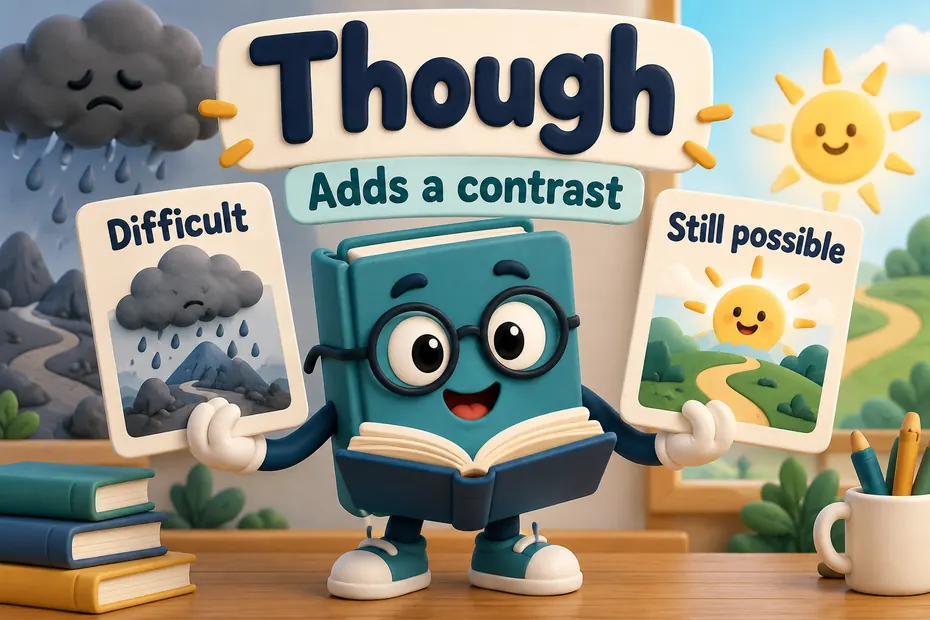
Though often introduces a contrast between two facts: “Though the room was small, everyone found a seat.” It can also appear at the end of a sentence in a conversational meaning similar to however: “The room was small. It was comfortable, though.” The structure you choose determines how the contrast is presented.
How do I build a sentence with though?
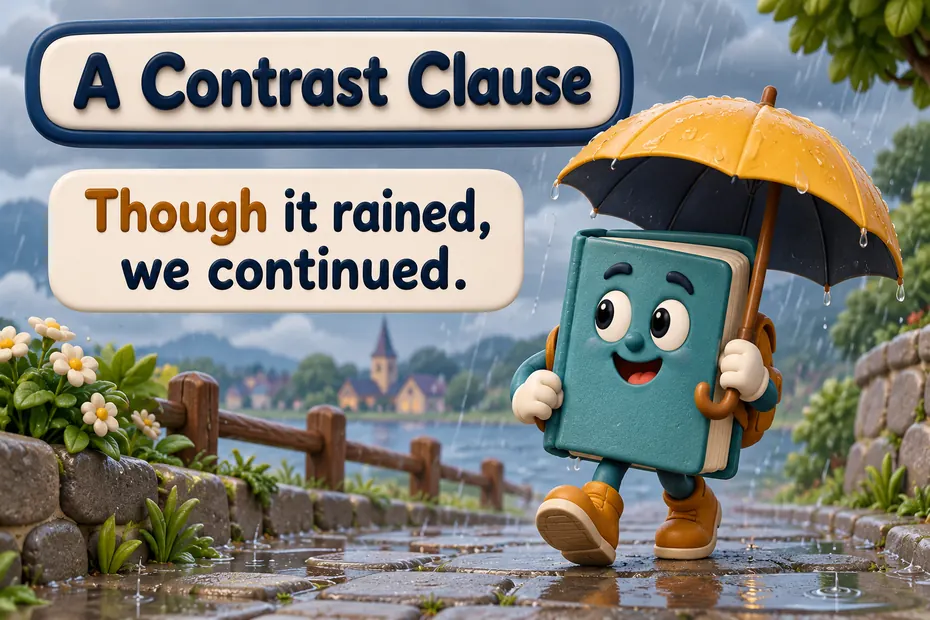
Combine a though clause with a main clause. In “Though the road was busy, the crossing remained quiet,” the main message is that the crossing remained quiet, while the opening clause supplies the contrasting fact. The words “Though the road was busy” are not normally a complete sentence on their own.
Move the clause to see how the emphasis changes: “The crossing remained quiet though the road was busy.” When the though clause comes first, a comma normally separates it from the main clause. When it follows, a comma is usually unnecessary for this ordinary pattern. Read the sentence as a whole rather than putting a comma after every occurrence of though.
| Pattern | Original example | Focus |
|---|---|---|
| Though clause first | Though the café was full, we found a table outside. | Sets up the contrast before the main result. |
| Though clause second | We found a table outside though the café was full. | Presents the result before the contrast. |
| Even though | Even though the book was long, I finished it that weekend. | Emphasizes a surprising contrast. |
| As though | She spoke as though she knew the answer. | Describes an impression or comparison. |
| Though at the end | The book was long. It was enjoyable, though. | Adds a conversational contrasting comment. |
Are even though and as though interchangeable?
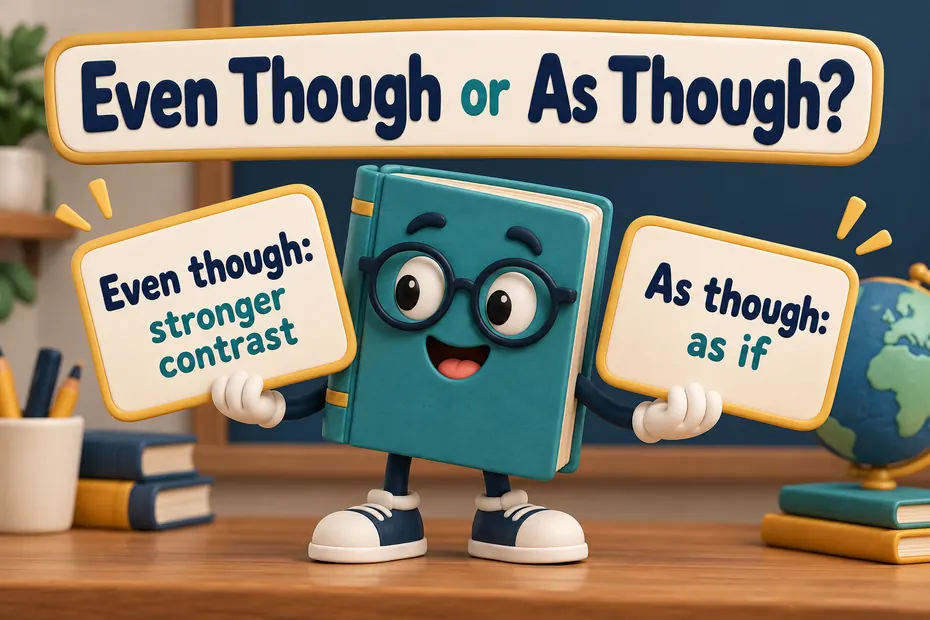
No. Even though strengthens a contrast, while as though introduces an impression similar to as if. “Even though he was tired, he joined the discussion” contrasts tiredness with participation. “He spoke as though he had rehearsed the discussion” describes the impression created by his speech; it does not establish whether he actually rehearsed.
Also distinguish even though from even if. “Even though the shop is closed, we can collect the parcel outside” presents its closure as a fact. “Even if the shop is closed, we can collect the parcel outside” considers a possibility. Choose according to whether your sentence is reporting a fact or allowing for a condition.
When does though work at the end?
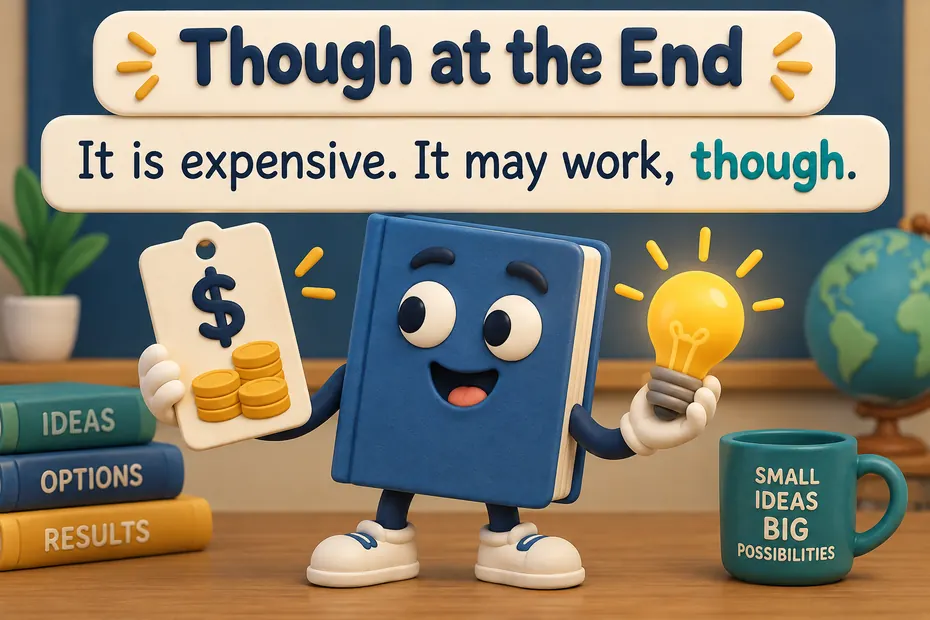
At the end, though can add a contrasting comment: “The ticket costs more. The seat is better, though.” This use is particularly common in conversation. It depends on context, so an isolated “It is better, though” leaves the reader wondering what is being contrasted. Supply the relevant earlier detail when you write a standalone example.
- The practice session was short. We learned a lot, though.
- I do not like the cover. The story is interesting, though.
- The journey took longer than expected. The view was worth it, though.
Questions about using though
Can I start a sentence with though?
Yes, provided you complete the sentence with a main clause. “Though the weather changed, the event continued” is complete; the opening clause alone is normally a fragment. Put the contrast first when it helps the reader understand the main result. For a simple practice sentence, identify the subject and verb in both parts.
Can although go at the end like though?
Not in the same conversational pattern. “It was difficult, though” uses though in a meaning close to however; replacing it with although produces an incomplete or unnatural sentence. Although normally introduces a contrasting clause. You can write “It was rewarding although it was difficult,” where the word is followed by that clause.
Should I write though and but together?
For the ordinary contrast pattern, choose one structure: “Though it was late, we continued,” or “It was late, but we continued.” Adding but before the main clause after an opening though clause is unnecessary in standard practice. This does not mean the two words can never appear anywhere in the same longer passage.
Is though the same word as through?
No. Though commonly expresses contrast, whereas through can describe movement across or within something, completion, or other relationships. “We walked through the park” describes a route. “Though the park was crowded, we enjoyed the walk” presents a contrast. The extra r changes the word, so check spelling as well as pronunciation.
How do I choose a clear example?
Name two details that genuinely contrast, then make the main result explicit. “Though the instructions were brief, they were clear” contrasts limited length with usefulness. Avoid using though merely to add an unrelated fact. Read the sentence aloud and ask what expectation the main clause challenges; that relationship should be easy to explain.
See Cambridge Grammar on although and though, even, as if and as though, and contrasting conjunctions. Purdue OWL explains introductory-clause commas. The practice examples are original.
Although often overlooked, the word “though” is a powerful conjunction used to introduce a contrasting idea or to provide an exception to a previous statement. It adds depth and complexity to sentences by presenting a contrasting viewpoint or condition.
“Though” is commonly used to acknowledge a different perspective, to introduce a concession, or to demonstrate a nuanced understanding of a situation. It helps to create a balanced argument or narrative by presenting conflicting or unexpected information in a concise manner.
7 Examples Of Though Used In a Sentence For Kids
- I like to play outside, though it is very sunny.
- My favorite color is blue, though sometimes I like pink too.
- I can count to ten, though sometimes I get confused.
- I love to eat ice cream, though my mom says not too much.
- I have a pet dog, though I wish I had a cat too.
- I enjoy singing songs, though I can be a bit shy.
- I can ride a bicycle, though I still use training wheels.
14 Sentences with Though Examples
- Though I have an early class, I stayed up late studying for my exam.
- I wanted to join the debate club, though I am not very confident in my speaking abilities.
- I have a part-time job to help with expenses, though it can be challenging to balance work and studies.
- Though I am not a morning person, I try to wake up early for yoga classes.
- I enjoy attending college events, though sometimes my academic workload gets in the way.
- Though I am not very athletic, I signed up for the college sports team to stay active.
- I prefer studying alone, though group study sessions can be helpful for certain subjects.
- I love trying new dishes at the college cafeteria, though I miss home-cooked meals sometimes.
- I have a lot of assignments to complete, though I make sure to take study breaks to avoid burnout.
- Though I am on a tight budget, I try to save up for extracurricular activities like college trips.
- I am interested in learning a new language, though finding time between classes and assignments can be a challenge.
- Though I am introverted, I push myself to attend networking events to build connections.
- I enjoy exploring different career paths, though choosing the right one can be overwhelming.
- Though I am a perfectionist, I have learned to embrace failure as part of the learning process.
How To Use Though in Sentences?
Though is a versatile word that can be used in various ways within a sentence. Here are some examples to help beginners understand how to use though effectively:
- Contrast:
- “I don’t like coffee, though I enjoy the smell of it.”
- “She is very busy at work, though she always finds time for her family.”
- However:
- “He had a high fever, though he still managed to finish his homework.”
- “The weather was cold, though we decided to go for a walk anyway.”
- Despite the fact that:
- “She didn’t study for the exam, though she still managed to get a good grade.”
- “The movie received bad reviews, though it was still a box office hit.”
- Emphasize:
- “I really like the color blue, though green is also nice.”
- “She is excited to go on vacation, though she is a bit nervous about flying.”
By using though in these different contexts, you can add depth to your sentences and convey various meanings. Remember to pay attention to the structure of your sentence and ensure that though is placed correctly to create a clear and effective message.
Conclusion
In conclusion, the examples of sentences using the word “though” demonstrate its versatility in conveying contrasts, concessions, and exceptions within a sentence. The word serves as a bridge between contrasting ideas, highlighting nuances and adding depth to a statement. “Though” can be used to introduce a contrasting thought, acknowledge a concession, or emphasize a condition that may seemingly contradict the main argument.
Overall, “though” plays a crucial role in connecting ideas and clarifying relationships between different parts of a sentence. Its flexible usage allows for a more nuanced and complex expression of thoughts, enabling writers to effectively convey a range of shades of meaning within a single sentence.