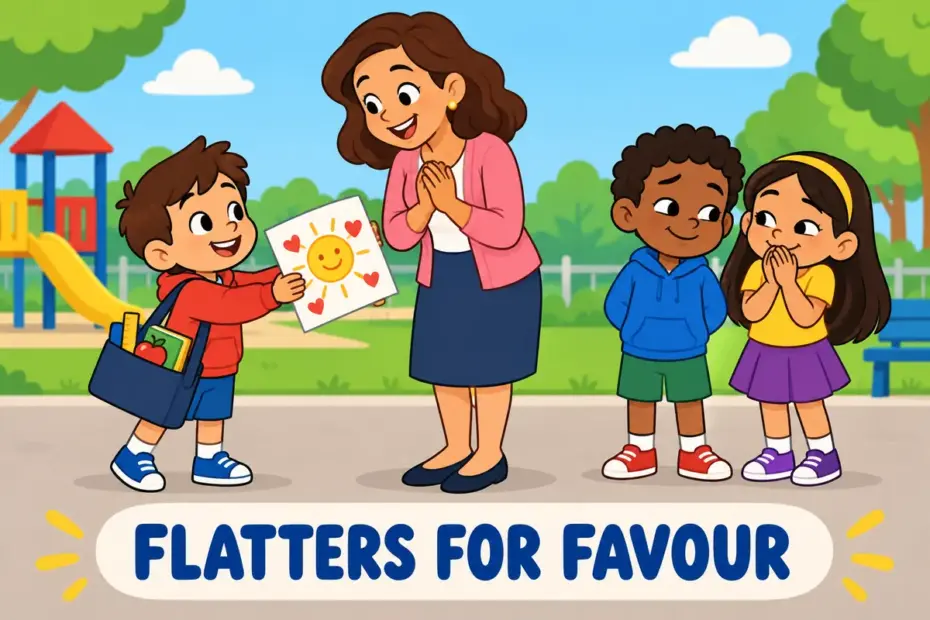
Toady is a noun for a person who flatters someone powerful and does small favours to win approval. To use toady in a sentence, show both the flattery and the person it is aimed at: “The manager surrounded himself with toadies.”
Toady at a glance
- Toady is mainly a noun; its plural is toadies, and the verb is toady or toady up to.
- As a verb it always takes the preposition to: toady to the boss.
- The noun names a follower who flatters and runs errands for a superior.
- The word is always disapproving and usually informal.
- The commonest error is confusing toady with toad, the animal, which shares its spelling root.
What does toady mean?
Toady is a noun meaning a person who flatters and serves someone powerful in order to gain favour. The Cambridge entry for toady records both the noun and the verb, and the verb always points at the person being flattered. A sycophant flatters for gain too, but the noun carries more formality than toady does.
| Sense | Plain meaning | Example sentence |
|---|---|---|
| Noun, the person | A follower who flatters a superior for gain | The director was surrounded by toadies. |
| Verb, the act | To behave servilely toward someone | He toadied to the chair of the board all year. |
One limitation is worth stating plainly. Toady is an insult, so it has no neutral use: calling a colleague a toady accuses them of insincerity, not merely of being helpful. When the flattery is gentle and harmless, flatterer is the softer word. Save toady for the person who trades dignity for advantage.
How do you use toady in a sentence?
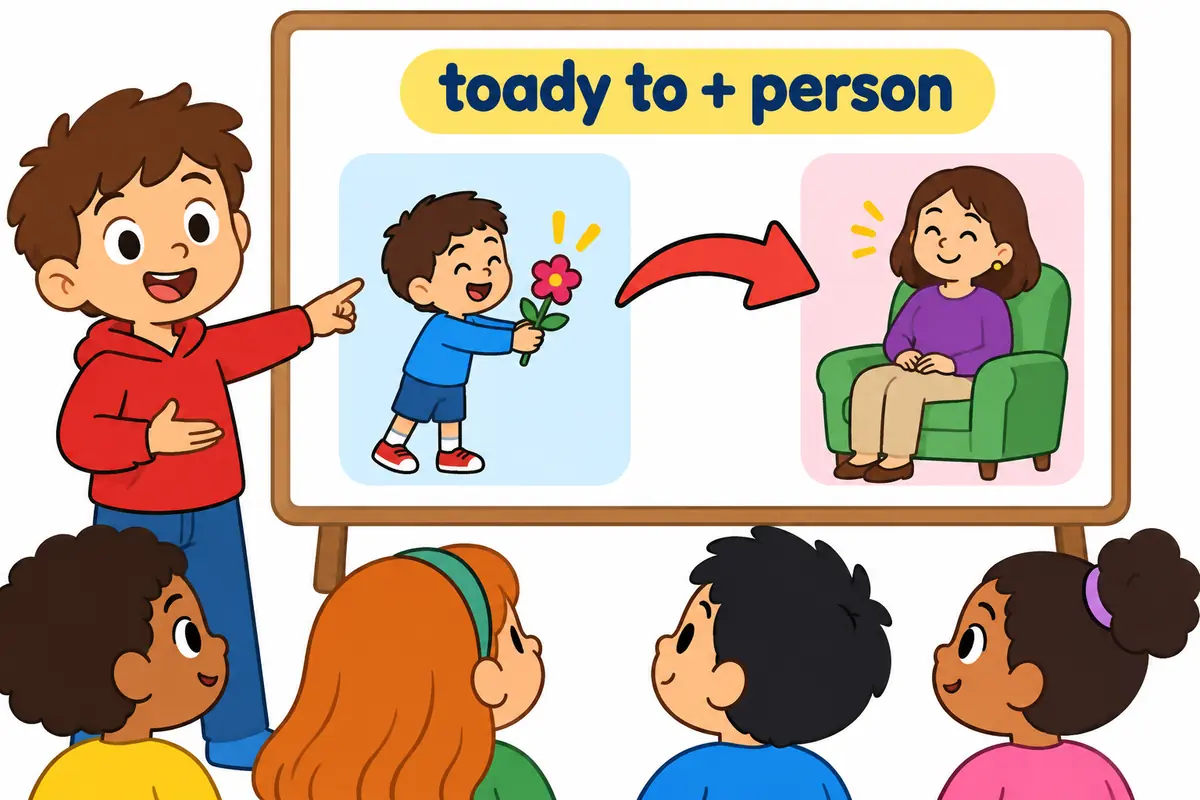
The noun is simply the label for the person, while the verb needs the preposition to before the target. A bootlicker is the blunt, insulting cousin of toady in everyday speech. The patterns below cover almost every real use.
| Pattern | Example | What it signals |
|---|---|---|
| a toady to + person | He was a toady to three different managers. | The noun names the flatterer and the target. |
| toady to + person | She toadied to the editor for months. | The verb, always with to, describes the behaviour. |
| surrounded by toadies | The principal was surrounded by toadies. | A settled frame that criticises the leader too. |
| play the toady | He played the toady to escape the hardest work. | Treats the flattery as a chosen role. |
Toady in a sentence: examples across contexts
Toady keeps its contempt wherever it appears, but the setting decides how openly the flattery is shown. The eight sentences below move from a classroom to a political memoir, and each names the target. The verb form is common in British and American writing alike.
| Context | Example sentence | Why this works |
|---|---|---|
| Classroom | Everyone knew which pupil was the teacher’s toady. | Shows the noun in its simplest, childhood setting. |
| Workplace email | Let us solve the problem instead of toadying to the client. | Uses the verb to criticise the behaviour, not a person. |
| News report | Critics called the new adviser a toady to the minister. | Attributes the insult to others rather than the writer. |
| Political memoir | The court was full of toadies and place-seekers. | Pairs the noun with a similar word for reinforcement. |
| Drama review | He plays the royal toady with real comic timing. | Uses the noun as a character type. |
| Sports writing | No manager wants a squad of toadies. | Extends the word to a whole group. |
| Conversation | Stop toadying to the teacher and ask a real question. | The verb is the natural form in direct speech. |
| Academic prose | The study argues that courts reward the toady, not the able. | Treats the noun as a social role worth analysis. |
Toady vs sycophant
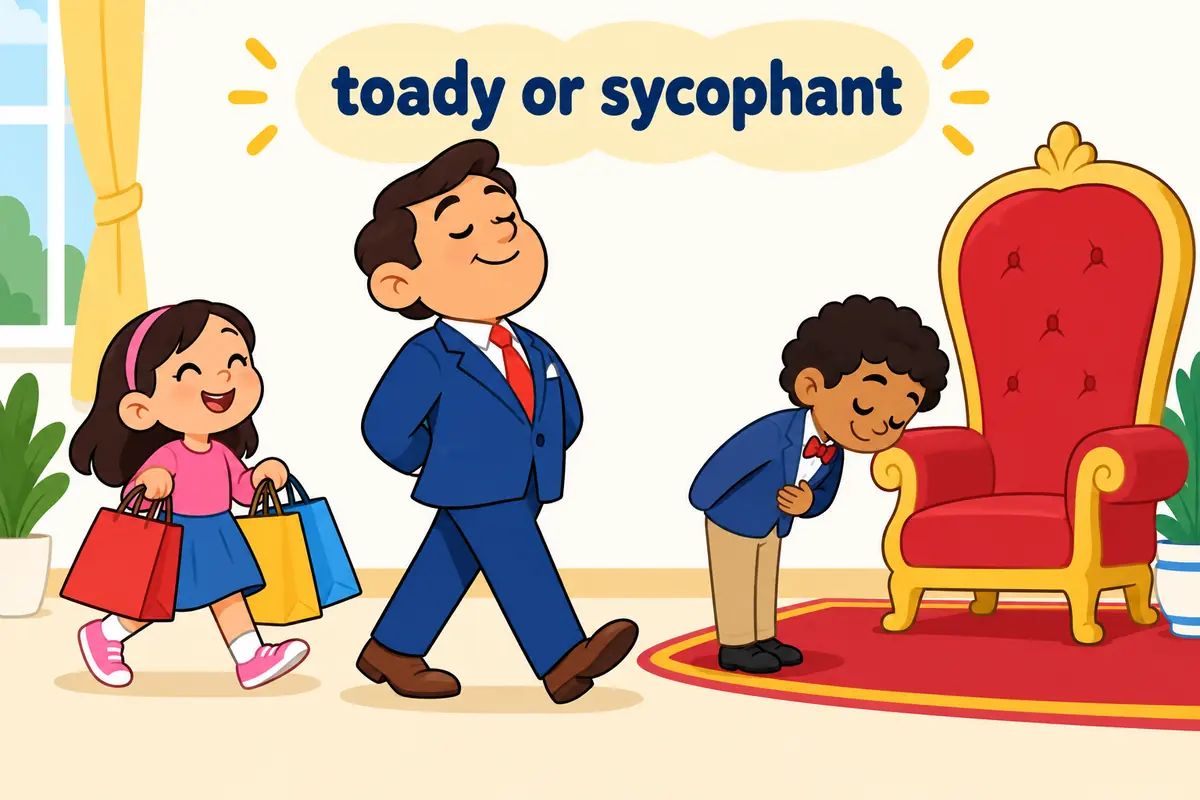
Toady and sycophant describe the same flattery, but they live in different registers and draw slightly different pictures. Sycophant is formal and suggests a courtier or an office schemer; toady is earthier and suggests an errand-running follower. A yes-man agrees with everything, which is only one of the ways a toady behaves.
| Attribute | toady | sycophant |
|---|---|---|
| Core idea | A servile follower who flatters for gain | A flatterer who seeks favour |
| Typical behaviour | Runs errands and agrees loudly | Praises and ingratiates |
| Register | Informal and contemptuous | Formal and literary |
| Typical setting | School, office, club | Court, ministry, corporation |
| Strength of insult | Sharp and familiar | Cool and damning |
Verdict: choose toady for the follower who carries bags and echoes opinions, and sycophant when you want a colder, more formal word for the same flattery.
Word forms and grammar of toady
Toady is unusual because the same spelling serves as both noun and verb, and only the verb takes a preposition. The manner rather than the person is obsequious, an adjective that describes how a toady behaves. Here are the forms to expect.
| Form | Part of speech | Example |
|---|---|---|
| toady | noun, singular | Every office has its toady. |
| toadies | noun, plural | The toadies laughed at every joke. |
| toady | verb, base form | Do not toady to the referee. |
| toadied | verb, past and past participle | He toadied to the captain all season. |
| toadying | verb, present participle | They were toadying to win the contract. |
| toadyism | noun, rare | Toadyism thrives where promotion is secret. |
Common mistakes with toady
- Incorrect:
He toadied his manager.Correct: He toadied to his manager. Rule: The verb toady is intransitive and always takes the preposition to. - Incorrect:
The toad sat by the pond was a toady.Correct: The small brown toad by the pond is not a toady. Rule: Toad is the animal; toady is the flatterer, and only the extra letter separates them. - Incorrect:
She was a helpful toady to the team.Correct: She was a helpful colleague. Rule: Toady is always an insult, so it cannot describe genuine helpfulness. - Incorrect:
He is a toady of the boss.Correct: He is a toady to the boss. Rule: The noun also takes to, not of, before the target.
Practice using toady
Work through the six items, then check the reasoning rather than only the answer.
- Fill the gap: The new assistant ______ to the director at every meeting.
- Choose the better word: He agreed with everything simply to please her, a real (toady / mentor).
- Correct the error: She toadied her professor all term.
- Build a sentence: use a toady to about a pupil and a team captain.
- Spot the register: which belongs in a political memoir — the court was full of sycophants, or the court was full of yes-people?
- Rewrite as a noun: He flattered the coach constantly. Use toady.
Answers
- toadied — the verb needs to before the person being flattered.
- toady — a mentor guides, while a toady flatters only to gain favour.
- She toadied to her professor — the verb cannot take a direct object.
- Model answer: The youngest pupil became a toady to the team captain.
- The court was full of sycophants — a formal memoir suits the grander noun.
- He was the coach’s toady — the noun names the person, not the behaviour.
The bottom line
Use toady in a sentence for a person who flatters a powerful figure to gain favour, and remember that the word is always an insult. The two details that decide most sentences are the form and the preposition: the noun takes to before the target, and the verb also needs to, as in toady to the boss. A hanger-on may stay for the benefits, but only a toady flatters for them.
Frequently asked questions about toady
Is toady a noun or a verb?
Toady works as both. The noun names the person, as in every office has its toady, and the verb describes the behaviour, as in he toadied to the chair. The verb is intransitive and always takes to, so you toady to someone rather than toady someone directly.
What is the difference between a toady and a sycophant?
Both describe a flatterer, but toady is informal and contemptuous while sycophant is formal and literary. A toady suggests a follower who runs errands and echoes opinions; a sycophant suggests a courtier or office schemer. Choose toady for everyday contempt and sycophant for a colder, grander tone.
Is toady an informal word?
Toady is informal and openly insulting, which separates it from the neutral vocabulary of description. It belongs in speech, journalism and fiction rather than in a formal report about a colleague. In a workplace document, choosing a neutral phrase such as eager to please is safer than naming a toady.
How do you use toady in a sentence?
Use the noun to label a person, as in the manager surrounded himself with toadies, and the verb with to to describe the behaviour, as in she toadied to the editor. Both forms are disapproving. A sentence that admires the help given is using the wrong word entirely.
Have you ever encountered someone who is overly eager to flatter and please others in the hopes of gaining favors or advantages? This behavior is commonly known as being a “toady.”
A toady is someone who excessively and insincerely praises or ingratiates themselves to others, often for personal gain or to win favor. This type of individual can come across as overly fawning or obsequious, willing to do anything to curry favor with those in a position of power or authority.
7 Examples Of Toady Used In a Sentence For Kids
- The toady is a small, colorful amphibian.
- I saw a toady hopping on the grass.
- The toady has big round eyes.
- Can you spot the toady near the pond?
- Toady loves to eat insects.
- The toady makes a croaking sound.
- Let’s be gentle and kind to the toady.
14 Sentences with Toady Examples
- Toady to the professor might help you secure a good grade in the class.
- It’s important to avoid being a toady in group projects and instead contribute equally.
- Some students resort to being a toady to get preferential treatment from teachers.
- Being a toady to seniors in college won’t necessarily help you in the long run.
- It’s better to focus on your studies and skills rather than being a toady to influence others.
- Joining study groups can help you learn collaboratively without needing to be a toady.
- In group discussions, it’s important to express your opinions honestly instead of being a toady.
- Being a toady can sometimes backfire and harm your reputation among peers.
- Collaborating with classmates in a fair and equal manner is more beneficial than resorting to being a toady.
- College is a place for personal growth and development, so avoid being a toady to fit in.
- Professors appreciate students who ask thoughtful questions rather than just trying to toady up to them.
- Adopting a toady attitude may lead to missed opportunities for gaining genuine respect from professors.
- Students should focus on developing their own skills and talents rather than trying to be a toady.
- In the competitive academic environment of college, it’s important to stand out for your abilities rather than being a toady.
How To Use Toady in Sentences?
To use Toady in a sentence, simply incorporate the word in a way that makes sense within the context of your message. Toady is a noun that refers to a person who flatters others in order to gain favor or advantage.
For example, you could say, “It was clear that he was a toady as he constantly praised the boss in hopes of a promotion.”
It’s important to note that Toady is not a commonly used word in everyday language, so it may be more suitable for formal or written communication. However, if you do choose to use it in conversation, be sure to provide some context so that the listener can understand its meaning.
Overall, using Toady effectively in a sentence involves understanding its definition and fitting it into your communication in a way that flows naturally. With practice, you will become more comfortable using this word and expanding your vocabulary.
Conclusion
In conclusion, the usage of sentences containing the keyword “toady” often reflects instances of flattery, sycophancy, or insincere praise directed towards someone in a position of power. These sentences showcase individuals who seek favor or advantage by excessively praising or ingratiating themselves to others, typically in a servile or obsequious manner. Such sentences highlight the dynamics of power and influence, where toadies attempt to gain favor through unctuous behavior.
Overall, sentences incorporating the term “toady” serve as poignant reminders of the complexities within social and professional relationships, shedding light on the often manipulative and insincere tactics employed by those seeking to curry favor or gain advantage through flattery. By examining such sentences, one can gain insights into the dynamics of power, influence, and the subtle dynamics at play in various interactions and hierarchies in society.


