
Tumult means a loud, confused noise made by a crowd, or a state of disorder and agitation. To use tumult in a sentence, set the scene first and let the noun carry the uproar: “A tumult rose from the square.” It can be heard in the streets or felt inside a person.
Tumult at a glance
- Tumult is a noun; its adjective is tumultuous and its adverb is tumultuously.
- It covers both outer noise and inner agitation.
- It usually appears with rise, break out or follow, and with sudden, angry or violent.
- Tumult is literary and newsroom vocabulary rather than everyday speech.
- The commonest error is confusing tumult with turmoil, which stresses confusion more than noise.
What does tumult mean?
Tumult is a noun meaning a loud, confused noise, especially one made by a crowd, or a violent disturbance of the mind. The Cambridge entry for tumult records both the uproar and the agitation senses. The word keeps the two closely linked.
| Sense | Plain meaning | Example sentence |
|---|---|---|
| Public uproar | A loud, disorderly noise from a crowd | A tumult of voices filled the market square. |
| Disorder | A state of confusion and unrest | The meeting ended in tumult. |
| Inner agitation | A violent disturbance of the mind | Her mind was in tumult before the exam. |
One limitation is worth stating plainly. Tumult is not a synonym for a fight. It names noise and confusion, and a tumult can be peaceful, as when a stadium erupts in cheers. Where actual violence is meant, use fracas, riot or brawl.
How do you use tumult in a sentence?
The noun usually follows an event verb or sits inside a phrase with in. Five patterns cover almost every natural sentence.
| Pattern | Example | What it signals |
|---|---|---|
| a tumult of + noun | a tumult of cheering | The crowd noise is named directly. |
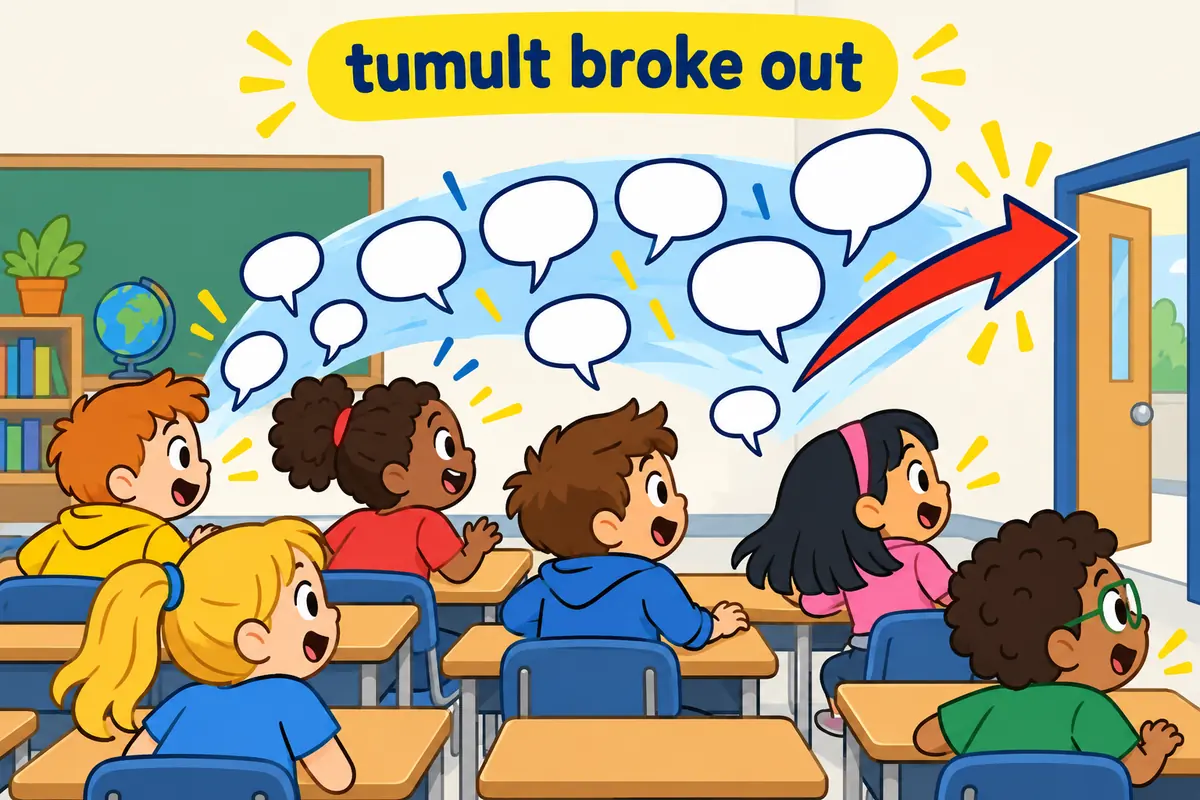
| tumult + breaks out / rose / followed | Tumult broke out in the hall. | Event verbs suit the public sense. |
| in tumult | The harbour was in tumult. | Marks an ongoing state of disorder. |
| a tumult of + emotion | a tumult of grief and relief | Uses the inner sense with abstract nouns. |
| amidst the tumult | Amidst the tumult, one voice was clear. | Sets background action. |
Where the point is a low hum of many voices rather than an uproar, a writer may reach for commotion instead.
Tumult in a sentence: examples across contexts
Tumult changes register more than meaning. These sentences move from a classroom to a news report, and each one names what is making the noise or causing the disorder.
| Context | Example sentence | Why this works |
|---|---|---|
| Classroom | A tumult of cheers greeted the last bell before the holidays. | Names the crowd and the sudden sound. |
| News report | Tumult broke out in the chamber after the vote was announced. | The event verb marks the start of disorder. |
| Workplace email | The announcement caused a tumult in the open-plan office. | Uses the word for a brief, noisy reaction. |
| Sports commentary | A tumult of noise rolled around the stadium as the goal went in. | The plural image of sound is idiomatic. |
| Literary writing | She walked home through the tumult of the market. | Sets a crowded, loud scene. |
| History essay | The decade of tumult ended with an uneasy calm. | Carries the word toward political disorder. |
| Fiction | His mind was in turmoil, though the room was silent, a pandemonium of thought. | Contrasts inner noise with outer quiet, and shows a stronger noun. |
| Diary | The uproar of the day left me exhausted by evening. | Uses the near-synonym to show register. |
Notice that only the fiction example turns inward. That shift is where tumult meets its closest neighbour.
Tumult vs turmoil
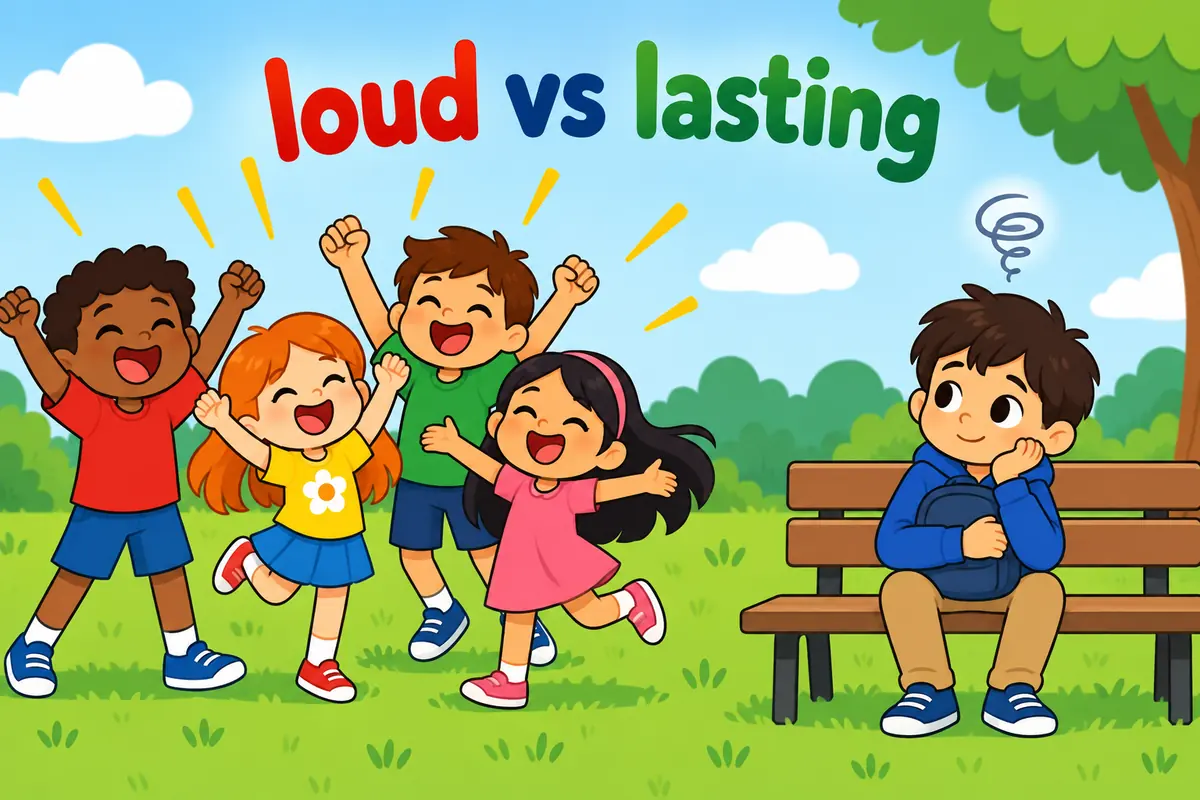
Tumult and turmoil both suggest disorder, and they are not interchangeable. An emotional turmoil is a lasting unsettled state, while a tumult is usually a loud, short event.
| Attribute | tumult | turmoil |
|---|---|---|
| Core meaning | Loud, confused noise and disorder | Confused, unsettled state |
| Where it lives | Public scenes and crowds | Feelings, politics and long crises |
| Typical collocations | tumult broke out, a tumult of voices | in turmoil, emotional turmoil |
| Duration | Brief and event-like | Lasting and state-like |
| Sound | Always implied | Not necessarily present |
Verdict: choose tumult when the scene is loud and confused, and turmoil when the disturbance is an ongoing, uneasy condition that a listener cannot hear.
Word forms and grammar of tumult
Tumult itself does not take a plural in ordinary use, but the adjective tumultuous is common and worth learning. The table lists the family.
| Form | Part of speech | Example |
|---|---|---|
| tumult | noun | The tumult lasted only a minute. |
| tumults | noun, plural (rare) | The chronicle records many tumults. |
| tumultuous | adjective | a tumultuous welcome |
| tumultuously | adverb | The crowd cheered tumultuously. |
| tumultuousness | noun, rare | the tumultuousness of the era |
Common mistakes with tumult
- Incorrect:
The two players started a tumult.Correct: The two players started a brawl. Rule: Tumult is noise and confusion, not violence or a fight. - Incorrect:
The crowd was tumult.Correct: The crowd was in tumult. Rule: Tumult is a noun; the state needs in, or use the adjective tumultuous. - Incorrect:
The meeting was very tumult.Correct: The meeting was very tumultuous. Rule: After very, use the adjective tumultuous, not the noun. - Incorrect:
Tumultuous simply means noisy.Correct: Tumultuous means chaotic as well as loud. Rule: The adjective adds disorder to the noise, not volume alone. - Incorrect:
There were many tumults on the floor.Correct: The floor was in tumult for an hour. Rule: The plural is rare; the singular with in is more natural.
Practice using tumult
Work through the six items, then check the reasoning rather than only the answer.
- Fill the gap: A ______ of applause filled the hall when the winner was named.
- Choose the better word: After the loss, he walked home in (tumult / turmoil).
- Correct the error: The crowd was tumult after the decision.
- Build a sentence: use tumult broke out about a surprise result in a school election.
- Spot the register: which belongs in a news report — tumult broke out in the chamber, or everyone went totally nuts?
- Rewrite with the adjective: The meeting was full of noise and confusion. Use tumultuous instead.
Answers
- tumult — the noun names the loud, confused sound of a crowd.
- turmoil — the feeling is lasting and inward, not a public noise.
- The crowd was in tumult after the decision — the state needs in or the adjective.
- Model answer: Tumult broke out when the underdog was declared the winner.
- Tumult broke out in the chamber — a report keeps the event verb and avoids slang.
- The meeting was tumultuous — the adjective describes the disorder of the event.
The bottom line
Use tumult in a sentence for a loud, confused noise or a sudden scene of disorder, and let an event verb carry it: tumult broke out. The two nuances that decide most sentences are that the width of the noise always matters, and that a lasting inner state calls for turmoil instead. The adjective is tumultuous.
Frequently asked questions about tumult
What is the difference between tumult and turmoil?
Tumult is a loud, confused noise or a brief scene of disorder, usually public. Turmoil is a lasting, unsettled condition, often emotional or political, and it need not make any sound. A crowd can be in tumult for a minute, while a person can be in turmoil for months.
Is tumult a noun or an adjective?
Tumult is a noun, as in a tumult of voices. Its adjective is tumultuous, meaning full of noise and disorder, and its adverb is tumultuously. A common error is to write the noun after very, as in very tumult, when the sentence needs the adjective very tumultuous.
Can tumult mean inner emotion?
Yes. Besides the public sense, tumult can describe a violent disturbance of the mind, as in her mind was in tumult. The inner use is more literary and less common than the crowd sense, and it usually appears with in or within rather than with an event verb.
Is tumult a formal word?
Tumult sits at the literary and journalistic end of the language. News reports and novels use it freely, while everyday conversation usually prefers noise, uproar or chaos. Choosing tumult signals that the writer wants a heightened, slightly old-fashioned tone rather than a plain description.
Have you ever experienced a situation filled with uproar, chaos, and confusion? Welcome to the world of tumult. Tumult is a noun that describes a state of loud, disorderly disturbance or commotion.
This word is often used to depict a scene of uproar, whether it’s a rowdy protest, a heated argument, or a crowded and noisy event. When tumult ensues, emotions run high, voices are raised, and the atmosphere is charged with intensity.
7 Examples Of Tumult Used In a Sentence For Kids
-
The tumult of the playground made everyone excited.
-
The tumult of the horn scared the birds away.
-
We heard a loud tumult during the thunderstorm.
-
The tumult of the crowd made it hard to hear.
-
The tumult of the animals at the zoo was exciting.
-
We could see the tumult of colors during the Holi festival.
-
The tumult of the music made everyone want to dance.
14 Sentences with Tumult Examples
- Tumult erupted in the college auditorium during the debate competition.
- The final exam results caused a tumult among the students.
- Walking through the crowded campus during lunchtime was always a tumultuous experience.
- The announcement of a guest lecture by a famous author created a tumult of excitement among the students.
- Trying to find a quiet study space during exam week amidst the tumult of the library was challenging.
- The college festival brought a tumult of colors, music, and energy to the campus.
- The tumult of voices in the cafeteria made it difficult to have a conversation with friends.
- The sudden cancellation of a popular event caused a tumult among the student community.
- The college canteen was always filled with a tumult of students trying to grab their favorite dishes.
- The protest march on campus created a tumult as students voiced their demands for better facilities.
- The annual sports day was filled with tumult as teams competed fiercely for the championship.
- The tumult of deadlines and assignments seemed overwhelming towards the end of the semester.
- Joining a new club on campus brought a tumult of new friendships and activities into my life.
- Attending a political debate on campus led to a tumult of differing opinions among the students.
How To Use Tumult in Sentences?
Tumult can be used in a sentence to describe a state of confusion, disorder, or chaos. When using tumult in a sentence, it is important to remember that it is a noun and typically follows a subject or verb in a sentence.
For example: “The protest descended into tumult as the crowd clashed with police.”
To correctly use tumult in a sentence, follow these steps:
- Identify a situation or event that involves chaos, confusion, or disorder.
- Choose a subject or verb that depicts the state of tumult.
- Place tumult after the subject or verb to accurately describe the situation.
- Ensure that the sentence flows naturally and conveys the intended meaning.
Practicing using tumult in sentences can help you become more comfortable incorporating it into your writing and communication. By understanding its meaning and proper usage, you can effectively communicate situations of chaos or disorder. Remember to pay attention to context and tone when using tumult to ensure that it fits appropriately within your sentence.
Conclusion
In conclusion, tumultuous sentences can be characterized by their chaotic and disorderly nature. These sentences often convey a sense of commotion, confusion, or upheaval, making them challenging to follow and understand. Whether due to the use of conflicting ideas, abrupt shifts in tone, or unclear structure, tumultuous sentences can hinder effective communication and disrupt the flow of writing.
To improve clarity and coherence in writing, it is important to avoid constructing sentences with tumultuous characteristics. By ensuring that sentences are organized, concise, and logically connected, writers can enhance the readability and impact of their work. Striving for clarity and coherence in sentence construction is essential for conveying ideas effectively and engaging readers in a meaningful way.


