
Usurp is a transitive verb meaning to seize power, a position or a right that belongs to someone else, and to hold it without a lawful claim. To use usurp in a sentence, name who takes and what is taken: “The general usurped the throne.” The verb always carries disapproval.
Usurp at a glance
- Usurp is a transitive verb; its forms are usurps, usurped, usurping, usurpation and usurper.
- It always takes an object: a throne, an office, a role, a right or another thing’s place.
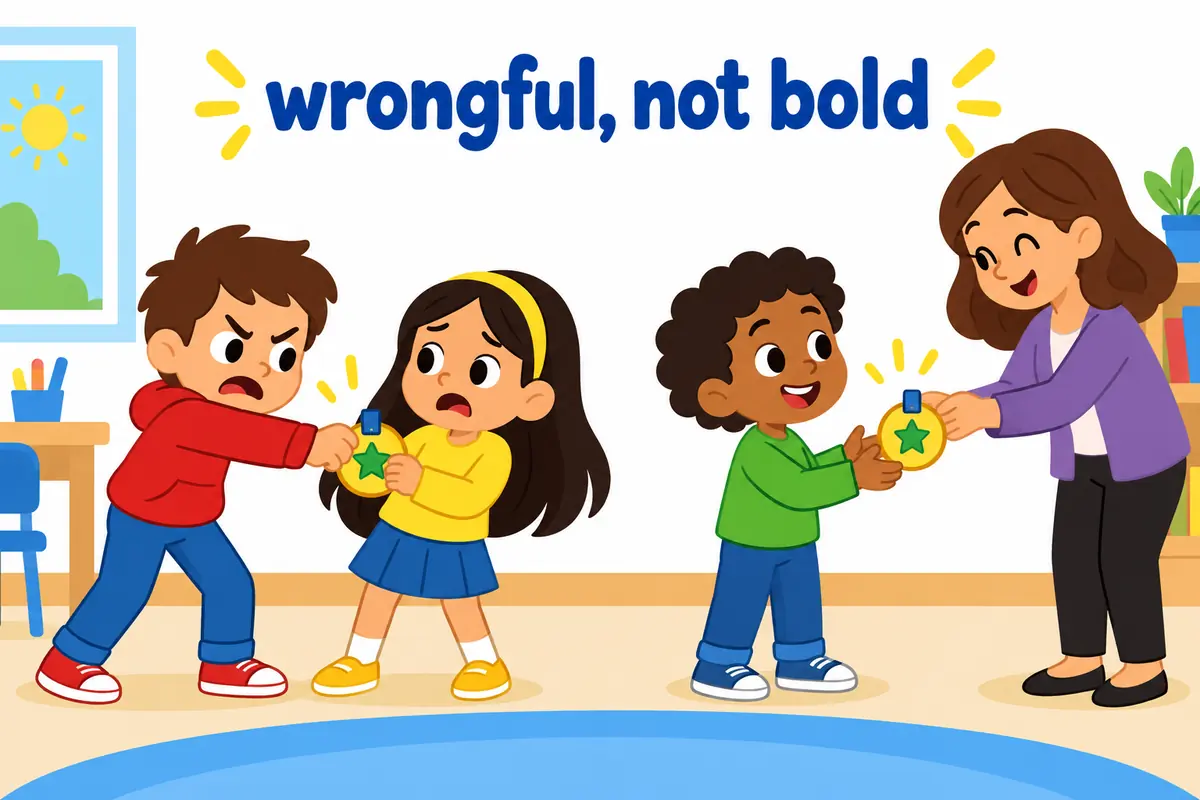
- The taking is presented as wrongful, not merely bold or clever.
- The commonest collocations are usurp the throne, usurp power and usurp someone’s authority.
- The commonest error is using usurp for a planned or lawful handover.
What does usurp mean?
Usurp is a transitive verb meaning to seize power, a position or a right that belongs to somebody else, and to keep it without a lawful claim. The Cambridge entry for usurp and the Merriam-Webster entry agree on that core of wrongfulness; the difference between the senses is only what gets taken.
| Sense | Plain meaning | Example sentence |
|---|---|---|
| Seize political power | Take a throne or office illegally | The general usurped the throne after the coup. |
| Take another’s role | Assume a position that belongs to someone else | Her deputy quietly usurped her role in the talks. |
| Displace a function | Take over a duty or an established right | Phone maps have usurped the paper atlas. |
One limitation matters here. Usurp is not a neutral synonym for take over, because it always implies a contested or unlawful claim. An elected leader who follows a retiring one has taken office, not usurped it.
How do you use usurp in a sentence?
Place the wrongfully taken thing directly after the verb: somebody usurps a throne, a role or an authority. The subject is usually a person or a group, and the object is a thing that can be held, never a plain fact. Where the taking involves open force, seize by force is the plainer verb.
| Pattern | Example | What it signals |
|---|---|---|
| person + usurp + throne or office | The duke usurped the throne while the king was abroad. | A political seizure, the oldest sense. |
| person + usurp + role or post | A junior clerk had usurped the manager’s duties. | Displacement inside an organisation. |
| thing + usurp + another thing’s place | Streaming has usurped the video shop’s place. | A figurative transfer, common in commentary. |
| usurp + someone’s authority or power | He had usurped their authority without a vote. | A claim that a right was taken unlawfully. |
| be usurped | The committee’s powers were usurped by one adviser. | Focuses on the loss rather than the taker. |
The passive is frequent because a wronged party makes a sympathetic subject. For a planned handover with no wrongdoing at all, take over is the neutral choice.
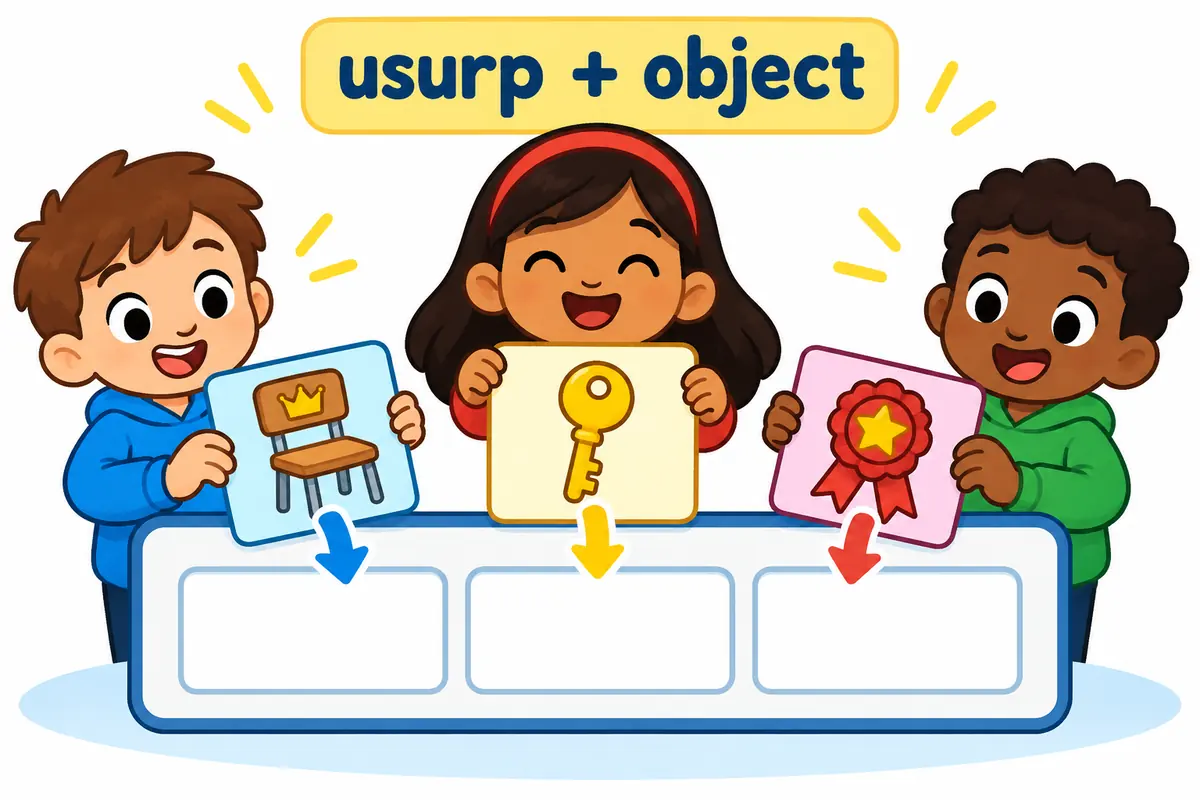
Usurp in a sentence: examples across contexts
Usurp keeps one meaning while its register shifts with the subject matter. The nine sentences below move from a playground to a history essay, and each names the thing that was taken.
| Context | Example sentence | Why this works |
|---|---|---|
| Classroom | Maya usurped the reading corner while the class was at lunch. | A concrete, harmless setting makes the idea visible. |
| Workplace email | The new lead had usurped the schedule without telling anyone. | Names the object and the owner’s surprise. |
| News report | Rebels usurped the palace and declared a new government. | The political sense with an authority as subject. |
| History essay | Richard usurped the crown, and chroniclers never forgave him. | Shows the lasting disapproval the word carries. |
| Legal writing | A trustee may not usurp a beneficiary’s power of appointment. | A right, rather than a throne, is the object. |
| Technology writing | One chat app has usurped the office diary. | The figurative sense applied to tools. |
| Political commentary | The prime minister let an adviser usurp cabinet authority. | Distributes blame between taker and bystander. |
| Conversation | My brother totally usurped my seat by the window. | Playful hyperbole, still grammatically transitive. |
| Academic prose | Central banks did not usurp fiscal policy by design. | A negated claim, common in scholarly argument. |
Notice that the object is the interesting part of almost every sentence. Readers learn what was taken, not merely that somebody took it.
Usurp vs seize
Usurp and seize both describe taking, but they differ in wrongfulness, object and duration. Seize is the physical, neutral act; usurp is the wrongful claim to hold.
| Attribute | usurp | seize |
|---|---|---|
| Core job | Take and hold a position wrongfully | Grab something by force or suddenly |
| Wrongfulness | Always implied | Not implied; may be lawful |
| Typical object | A throne, role, right or function | An object, chance, city or power |
| Duration | Implies keeping it | Moment of taking only |
| Register | Formal, often historical | Neutral to journalistic |
| What it implies | A claim that should not exist | A quick, forceful action |
Verdict: seize when the action is the point, and usurp when the lasting, contested claim to hold is the point.
Word forms and grammar of usurp
Usurp inflects as a regular verb, and its noun usurpation appears in political and legal writing. For a rival who merely displaces another, supplant a rival is the closer word, because it stresses replacement without the same verdict of theft.
| Form | Part of speech | Example |
|---|---|---|
| usurp | verb, base form | They plan to usurp the council next spring. |
| usurps | verb, third person singular | Ambition usurps good judgement in his account. |
| usurped | verb, past and past participle | The prince usurped the title in 1452. |
| usurping | verb, present participle | She was accused of usurping a colleague’s project. |
| usurpation | noun | The usurpation lasted barely a year. |
| usurper | noun, person | Court records call him a usurper. |
| usurpment | non-standard, avoid | The word is usurpation, never usurpment. |
The force of usurp overlaps with wrest control, which also implies a struggle, but wrest says nothing about whether the claim is lawful.
Common mistakes with usurp
- Incorrect:
The new chief usurped the retiring founder.Correct: The new chief took over from the retiring founder. Rule: A planned handover is not usurpation, because nothing wrongful was taken. - Incorrect:
The faction usurped.Correct: The faction usurped control of the budget. Rule: Usurp is transitive, so the thing taken cannot be left out. - Incorrect:
He was usurped the throne.Correct: His nephew usurped the throne. Rule: The taker is the subject and the throne is the object; there is no second object. - Incorrect:
The decree usurped that taxes would rise.Correct: The decree meant that taxes would rise. Rule: The verb takes a noun phrase, never a that-clause. - Incorrect:
They usurped power lawfully at the election.Correct: They took power lawfully at the election. Rule: A lawful transfer is not a usurpation. encroach on a boundary is the gradual cousin of this word.
Practice using usurp
Work through the six items and then read the reasoning with each answer.
- Fill the gap: The treasurer ______ the chair’s authority while she was away.
- Choose the better word: At the ceremony the mayor (usurped / received) the ceremonial chain.
- Correct the error: The report usurped that costs had fallen.
- Build a sentence: use usurp + role about a classmate taking over a group project.
- Spot the register: which belongs in a history essay — the barons usurped royal power, or the barons totally grabbed the crown?
- Rewrite with the noun: The general usurped the government. Use usurpation instead.
Answers
- usurped — the chair’s authority is the thing wrongfully taken.
- received — a ceremony transfers office lawfully, so usurp would be false.
- The report showed that costs had fallen — usurp cannot take a that-clause.
- Model answer: Ben usurped the editor’s role when the team was late.
- The barons usurped royal power — an essay avoids totally and keeps the formal verb.
- The general’s usurpation of the government lasted a year.
The bottom line
Use usurp in a sentence when somebody takes a position or right that was not theirs to take, and name that thing as the object. Two nuances decide most cases: the verb is always transitive, and it always carries the judgement that the claim was unlawful. Where the removal is violent and complete, overthrow a government is the more precise verb.
Frequently asked questions about usurp
Is usurp always negative?
Yes. Usurp marks the taking as wrongful or contested, so it is never a neutral description of succession. A politician who wins an election has taken office, not usurped it. The single exception is deliberate irony, as when a sibling jokes that a cat has usurped the best chair.
What is the difference between usurp and seize?
Seize describes the physical or sudden act of taking, and it can be entirely lawful, as when police seize evidence. Usurp describes holding a position or right that belongs to another, and it always implies the claim is illegitimate. Seize is about the grab, and usurp is about the lasting title.
Can you usurp a position without force?
Yes. Many usurpations are quiet, achieved through paperwork, procedure or a colleague’s silence. A deputy who begins signing letters in the director’s name has usurped that authority without any force at all. The word tracks the wrongful claim, not the method used to make it.
What is the noun form of usurp?
The noun is usurpation, meaning the act of usurping, and the person is a usurper. Thus a court might describe the usurpation of a title and name the usurper in the same judgment. The invented form usurpment is not a word and should never appear in formal writing.
Do you know what it means to usurp something? Usurp is a verb that refers to taking power or control over something or someone illegally or by force.
When someone usurps something, they are typically seizing it without permission or authority. This action often involves overtaking or displacing the rightful owner or leader.
7 Examples Of Usurp Used In a Sentence For Kids
- The king tried to usurp the queen’s throne.
- The sneaky fox wanted to usurp the rabbit’s burrow.
- The evil witch planned to usurp the fairy’s magic.
- The naughty elf tried to usurp Santa’s sleigh.
- The clever cat wanted to usurp the dog’s bed.
- The greedy dragon tried to usurp the knight’s treasure.
- The tricky magician wanted to usurp the clown’s tricks.
14 Sentences with Usurp Examples
- Usurp the top position in your class by consistently scoring high marks in all subjects.
- Don’t let procrastination usurp your study time, prioritize your tasks and stick to a schedule.
- Avoid letting distractions usurp your focus during important lectures and seminars.
- It’s important to not let peer pressure usurp your values and beliefs while in college.
- Usurp the opportunity to participate in extracurricular activities to enhance your college experience.
- Stay alert and don’t let stress usurp your mental well-being during exam season.
- Don’t let laziness usurp your chances of achieving your academic goals.
- Take control of your finances and don’t let overspending usurp your budget.
- Ensure that group projects are a team effort and no one tries to usurp the leadership.
- Seek help from professors or counselors if you feel imposter syndrome trying to usurp your confidence.
- Usurp opportunities for internships and placements to gain practical experience in your field of study.
- Don’t let a lack of preparation usurp your chances of success in competitive exams.
- Stay true to your passion and don’t let societal expectations usurp your dreams and aspirations.
- Usurp the chance to network with industry professionals and alumni to enhance your career prospects.
How To Use Usurp in Sentences?
To use the word “Usurp” in a sentence, you can follow these simple steps:
-
Understand the meaning of the word “Usurp.” It refers to taking power or control by force, without the legal right or authority to do so.
-
Identify a situation where someone wrongfully seizes a position or power. For example, “The ambitious rival tried to usurp the throne from the rightful king.”
-
Place the word “Usurp” in your sentence in the correct context. Ensure that it accurately conveys the idea of seizing something wrongfully. For example, “The dictator sought to usurp the democratically elected government and establish his rule.”
-
Check your sentence to make sure that the word “Usurp” is grammatically correct and fits naturally within the sentence structure.
-
Practice using the word “Usurp” in different sentences to become more comfortable with its usage and expand your vocabulary.
By following these steps, you can effectively incorporate the word “Usurp” into your writing and conversations. Remember to always consider the context in which you are using the word to ensure clear communication.
Conclusion
In conclusion, the word “usurp” refers to the act of taking over a position, power, or property without the right or authority to do so. Through various examples, we have seen how individuals can usurp authority, control, or leadership from others, often resulting in conflict, injustice, or imbalance of power. Usurpation can occur in various contexts, from political leaders seizing power to family members taking control of assets without permission.
It is essential to be aware of the consequences of usurping authority or property, as it can lead to disputes, legal ramifications, and strained relationships. Understanding the concept of usurpation can help prevent abuses of power and promote fairness and respect in interpersonal and societal interactions.


