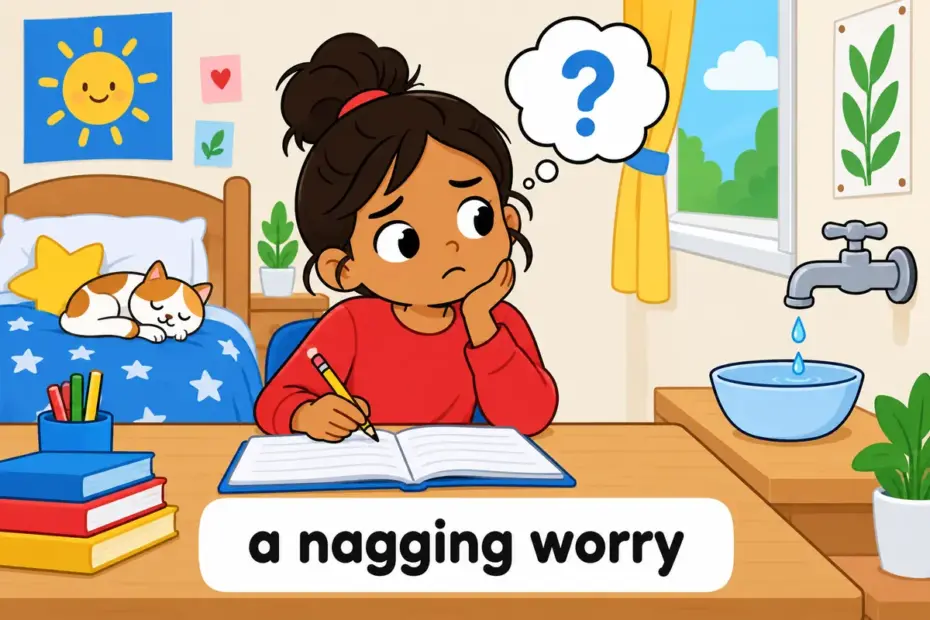
Vex means to annoy or worry someone, often with something small and repeated. To use vex in a sentence, make a person or a question the object: “The delay vexed the whole team.” The verb is transitive and slightly formal, and its adjective vexed also describes a difficult, unresolved problem.
Vex at a glance
- Vex is a transitive verb; its forms are vexes, vexed and vexing, with the noun vexation.
- It means to annoy someone or to trouble them with a nagging problem.
- The adjective vexed means difficult and unresolved, as in a vexed question.
- Vex is more formal and literary than annoy or bother.
- The commonest error is leaving out the object, because vex cannot stand alone.
What does vex mean?
Vex is a verb meaning to annoy or trouble someone, and often to worry them with a problem that will not go away. The Cambridge entry for vex records both the irritation and the ongoing worry, which is why the word suits small, persistent troubles rather than sudden shocks. A passing nuisance may bother someone for a minute, but a vexing problem keeps returning.
| Sense | Plain meaning | Example sentence |
|---|---|---|
| Annoy | Irritate someone with a small, repeated problem | The dripping tap vexed him all night. |
| Worry or trouble | Cause ongoing concern or difficulty | Falling sales vexed the board for months. |
One limitation belongs here. Vex is not a word for rage or terror, and it is gentler than enrage. When the annoyance is trivial and passing, irritated or bothered is more natural, and when a person is frightened, the right verb is alarm or frighten rather than vex.
How do you use vex in a sentence?
The verb is transitive, so something is always vexed, and the passive is as common as the active. A near synonym in tone is irk, though irk is lighter and never carries the sense of worry.
| Pattern | Example | What it signals |
|---|---|---|
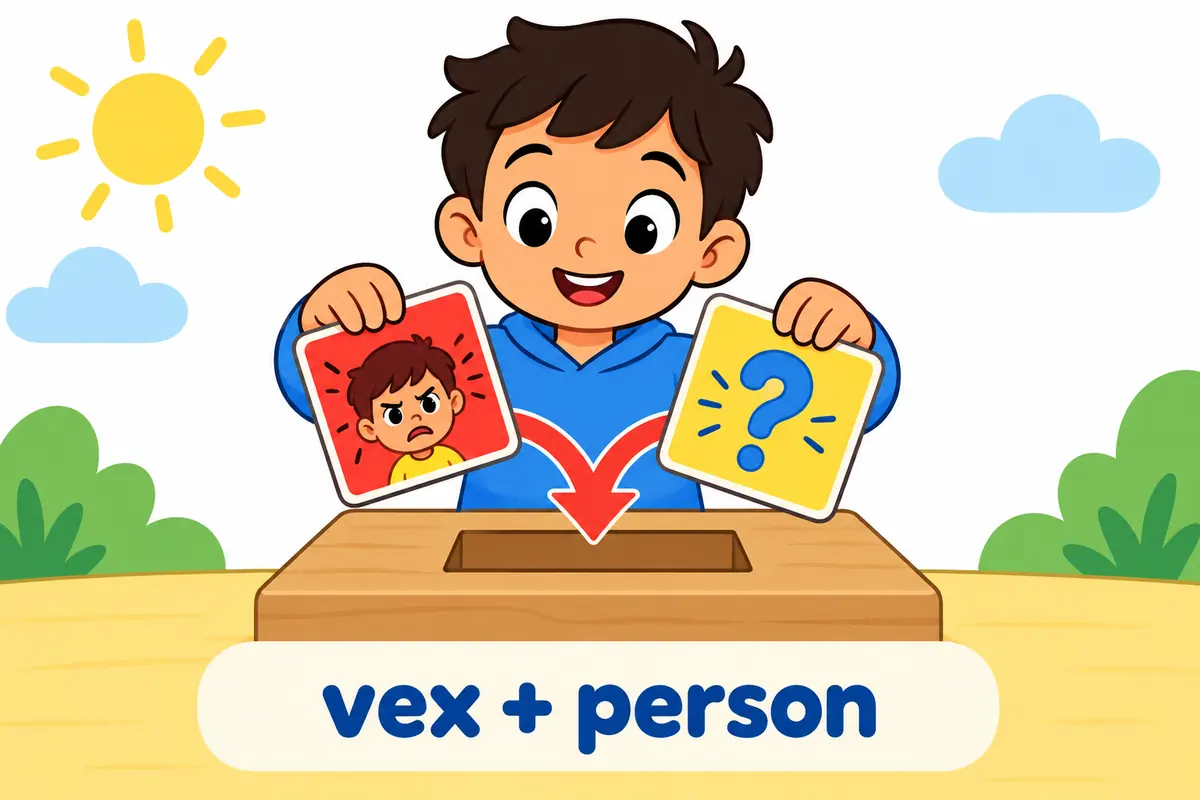
| vex + person | The noise vexed the neighbours. | The person is the object who feels the irritation. |
| be vexed + by, at or about + noun | She was vexed by the constant delays. | Passive form that puts the cause in a phrase. |
| it vexes + person + that or when | It vexed him that nobody replied. | A formal extraposed clause names the worry. |
| a vexed + question or issue | Funding remains a vexed question. | Fixed adjective meaning unresolved, not annoyed. |
Vex in a sentence: examples across contexts
Vex changes register more than meaning, moving from a light home annoyance to a formal, unresolved problem. Each example below keeps the sense of small or persistent trouble, the kind that can plague a whole week.
| Context | Example sentence | Why this works |
|---|---|---|
| Home | The squeaky hinge vexed everyone in the flat. | A tiny repeated sound suits the mild sense. |
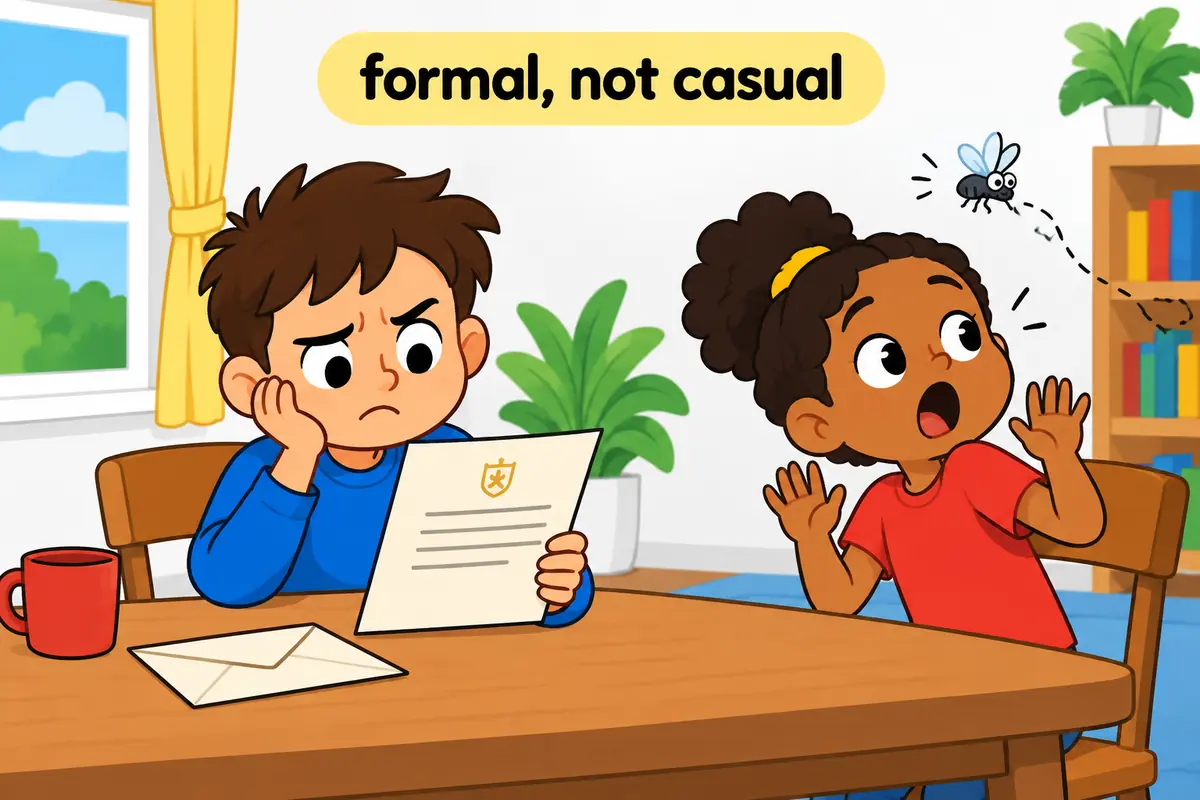
| Workplace email | We are vexed by the latest change to the booking system. | The passive keeps the tone polite and formal. |
| News report | The shortage has vexed officials for three summers. | The ongoing trouble sense appears in the tense. |
| Literary writing | A single doubt vexed her through the long winter. | The inner worry sense suits a reflective tone. |
| Academic prose | How to fund the archive remains a vexed question. | The fixed phrase means the issue is unresolved. |
| Sports report | One error vexed the goalkeeper long after the final whistle. | Shows annoyance shading into worry. |
| Legal writing | Counsel returned to the same vexed point about jurisdiction. | Uses the formal, difficult-problem sense. |
| Family | It vexed her mother that no one ever closed the gate. | The extraposed clause names a domestic irritation. |
| Conversation | It did vex me, but only for a minute. | The simple past and the downtoner keep it light. |
Only the conversational example adds a downtoner, which shows how formal the word usually is. Where the problem drags on and the mood darkens, trouble is the wider and more serious verb.
Vex vs annoy
Vex and bother both name mild irritation, but they differ in register and in how long the feeling lasts.
| Attribute | vex | annoy |
|---|---|---|
| Intensity | Mild to moderate, often lasting | Mild and immediate |
| Register | Formal and literary | Everyday and neutral |
| Typical cause | A repeated or unresolved problem | A single passing nuisance |
| Typical object | A person or a question or issue | A person |
| Extra sense | Can mean to worry | Means only to irritate |
Verdict: choose vex when the trouble is persistent or the tone is formal, and provoke only when the irritation is strong enough to draw a reaction; for an ordinary passing nuisance, annoy is the plainer and safer word.
Word forms and grammar of vex
Vex inflects as a regular verb, and its family includes two adjectives and a noun that learners often miss.
| Form | Part of speech | Example |
|---|---|---|
| vex | verb, base form | Such delays can vex any manager. |
| vexed | verb, past and past participle | The decision vexed the committee. |
| vexing | verb, present participle | The rules are still vexing applicants. |
| vexed | adjective | It is a vexed question with no easy answer. |
| vexation | noun | He sighed in quiet vexation. |
| vexatious | adjective, formal | They filed a vexatious complaint. |
Common mistakes with vex
- Incorrect:
The traffic vexed.Correct: The traffic vexed the driver. Rule: Vex is transitive, so it always needs a person or thing as its object. - Incorrect:
I vexed that the train was late.Correct: It vexed me that the train was late. Rule: The verb cannot take a that-clause directly; use the it vexed me frame. - Incorrect:
The thunder vexed the frightened child.Correct: The thunder frightened the child. Rule: Vex means mild annoyance or worry, never fear. - Incorrect:
She was very vexation after the meeting.Correct: She was full of vexation after the meeting. Rule: Vexation is a noun and cannot follow the verb be as a feeling. - Incorrect:
He vexed about the bill for hours.Correct: He worried about the bill for hours. Rule: The active verb needs an object; to describe your own state, choose a different verb.
Practice using vex
Work through the six items, then check the reasoning rather than only the answer.
- Fill the gap: The leaking roof ______ the whole family for weeks.
- Choose the better word: The buzzing fly (annoyed / vexed) her for the single second it was near.
- Correct the error: The pupils vexed that the bell never rang.
- Build a sentence: use a vexed question about a decision the school keeps postponing.
- Spot the register: which belongs in a history essay — the border has long been a vexed issue, or the border thing is super annoying?
- Rewrite in the passive: The endless forms vexed the applicants. Begin with the applicants.
Answers
- vexed — the ongoing trouble object takes the past tense of vex.
- annoyed — one passing moment is too slight and too brief for vex.
- It vexed the pupils that the bell never rang — the that-clause needs the extraposed frame.
- Model answer: How to timetable the exams remains a vexed question for the staff.
- The border has long been a vexed issue — the essay keeps an elevated register and the fixed phrase.
- The applicants were vexed by the endless forms — the passive keeps the people as the first focus.
The bottom line
Use vex in a sentence for a small or persistent trouble that annoys or worries someone, and remember that the verb always takes a person or an issue as its object. The two nuances that decide most sentences are these: vex is more formal than annoy, and its adjective vexed can mean unresolved rather than irritated. When the annoyance is brief and trivial, the plainer word serves better.
Frequently asked questions about vex
Is vex a formal word?
Vex is more formal and literary than annoy or bother, and it appears often in older writing and in careful modern prose. In casual conversation most people say annoy or irritate instead. Using vex deliberately lifts the register, so it can sound stiff in a quick message but elegant in an essay or a novel.
What does a vexed question mean?
A vexed question is a problem that people have argued about for a long time without settling it. Funding, boundaries and inherited rules are common examples. Here vexed is an adjective meaning difficult and unresolved, not annoyed, so the phrase describes the issue rather than anyone’s feelings.
Can vex describe worry as well as annoyance?
Yes. Besides mild irritation, vex can mean to trouble someone with a nagging worry that will not go away, as when falling sales vex a manager for weeks. The two senses shade into each other, since a problem that keeps returning both annoys and worries the person who faces it.
Does vex appear in the passive voice?
Vex appears in the passive often, especially as be vexed by, at or about something. The passive puts the person first, as in she was vexed by the delays, which suits formal writing. The active voice is more direct but names the source of the irritation as the subject.
Have you ever been in a situation where something or someone left you feeling irritated or frustrated? This feeling of annoyance or distress is what we commonly refer to as being “vexed.” When something vexes us, it can range from minor inconveniences to major issues that cause us distress.
In everyday interactions, feeling vexed can occur when faced with obstacles, misunderstandings, or challenges that test our patience. While the feeling may be temporary, it can significantly impact our mood and reactions. Let’s explore further how we can navigate these vexing moments and find constructive ways to address them.
7 Examples Of Vex Used In a Sentence For Kids
- The loud noise can vex the baby.
- Don’t let the spilled milk vex you.
- It’s okay to feel vexed when things don’t go as planned.
- Take a deep breath when you start to feel vexed.
- Sometimes we all get vexed, but it’s important to stay calm.
- Let’s find a solution together when something vexes us.
- Remember to talk to a grown-up if something is really vexing you.
14 Sentences with Vex Examples
- Vex your professors with thoughtful questions during lectures to deepen your understanding.
- Don’t let small setbacks vex you; stay focused on your goals and keep working hard.
- Group projects can sometimes vex students, but effective communication and collaboration can make it easier.
- Take breaks to relax and unwind when deadlines start to vex you.
- It can vex students when they struggle to balance academics and extracurricular activities.
- Vex your study group to create challenging practice quizzes to help each other prepare for exams.
- Don’t let difficult assignments vex you; seek help from professors or academic advisors.
- Roommate conflicts can vex students, but open communication and setting boundaries can help resolve issues.
- Trying to navigate campus bureaucracy can vex students, but staying organized and persistent is key.
- Feeling lost in your career path can vex students, but seeking guidance from career counselors can provide clarity.
- Feeling overwhelmed by the amount of coursework can vex students, but breaking tasks into smaller chunks can make it more manageable.
- Vex your friends to form a study group to motivate each other and share resources.
- Feeling homesick can vex students, but connecting with peers and exploring campus activities can help ease the feeling.
- Struggling to find internships or job opportunities can vex students, but networking and attending career fairs can open doors.
How To Use Vex in Sentences?
To use the word Vex in a sentence, begin by identifying a situation that is frustrating, irritating, or causing someone to feel annoyed. For example, “The constant noise from the construction site began to vex the residents of the peaceful neighborhood.” In this sentence, the word Vex is used to describe how the noise is causing annoyance or frustration to the residents.
When incorporating the word Vex in a sentence, it is important to pay attention to the context in which it is being used. Vex is mainly used to express a feeling of being annoyed or irritated by a particular situation or person. For instance, “His constant criticism started to vex his coworkers, making the work environment tense and uncomfortable.”
As you practice using the word Vex in different sentences, try to vary the situations and contexts in which it is applied. This will help you become more familiar with the nuances of the word and how it can be effectively used to convey a sense of annoyance or frustration.
In summary, when learning to use the word Vex in a sentence, remember to choose situations where someone is feeling irritated or frustrated, and ensure the context fits the meaning of the word. By practicing with different examples, you can improve your understanding and mastery of incorporating Vex effectively in your writing.
Conclusion
In conclusion, sentences containing the word “vex” typically express feelings of being annoyed, frustrated, or agitated. These sentences often convey a sense of being bothered or troubled by something, whether it be a situation, individual, or circumstance. By using “vex” in sentences, writers can effectively convey a strong emotion of irritation or displeasure.
Whether describing a vexing dilemma, a vexatious person, or a vexing problem, sentences with “vex” clearly communicate feelings of annoyance or disturbance. In literature and everyday language, the word “vex” remains a powerful choice for articulating moments of frustration or aggravation, helping to convey a range of negative emotions with precision and clarity.


