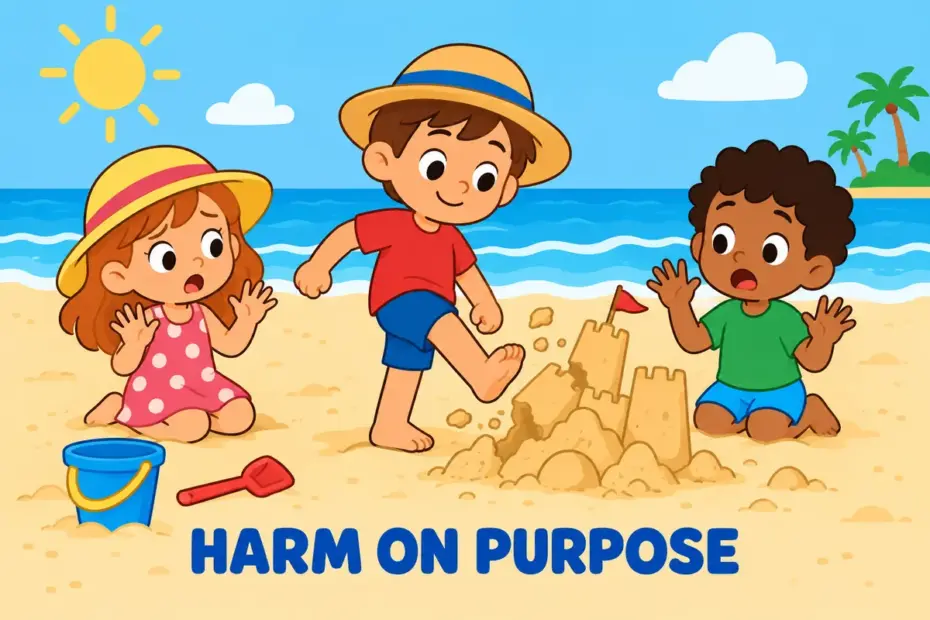
Wanton describes an act that is deliberate and unprovoked, carried out with no concern for the harm it does: wanton damage, wanton cruelty, a wanton disregard for safety. The pattern is the adjective placed before the thing it describes, as in “The empty house suffered wanton destruction.”
Wanton at a glance
- Wanton is an adjective; its forms are wanton, wantonly and the noun wantonness.
- It describes deliberate harm done for no reason, not merely careless risk.
- The word attaches to acts and attitudes: destruction, cruelty, disregard, violence.
- Wanton belongs to formal, legal and literary writing rather than conversation.
- The commonest error is spelling it wonton, which is a kind of dumpling.
What does wanton mean?
Wanton is an adjective meaning deliberate and unprovoked, done without any proper reason or concern for the consequences. The Cambridge entry for wanton points to both deliberate harm and a lack of restraint, and the older sense of reckless self-indulgence survives mainly in literary writing. Where the act is planned and aimed at harm, deliberate covers the intent but not the cruelty.
| Sense | Plain meaning | Example sentence |
|---|---|---|
| Deliberate and unprovoked | Harm done for no reason | The vandals caused wanton damage. |
| Showing no regard | Ignoring the risk to others | The order showed a wanton disregard for safety. |
| Old use, unrestrained | Self-indulgent and without restraint | Critics called the spending wanton. |
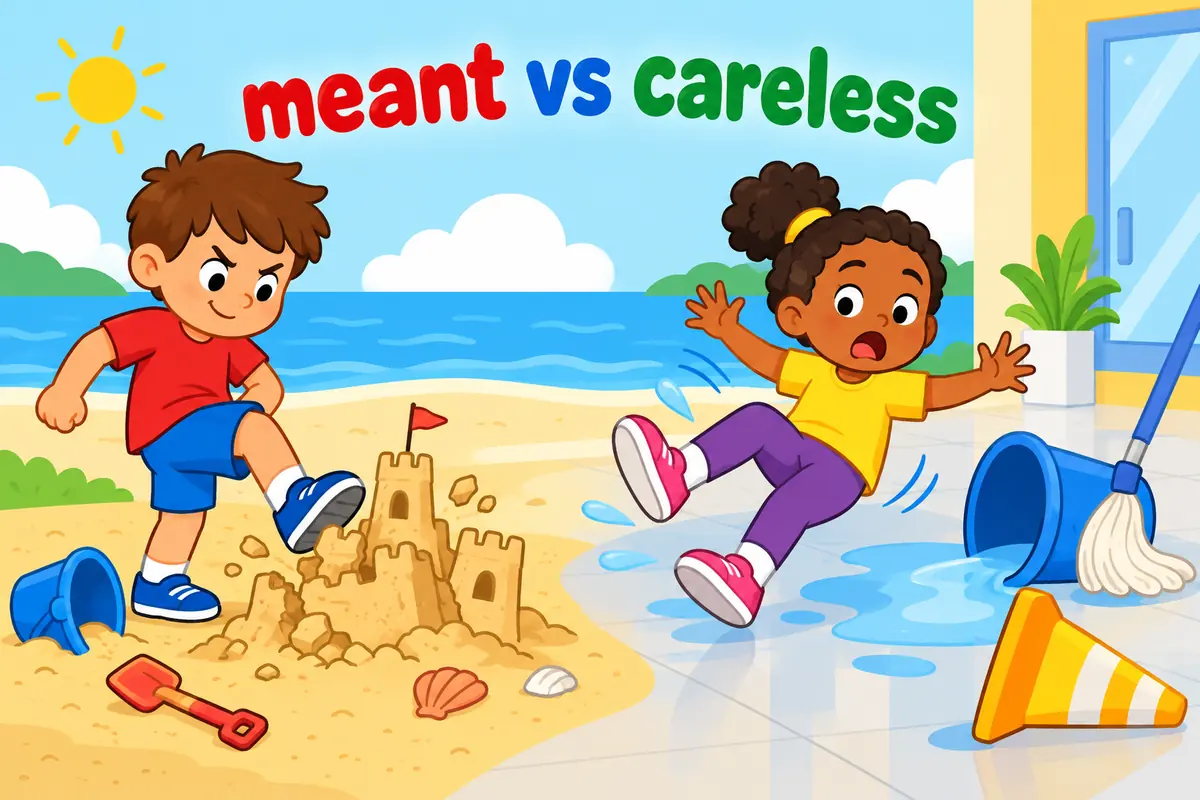
One limitation is worth stating plainly. Wanton is a serious, formal charge, so it is the wrong word for ordinary mischief or a small mistake. It also does not mean merely careless: speeding through a school zone is reckless, while smashing windows for fun is wanton.
How do you use wanton in a sentence?
Place wanton directly before the act or attitude it condemns, and name the harm so the charge is concrete. Five patterns cover almost every natural sentence, and the fixed legal phrases are the ones readers meet most.
| Pattern | Example | What it signals |
|---|---|---|
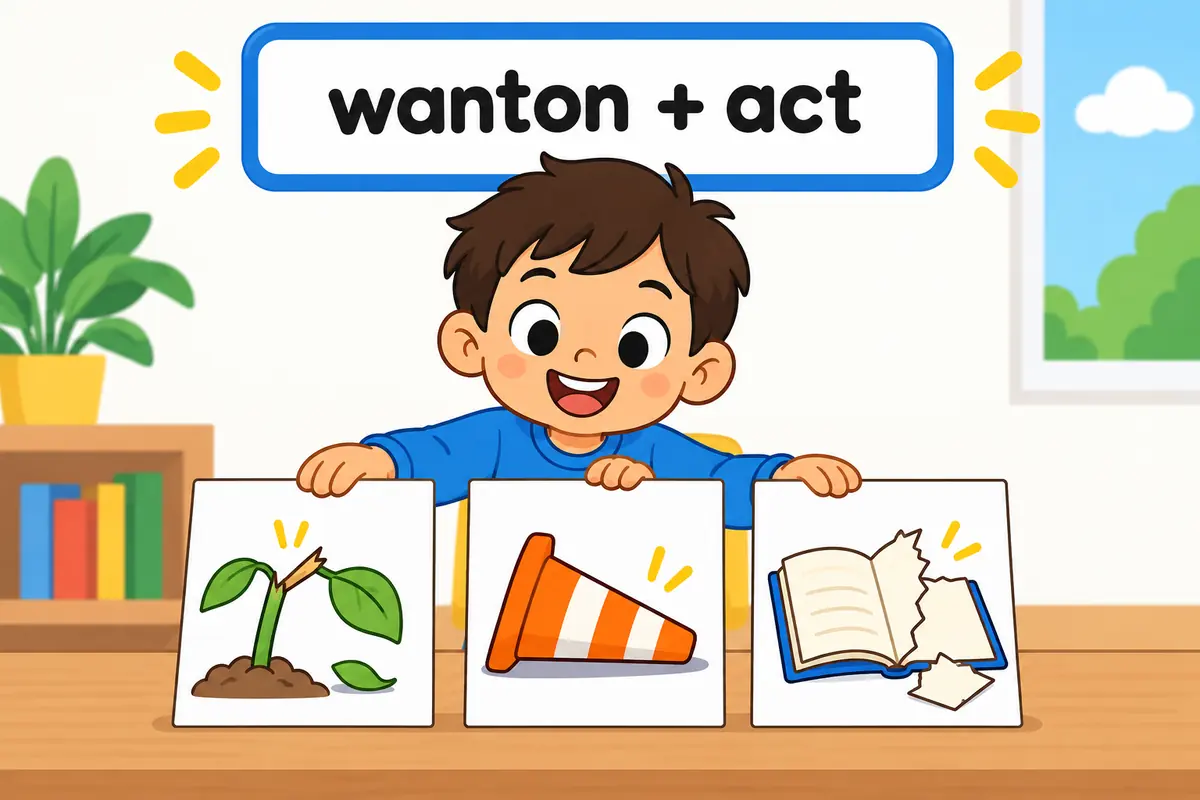
| wanton + act noun | They were fined for wanton destruction of the hedgerow. | Names the harm in a formal charge. |
| wanton disregard for + thing | The company showed wanton disregard for the rules. | A fixed phrase used in reports and law. |
| wanton + cruelty or violence | The report condemned the wanton cruelty. | Stresses that the harm was unprovoked. |
| wanton + waste | The scheme was a wanton waste of public money. | Condemns spending as pointless and heedless. |
| wantonly + verb | They wantonly destroyed the young trees. | Moves the strong charge onto the action itself. |
The adjective is nearly always attributive; it seldom appears after a linking verb, because the act matters more than the person.
Wanton in a sentence: examples across contexts
Wanton keeps its grave, formal meaning wherever it appears, which is why it clusters in news, law and commentary. The nine sentences below move from a playground to a courtroom, and each names the harm that was needless.
| Context | Example sentence | Why this works |
|---|---|---|
| Classroom | The teacher explained why wanton damage to books hurts everyone. | A small setting makes the moral point gently. |
| Workplace email | Management described the leaks as a wanton breach of trust. | Uses the adjective for a serious internal charge. |
| News report | Residents condemned the wanton felling of the old oaks. | Pairs a concrete act with strong public feeling. |
| Legal writing | The claim alleged wanton disregard for the tenant’s safety. | Uses the fixed phrase that appears in pleadings. |
| Editorial | The budget cuts were a wanton gamble with public health. | Condemns a decision as needlessly risky. |
| History essay | Historians debate how far the raid was truly wanton. | Shows the word can be argued over. |
| Environmental writing | Campaigners tracked the wanton dumping of waste in the river. | Names the offence rather than the offender. |
| Sports commentary | The captain called the foul a wanton act with no place in the game. | Condemns intent, not just the result. |
| Conversation | It felt almost wanton to throw away food. That is, needless. | The informal repair shows the word is marked as formal. |
In every row the word carries blame and gravity. Used as a casual synonym for naughty, it lands badly.
Wanton vs reckless
Wanton and reckless both appear in legal writing about harm and they are not interchangeable. Reckless means taking a risk you should have known better than to take; wanton means causing harm on purpose, for no good reason.
| Attribute | wanton | reckless |
|---|---|---|
| Core meaning | Deliberate and unprovoked harm | Careless disregard of an obvious risk |
| Intent | Aimed at the harm | Not aimed, but avoidable |
| Typical noun | Destruction, cruelty, disregard | Driving, spending, behaviour |
| Strength | Stronger, implies callousness | Serious but less loaded |
| Register | Formal and literary | Neutral to formal |
| Common slip | Using it for mere clumsiness | Using it for planned harm |
Verdict: choose reckless when somebody ignored a danger without meaning harm, and choose wanton when the harm was clearly intended or enjoyed. A collision caused by speed is reckless; a bonfire of someone else’s letters is wanton.
Word forms and grammar of wanton
Wanton inflects as an adjective, and its adverb wantonly carries the same charge onto a verb. The table also marks the spelling trap that catches learners and, occasionally, headlines.
| Form | Part of speech | Example |
|---|---|---|
| wanton | adjective | They deplored the wanton waste. |
| wantonly | adverb | The trees were wantonly cut down. |
| wantonness | noun | Reviewers noted the wantonness of the attack. |
| more wanton | comparative, unusual | A more wanton act is hard to imagine. |
| wonton | non-standard for wanton | Wonton is a dumpling, not a legal charge. |
Comparatives are grammatical but rare, because wanton already marks the extreme of needless harm.
Common mistakes with wanton
- Incorrect:
A carton of wanton soup, please.Correct: A carton of wonton soup, please. Rule: The dumpling is wonton; the adjective for needless harm is wanton. - Incorrect:
He tripped and caused wanton damage to the vase.Correct: He tripped and accidentally broke the vase. Rule: Wanton requires intent, so an accident cannot be wanton. - Incorrect:
The mistake was wanton, but nobody minded.Correct: The mistake was careless, but nobody minded. Rule: A small slip is careless; keep wanton for grave, deliberate harm. - Incorrect:
She wanton to leave the gate open.Correct: She heedlessly left the gate open. Rule: Wanton is an adjective, so it cannot sit where a verb belongs. - Incorrect:
The report described a wanton of the rules.Correct: The report described a wanton disregard for the rules. Rule: Use the adjective before its noun; canon, meaning an accepted body of works, merely looks similar.
Practice using wanton
Work through the six items, then check the reasoning rather than only the answer.
- Fill the gap: The court condemned the ______ destruction of the ancient wall.
- Choose the better word: Driving at that speed in the rain was (wanton / reckless).
- Correct the error: The spill was a wanton accident.
- Build a sentence: use wanton disregard about a firm that ignored safety warnings.
- Spot the register: which belongs in a news report — the fire was a wanton act, or someone was being really naughty?
- Rewrite with the adverb: They threw the paint without caring. Use wantonly instead.
Answers
- wanton — the adjective sits before the act it condemns, destruction.
- reckless — the driver took a risk without intending harm, which is reckless.
- The spill was a heedless accident — wanton needs intent and cannot describe an accident.
- Model answer: Inspectors found a wanton disregard for the safety of workers.
- The fire was a wanton act — a report keeps the formal, serious word.
- They wantonly threw the paint — the adverb moves the charge onto the action.
The bottom line
Use wanton in a sentence to condemn harm that is deliberate and needless, and place it directly before the act it describes. The two facts that decide most sentences are these: the word requires intent, so it can never describe an accident, and it is a grave formal charge, so it does not fit small mischief. Where somebody merely ignored a risk, reckless is the accurate choice.
Frequently asked questions about wanton
Is wanton a formal word?
Yes. Wanton belongs to formal, legal and literary writing, where it carries a serious accusation of needless harm. In conversation it sounds heavy and slightly old-fashioned, which is why speakers usually reach for needless, deliberate or cruel instead of the exact adjective in casual talk.
Can wanton describe an accident?
No. Wanton requires intent, so an event that nobody meant to cause cannot be wanton. An accident may be unfortunate or careless, but the charge of wanton behaviour claims that the harm was aimed at or at least callously welcomed, which is a much stronger matter.
What is the difference between wanton and reckless?
Reckless means ignoring a clear risk, while wanton means causing harm on purpose for no good reason. Speed that endangers people is reckless; smashing a neighbour’s windows for fun is wanton. Both are serious, but only wanton implies that the harm itself was the point.
Is wanton related to wonton?
The two words are unrelated despite the similar spelling. Wonton is the Chinese dumpling served in soup, while wanton is the adjective meaning needless and deliberate harm. A simple way to keep them apart is that wonton names food and wanton describes an act.
Do you know what it means to act wanton? Wanton is an adjective that describes something done in a cruel, excessive, or unjustifiable way without any restraint or control.
This word is often used to convey a sense of recklessness or disregard for consequences, making it a powerful term to highlight behavior that is deemed inconsiderate or unethical.
7 Examples Of Wanton Used In a Sentence For Kids
- The wanton kitten kept chasing its tail in circles.
- The wanton puppy ran around the yard, full of energy.
- The wanton squirrel jumped from tree to tree, looking for nuts.
- The wanton butterfly fluttered from flower to flower, enjoying the sunshine.
- The wanton bird sang a beautiful song in the morning.
- The wanton fish swam quickly in the pond.
- The wanton rabbit hopped happily in the grass.
14 Sentences with Wanton Examples
- Wanton destruction of college property will not be tolerated.
- Some students engaged in wanton vandalism last night.
- The graffiti on the walls seemed to be a result of wanton mischief.
- The professor was disappointed with the wanton disregard for academic integrity.
- It is important to avoid wanton plagiarism in your research papers.
- The dean warned students against wanton misconduct during the upcoming festival.
- I was shocked by the wanton misuse of resources by some of my classmates.
- The committee is investigating the incident of wanton cheating during the exam.
- The student council president condemned the wanton disruption of classes by a group of students.
- The university has a strict policy against wanton harassment of any kind.
- It’s crucial for students to be aware of the consequences of wanton indiscipline in college.
- The disciplinary committee dealt with the case of wanton rebellion swiftly.
- The act of wanton defiance towards authority will only lead to trouble.
- Wanton violation of campus rules can result in serious repercussions.
How To Use Wanton in Sentences?
Wanton means deliberate and unprovoked in terms of actions or behavior. To use it in a sentence, follow these steps:
-
Identify the action or behavior that is deliberate and unprovoked.
-
Place Wanton in a position in the sentence where it can describe the action or behavior accurately.
Example Sentence: She caused a wanton destruction of the property by smashing the windows with a baseball bat.
In this sentence, “wanton” describes the destruction of the property as deliberate and unprovoked.
Remember, wanton is a strong word that implies reckless and intentional behavior, so use it carefully and make sure it accurately reflects the situation.
Conclusion
In conclusion, wanton behavior or disregard for others’ feelings was evident in the wanton destruction of property during the riots. The wanton disregard for safety resulted in injuries and chaos in the city. It is important to remember that such wanton actions have consequences that can harm not just individuals, but entire communities. Whether it is through violence, negligence, or carelessness, wanton behavior should not be excused or tolerated. Society must strive for empathy, responsibility, and respect to prevent wanton harm and ensure a safe and harmonious environment for all.


