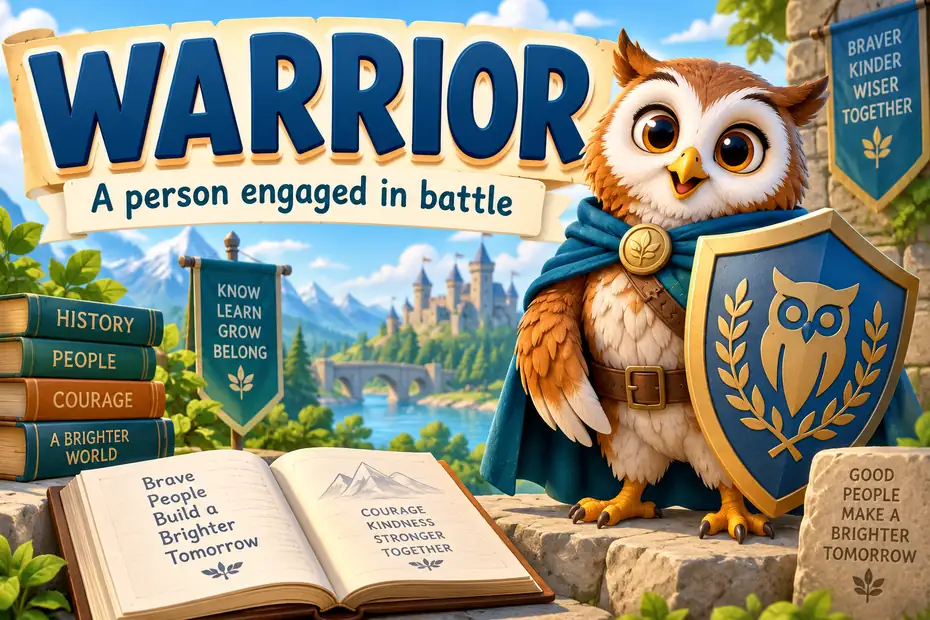
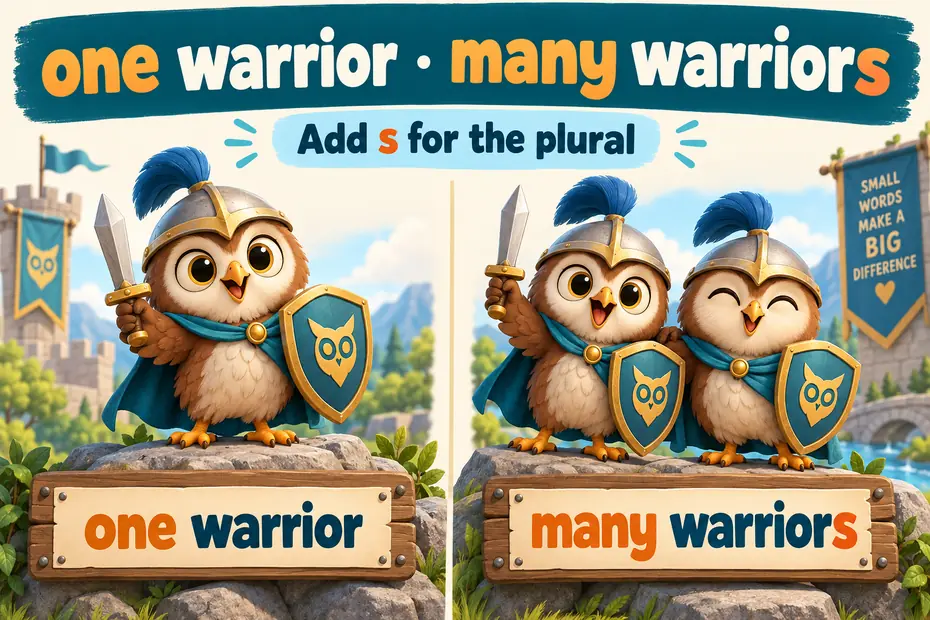
Warrior is a noun for a person engaged or experienced in warfare, and it can also describe someone involved in a struggle or cause. Use “a warrior” for one person and “warriors” for several: “The warrior guarded the gate.” In figurative writing, explain the struggle rather than assuming a battle.
What are the key grammar facts about warrior?
- Singular: a warrior or the warrior.
- Plural: warriors.
- Singular possessive: the warrior’s shield.
- Plural possessive: the warriors’ shields.
- Word type: noun, sometimes used before another noun.
- Capitalization: lowercase in ordinary descriptions; a specific title or team name may use a capital.
How do you build a complete sentence with warrior?
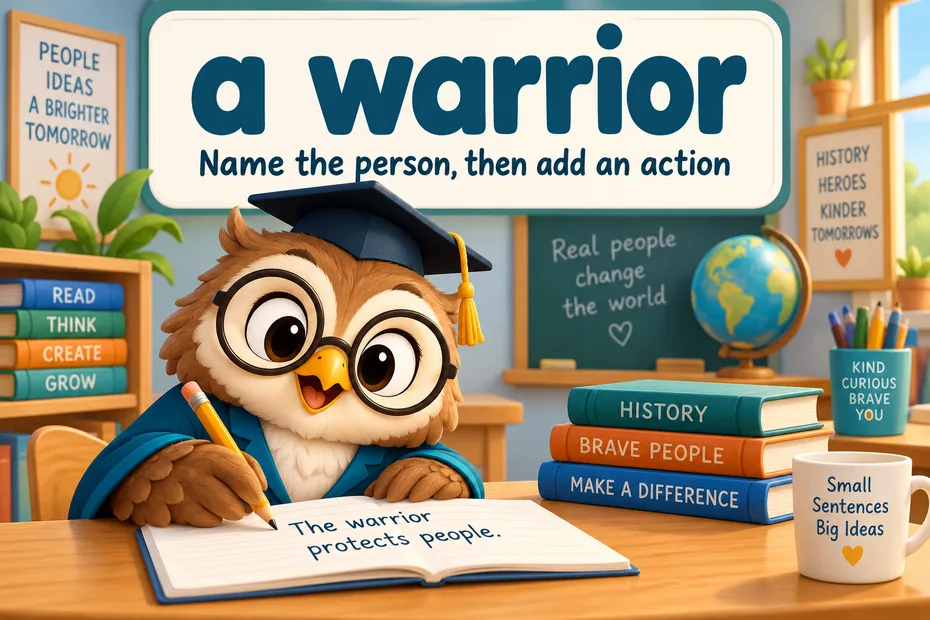
Give the warrior an action or a description through a complete verb. “A warrior entered the courtyard” names a person and reports an event. “The warrior was exhausted” names a person and describes a state. A phrase such as “the brave warrior at the gate” is not a complete sentence by itself.
Match the verb to the noun’s number. “The warrior stands beside the gate” describes one person. “The warriors stand beside the gate” describes several. In the past tense, the regular verb can remain the same: “The warrior stood” and “The warriors stood.” Do not add an apostrophe merely to make warrior plural.
| Form | Original example | What it expresses |
|---|---|---|
| A warrior | A warrior carried the banner. | One person, newly introduced. |
| The warrior | The warrior lowered the banner. | A person already identified. |
| Warriors | Warriors gathered in the courtyard. | More than one person. |
| Warrior’s | The warrior’s shield rested against the wall. | Something belonging to one warrior. |
When is warrior literal, and when is it figurative?
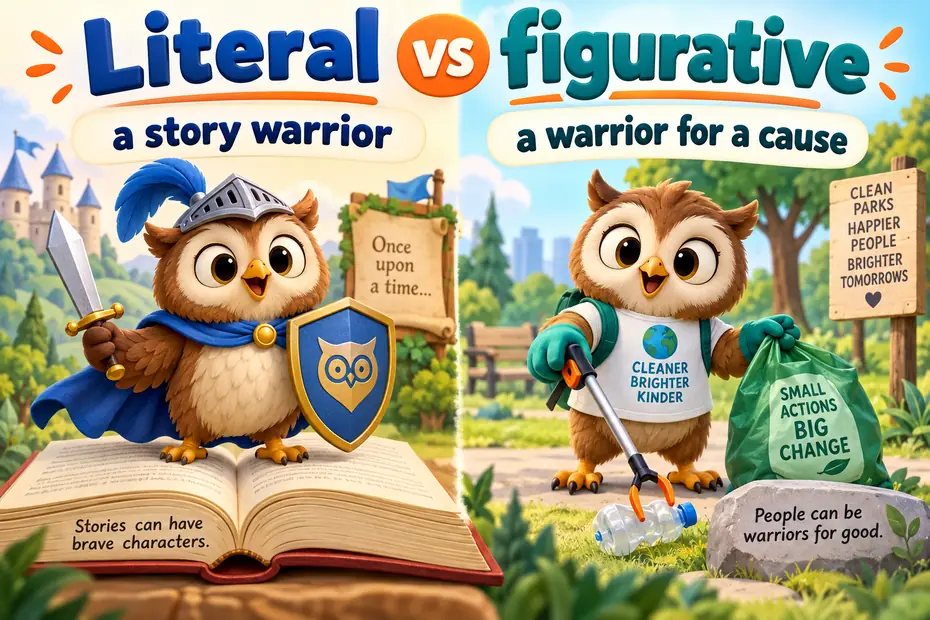
Literal warrior refers to warfare; figurative warrior transfers that idea to another struggle. Merriam-Webster records the warfare meaning and a broader conflict or struggle sense. “The warrior returned from battle” is literal within its story. “She was a warrior for accessible education” presents determined advocacy metaphorically.
For a figurative example, name what the person does: “She was a warrior for accessible education, organizing evening classes and collecting used textbooks.” The concrete actions prevent the metaphor from replacing useful information. In a neutral news report, “education advocate” may be clearer if the writer does not intend a dramatic or admiring tone.
Do not treat every figurative compound as a compliment. Oxford Learner’s Dictionaries notes that some cause-related compounds can be disapproving. Context, speaker, and surrounding wording determine the tone. A label that sounds enthusiastic in one setting can sound sarcastic in another.
Which original examples suit different kinds of writing?
Choose the sentence according to the scene and tone you need. These invented examples model vocabulary use, rather than making claims about real historical figures or groups.
- The warrior placed her shield beside the entrance.
- Two warriors returned to the camp before sunset.
- The story follows a warrior who chooses negotiation.
- The poet described the warrior’s long journey home.
- The children drew a friendly warrior for the storybook.
- He called his grandmother a warrior for her persistence.
- The campaign’s volunteers were described as warriors for change.
- The museum label identified the figure as a warrior.
The sixth and seventh examples need context if used outside this list. They praise persistence or activism by metaphor; they do not establish combat experience. The museum sentence, meanwhile, reports a label rather than inventing the figure’s identity. Good descriptive writing makes the source of an interpretation visible.
Does warrior mean the same thing as soldier or hero?
No: the words overlap, but they emphasize different things. Warrior foregrounds fighting or struggle; soldier identifies a military role; hero expresses admiration or an important story role. “The novel’s hero is a warrior” can use both words because the character’s narrative role and fighting role are different attributes.
A fantasy story can have a warrior who is not the hero, and a hero can solve problems without fighting. For a factual account of a serving person, use the person’s actual role when you know it. Avoid exchanging a specific role for a dramatic label simply because the label sounds more powerful.
Which earlier claims should be read with care?
The original examples illustrate wording; they do not prove cultural or historical facts. In particular, the retained claim that warrior is a popular choice for showcasing Bharatanatyam does not identify evidence for that assertion. A safer language model is “The performance portrayed a warrior character,” which describes a particular imagined performance without claiming a general tradition.
Likewise, honor and bravery are common storytelling associations, not requirements built into every use of warrior. A dictionary definition does not guarantee that a warrior is morally admirable or belongs to one gender. Describe the individual action when a character’s courage or choices matter.
Frequently asked questions
Can a woman be called a warrior?
Yes. Warrior is a noun for a person and is not restricted to men. “The warrior adjusted her shield” is a straightforward sentence. Use the character’s pronouns and actual role; no special replacement term is required merely because the person is a woman.
Should warrior have a capital letter?
Use lowercase for an ordinary noun: “a warrior.” Capitalize it at the start of a sentence or as part of a verified name or title. A sports team’s official name follows its own capitalization. Do not capitalize the word everywhere just because it sounds important.
What is a simple warrior sentence for a child?
“The warrior carried a shield” is short and concrete. It names the person, gives a past-tense action, and names the object. If introducing a fictional character, “A kind warrior helped the travelers” adds a specific helpful action rather than equating fighting with goodness.
Original sentence collection and explanations
“Warrior,” in the realm of storytelling and mythology, typically refers to a fierce and skilled fighter, often with a code of honor and bravery. Warriors are frequently portrayed as combat experts, sworn to protect and defend their people or beliefs with unwavering determination.
Whether depicted as knights in shining armor, samurais wielding katanas, or fierce Amazonian warriors, these characters exemplify strength, resilience, and a willingness to face adversity head-on. Throughout literature and folklore, warriors play central roles in epic battles, quests for honor, and struggles against formidable foes.
7 Examples Of Warrior Used In a Sentence For Kids
- Warrior means a brave fighter.
- The warrior is ready to protect us.
- We can be brave and strong like a warrior.
- The warrior fights courageously in battles.
- My favorite superhero is a powerful warrior.
- We can all be heroes like a warrior.
- Let’s pretend to be warriors and save the day!
14 Sentences with Warrior Examples
- Warrior is a popular choice for college cultural fests to showcase traditional dance forms like Bharatanatyam.
- Many college students in India like to dress up as a warrior for themed costume parties.
- The college inter-hostel sports competition had a theme of “Battle of the Warriors“.
- The annual college debate competition was intense, with each participant being a warrior for their respective arguments.
- As part of the college rally, students painted slogans like “Be a Social Warrior” on posters and banners.
- The college’s martial arts club had a special workshop on self-defense techniques led by a seasoned warrior.
- For the college Dandiya night, students practiced vibrant dance moves inspired by the warrior spirit.
- As part of the college’s charity drive, students volunteered at a local orphanage, embodying the compassion of a warrior.
- The college’s environmental club organized a tree-planting campaign, encouraging students to be warriors for sustainability.
- During the college entrepreneurship summit, successful business leaders shared their stories of overcoming challenges like true warriors.
- The college’s coding club held a hackathon where participants showcased their skills as digital warriors.
- In the college fashion show, one of the segments featured designs inspired by ancient warrior armor.
- The college’s literature club organized a poetry slam where students expressed their inner warrior through spoken word.
- As part of a college workshop on mental health awareness, students discussed the importance of being a warrior against stigma and seeking help when needed.
How To Use Warrior in Sentences?
To use the word Warrior in a sentence, you can follow these simple steps:
-
Identify the context: Determine the meaning of the word Warrior as a noun referring to a brave fighter or soldier.
-
Choose your words carefully: Select a subject and a verb that can work together with the word Warrior to form a coherent sentence. For example, “The Warrior displayed incredible courage on the battlefield.”
-
Consider the structure: Ensure that the sentence flows well and makes sense. It is essential to have a clear subject (such as “The Warrior“), a verb (like “displayed”), and additional information to give context to the sentence.
-
Practice using it in different contexts: Experiment with using the word Warrior in various situations to become comfortable incorporating it into your vocabulary. For instance, “The Warrior was known for their unwavering determination in the face of adversity.”
-
Review and seek feedback: After constructing a sentence using the word Warrior, review it to check for proper grammar and clarity. You can also ask for feedback from others to improve your sentence construction skills.
By following these guidelines, you can effectively incorporate the word Warrior into your sentences with confidence and clarity.
Conclusion
In conclusion, a warrior embodies strength, courage, and determination in the face of adversity. They are known for their unwavering commitment to their cause, displaying valor and bravery in battles. Throughout history, warriors have played a crucial role in shaping the course of events through their dedication and sacrifice. Whether on the battlefield or in personal challenges, a warrior’s spirit shines through, inspiring others to push beyond their limits and strive for success.
Ultimately, the essence of a warrior lies in its resilience and indomitable spirit. They serve as a symbol of determination and perseverance, showing that with grit and perseverance, any obstacle can be overcome. The legacy of a warrior endures through the ages, leaving a lasting impact on society and inspiring future generations to display the same courage and strength in the face of challenges.



