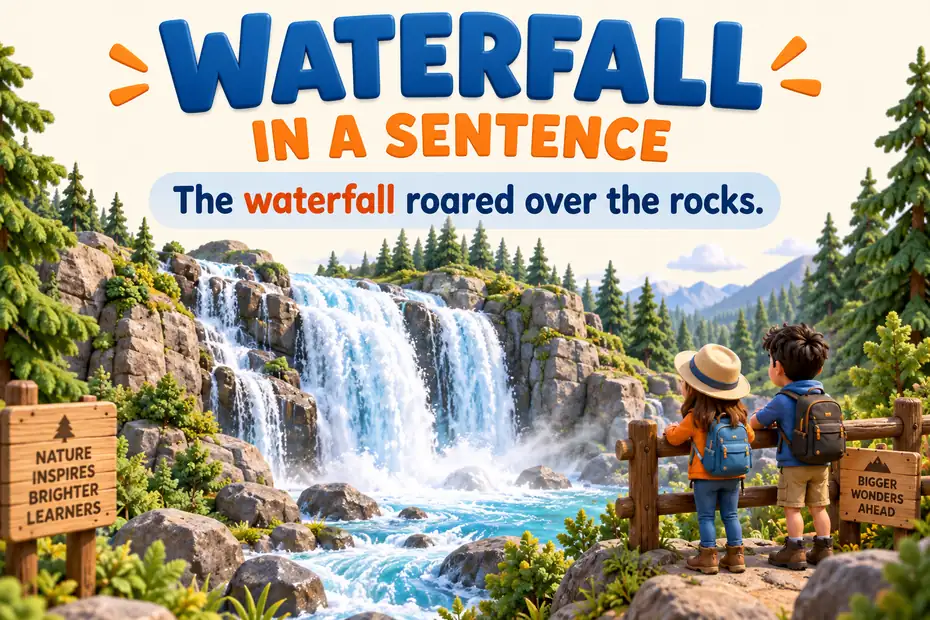
Waterfall in a sentence: “The waterfall roared over the rocks.” Waterfall is usually a countable noun naming water that drops steeply over an edge. Use a waterfall for one, waterfalls for more than one, and a separate verb such as roared, flowed, or cascaded to describe its action.
- Write the noun as one word: waterfall.
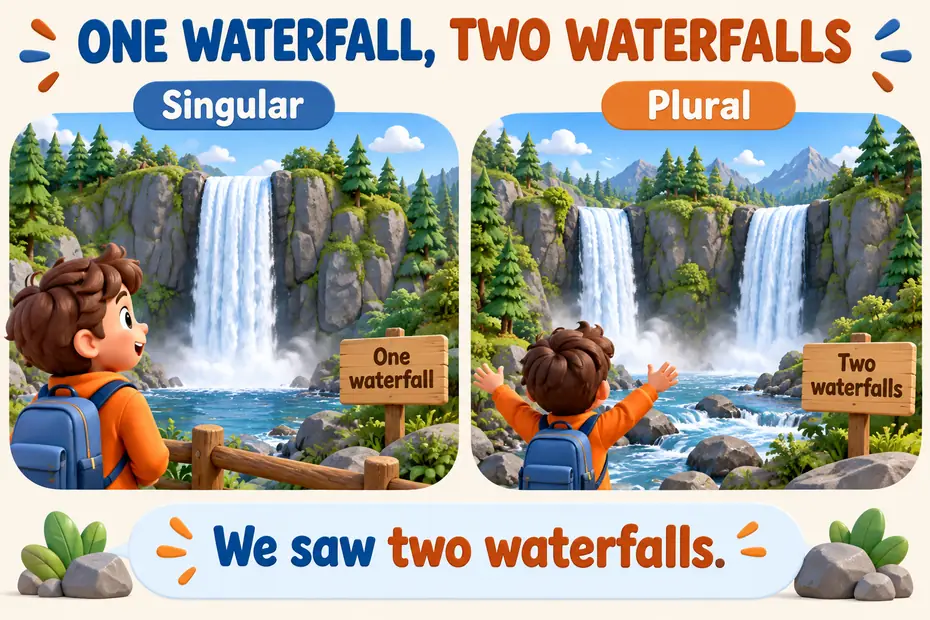
- The regular plural is waterfalls.
- Use a waterfall, because the word begins with a consonant sound.
- In “a hidden waterfall,” hidden describes the noun waterfall.
- A waterfall can be natural, artificial, or part of a figurative comparison.
How do you use waterfall in a sentence?
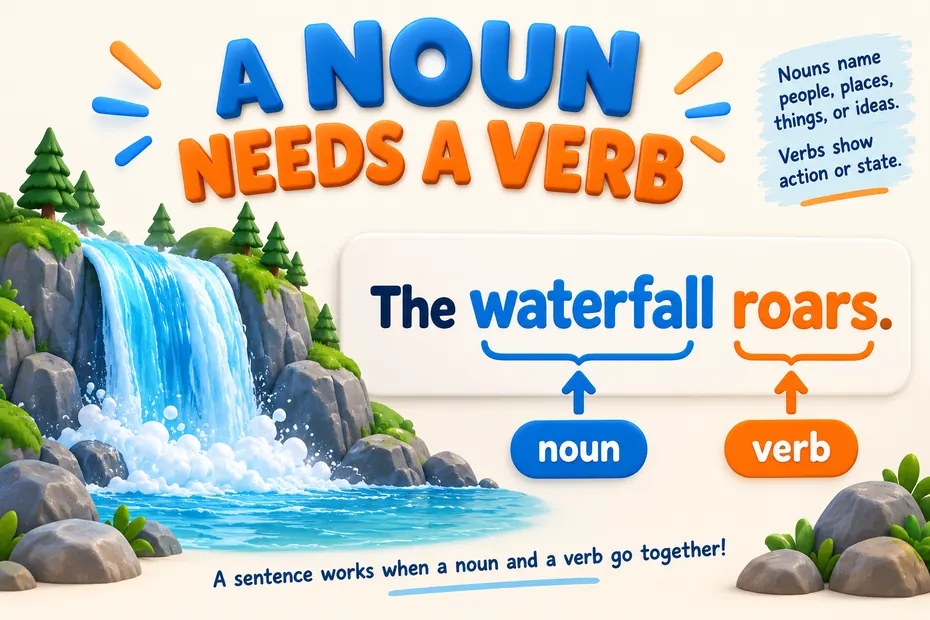
Give waterfall a clear role, then choose a verb that fits the meaning. “The waterfall thundered” makes the waterfall the subject. “We photographed the waterfall” makes it the object of photographed. “Mist rose from the waterfall” puts the noun after the preposition from.
Merriam-Webster’s waterfall entry identifies the word as a noun and includes both natural and artificial examples. For ordinary learner writing, treating it as a noun is the clearest starting point. Do not force the word into a verb position just because falling water moves.
| Pattern | Example | What it teaches |
|---|---|---|
| Singular subject | The waterfall is loud. | Singular noun with is |
| Plural subject | The waterfalls are loud. | Plural noun with are |
| Object | Maya sketched a waterfall. | Something receiving the action |
| After a preposition | We stopped near the waterfall. | A location phrase |
| Noun modifier | The waterfall trail is closed. | Waterfall identifies the kind of trail |
Clear waterfall sentence examples for different levels
Short examples help children identify the noun; longer examples show location, cause, and description. Each sentence below supplies information rather than repeating “waterfall” unnecessarily.
- The waterfall is behind the trees.
- I can hear a waterfall.
- We drew two waterfalls in our notebooks.
- The waterfall sends mist into the air.
- A rainbow appeared in the spray beside the waterfall.
- We watched the waterfall from the marked lookout.
- After the rain, the waterfall sounded louder than before.
- The artist painted the waterfall with thin white strokes.
- Although the waterfall looked small from the road, its roar carried across the valley.
- The hotel’s artificial waterfall trickled beside the reception desk.
Choose a when introducing an unspecified waterfall: “We found a waterfall on the map.” Choose the when the reader already knows which one: “The waterfall was beside the trail.” A name can also identify it: “We photographed Niagara Falls.” The place name does not need an extra waterfall unless the context calls for explanation.
Which common waterfall examples need correction?
The older examples below remain available, but three points need clarification. In “the hidden waterfall,” waterfall is a noun, not an adjective; hidden is the describing word. In “waterfall trail,” the noun modifies another noun, which differs from labeling every use an adjective.
“The rain began to waterfall down from the sky” is awkward for standard learner English. Prefer “The rain began to pour” or “Rainwater cascaded over the roof.” If the exercise requires the exact noun, write “Heavy rain fed the waterfall.” That version keeps both the meaning and the grammar clear.
Sentences about splashing, swimming, or jumping into waterfall pools should not be read as activity recommendations. NSW National Parks’ waterfall safety guidance advises following signs, staying on marked tracks, and recognizing slippery rocks and paths. A safer classroom example is “We admired the waterfall from behind the railing.”
How can you make waterfall descriptions more precise?
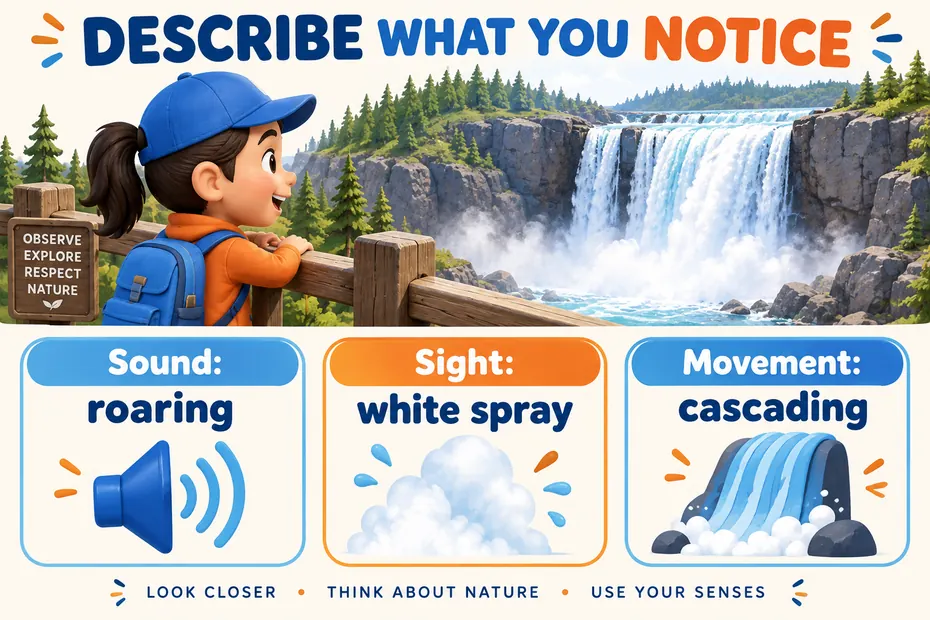
Pick one observable detail: sound, appearance, movement, or position. “The waterfall was beautiful” states an opinion. “White spray rose above the dark rocks” gives the reader a scene. You can combine them without overloading the sentence: “The waterfall roared beneath a cloud of white spray.”
Match the verb to the subject. A waterfall roars; water cascades; mist drifts; visitors watch. Changing the subject changes what the sentence emphasizes. In creative writing, “Her hair fell like a waterfall” is a simile: like signals a comparison, rather than claiming that hair is water.
Frequently asked questions
Is waterfall one word or two?
The ordinary noun is one word: waterfall. “Water falls over the ledge” is also correct, but it contains the noun water followed by the verb falls. Compare “The waterfall is loud” with “The water falls loudly.” The space changes the grammar.
Can waterfall be used in a question?
Yes. Write “Where is the waterfall?” to ask about its location, or “Did you photograph the waterfall?” to ask about an action. Keep the helping verb before the subject where needed. For a plural location question, write “Where are the waterfalls?”
What is the difference between waterfall and cascade?
Waterfall names the feature, while cascade can name falling water or serve as a verb. “The waterfall cascaded over the rocks” therefore combines the noun with an action word. For a concise sentence, “Water cascaded over the rocks” often expresses the same visible movement.
Should I write a waterfall or an waterfall?
Write a waterfall. English chooses a or an according to the following sound, and waterfall starts with a consonant sound. An intervening adjective can change the choice: “an impressive waterfall” and “a narrow waterfall” are both correct because the adjective comes next.

Have you ever marveled at the beauty of a waterfall? A waterfall is a natural wonder where water cascades down from a higher elevation, creating a breathtaking sight and soothing sound.
The sheer force and graceful flow of waterfalls have captivated observers for centuries. From towering cascades to gentle streams, waterfalls come in various sizes and shapes, each offering a unique spectacle of nature’s power and elegance.
7 Examples Of Waterfall Used In a Sentence For Kids
- The waterfall is a big waterfall.
- I love the sound of the waterfall.
- Birds like to fly near the waterfall.
- The waterfall makes me happy.
- We can splash in the waterfall.
- The waterfall is so beautiful.
- I want to visit the waterfall again.

14 Sentences with Waterfall Examples
- Waterfalls are a great spot for weekend getaways with friends in college.
- After a long week of exams, a trip to a waterfall can be very rejuvenating.
- Many college students enjoy trekking to reach hidden waterfalls in the mountains.
- The sound of a waterfall can be calming and help reduce stress from assignments.
- Taking a dip in the pool formed by a waterfall is a thrilling experience.
- College students often organize picnics near a waterfall during monsoon season.
- The breathtaking view from the top of a waterfall is definitely worth the hike.
- Some college campuses have waterfalls on the premises, offering a serene escape.
- Studying near a waterfall can be a refreshing change from the usual library setting.
- There are many Instagram-worthy photo opportunities at a scenic waterfall.
- Jumping off a cliff into a waterfall pool is a popular adventure activity.
- College students with an interest in photography often visit waterfalls for the perfect shot.
- Watching the sunset near a waterfall can create lasting memories with friends.
- The cool mist from a cascading waterfall is a welcome relief from the hot Indian summers.

How To Use Waterfall in Sentences?
Waterfall is a term used to describe a natural cascade of water flowing over a cliff or rocks. In writing, waterfall can also refer to a specific style of project management methodology. Here’s a guide on how to use the word “waterfall” in a sentence:
- Noun – Natural Waterfall: “We hiked for two hours to see the breathtaking waterfall in the forest.”
- Noun – Project Management Methodology: “Our team followed the traditional waterfall approach for software development.”
- Verb: “The rain began to waterfall down from the sky, drenching everything in its path.”
- Adjective: “The scenery on our hike was stunning, especially the hidden waterfall we discovered.”
- Phrase: “The sound of the waterfall soothes my mind and helps me relax.”
Remember to use waterfall appropriately based on its part of speech in the sentence. With practice, you’ll become more comfortable incorporating waterfall into your writing.

Conclusion
In conclusion, sentences with waterfall can describe the majestic beauty of a natural cascade as well as the serene sounds and peaceful atmosphere it creates. Visiting a waterfall can be a refreshing and awe-inspiring experience, connecting us with the power and tranquility of nature. Whether it’s a gentle trickle or a thundering torrent, waterfalls have a way of captivating our senses and offering a moment of escape from our daily routines.
The soothing sight and sound of a waterfall can evoke a sense of wonder and rejuvenation, making it a popular destination for relaxation and contemplation. As we observe the cascading water and feel its mist on our skin, we are reminded of the beauty and resilience of the natural world, inviting us to pause and appreciate the simple joys that surround us.


