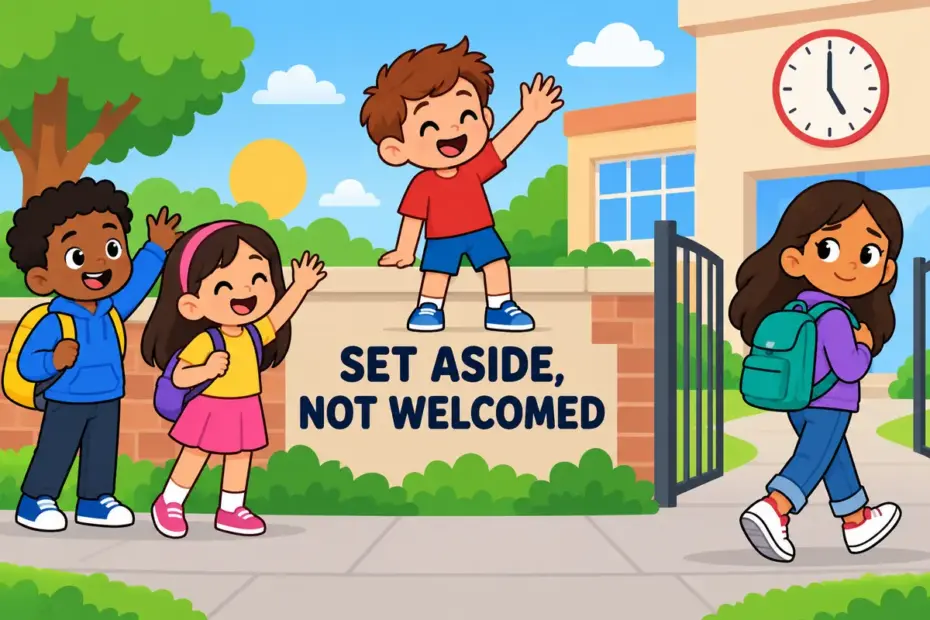
Wave off means to dismiss an offer, idea or concern with a gesture or a few words, and it also describes waving goodbye as someone leaves. To use wave off in a sentence, give it an object: “She waved off the suggestion.” The verb is transitive, and its particle can move.
Wave off at a glance
- Wave off is a transitive phrasal verb; its forms are wave off, waves off, waved off and waving off.
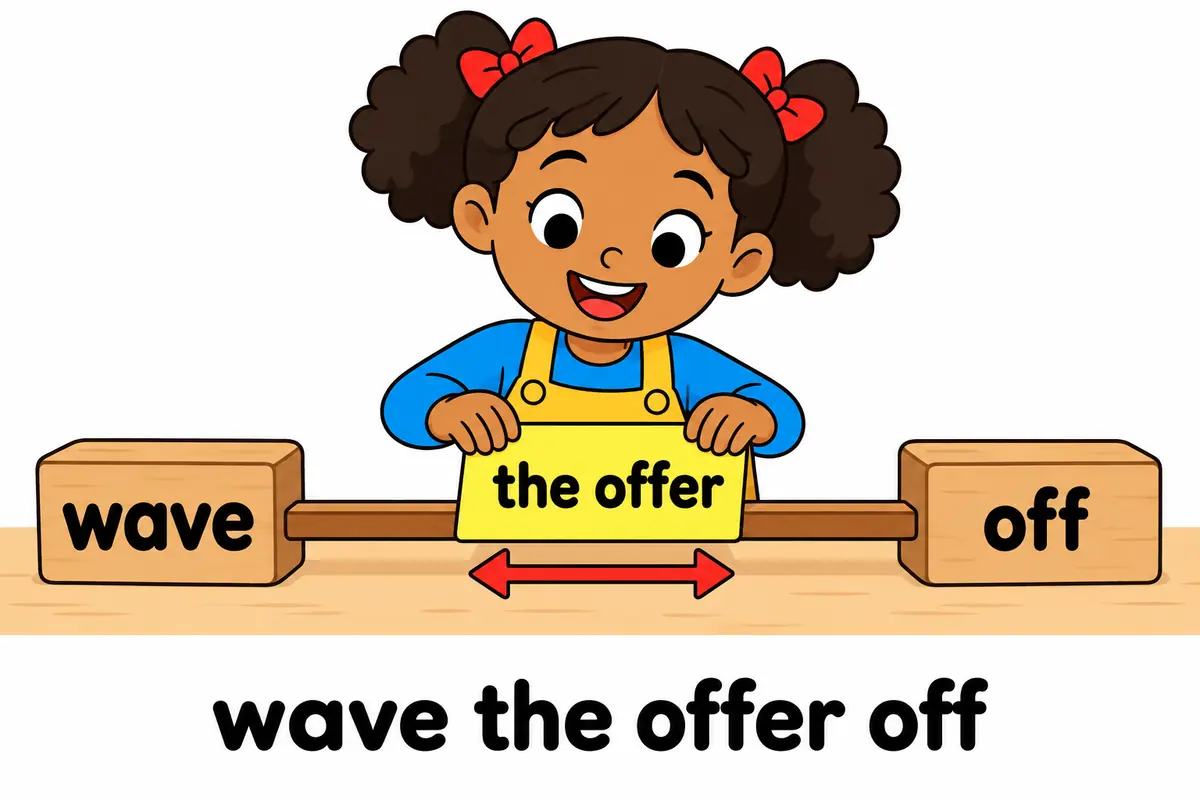
- The particle can move, so wave off the offer and wave the offer off are both standard.
- The two main senses are dismissing something and waving a person goodbye.
- Typical objects are an offer, a suggestion, a concern, a question or a warning.
- The commonest error is using wave off for a plain greeting, where wave to or wave at belongs.
What does wave off mean?
Wave off is a phrasal verb meaning to reject or ignore an offer, idea or concern as unimportant, and also to wave your hand as somebody leaves. The Cambridge entry for wave off records the dismissal sense beside the farewell one, so context decides which a reader hears. Wave off is gentler than refuse an offer outright, because a refused offer is formally turned down while a waved-off suggestion is simply set aside. To dismiss a concern is the direct paraphrase of that second sense.
| Sense | Plain meaning | Example sentence |
|---|---|---|
| Dismiss an offer | Set an idea aside as unimportant | The board waved off the proposal in a minute. |
| Dismiss a concern | Treat a worry as unnecessary | The coach waved off questions about the injury. |
| Wave goodbye | Wave your hand as a person leaves | We waved the team off at the station. |
| Disallow in sport | Signal that a score does not count | The referee waved off the goal after a review. |
The limitation is worth stating plainly: wave off does not mean forget or forgive. A waved-off complaint can return later, and a waved-off warning is not disproved, only declined.
How do you use wave off in a sentence?
Wave off is transitive, so it needs an object such as an offer, a question or a departing person. The particle is separable, which means a pronoun object must sit between the verb and the particle: they waved him off, never they waved off him.
| Pattern | Example | What it signals |
|---|---|---|
| wave + off + object | She waved off the criticism. | The natural order when the object is a long phrase. |
| wave + object + off | She waved the criticism off. | Separated particle, common when the object is short. |
| wave + object + off (a person) | They waved us off at the gate. | A farewell, with the person between verb and particle. |
| be waved off | The idea was waved off immediately. | Passive voice for formal reporting. |
| wave off + a question | He waved off the question and kept walking. | Deflection rather than refusal. |
Speakers usually separate the particle for people (wave us off) and keep it joined for abstract things (waved off the criticism), and that small split is one of the clearest marks of a fluent user.
Wave off in a sentence: examples across contexts
Wave off keeps one meaning but shifts its weight from a friendly farewell to a firm dismissal. The nine sentences below move from a playground to a news desk, and each names what is being waved off.
| Context | Example sentence | Why this works |
|---|---|---|
| Classroom | The teacher waved off the late apology and pointed to a seat. | Dismisses a small thing without rudeness. |
| Workplace email | Management waved off the safety concerns until the inspection. | Names the object and the consequence. |
| News report | Officials waved off the rumours as baseless. | The as-phrase shows the grounds for rejection. |
| Sports writing | The referee waved off the equaliser after a foul. | The technical sense, with the reason supplied. |
| Conversation | She waved off my thanks and kept walking. | The object sits between verb and particle. |
| Family scene | We waved Grandpa off from the porch. | The farewell sense, with the person in the middle. |
| Academic writing | The committee waved off the objection without debate. | Understates the dismissal through plain phrasing. |
| Travel | The driver waved off the tip with a grin. | Shows polite refusal of something offered. |
| Customer service | The clerk waved off the complaint and called a manager. | Signals that a concern is being set aside. |
Only the farewell sentences place a person between the two parts of the verb, which is the clue that the object is a human being.
Wave off vs wave down
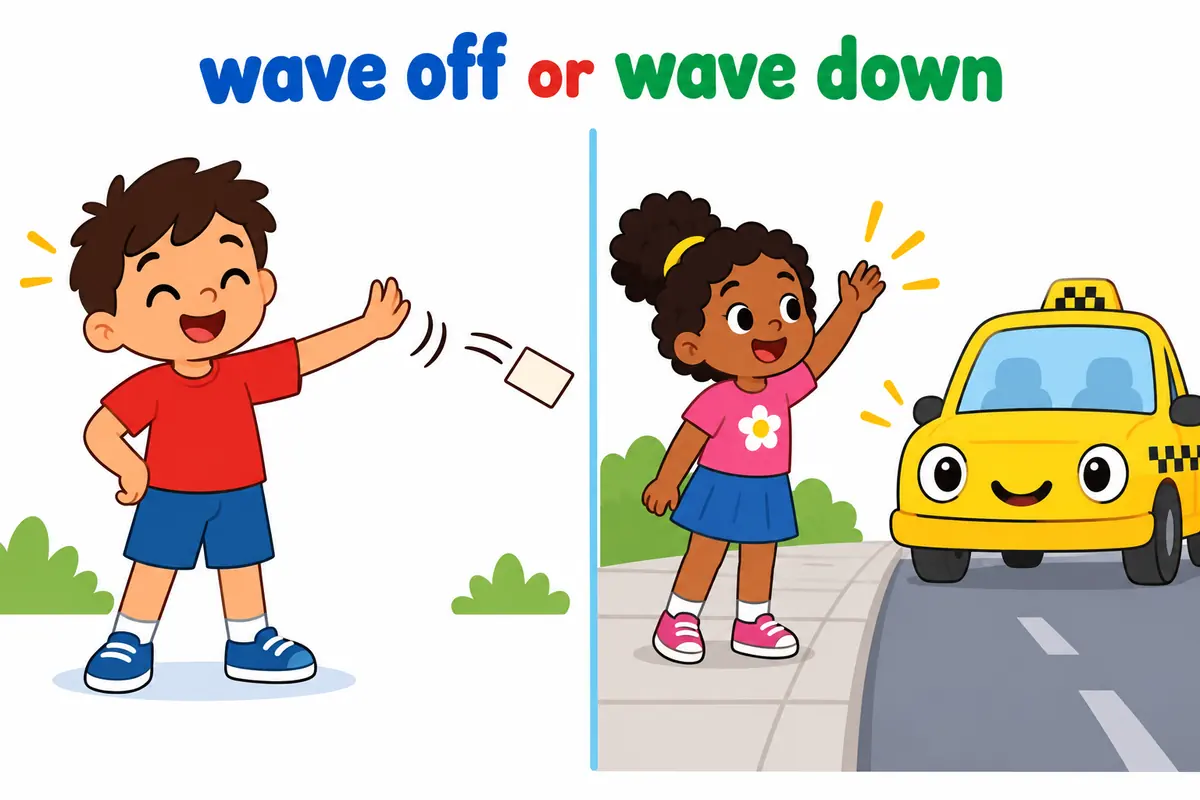
If you raise an arm to stop a taxi you wave it down, not off, and these two phrasal verbs are the pair learners mix most because both involve a hand signal. Wave off pushes something away; wave down pulls it towards you. To rebuff a proposal is the sharper, more formal cousin of waving it off.
| Attribute | wave off | wave down |
|---|---|---|
| Core meaning | Reject or dismiss; wave a person goodbye | Signal a vehicle or person to stop |
| Hand motion | Palm flicks outward or sideways | Arm lifts and sweeps downward |
| Typical object | An offer, a concern, a departing friend | A taxi, a bus, a passing stranger |
| What happens next | The thing is set aside or the person departs | Something stops and comes to you |
| Register | Neutral to formal | Neutral and everyday |
Verdict: wave off refuses what is already there, while wave down calls something over that has not yet stopped, so the direction of the gesture decides which verb you need.
Word forms and grammar of wave off
Wave off inflects like any regular verb, and the only form learners build wrongly is the hyphenated adjective. The table lists the shapes a reader will meet in real writing.
| Form | Part of speech | Example |
|---|---|---|
| wave off | verb, base form | Do not wave off the warning. |
| waves off | verb, third person singular | She waves off every objection. |
| waved off | verb, past and past participle | He waved off the offer politely. |
| waving off | verb, present participle | They were waving off the last guests. |
| waved-off | adjective before a noun | The waved-off goal changed the match. |
The compound adjective is hyphenated only when it stands before its noun, the same rule that governs a well-known name or a last-minute change.
Common mistakes with wave off
Five errors cover almost every wrong use of this phrasal verb, and each has a plain fix.
- Incorrect:
She waved off to the crowd.Correct: She waved to the crowd. Rule: Wave off needs an object; for a greeting use wave to or wave at. - Incorrect:
He waved off the offer down.Correct: He waved off the offer. Rule: Never stack two particles on one verb; choose off or down. - Incorrect:
They waved off him at the gate.Correct: They waved him off at the gate. Rule: A pronoun object must sit between the verb and the particle. - Incorrect:
The plan was waved off on by the board.Correct: The plan was waved off by the board. Rule: The passive keeps off next to wave and adds by for the agent. - Incorrect:
He tried to brush off the question.Correct: He waved off the question. Rule: The phrase brush off shares the particle off but sounds ruder than wave off.
Practice using wave off
Work through the six items, then check the reasoning rather than only the answer.
- Fill the gap: The minister ______ the reporter’s question and moved on.
- Choose the better word: The driver slowed when the woman raised her arm. Did she (wave off / wave down) the taxi?
- Correct the error: He waved off down the job offer.
- Build a sentence: use wave off about a friend leaving at an airport.
- Spot the register: which sentence belongs in a news report — the boss waved off the worries, or officials waved off the safety concerns as unfounded?
- Fill the gap: The referee ______ the goal because of an offside foul.
Answers
- waved off — the question is the thing being set aside.
- wave down — the arm is calling the taxi to stop, not pushing it away.
- He waved off the job offer. — wave off takes its own object and needs no second particle.
- Model answer: We waved our cousin off at the departure gate.
- Officials waved off the safety concerns as unfounded — a report avoids the casual boss and the informal worries.
- waved off — this is the sporting sense, where an official disallows a score.
The bottom line
Use wave off in a sentence when something or someone is being set aside, and give the verb an object every time. Two points settle most sentences: the particle can move, so a pronoun sits inside the verb as in wave her off, and the greeting sense belongs to wave to rather than wave off. For a closer look at the opposite idea, accept an offer is the natural counterweight, while a good team will welcome a suggestion rather than dismiss it.
Frequently asked questions about wave off
Is wave off one word or two?
As a verb, wave off is two words, and its forms are waves off and waved off. As an adjective before a noun it is hyphenated, as in a waved-off goal. Everyday writing treats the verb as an open two-word phrase, so keep the space in normal sentences.
What is the difference between wave off and brush off?
Wave off and brush off both mean to set something aside, but brush off sounds more personal and dismissive. You wave off a suggestion or a worry; you brush off a person or a complaint. Brush off also hints at rudeness, while wave off often sounds relaxed and even friendly.
Can you wave someone off at a station?
Yes. To wave someone off is to wave goodbye as they leave, and a pronoun must sit between the verb and the particle. So you wave her off, never wave off her. The pattern is common at airports, stations and school gates where people depart.
Does wave off always need an object?
Wave off is transitive, so it nearly always needs an object, whether that object is an offer, a question or a person. Only in sports reporting does a bare waved off appear, as shorthand for a disallowed score, with the object understood from the context.
Ever been in a situation where someone dismisses a suggestion or request quickly and decisively? That action is known as a “wave off.” Essentially, it involves promptly rejecting an idea without much consideration or discussion.
When someone waves off a suggestion, they typically do so with a gesture or brief comment that indicates their lack of interest or intention to pursue the topic further. This dismissal can come across as abrupt or indifferent, leaving little room for negotiation or further exploration of the idea.
7 Examples Of Wave Off Used In a Sentence For Kids
- Wave off the flies with your hand.
- Let’s wave off to our friends as they leave.
- The wind made the trees wave off their leaves.
- Don’t forget to wave off to your parents before school starts.
- The lifeguard had to wave off swimmers due to the storm.
- It’s fun to wave off at passing cars.
- The teacher had to wave off the students during the fire drill.
14 Sentences with Wave Off Examples
- Wave off the idea of skipping classes to go on a road trip.
- Before you wave off your assignment, consider the impact on your final grades.
- Don’t just wave off the opportunities for internships that come your way.
- It’s important to wave off negative influences when focusing on your studies.
- Wave off the temptation to procrastinate and start working on your project.
- If you feel overwhelmed, take a break and wave off any doubts about your abilities.
- Remember to wave off distractions during exam preparation.
- Wave off the urge to overspend during college festivals and events.
- It’s essential to wave off any feelings of self-doubt while pursuing your dreams.
- Focus on your goals and wave off any unnecessary drama in your social circle.
- Even when times get tough, don’t wave off seeking help from your professors or counselors.
- When feeling burnt out, wave off additional commitments and prioritize self-care.
- Don’t wave off the importance of networking and building connections during your college years.
- Learn to wave off criticism that is not constructive and stay focused on your personal growth.
How To Use Wave Off in Sentences?
Wave Off is used when indicating that something or someone should be disregarded or dismissed. It is a term used to show a negative response to a suggestion, idea, or action.
To use Wave Off in a sentence, follow these steps:
1. Identify the situation where you want to dismiss or disregard something.
2. Formulate a sentence that includes the term “Wave Off.”
3. Use “Wave Off” at the beginning or in the middle of the sentence to clearly indicate the action of dismissing or disregarding.
For example:
– “I had to wave off the proposal as it wasn’t feasible within our budget.”
– “She tried to offer help, but I had to wave off her assistance as I preferred to do it alone.”
– “The teacher had to wave off the student’s excuse for not completing the assignment on time.”
By incorporating Wave Off into your sentences, you can effectively communicate the act of dismissing or ignoring something. Remember to use it appropriately to convey your message clearly in conversations or in writing.
Practice using Wave Off in various situations to become more comfortable with incorporating it into your vocabulary.
Conclusion
In conclusion, the phrase “wave off” is frequently used in contexts where an action is being stopped or cancelled. Examples include waving off a suggestion, a plan, or a danger. It can also refer to dismissing someone or something. The term is versatile and can be applied in various situations to convey the act of rejecting or disregarding a request, idea, or threat.
By examining sentences with “wave off,” it becomes clear that the phrase is commonly used to indicate a refusal or a decision to not proceed with something. Whether it’s waving off a potential conflict or brushing aside an unappealing proposal, this expression is a succinct way to describe the act of disregarding or declining.


