What does wreck mean in a sentence?
Wreck can be a noun for a destructive crash or something ruined, and a verb meaning to damage or ruin. Compare “The model boat was a wreck” with “The falling shelf wrecked the model boat.” The first sentence describes the boat’s condition. The second identifies what caused the damage. Both sentences are natural, but the word has a different grammatical job in each.
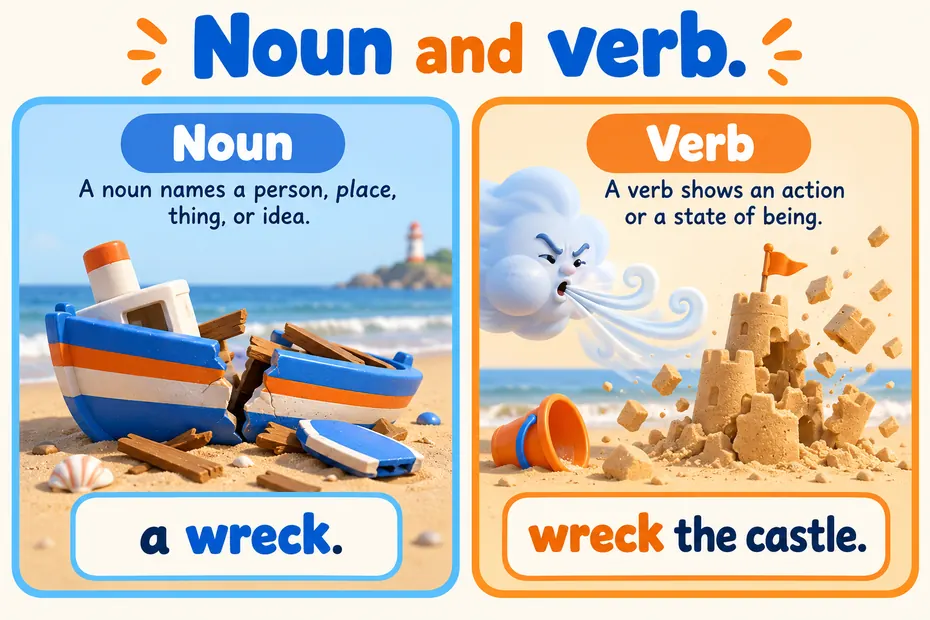
Key facts: noun and verb uses
The noun often takes an article: “a wreck” or “the wreck.” It can be plural: “The museum displayed photographs of several wrecks.” The verb changes form: wrecks, wrecked and wrecking. Write “The wave wrecked the sandcastle” for a past event, and “The waves are wrecking the sandcastle” for an action in progress.
| Use | Example | How to identify it |
|---|---|---|
| Noun: damaged thing | The old boat was a wreck. | It follows the article a. |
| Noun: crash | The report described a train wreck. | It names an event. |
| Verb | The storm wrecked the shelter. | It describes what the storm did. |
| Participial adjective | They photographed the wrecked boat. | It describes the boat. |
Merriam-Webster’s wreck entry distinguishes these noun and verb senses. The examples here use models and fictional situations to make the grammar clear. The original introduction below calls wreck a verb, but that description is incomplete because the noun is also common.
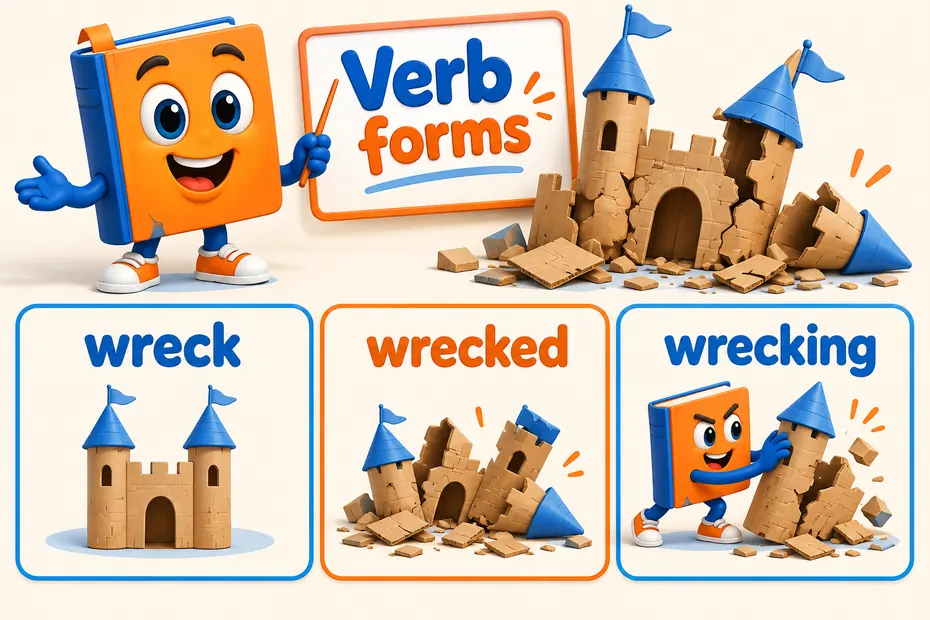
How to build a clear verb sentence
A useful pattern is subject + wreck + object: “The wave wrecked the castle.” The subject causes the damage, and the object receives it. You can expand the sentence with a location or time: “A large wave wrecked the sandcastle after lunch.” The extra detail helps readers picture the scene without changing the main grammatical relationship.
A passive sentence changes the focus: “The sandcastle was wrecked by a large wave.” The castle comes first because its fate is what matters to the writer. If the cause is unknown or unimportant, write “The sandcastle was wrecked overnight.” Avoid adding a cause unless the context supports it. A clear sentence can report damage without guessing who or what caused it.
After can, may, will or did, use the base form: “A wave can wreck the castle,” “Will the rain wreck our plans?” and “Did the storm wreck the model?” Do not write “did wrecked.” In a negative past sentence, use “The storm did not wreck the model.” The past tense is carried by did, so wreck remains in its base form.
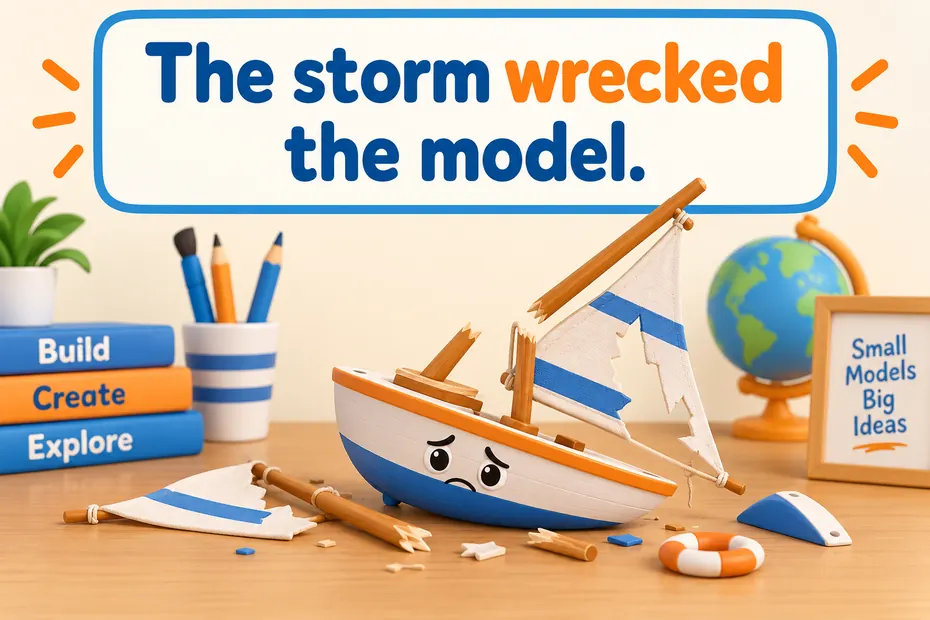
Wreck, wrecked and wreckage
Wrecked can be a past-tense verb or a participle used descriptively. “The wind wrecked the display” gives an action. “The wrecked display stood in the corner” describes a damaged display. In “The display was wrecked by the wind,” it forms part of a passive construction. Look at the whole phrase before deciding what role the form has.
Wreckage names damaged remains or debris: “The team cleared the wreckage.” It is normally a mass noun, so “pieces of wreckage” is more useful than an ordinary plural wreckages. By contrast, wrecks can name separate damaged vessels or separate crashes. “Two wrecks” and “two pieces of wreckage” therefore do not necessarily refer to the same kind of thing.
Fresh examples and figurative uses
- The wave wrecked our carefully built sandcastle.
- The toy boat was a wreck after falling from the shelf.
- The artist repaired the wrecked cardboard model.
- A spilled drink nearly wrecked the poster.
- The canceled rehearsal wrecked the fictional band’s plans.
- The guide pointed to the shipwreck in the photograph.
- The inspector recorded the wreck’s location.
- They collected the pieces of wreckage from the model.
Wreck can also be figurative: “The delay wrecked our plans” means the delay disrupted or ruined them, rather than physically breaking an object. The informal expression “a nervous wreck” describes someone feeling very distressed. It is expressive everyday wording, not a diagnosis. When discussing a real person’s health, a precise description is usually more useful than treating a figurative label as a medical fact.
Wreck versus wreak, and original usage corrections
For the familiar expression about causing chaos, wreak havoc is the usual choice: “The storm wreaked havoc.” Wreck generally emphasizes ruining or damaging something. Usage does overlap, and the dictionary records wreck in the sense of wreak, so avoid claiming that every instance of wreck havoc is impossible. For a beginner’s clear model, prefer the established phrase wreak havoc or simply say “The storm caused severe damage.”
The original adverb example “wreckedly” is not a standard form to imitate in ordinary writing. Replace it with a normal verb sentence: “The storm left a path of destruction.” Also, “Wreck your diet” and “Wreck your notes organizing system” are imperatives: they sound like instructions to cause damage. If the intended message is cautionary, write “Do not wreck your notes system” or describe what might disrupt it.
Some original examples make broad claims about grades, mental health and productivity. Read those as illustrative language rather than established outcomes for every student. A measured rewrite might say “The missed deadline disrupted the project schedule.” It describes a concrete consequence without making a sweeping prediction.
Practice and frequently asked questions
Identify the use: “The boat was a wreck.” “The wave wrecked the boat.” “They examined the wrecked boat.” The answers are noun, verb and descriptive participle. Then complete “Did the wave ___ it?” with wreck and “The wave ___ it yesterday” with wrecked.
Is wreck only a verb?
No. It is also a noun for a crash, damaged remains or something in a ruined condition.
What is the past tense?
Wrecked is the regular past tense. Wrecking is the -ing form.
Can wreck be figurative?
Yes. Wrecking a plan describes ruining or seriously disrupting it without physical destruction.
Should I write wrecked havoc?
For the familiar expression, write wreaked havoc. Alternatively, write wrecked the building or caused havoc, according to the meaning.

Have you ever struggled with constructing sentences that include the word “wreck”? A “wreck” is a verb that portrays the act of causing destruction, damage, or ruin to something. When using this term in a sentence, consider the subject carrying out the wrecking action.
Whether describing a chaotic car wreck or a disastrous shipwreck, incorporating “wreck” into your sentences adds a vivid imagery of destruction. By learning how to structure sentences with “wreck” effectively, you can convey powerful emotions and intense scenes in your writing. Let’s explore some cohesive ways to construct example sentences that feature the word “wreck” to enhance the impact of your storytelling.
7 Examples Of Wreck Used In a Sentence For Kids
- The big storm caused a wreck in the playground.
- The little car went too fast and ended up in a wreck.
- Let’s be careful and not wreck our toys when we play.
- The pirate ship looked like a wreck after the battle.
- The construction site had a big wreck with all the broken equipment.
- The train wreck was all over the news.
- Our sandcastle got wrecked by the big wave.
14 Sentences with Wreck Examples
- Wreck your notes organizing system every end of semester.
- Burning the midnight oil may wreck your sleep schedule.
- Don’t let a breakup wreck your focus on academics.
- Procrastinating on assignments can wreck your grades.
- Cramming for exams can wreck your mental health.
- Wreck your diet with too much junk food during exams.
- Avoiding self-care can wreck your overall well-being.
- Oversleeping can wreck your attendance record.
- Missing deadlines can wreck your chances for internships.
- Getting involved in too many extracurricular activities can wreck your study routine.
- Joining the wrong study group can wreck your productivity.
- Letting negative thoughts consume you can wreck your motivation.
- Social media addiction can wreck your concentration.
- Seeking perfection in every assignment can wreck your confidence.
How To Use Wreck in Sentences?
Wreck can be used in a sentence to indicate destruction or damage. For example, “The car was in a terrible wreck after colliding with a tree.”
Other ways to use wreck in a sentence include:
- Noun: “The old house was a wreck after the storm passed through.”
- Verb: “The storm wrecked havoc on the small town, leaving nothing untouched.”
- Adjective: “The wrecked ship was a haunting reminder of the dangers at sea.”
- Adverb: “The storm came through quickly and wreckedly left a path of destruction in its wake.”
Remember, wreck can be used to describe physical damage like in the case of accidents or natural disasters, as well as emotional or mental destruction.
To better understand how to use wreck in a sentence, try reading examples in context from books, articles, or online resources. Practicing using the word in different forms (nouns, verbs, adjectives, adverbs) can also help you become more comfortable incorporating it into your own writing.
Conclusion
In conclusion, the word “wreck” is used to describe situations where something has been severely damaged or destroyed. Examples of sentences with “wreck” include: “The car was a total wreck after the accident” and “The storm wreaked havoc and left a trail of wreckage in its path.” Whether it refers to a physical object or a state of disarray, “wreck” conveys the sense of devastation and ruin caused by an event.
By using “wreck” in sentences, we can effectively communicate the extent of damage or chaos present. It serves as a powerful word to describe the aftermath of accidents, disasters, or turbulent situations. The word “wreck” encapsulates the idea of destruction, allowing for clear and vivid descriptions of scenarios where damage and disorder are prevalent.


